February 17, 2026
More than just a children's pastime, a colouring book for adults is a surprisingly powerful tool for finding a bit of calm in our hectic lives. Think of it as a mental reset button—a simple, creative way to tune out the daily noise and focus on the satisfying act of bringing colour to a page.
In a world buzzing with notifications and endless to-do lists, the simple act of colouring offers a welcome escape. It doesn't demand any artistic genius or complicated skills; all you need is a quiet moment and the willingness to slow down. This gentle activity has found its way into so many homes because it’s a real, tangible way to manage stress and clear your head. The steady, rhythmic motion of filling in a design helps soothe the mind in a way that feels a lot like meditation.
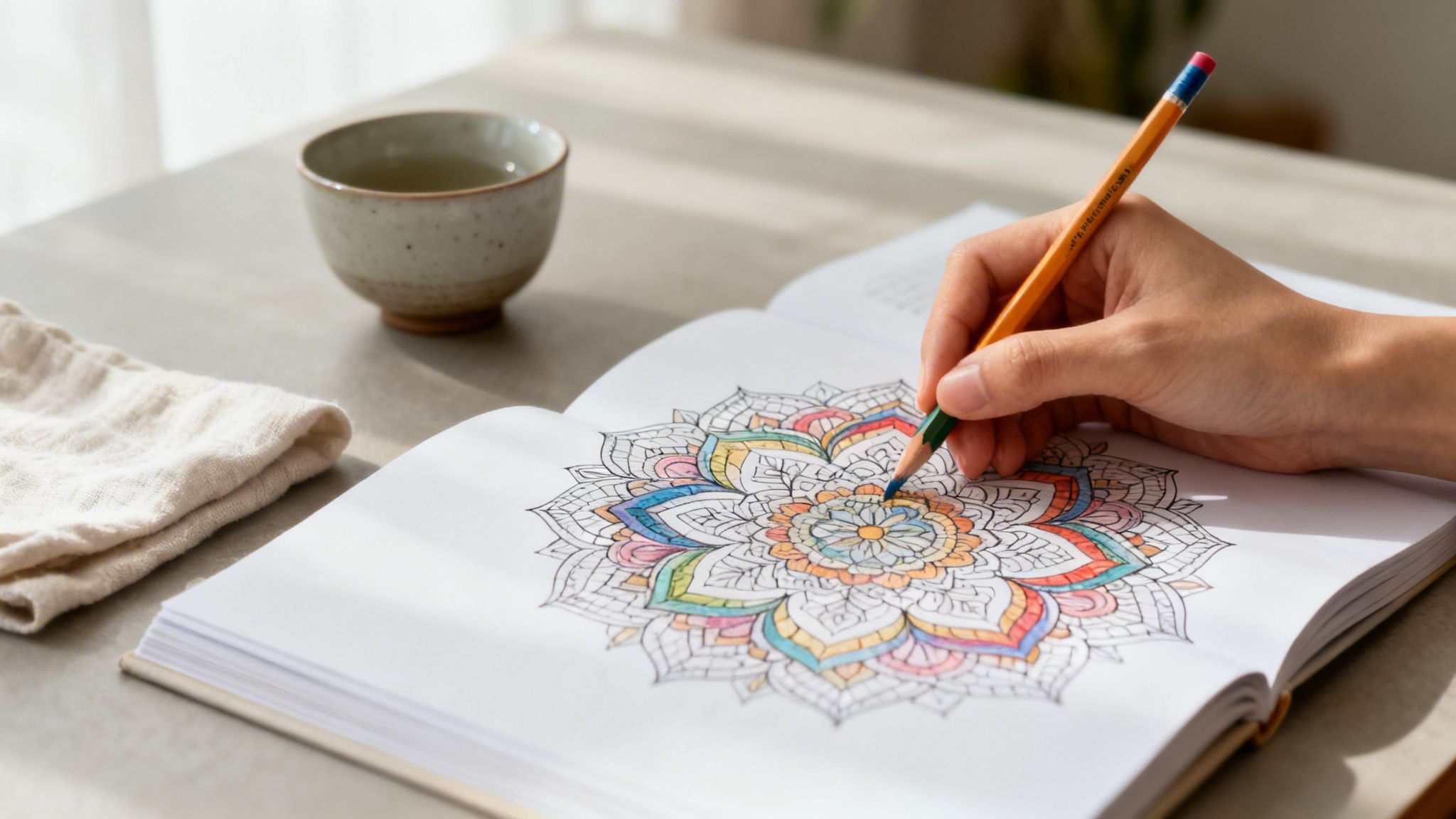
But it's not just about relaxing. This creative process actually sharpens your focus and gets different parts of your brain working together. When you're busy choosing colours and deciding where they should go, you’re tapping into problem-solving and fine motor skills. This deep focus allows you to gently set aside your worries, leading to a much calmer state of mind.
The perks of picking up a colouring book go far beyond just having fun. Spending time with this creative outlet can have a genuinely positive impact on your well-being. In fact, studies have shown that focusing on structured patterns, like the ones in colouring books, can ease feelings of anxiety and make you feel more present.
Here are a few key benefits:
This quiet journey, from a black-and-white page to a vibrant piece of art, is incredibly rewarding. It’s a simple practice that nurtures your inner artist while acting as a powerful antidote to modern stress.
Ultimately, this creative spark can inspire you beyond the page. The very same principles of colour, pattern, and patience are at the heart of tangible crafts, like painting traditional Scandinavian Dala horses. This guide will help you explore this peaceful hobby and show you how it can connect you to deeper artistic traditions.
Stepping into the world of adult colouring books feels a bit like walking into a massive art gallery. The variety is astounding, and there’s truly a style for every personality and mood. Finding the right colouring book for adults isn't about skill level; it's about what speaks to you. It’s a chance to pick a theme that genuinely sparks your creative spirit and helps you unwind.
Your choice of book really shapes the whole experience. Are you looking for a quiet, meditative session, or would you rather get lost in a whimsical story? Figuring out the different styles is the first step to finding a book that feels like it was made just for you. This personal connection is what turns colouring from a simple pastime into a deeply fulfilling hobby.
For many people, the biggest draw of colouring is its power to quiet a busy mind. This is where mandalas and intricate geometric patterns really shine. With their repeating, symmetrical elements, these designs gently guide you into a state of focused flow. The structure does all the heavy lifting, letting your mind relax as you simply focus on choosing colours and filling in each little section.
Colouring these complex circles and shapes isn't about creating a perfect masterpiece—it's all about the process. The repetitive nature of the patterns creates a predictable, calming rhythm. This kind of mindful activity can help ease feelings of anxiety by giving your brain a single, engaging task to home in on, gently nudging aside the worries of the day.
If you find your peace in the great outdoors, botanical and nature-themed colouring books are a wonderful escape. These pages are filled with everything from delicate floral arrangements and dense jungles to beautifully detailed illustrations of birds and wildlife. This style invites you to play with the rich, vibrant palettes found in nature, offering endless room for creativity.
These designs are perfect for anyone who enjoys a bit more freedom than geometric patterns provide. You can experiment with shading a petal to give it depth or blend colours on a leaf, bringing the scene to life with either realism or a touch of fantasy. For a little more guidance on making your botanicals pop, have a look at our advice on mastering flower line drawing to really elevate your technique.
Choosing a style is like selecting a destination for your mind. Whether it’s the structured peace of a mandala or the organic freedom of a forest scene, the right book provides a welcome escape and a canvas for your personal expression.
Another fascinating category is books filled with narrative and cultural designs. Some tell a story page by page, drawing you into enchanting worlds with imaginative characters. Others are a celebration of global artistry, featuring patterns inspired by traditional textiles, architecture, and folk art. This is where you'll find the beautiful Scandinavian motifs that often appear in our beloved Dala horse designs.
These books connect you to a deeper sense of heritage and craftsmanship. The intricate, swirling patterns that echo traditional "kurbits" paintings offer a satisfying challenge and a link to timeless artistic traditions. Choosing a book with these cultural elements turns your colouring session into an appreciation of history and art, adding another rich layer of meaning to your creative time.
While the beautiful, intricate designs in a colouring book for adults are what first catch your eye, it's the paper that truly makes or breaks the experience. Think of it like a chef choosing the freshest ingredients—the paper quality quietly determines just how good the final result will be. Choosing the wrong kind can turn a relaxing afternoon into a frustrating mess.
Simply put, good paper is the foundation for everything you do. It decides how well your colouring tools perform, how vibrant your colours look, and whether your finished piece feels like a polished work of art or a disappointing experiment. When you invest in a book with quality paper, you're making sure your creative effort pays off.
One of the first things to look for is paper weight, which is usually measured in GSM (grams per square metre). You can think of GSM as a way to describe the paper's density and thickness. The higher the GSM number, the heavier and more durable the paper is, which is absolutely crucial depending on the tools you love to use.
For example, alcohol-based markers are famous for bleeding through thin, flimsy paper, which can easily ruin the design on the other side. A thicker paper, ideally 120 GSM or higher, is sturdy enough to handle markers, gel pens, and even a light wash of watercolour without buckling or bleeding through. This strength also gives you a fantastic surface for techniques like blending and layering with coloured pencils, helping you achieve a smooth, professional finish.
The flowchart below can help you connect your colouring goals to the right style of book, which often gives clues about the paper inside.
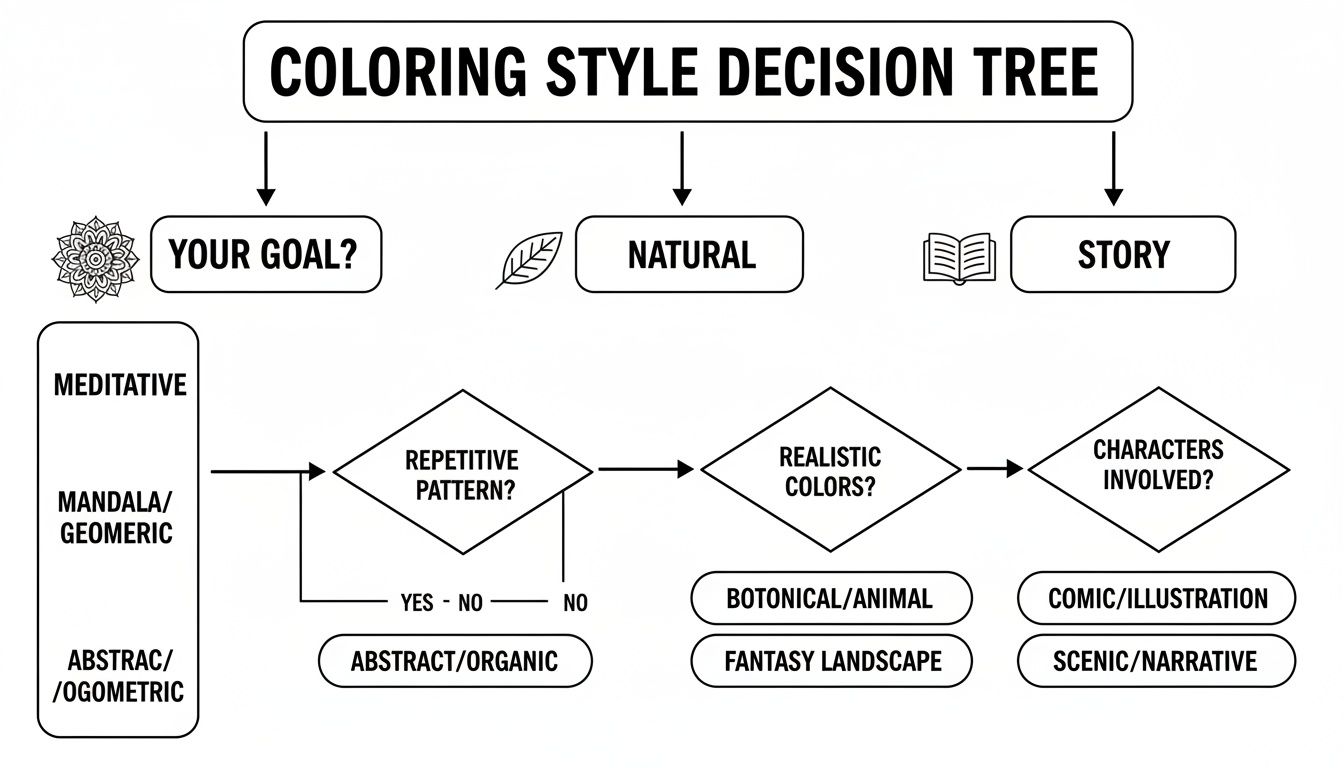
This decision tree helps you think about what you want out of your colouring session—meditation, a connection with nature, or a bit of storytelling—and guides you toward the perfect theme.
Another key detail to consider is whether the pages are single- or double-sided. Each style has its own perks, and the best choice really comes down to your favourite colouring supplies.
Single-Sided Pages: These are the gold standard if you love using markers, paint pens, or any other "wet" media. With no design on the back, you can colour freely without ever worrying about ink bleeding through and destroying another picture. Many top-tier books are printed this way for exactly that reason.
Double-Sided Pages: These are perfect for coloured pencils, crayons, and pastels—anything that won't bleed. This format essentially gives you twice as many illustrations for your money, making it a brilliant and economical option if you stick to dry tools.
Choosing the right paper isn’t just a technical detail; it's an act of self-care. It ensures that your valuable creative time results in artwork you can be proud of, free from the disappointment of smudges and bleed-through.
Once you've got a beautiful colouring book for adults in your hands, the real fun begins: choosing your tools. Picking your creative toolkit is a bit like a musician selecting their instrument. Each one creates a different feel and tone, letting you express yourself in completely unique ways. From the soft, subtle touch of pencils to the bold, vibrant punch of markers, your tools will breathe personality into your artwork.
This isn't about rushing out to buy the most expensive supplies on the shelf. It’s about finding what feels right for you. Starting with just a few basics is the perfect way to figure out what you enjoy most. As you get more comfortable, you can start exploring other tools and techniques that will bring even more depth and character to your colouring pages.
Coloured pencils are probably the most popular choice for adult colouring, and for good reason. They offer an incredible amount of control, which makes them perfect for those tiny, detailed spots, and their versatility is second to none. You can create the softest, most delicate layers or press a bit harder for rich, deep colour. That level of control makes them the ideal starting point for learning a few fundamental techniques.
Think of coloured pencils as the foundation of your colouring skills. With just a few simple but powerful methods, you can add a surprising amount of realism and dimension to any design.
Building a good collection of coloured pencils is an investment in your creativity. They are forgiving enough for beginners, yet offer enough sophistication for advanced colourists to explore complex, stunning effects.
When you want your colours to pop right off the page, markers and pens are your best friends. Fine-tipped markers are fantastic for getting crisp, clean lines and filling in smaller, intricate areas without any fuss. For larger sections, alcohol-based markers are a favourite among colourists because they lay down smooth, streak-free colour that looks incredibly professional.
Gel pens are like the secret weapon for adding that final touch of magic. They come in an amazing range of finishes—metallic, glitter, and even neon—that can make certain parts of your design just sing. Use them to add a little shimmer to a flower petal or a metallic glint to a geometric pattern for a truly eye-catching effect. For ideas on how to pair these bold tones, you can also explore our helpful colour mixing chart.
Building your toolkit is a personal journey of discovery. Start with whatever medium feels most inviting, whether it’s the gentle control of pencils or the immediate impact of markers. Experimenting with different tools and techniques is how you’ll find a style that is uniquely yours, turning each page of your colouring book into a true reflection of your creativity.
There’s a quiet satisfaction that comes with finishing a colouring page, isn't there? That final stroke of the pencil brings a real sense of accomplishment. But what happens next? Don't just close the book! With a little thought, you can turn a relaxing hobby into lasting art you can display, gift, or use as inspiration.
First things first: preservation. To keep your hard work looking fresh, especially if you've used coloured pencils or pastels, a light coat of fixative spray is a game-changer. This clear sealant locks in your colours, preventing smudges and fading over time. It’s a simple step that ensures your art stays as vibrant as the day you completed it.
Once your piece is protected, it's ready for its moment in the spotlight. Framing is the classic way to elevate a simple coloured page into a piece of home decor. The right frame can completely transform your work, turning it into a focal point that brightens any room.
Here are a few simple tips to get you started:
Your finished colouring page is more than just paper and ink; it’s a tangible record of your creativity and a moment of peace. Displaying it celebrates that personal journey and brings a unique, handmade touch to your living space.
Your artwork also makes for an incredibly personal and heartfelt gift. A beautifully framed colouring page is a thoughtful present for birthdays, holidays, or simply to show someone you care. It’s a one-of-a-kind gift that shares a piece of your creative passion.
And that passion for detail doesn't have to stay on the page. The skills you’ve been honing—choosing colour palettes, blending shades, and focusing on intricate patterns—are perfectly transferable to three-dimensional crafts. For any creative spirit, it’s a natural and exciting next step.
Why not try applying your colouring skills to a new canvas? An unpainted DIY Dala horse from Dalaart offers the perfect opportunity. You can test out colour combinations and practice your pattern work on paper, then bring your vision to life on a cherished piece of Scandinavian folk art. You’ll be creating a truly unique keepsake that’s all your own.
Have you ever found yourself colouring in a beautiful, swirling pattern and feeling like you're tapping into something ancient? Well, you are. Many of those intricate designs in colouring books for adults aren't just random doodles; they're deeply rooted in cultural history, especially the rich world of Scandinavian folk art. Your relaxing hobby has a direct line to centuries of artistic heritage, turning each page into a small celebration of global craftsmanship.
This connection becomes crystal clear when you look at the motifs on a traditional Swedish Dala horse. The flowing, elaborate floral patterns, known as 'kurbits' paintings, are the soul of this art form. These distinct, stylised gourds and botanicals have inspired artists for generations, and you can see their influence beautifully echoed in many modern colouring book designs.
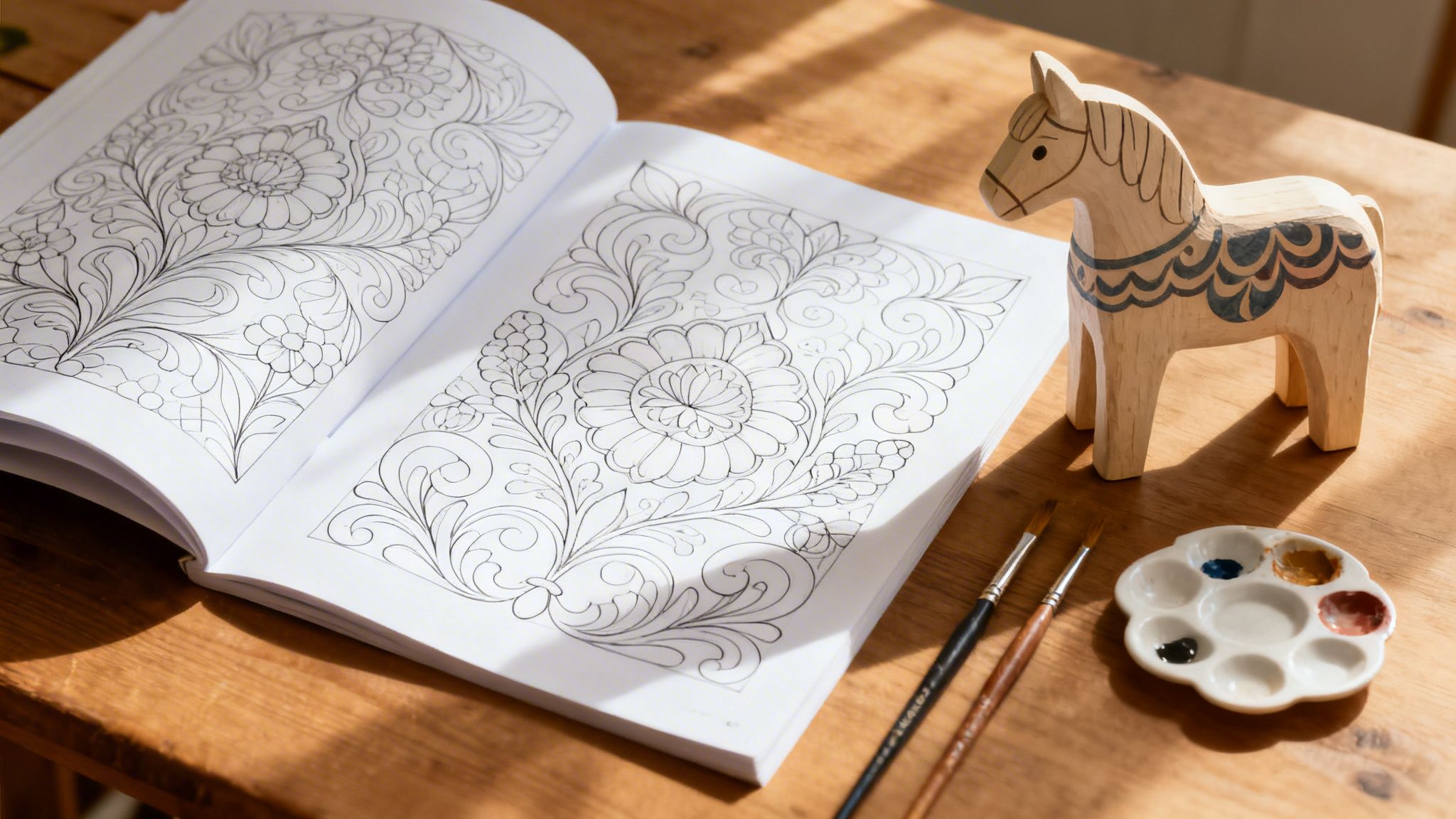
When you pick up a book filled with these Scandinavian-inspired patterns, you’re doing much more than just filling in shapes. You’re interacting with a piece of history. Knowing this adds a wonderful new layer of meaning to your creative time, making each stroke of your pencil or pen feel more intentional and significant.
To make this connection even more real, try creating a project that bridges both worlds. Pairing a Scandinavian-themed colouring book with a DIY Dala horse kit is a fantastic way to have a truly immersive and rewarding creative experience. Think of it as exploring your ideas on paper before you commit them to a three-dimensional object.
You can use the colouring pages as your personal design lab.
This hands-on approach elevates your colouring from a simple pastime into a form of preparatory art. It's a chance to build confidence and skill, resulting in a cherished wooden keepsake that tells a story of both tradition and your own creativity.
The global appeal for artisan-inspired products is only growing. In Southeast Asia, for example, the adult colouring book market has seen incredible growth, with the Asia Pacific segment reaching around USD 72 million. There’s been a significant surge in demand for mandala and animal-themed books—reminiscent of the hand-painted designs on Swedish Dala horses—with sales spiking over 25% year-over-year. This trend really highlights the widespread desire for creative outlets like the DIY models from Dalaart.
You might also be interested in our specially curated colouring pages for adults to kickstart your project.
So, you've got your new colouring book and a fresh set of tools. Fantastic! But even with everything laid out, a few questions might pop up as you get started. Let's tackle some of the most common ones so you can dive into your creative session with confidence.
It’s easy to get lost in a design for hours, but long colouring sessions can sometimes be tough on your hands. To keep things comfortable, try holding your pencils or markers with a lighter, more relaxed grip. You can even find ergonomic grips to slide onto your tools, which can make a world of difference.
The most important thing, though, is to take short breaks every 20-30 minutes. Get up, stretch your fingers and wrists, and give your eyes a rest. Making sure your space is well-lit and that you’re sitting with good posture will also help you enjoy your colouring book for adults for longer without any aches or pains.
The real secret is just listening to your body. Colouring should be a source of calm, not discomfort, so think of those little pauses as part of the relaxing process.
Absolutely! In fact, that's where the real fun begins. Mixing different colouring media is a brilliant way to add depth, texture, and a professional touch to your pages. For example, you could lay down a smooth base layer with markers and then go back in with coloured pencils to add shading and fine details.
Gel pens are also perfect for adding a final bit of magic. Use them to create shimmery highlights or metallic accents that catch the light. Just a quick tip: always test your tool combinations on a spare piece of paper first. This helps you see how they’ll look together and makes sure the paper can handle it without bleeding or tearing.
Choosing colours is one of the most exciting parts of the whole process. If you’re aiming for a peaceful, harmonious vibe, try using analogous colours—these are colours that sit right next to each other on the colour wheel, like a soothing blend of blues, greens, and purples.
Want something that really pops off the page? Go for complementary colours. These are opposites on the wheel, like yellow and purple, and they create a fantastic, high-contrast effect. You can also find endless inspiration in nature, photographs, or even by searching for pre-made palettes online. Ultimately, there are no rules, so just experiment and have fun with it!
Ready to find your next creative project? Take a look through the authentic, hand-crafted collection at Dalaart. You’ll find everything from beautifully painted Dala horses to unpainted DIY models, perfect for your next artistic adventure. Discover the collection at Dalaart.


.svg)


.png)


