February 20, 2026
There's a certain magic to porcelain that holds generations of stories, and few collections capture this feeling quite like Rosenthal Classic Rose. This celebrated line of German porcelain is instantly recognisable for its delicate floral patterns and romantic spirit. It’s a design that feels both quintessentially European and deeply personal, cherished by collectors for its blend of meticulous craftsmanship and nostalgic charm.
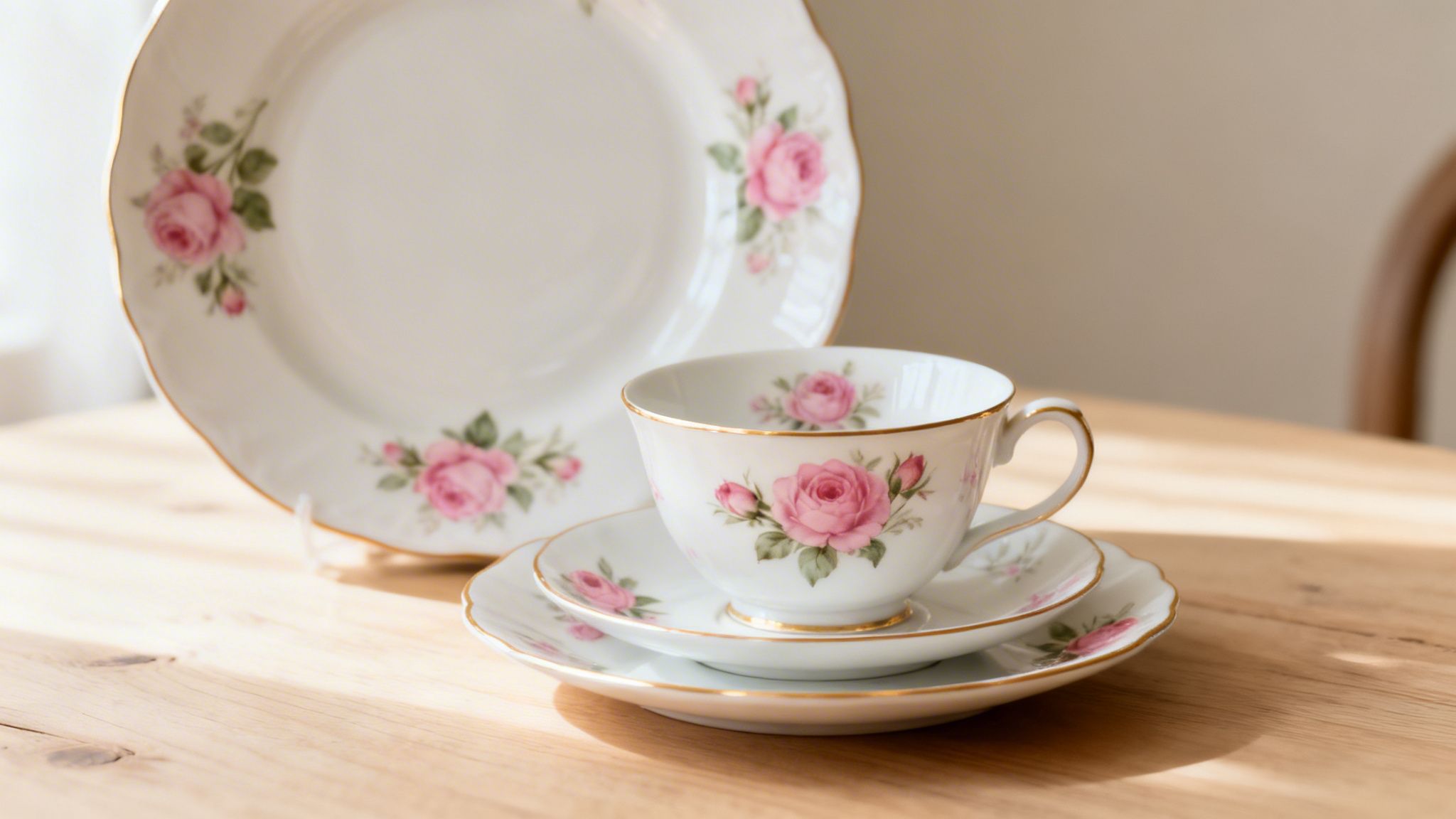
With Rosenthal Classic Rose, every teacup, saucer, and plate feels like a page from a bygone era of elegance. This isn't just dinnerware; for many families, it's an heirloom, a tangible symbol of refined taste passed down through the years. Its enduring appeal comes from a perfect balance of art and everyday function.
The entire collection is built around a soft, romantic aesthetic. Picture delicate pink roses unfurling across pristine white porcelain, often kissed with a hint of gold trim. The imagery alone evokes garden parties, quiet afternoon teas, and cherished family dinners.
While the collection is steeped in classic European heritage, its real beauty lies in its surprising versatility. These pieces aren't meant to be locked away in a formal dining room cabinet. In fact, their delicate nature creates a stunning contrast against modern, minimalist interiors.
This unique ability to bridge the old and the new is precisely why it continues to captivate enthusiasts today. Here’s a closer look at its charm:
Consider this guide your go-to resource for stepping into the world of Rosenthal Classic Rose. We’ll walk through its history, show you how to identify authentic pieces, and spark some inspiration for styling them in your own home.
To really get a feel for the delicate beauty of the Rosenthal Classic Rose collection, you first need to understand the powerhouse brand behind it. The story doesn’t start in some grand palace, but in a castle in Selb, Germany, where Philipp Rosenthal began painting porcelain back in 1879. This wasn't just a business venture; it was the beginning of a legacy built on a fierce commitment to quality and artistic vision.
From those early days, Rosenthal quickly made a name for itself as a leader in German porcelain. The brand became known for its incredible knack for blending timeless elegance with fresh, contemporary design, often collaborating with the leading artists and designers of the day. This forward-thinking mindset is what kept Rosenthal relevant through decades of changing tastes, from Art Nouveau all the way to modernism.
It wasn't always a smooth ride, of course. The company had to navigate huge historical shifts, including two World Wars that completely upended European manufacturing. And yet, Rosenthal’s dedication to pure craftsmanship never faltered. That resilience is practically fired into every single piece of china, representing a true survival of artistry against all odds.
This enduring spirit is what gives patterns like the Rosenthal Classic Rose such a deep sense of history. When you hold a piece, you're holding a fragment of this long, storied journey.
Think of it like a family tree; the brand's history provides a rich backstory for every item. This context transforms a simple teacup into an artefact of artistic and cultural heritage, connecting you directly to its German roots.
Even in more recent times, the company has shown remarkable strength. It weathered major changes, including filing for insolvency in 2009 before being acquired by an Italian company, which ensured the brand’s story would continue. This ability to adapt while staying true to its past is the hallmark of a truly great maker.
Understanding this history is so important. It explains why Rosenthal porcelain just feels different—it’s not only about the high-quality materials but about the philosophy baked into every design. The brand's deep respect for both tradition and innovation created the perfect environment for a collection like Classic Rose to be born. It’s a pattern that comes from over a century of expertise. This same dedication to heritage and quality can be seen in other legendary European porcelain, which you can explore in our look at Royal Copenhagen's distinctive designs.
The reputation Rosenthal built over 140 years is why collectors put so much trust in the name. Every backstamp tells a story of artistic integrity, resilience, and an unwavering standard of excellence that continues to define this iconic German porcelain brand today.
Stepping into the world of antique porcelain can feel a bit like learning a new language, but figuring out if you have a genuine piece of Rosenthal Classic Rose is easier than you might think. The real secret is knowing exactly where to look and what to look for.
Think of yourself as a detective on a fascinating case. Your single most important clue is almost always found on the underside of the piece.
Flip over a cup, plate, or saucer, and you'll find the backstamp—a special maker's mark that essentially acts as the item's birth certificate. This is your number one tool for authentication. Rosenthal used a whole host of different marks throughout its long history, and each one tells a story about the era it came from. The most familiar backstamp includes the Rosenthal name, a crown, and a pair of crossed roses.
These elements, however, changed subtly over the years. The style of the crown, the detail in the roses, and even the addition of words like "Germany" or "Bavaria" can help you place your piece on a historical timeline. This is where your investigation truly begins.
That little mark on the bottom is so much more than just a logo; it's a map to the past. Tiny variations can pinpoint a production window, often narrowing it down to a specific decade. For anyone serious about collecting, understanding these subtle shifts is what separates a random assortment from a cohesive, accurately dated collection.
Here are the core components to look at on a typical Rosenthal backstamp:
By comparing the backstamp on your item to a verified Rosenthal date chart, you can confidently figure out its approximate age. This single step is the most reliable way to confirm you have the real deal and understand its place in history.
While the backstamp is your most definitive clue, the quality of the porcelain itself speaks volumes. Authentic Rosenthal china has a distinct character that sets it apart from imitations or other floral-patterned dinnerware you might come across.
Train your eye to recognise the specific lustre and translucency of high-quality porcelain. When you hold a genuine piece up to a light source, it will often have a delicate, almost ethereal glow. The weight should feel balanced—substantial enough to feel durable, but never heavy or clumsy. For more insights into identifying top-tier European porcelain, you might find our guide to distinguishing patterns like Blå Fågel from Rörstrand helpful.
Finally, take a close look at the application of the Rosenthal Classic Rose motif itself. The roses should be rendered with obvious care, showing subtle gradations in colour and fine detail in the petals and leaves. Any gold or platinum trim should be applied cleanly and evenly, without any smudges or inconsistencies. These are the tell-tale markers of superior craftsmanship—the kind that's incredibly difficult to replicate—and they serve as your final confirmation of a genuine piece.
So, you've confirmed your pieces are genuine Rosenthal. Wonderful! Now comes the really exciting part: figuring out just how old they are and what they might be worth. These two questions are completely intertwined. A piece's age, which you can uncover from its backstamp, is one of the biggest drivers of its value on the collector's market.
Think of the Rosenthal backstamp as a little timestamp baked right into the porcelain. The company was brilliant enough to systematically change its mark over the decades, creating a wonderfully reliable timeline for collectors like us. By comparing the specific crown, script, and rose details on your piece to a verified date chart, you can pinpoint its production era with surprising accuracy.
Beyond its age, a few other crucial elements come into play when you're trying to get a feel for the value of your Rosenthal Classic Rose items. The single most important factor? Without a doubt, it's the condition. A piece in mint condition, with no damage whatsoever, will always fetch a much higher price than one showing its age.
Next up is rarity. It's simple supply and demand. Certain shapes, limited-run items, or pieces from a less common production period are naturally going to be more sought-after by dedicated collectors. A complete tea or dinner set, for instance, is often valued higher than the sum of its individual parts, simply because finding an entire, intact set is becoming a real challenge.
The infographic below shows how the key visual clues—the stamp, motif, and even the shape—morphed over time. These are the details you'll be looking for.
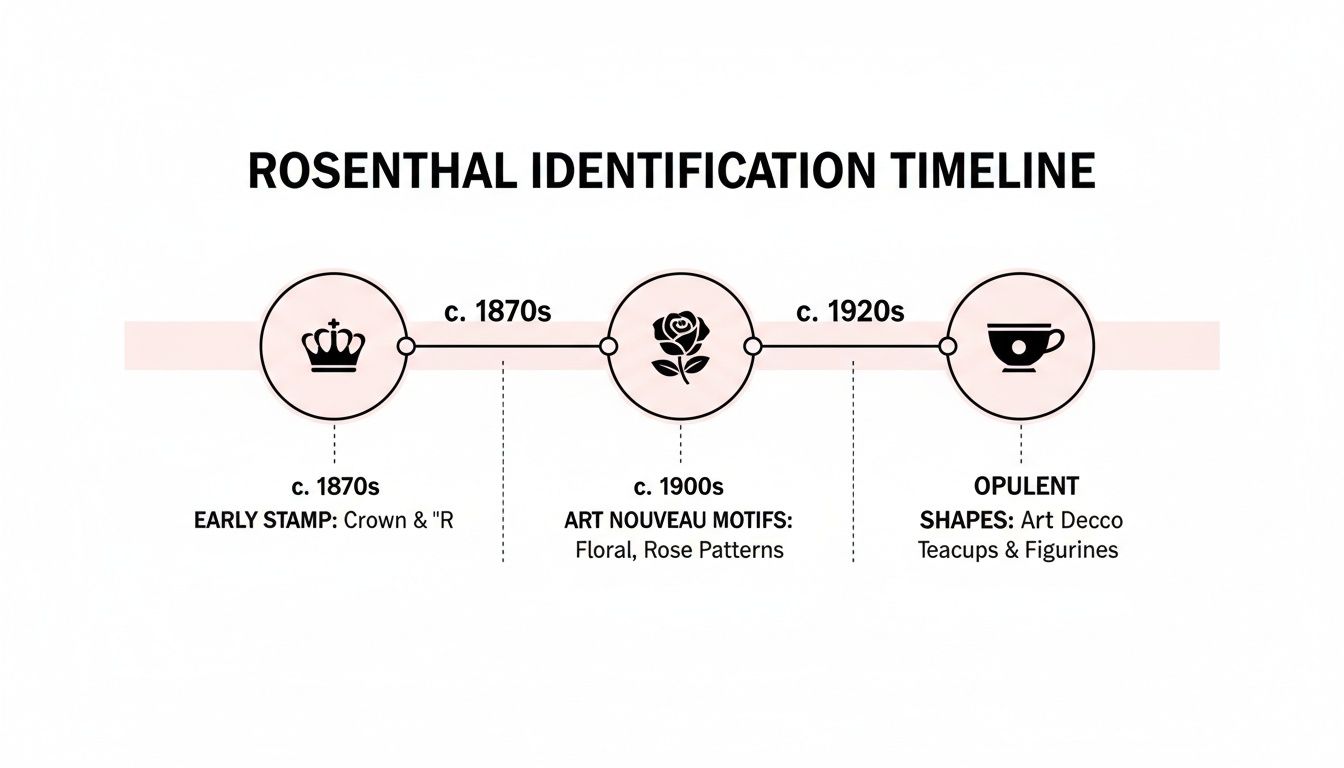
This visual guide is a fantastic starting point, showing how even subtle evolutions in the design can help you place a piece within a specific historical window.
To get a realistic sense of your collection's worth, you need to play detective. Grab your pieces and inspect them carefully under good, bright light. Being an honest appraiser of your own collection is the first step to understanding its true market value.
Here are the most common culprits to look out for:
A common mistake is to overlook what seems like minor damage. That "small" chip can easily reduce a piece's value by as much as 50% or more. A thorough and brutally honest inspection is absolutely the first step toward an accurate valuation.
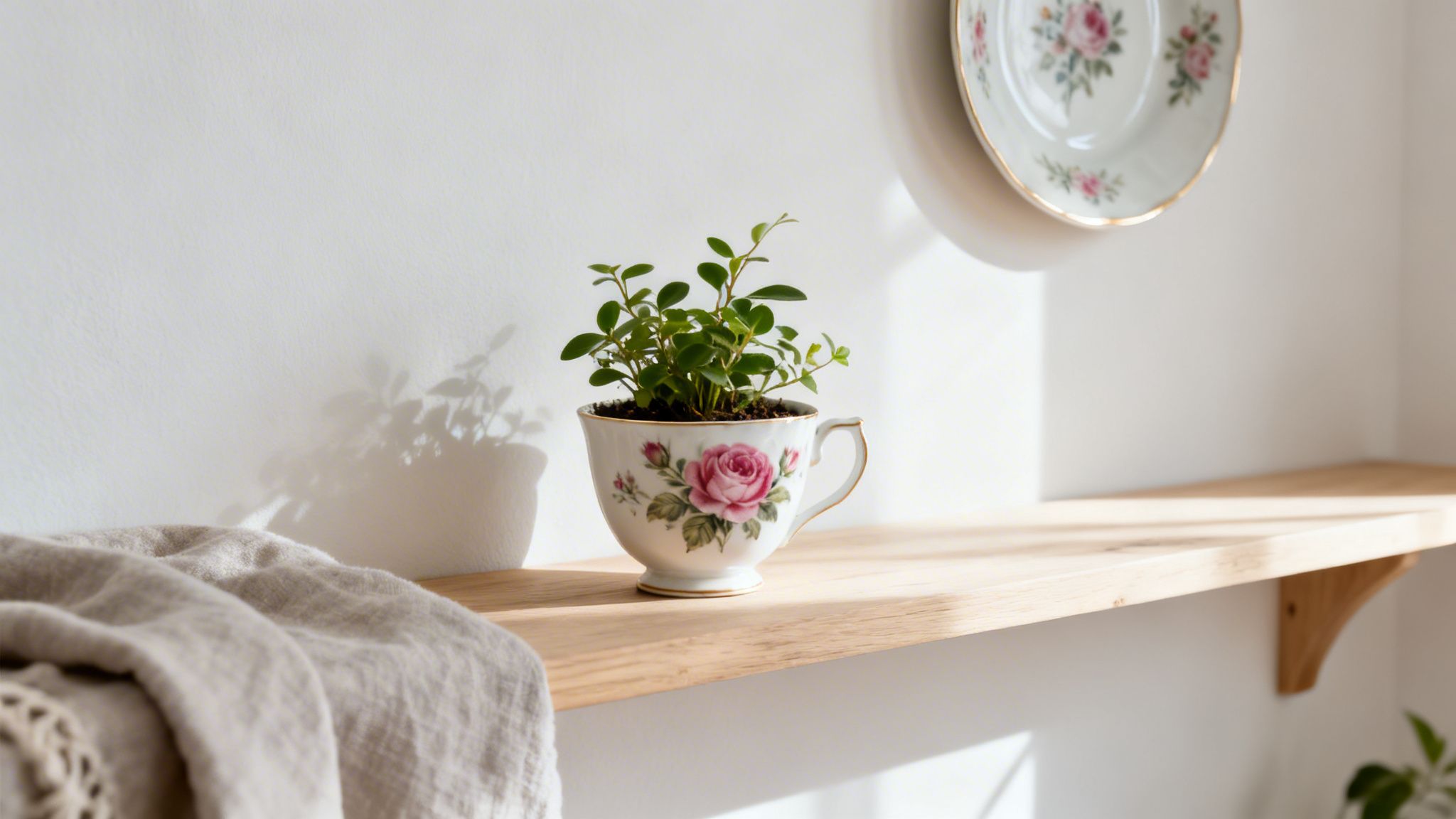
Your beautiful Rosenthal Classic Rose collection wasn't made to gather dust in a china cabinet. These are pieces with a story, and the best way to honour their history is to bring them into your everyday life. Think of each cup, saucer, and plate not just as dinnerware, but as a unique piece of art waiting to be displayed.
The real magic happens when you mix this romantic, floral pattern with modern decor. It creates a stunning conversation between old and new. The soft curves and delicate pink roses of your porcelain beautifully soften the clean, sharp lines of minimalist or Scandinavian-inspired rooms. This contrast adds layers of personality, warmth, and a tangible sense of heritage to a contemporary space.
The secret is to create small, thoughtful moments of beauty. Instead of a full, formal table setting, try using individual pieces as artistic accents. This lets the intricate details of the Rosenthal Classic Rose pattern truly stand out without clashing with your modern aesthetic.
Here are a few simple ideas to get you started:
Treat each piece as a standalone feature. A single, well-placed item often has more impact than a full set. It becomes a beloved focal point and a genuine conversation starter in your home.
The blend of Rosenthal Classic Rose and Scandinavian design works especially well. Scandinavian interiors are all about simplicity, natural materials like light wood, and a calm, neutral colour palette. The soft pink of the roses and the subtle gleam of gold trim add a perfect touch of colour and texture.
Imagine a rustic wooden shelf from our own Dalaart collection, which is all about authentic Swedish craftsmanship. Placing a single Rosenthal vase with a few fresh flowers on it creates a beautiful vignette. It’s a lovely meeting of German romanticism and Swedish simplicity—a look that feels personal, curated, and absolutely timeless. Let your collection live and breathe in your home.
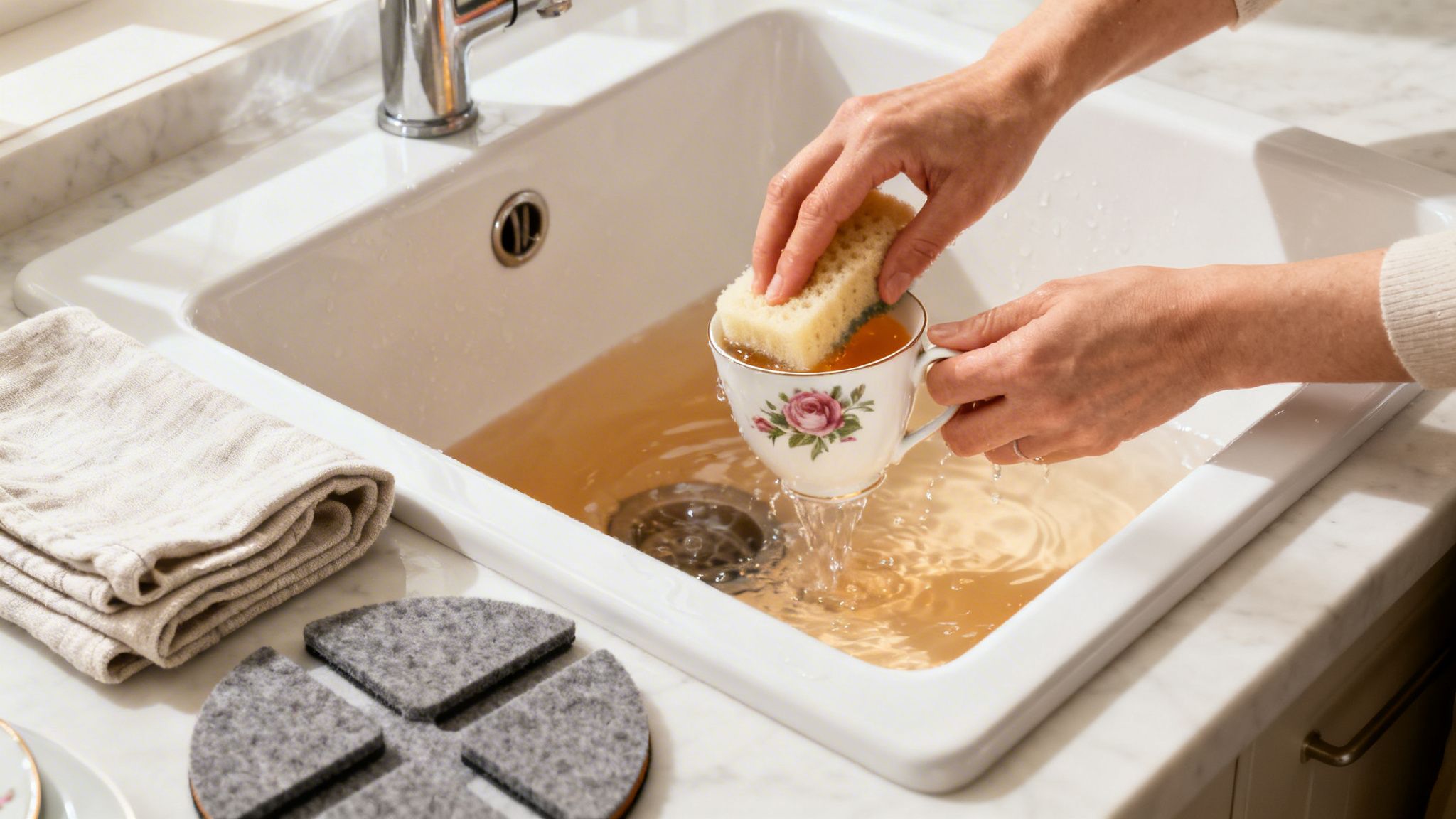
Keeping your treasured Rosenthal Classic Rose collection looking pristine for generations to come really just boils down to proper care. These pieces were crafted with such incredible detail, and a gentle touch is all it takes to preserve that beauty, especially when it comes to cleaning.
The most important rule? Avoid the dishwasher at all costs. Think of the high heat and harsh detergents as the quickest way to dull the sparkle of your china. This aggressive environment will, over time, cause the delicate floral decals to fade and can strip away the lustrous gold or platinum trim.
Instead, a gentle hand-wash is non-negotiable. It’s a simple act that makes all the difference in preserving the vibrancy and integrity of your collection.
When it’s time to wash your pieces, fill the sink with lukewarm water and a mild, non-abrasive soap. Use a soft cloth or a gentle sponge—never anything like a scouring pad—to carefully clean the surfaces. Once you’re done, rinse each piece thoroughly and pat it dry with a soft, lint-free towel. This little step is key to preventing those pesky water spots from forming on the glaze.
After cleaning, how you store your china is just as vital. Stacking plates and bowls directly on top of each other might seem harmless, but it creates friction that can easily lead to scratches and tiny chips on those delicate rims.
The simplest solutions are often the most effective. Placing a soft felt plate divider, a paper napkin, or even a coffee filter between each item provides a crucial layer of protection against wear and tear.
For the pieces you choose to display, make sure they have a secure home in a cabinet, away from high-traffic areas where they could be accidentally knocked over. This careful approach to both cleaning and storing your porcelain is the best investment you can make in its longevity. For more tips on looking after delicate ceramics, you might enjoy our guide to Swedish Stengods from Gabriel Keramik.
By following these simple steps, you'll ensure your beautiful Rosenthal Classic Rose remains a cherished heirloom for years to come.
As you begin to welcome these beautiful Rosenthal Classic Rose pieces into your home, a few practical questions are bound to pop up. Think of this as your quick-start guide to caring for and understanding your new treasures.
This is probably the most common question I hear, and the answer is a firm but gentle no. It's best to keep your vintage Rosenthal Classic Rose far away from the dishwasher. The combination of intense heat and harsh detergents is simply too much for the delicate floral patterns and, especially, the gold or platinum trim.
Over time, you'd see the vibrant colours fade and the precious metal detailing wear away. To keep your china looking as stunning as the day it was made, gentle hand-washing is always the way to go.
Every single piece of this collection was proudly made in Germany. Rosenthal has an incredible, long-standing reputation for producing some of the world's finest porcelain, and this pattern is a perfect example of that German commitment to quality.
Flip any piece over, and you'll almost always find a backstamp that confirms its origins with markings like "Rosenthal" and "Germany," a lovely little hallmark of its heritage.
If there's one thing every collector should know, it's this: the backstamp is your porcelain's birth certificate. It confirms authenticity, tells you where it was made, and is your single best tool for figuring out its age.
The secret is hiding in plain sight on the underside of your piece! The most reliable way to date your china is by carefully looking at the backstamp. Rosenthal was meticulous about its maker's marks, changing them slightly over the decades.
This creates a fantastic historical timeline for collectors. By matching the logo on your item to a verified Rosenthal dating chart (you can find these online), you can often pinpoint the production period, sometimes even narrowing it down to a specific decade. It’s like a fun little piece of detective work.
At Dalaart, we celebrate the beauty of handcrafted heritage. Explore our collection of authentic, hand-painted Swedish Dala horses and other treasures at https://dalaart.com.


.svg)


.png)


