December 22, 2025
When you talk about Höganäs Keramik stoneware, you're not just talking about plates and mugs. You're touching on a piece of Swedish cultural history, celebrated for its robust quality and a timeless, rustic design that feels right at home, no matter the decade. For over a century, these pieces have managed to be both incredibly functional and beautifully simple, earning them a permanent spot in kitchens all over the world.
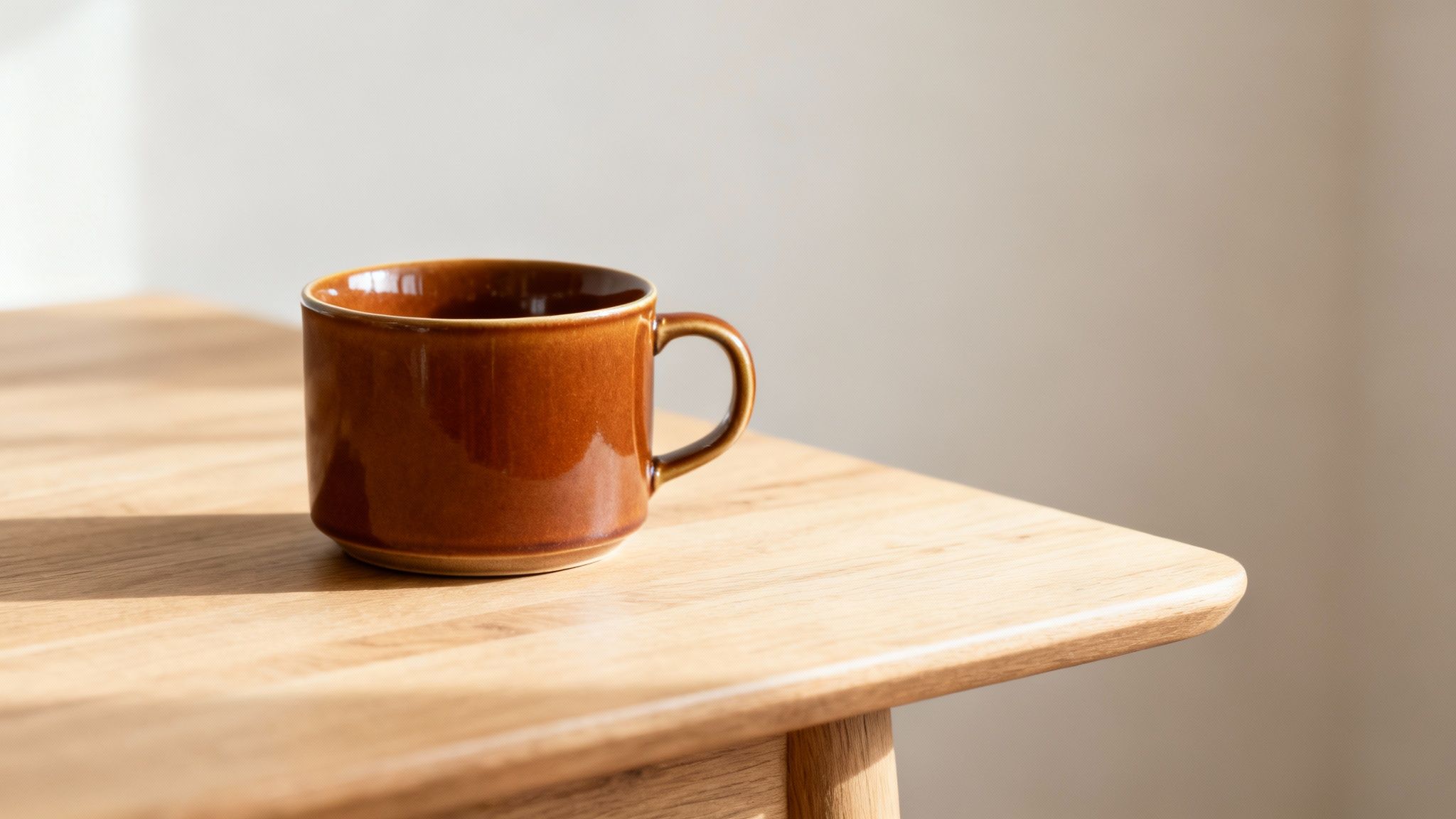
Holding a piece of Höganäs Keramik feels substantial. You're holding a story that kicked off back in 1909 in the Scania region of southern Sweden. This isn't just any pottery; it's a true symbol of craftsmanship built for the rigours of everyday life, and its lasting popularity comes down to that perfect blend of form and function.
The stoneware is famous for its incredible ability to retain heat. This makes it the perfect companion for a steaming cup of coffee that stays warm or a hearty casserole pulled straight from the oven. But it’s not all about practicality. The visual appeal is just as strong, with earthy tones, simple shapes, and a comforting heft that speaks volumes about its quality.
At its heart, Höganäs Keramik is the perfect expression of the Swedish philosophy of creating beautiful things to make daily life better. You can see this principle in every curve and glaze. The brand's legacy really stands on a few key pillars:
This deep connection to daily life is what elevates the stoneware from being merely useful. It becomes part of a home’s soul, a tangible link to a rich craft tradition that captures the hearts of both seasoned collectors and new admirers.
This guide will take you through the brand's fascinating history, shine a light on its most iconic collections, and give you practical advice if you're looking to start—or grow—your own collection. Getting to know these typical Swedish things offers a glimpse into why certain objects become such cherished heirlooms. We'll explore exactly why Höganäs Keramik stoneware remains a beloved and valuable treasure in Swedish design heritage.
To really feel the weight and warmth of a piece of Höganäs Keramik, you need to understand its story. It’s a story rooted deep in Swedish soil and the nation’s industrial past, beginning not with a grand artistic vision, but with humble, practical needs—a perfect reflection of the brand's lasting appeal.
It all started back in 1909, when glazier Sigfrid Johansson and master turner Karl Andersson founded Andersson & Johansson’s Pottery Factory. Their operation was small, focused on earthenware shaped by skilled hands. But even in those early days, the quality of their work began to set them apart, laying the foundation for what would become a household name in Swedish craftsmanship.
The brand's ambition didn't stay small for long. By 1914, just five years after opening, the little factory was already making waves, earning a spot at the prestigious Baltic Exhibition in Malmö. This event put their ceramics in front of a much wider Scandinavian audience and marked the beginning of their rapid rise. It’s fascinating how traditional crafts gain this kind of momentum; you can read more about a similar story in our article on the Leksands Hemslöjd webshop, which explores another side of Swedish heritage.
A major turning point came in 1926. That was the year the company made a pivotal decision: they shifted their entire production from earthenware to the far more durable and versatile stoneware. This was a complete game-changer. It meant they could create products that weren't just beautiful but could also handle the rigours of daily life—in the oven, on the table, and for generations to come.
This strategic move allowed the pottery to take over the much larger Höganäs AB premises, giving them room to grow. As you might expect, demand for their tough new products soared, kicking off an era of serious expansion.
The decision to embrace stoneware wasn't just a technical upgrade; it was a promise of longevity and function. It cemented Höganäs Keramik's identity as a maker of "vackrare vardagsvara"—more beautiful everyday goods—a philosophy at the very heart of Swedish design.
By the 1940s, the factory had doubled in size just to keep up. Their catalogue grew to include everything from moulds to pots and pans. This period of intense growth was formalised in 1948 when the business became a limited company, marking its transition from a local workshop to a major industrial force.
The post-war years sparked a design explosion across Scandinavia, and Höganäs Keramik was right in the middle of it. The brand's defining moment arrived during the legendary H55 exhibition in Helsingborg in 1955, a landmark event that celebrated the very best in international design.
It was here that the 'Old Höganäs' series was officially unveiled. The collection was an instant classic, winning over the public with its rustic charm and unpretentious style. The designs took their cues from the traditional lead-glazed pottery historically made in the region, brilliantly connecting modern production with a deep-seated local heritage.
This launch secured the brand’s place in the Swedish design hall of fame. The 'Old Höganäs' series captured everything that makes the company’s legacy so special:
From that small workshop to a celebrated national icon, the story of Höganäs Keramik is one of resilience, smart thinking, and a deep love for the craft. Every piece of Höganäs Keramik stoneware carries this century-long journey within it, making it so much more than just tableware—it’s a tangible piece of Swedish history.
The incredible durability of Höganäs Keramik isn’t some happy accident. It’s born from a meticulous process that turns humble, local clay into objects of real strength and beauty. The whole journey begins deep in the earth of Sweden’s Scania region, where rich clay deposits provide the very soul of every piece.
This specific clay is the secret ingredient. Its unique mineral makeup is what allows it to be fired at incredibly high temperatures—typically over 1,200°C (2,192°F). That intense heat is the key to its signature toughness.
Think of the clay as being made of tiny, separate grains. During the firing, these grains literally melt and fuse together in a process called vitrification. This creates a dense, almost glass-like body that’s non-porous and incredibly strong. It’s the reason your Höganäs mug can handle the shock of going from a hot dishwasher to a cold worktop without cracking.
Once the clay is pulled from the earth and prepared, the hands-on craftsmanship takes over. Skilled potters shape each item, whether it’s a perfectly rounded bowl or the iconic handle of a mug. While modern tools help with consistency, the process still honours the traditional techniques that have been passed down and perfected over generations.
After shaping and an initial drying period, the piece is ready for its glaze. The glaze isn’t just a pretty coating; it's a functional layer of liquid glass that, once fired, completely seals the stoneware. This is what makes the surface impermeable to liquids and stains, giving it that hygienic, easy-to-clean finish we all love.
The real magic happens when the clay body and the glaze work in harmony. It’s a carefully balanced chemical reaction inside the kiln that results in the beautiful, earthy colours and textures Höganäs Keramik is celebrated for.
The final stage is the most critical: the firing. Inside the kiln, the blistering heat works its magic, locking in the shape, fusing the glaze to the body, and hardening the clay into its final, resilient form. It’s this high-temperature firing that truly separates proper stoneware from more fragile ceramics like earthenware.
The timeline below highlights a few key moments in the brand’s history, showing how they arrived at this refined production process.
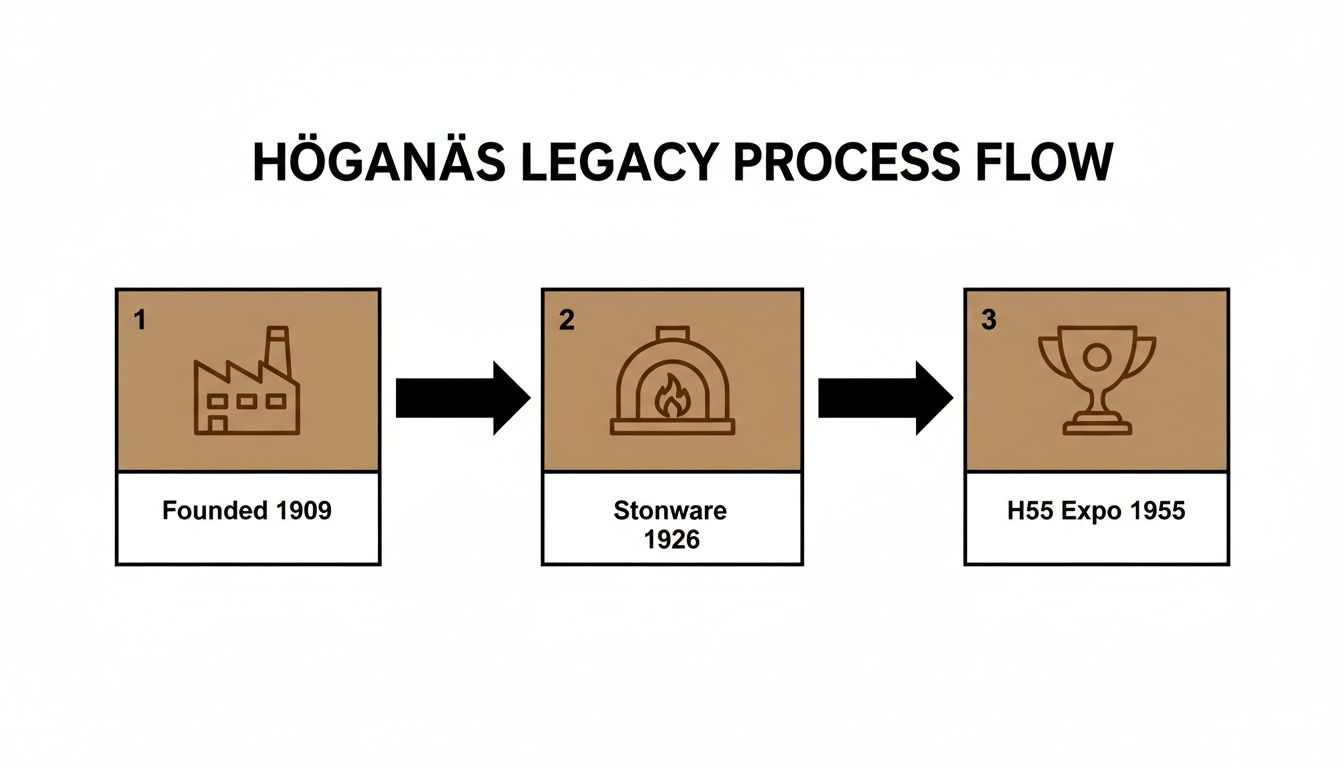
This visual journey makes it clear that the big shift to stoneware production back in 1926 was the defining moment that set the standard for the tough, high-quality tableware they produce today.
The properties baked into every piece of Höganäs Keramik make it perfectly suited for the realities of a modern kitchen. The benefits go way beyond just being hard to break.
From a simple lump of Scania clay to a cherished piece on your dining table, every item embodies a perfect marriage of natural materials and expert craftsmanship. It’s this thoughtful process that ensures each piece is not just a beautiful object, but a functional work of art built to last.
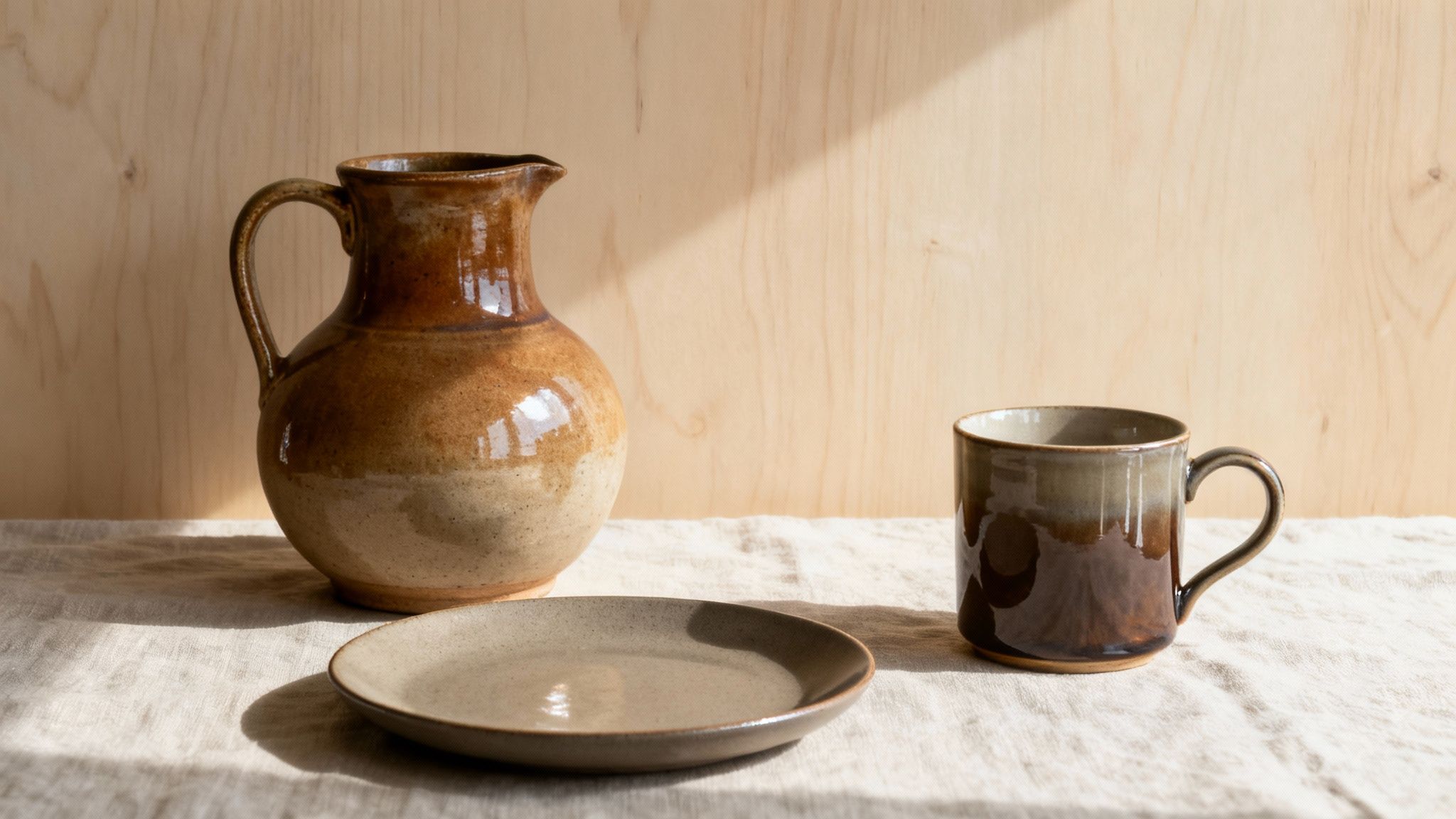
While the exceptional clay and expert firing give every piece its strength, it's the designs that truly tell the story of Höganäs Keramik. Over the decades, the brand has rolled out several product lines that have become the very definition of Swedish functionalism and rustic charm.
These aren't just random assortments of tableware. Think of them as carefully considered design philosophies brought to life in stoneware. Each series captures a different chapter of the brand’s history, reflecting the style of its era while somehow managing to stay completely timeless.
Getting to know these key collections is a must for any enthusiast. It helps you spot the subtle differences in shape, glaze, and purpose that make each bowl or mug unique—turning it from a simple piece of pottery into an identifiable piece of design history.
You simply can't talk about Höganäs Keramik without paying respect to the legendary Old Höganäs (Gammalt Höganäs) series. It was a massive success right from its launch at the H55 exhibition in 1955, and it remains the brand’s most iconic and instantly recognisable collection. Its design is the perfect embodiment of the Swedish idea of vackrare vardagsvara—more beautiful everyday goods.
The series is known for its simple, sturdy shapes and a signature warm, lead-free brown glaze that gives it such an earthy, comforting feel. The forms are wonderfully unpretentious and incredibly practical, from the classic bulbous teapot to the mugs and bowls that just feel right in your hands.
What makes Old Höganäs so enduring is how it connects to the area's deep pottery roots. It was a modern take on the simple, lead-glazed ceramics that had been made there for centuries, which gave it an immediate sense of familiarity and heritage. This knack for blending history with modern utility is a true hallmark of Scandinavian design. For those interested in this blend of tradition and timeless appeal, you can see a similar spirit in our guide to Royal Copenhagen's Star Fluted Christmas collection.
The Old Höganäs series wasn’t just a product launch; it was a statement. It declared that everyday items deserved to be both incredibly durable and quietly beautiful, a philosophy that cemented its place in Swedish homes for generations.
Beyond the classic brown glaze, Höganäs has explored a rich palette of colours and forms through many other collections. These lines show just how versatile the brand's stoneware is, adapting to changing tastes while holding on to its core identity.
Several designers have left their mark on the brand’s evolution. One of the most important modern contributors was Marie-Louise Hellgren, who designed the Collection series back in the 1990s. This line brought a more contemporary look with sleeker lines and a much wider range of colours—think blues, whites, and greys—that appealed to a whole new generation.
These later collections often share a few key traits:
These newer series prove that the spirit of Höganäs Keramik isn't stuck in the past. It’s a living tradition that honours its rustic roots while confidently embracing modern design, ensuring it remains as relevant and loved as ever.
Building a collection of Höganäs Keramik is a fantastic dive into the heart of Swedish design. It’s a hunt for beautiful, story-rich pieces that’s just as satisfying as owning them. Whether you’re just starting out or adding a specific piece to your shelves, knowing a few key things can make all the difference.
The secret to collecting with confidence is learning to spot the real deal and understand its value. This means getting familiar with the maker's marks—the little signatures left by the artisans—and developing a sharp eye for an item's condition. This guide will walk you through exactly that, helping you make smart choices for your collection.
The surest way to identify genuine Höganäs Keramik stoneware is to flip it over and look for the backstamp. These marks changed over the decades, so they’re like a timeline etched into the clay, helping you date a piece and confirm it’s authentic.
Early items from the Andersson & Johansson period (that’s before 1948) might just be stamped with "A&J Höganäs" or something similar. As the company evolved, so did its signature. A very common mark you'll see features the brand name with a stylised kiln or an anchor symbol, which became a true hallmark of Höganäs.
Here’s what to look for when you’re inspecting a backstamp:
Understanding these marks is like learning a secret language. Each stamp tells you a chapter of the company's long history, connecting your individual piece to a specific moment in time and making your collection feel that much richer.
Finding genuine Höganäs is part of the fun. Although the brand is thoroughly Swedish, its popularity means pieces have travelled all over the world—you just need to know where to look. Patience is your best friend here.
Swedish flea markets, or loppis, are legendary hunting grounds where unbelievable bargains can often be found. But if you can't hop on a plane to Sweden, the internet is your next port of call. Websites like Tradera (a Swedish auction site), Etsy, and eBay are hotspots for Höganäs Keramik. For more curated vintage finds, you might strike gold at specialised online shops like the EU Source that design lovers often recommend.
Once you’ve got a piece in your hands, giving it a thorough once-over is critical. Condition directly impacts both its value and how you can use it. Stoneware is tough, but it’s not invincible.
Gently run your fingers along the rims, handles, and spout. You’re feeling for tiny nicks or chips, which are the most common battle scars. Then, hold the piece up to a bright light and tilt it back and forth. You're looking for crazing—a fine web of cracks in the glaze itself. A little crazing might be fine for a piece that’s just for display, but it can weaken it for everyday use.
Also, keep an eye out for any deep scratches that cut through the glaze or odd discolouration. A flawless piece will always be worth more, but don't immediately write off items with minor wear. A small chip on a very old or rare item might be a fair trade-off, lending it a bit of character and a visible history.
One of the best things about owning Höganäs Keramik stoneware is just how tough it is. These aren't delicate pieces you have to tiptoe around; they were made for the hustle and bustle of everyday life. With just a little common sense, your collection can easily become a family heirloom, passed down from one generation to the next.
This isn’t about complicated cleaning routines or special treatments. The beauty of this stoneware lies in its robust nature, so maintenance is refreshingly simple. It’s all about preserving that beautiful finish and avoiding silly accidents. A few good habits are all it takes to keep your pieces looking and feeling as good as the day they came out of the kiln.
That built-in durability comes straight from the industrial grit of the Höganäs region. This was a place of hard work and innovation, where the ceramics industry was the heart of the community. Think about it: they built Sweden’s first wooden-railed railway there in 1798 to haul coal, just a year after Höganäs AB was founded. That legacy of strength and endurance is baked right into every plate and bowl. You can dig deeper into the region's fascinating industrial past to see how it shaped this iconic brand.
Most modern Höganäs Keramik stoneware is wonderfully fuss-free, designed for today’s kitchens. The intense firing process makes the surface non-porous and incredibly hygienic.
Here's a simple way to think about it: treat your stoneware with the same respect you'd give any good-quality cookware. It’s tough, but a bit of care ensures its beauty lasts as long as its strength.
Let's be honest, the biggest threat to your stoneware isn't wear and tear—it's chipping. Proper storage is your best line of defence against chips and cracks, and a few small tweaks in your cupboards can make all the difference.
How you stack things really matters. When piling up bowls or plates, try slipping a soft cloth, a paper towel, or a proper felt plate divider between each one. This simple buffer stops the unglazed, slightly rough bottom of one piece from scratching the smooth, glazed surface of the one below it. As for mugs, it’s always better to store them standing up on the shelf rather than hanging them by their handles, which can put unnecessary stress on the joints over the years.
If you're lucky enough to own some very old or rare items, they deserve a slightly more considered approach. Glazes on these early pieces can be a bit more delicate than their modern, mass-produced counterparts.
For these vintage treasures, handwashing is the only way to go. It’s also a good idea to avoid using them to serve very acidic foods like citrus or tomato-based sauces, as there’s a small chance it could stain older, more porous glazes over time. It helps to think of these special pieces as functional art—they’re still meant to be used, but with a little extra appreciation for their history.
Even with a brand as beloved and straightforward as Höganäs Keramik, a few questions always bubble to the surface. Maybe you're a new owner, wondering about daily use, or perhaps you're a long-time collector digging for specific details. Whatever your query, this is the place for clear, simple answers.
Think of this as your quick-start guide. We'll cover everything from figuring out what a piece might be worth to confirming if that casserole dish is truly oven-safe, clearing up any uncertainties you might have about your cherished stoneware.
The value of Höganäs Keramik stoneware can swing quite a bit, and it really comes down to a few key things. Age is a huge factor. Older pieces, especially anything from the early Andersson & Johansson period before the official name change, are much rarer and what serious collectors are always hunting for.
Of course, condition is just as crucial. A piece in mint condition—no chips, cracks, or heavy crazing—will always fetch a better price. Finally, rarity comes into play. A complete 'Old Höganäs' teapot set, for instance, is naturally going to be more valuable than a single, more common mug. The best way to get a real-world idea of prices is to look at what similar items have actually sold for on auction sites or have a chat with a dealer who specialises in vintage ceramics.
For the most part, absolutely. Any stoneware made from the mid-20th century onwards was designed with the modern kitchen in mind. That means it’s perfectly happy in the oven, microwave, and dishwasher. In fact, its incredible ability to hold and distribute heat is one of its best features.
There is one golden rule, though: avoid thermal shock. Never take a dish straight from the freezer and stick it in a preheated oven. That sudden, extreme temperature change is the one thing that can cause it to crack. If you have a very old or antique piece, it’s probably best to play it safe and keep it for serving rather than cooking.
The entire philosophy behind the brand was creating beautiful things that were tough enough for everyday life. That commitment to durability is baked right into the DNA of almost every Höganäs piece you'll find.
This is a great question and a common point of confusion, but they are two different things. Höganäs Keramik is the company (which started as Andersson & Johansson) that gave us the iconic tableware collections like 'Old Höganäs'. Their pieces are known for their smooth, often richly coloured glazes that were applied before being fired once in the kiln.
Höganäs Saltglaserat, on the other hand, isn’t a company but a much older salt-glazing technique famous in the region. It was mainly used for more rustic, functional items like big storage crocks. This process involves tossing salt into the kiln at peak temperature, which creates that classic, textured "orange peel" finish. So, while both have roots in the same town, they represent different eras, production methods, and product lines.
At Dalaart, we celebrate the enduring legacy of Swedish craftsmanship, from iconic ceramics to hand-carved folk art. Explore our curated collection of authentic Dala horses and more to bring a piece of Scandinavian heritage into your home. Visit us at https://dalaart.com to find your next treasure.


.svg)


.png)


