February 21, 2026
Choosing the right paintings for wall décor is so much more than just filling an empty space. It's one of the most powerful ways to define a room's atmosphere and tell your own personal story. This guide is designed to move beyond the usual decorating tips and give you the confidence to select art that truly feels like you.
A blank wall isn't just an empty surface; it’s a canvas waiting to be brought to life. The paintings you choose have a profound impact on a room’s energy, transforming it from a simple living area into a personalised sanctuary. The right piece can introduce colour, texture, and emotion, setting the tone for your entire home.
Think of artwork as the final, most important layer of your interior design. It has this unique ability to tie everything together, reflecting your personality and taste in a way that furniture alone simply cannot. A vibrant abstract can inject a shot of dynamism into a neutral living room, while a serene landscape can create a calming retreat in a bedroom.
Selecting paintings for your wall is a decision that genuinely affects the daily experience of your home. It’s an opportunity to create a space that inspires, soothes, or energises you. The art you display tells a story about who you are, what you love, and the kind of feeling you want to cultivate.
Choosing art is an act of self-expression. It’s how you turn a house into a home by infusing it with character and soul. The goal is to find pieces that resonate with you on a personal level, not just match the sofa.
This guide will walk you through everything you need to know to make thoughtful, meaningful choices. We'll explore the key considerations that ensure your selections are both beautiful and deeply personal.
By the end, you’ll be ready to select paintings that don’t just decorate your walls but also enrich your life. We'll also highlight how handcrafted pieces, like the authentic Scandinavian folk art from Dalaart, offer a unique alternative to mass-produced prints, bringing heritage and true craftsmanship into your home.
Before you can pick the perfect painting, it helps to know a little bit about what goes into one. The art world is vast, filled with different materials and styles, and understanding the basics is the best way to find a piece that truly speaks to you and your home.
Think of an art medium as the artist's toolkit. Just like a chef uses certain ingredients to create a specific flavour, an artist chooses their paint to get a particular effect. This choice is fundamental, shaping everything from the texture to the emotional feel of the finished work.
The type of paint an artist uses dramatically changes a piece's character. Three of the most popular mediums each bring something unique to the canvas.
Beyond the paint, it’s worth thinking about where the art comes from. Is it an original, one-of-a-kind piece, or is it a mass-produced print? A print is just a reproduction—a photo of the real thing—while a handcrafted painting is a unique creation.
An original artwork holds the direct touch of the artist. Each brushstroke is a testament to their skill and passion, imbuing the piece with a story and an energy that a machine-made print can never fully replicate.
Handcrafted pieces, like the hand-painted Dala animals we make here at Dalaart, are so much more than decoration. They’re individual works of folk art. Our master artisans craft each one on recycled wood, carrying a piece of cultural heritage forward. This turns them from simple paintings for wall spaces into meaningful objects with a soul.
This little map shows how personal expression in art is a beautiful mix of its story, its style, and the atmosphere it helps create.
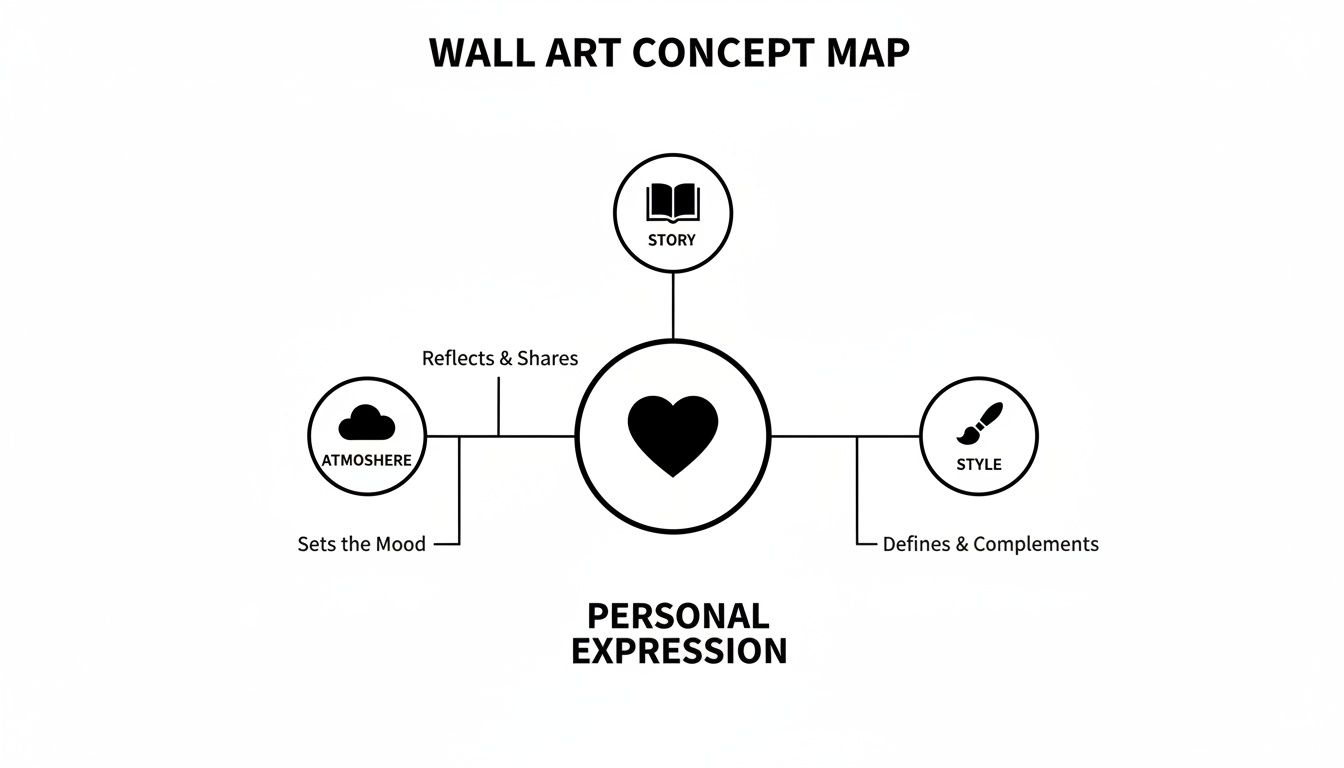
As you can see, these three elements are all connected, working together to make a piece of art a true reflection of you.
Style is all about how an artist sees the world—from picture-perfect realism to pure abstraction. And today, the appetite for different styles is booming. Just look at Southeast Asia's art scene, where Singapore has become a major hub. At the Art SG 2025 fair, over 40,000 visitors explored works from 30 countries, with some pieces selling for seven figures. It's clear the demand for unique art is growing.
Figuring out which style you love is a personal journey. You might find yourself drawn to the raw emotion of abstract expressionism, the quiet calm of minimalism, or the charming simplicity of folk art. Don't be afraid to explore.
Whether you're after a vibrant Dala horse or something entirely different, understanding your options is the first step. For those curious about different materials, you might find our guide on how to choose metal artwork for your wall helpful. The most important thing is to trust your gut and choose paintings for wall displays that you’ll be happy to see every single day.
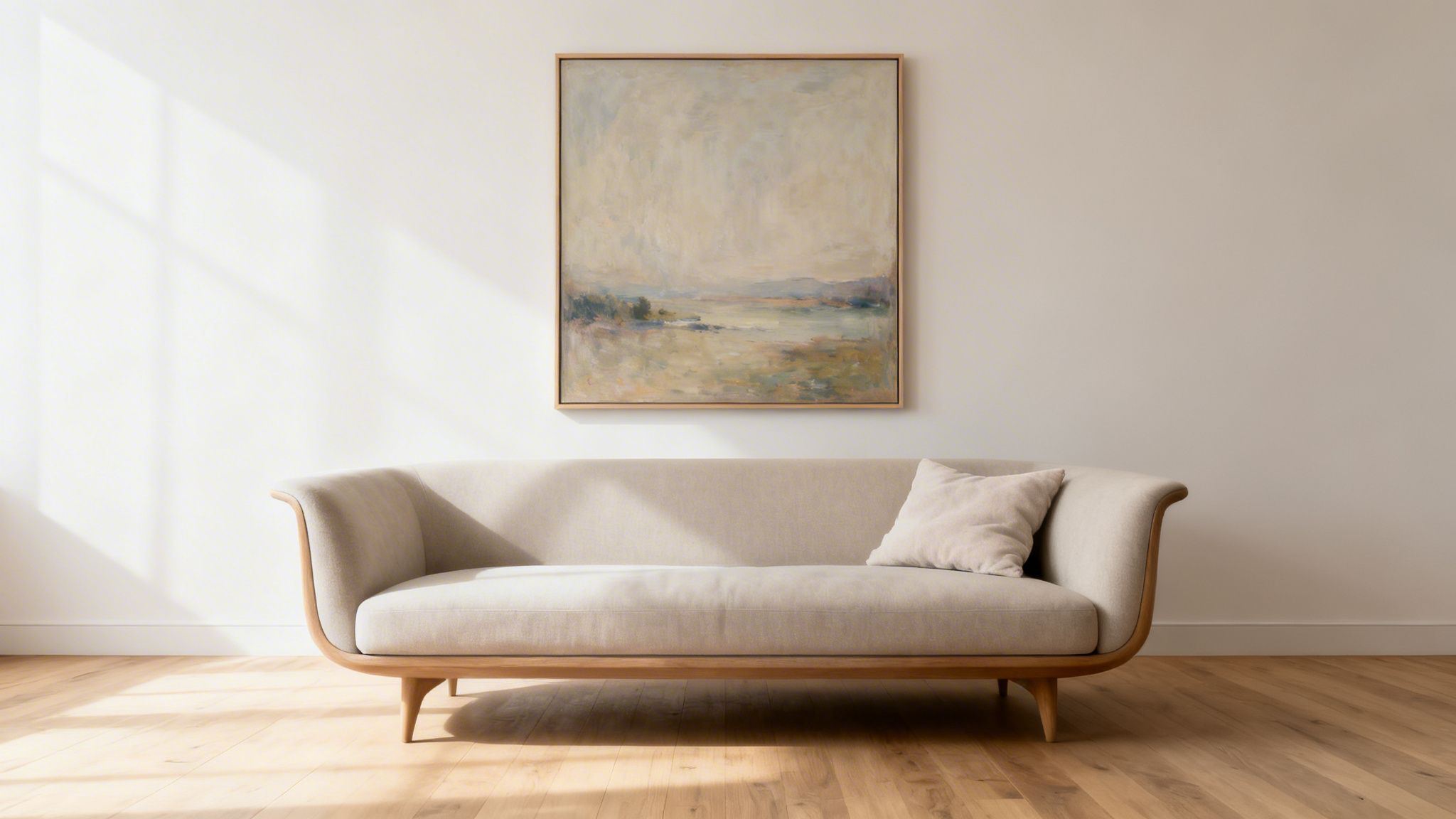
We’ve all seen it: a beautiful painting that looks completely lost on a giant wall, or a huge canvas that completely swallows a small room. Getting the size and scale right is one of the most important parts of styling your home, but it's also where people often feel the most unsure.
The good news is, it's not about guesswork. There are a few simple, time-tested guidelines that designers use to get it right every time. Think of a large painting not just as decoration, but as a new 'window' for your room. It should feel like it belongs there, offering a view that completes the space.
With a couple of key rules under your belt, you can choose and hang your paintings for wall displays with total confidence, turning your space into something truly special.
Here’s one of the best-kept secrets of the interior design world: the 57-inch rule. It sounds technical, but it’s incredibly simple. The rule says you should hang art so that its centre point is 57 inches (around 145 cm) from the floor.
Why that specific number? It’s not random. It represents the average human eye level, which is exactly how museums and galleries position their pieces for the most comfortable viewing experience.
Following this guideline puts your artwork right in the natural line of sight, so you and your guests aren't craning your necks or stooping to get a good look. It instantly makes the room feel balanced and professionally curated. Of course, it’s a starting point—if you have very high ceilings or you're hanging art in a dining room where everyone is usually seated, you can adjust a little lower.
Hanging paintings for wall spaces over a sofa, bed, or console table? There’s another golden rule for that: the two-thirds rule. This one is a game-changer. It suggests that your artwork (or a group of artworks) should be about two-thirds the width of the furniture it's hanging over.
So, if your sofa is 90 inches wide, aim for a painting or gallery arrangement that fills about 60 inches of that space. This simple ratio creates a beautiful anchor, tying the art and furniture together into one cohesive look.
When art is too small, it looks like it’s floating aimlessly above the furniture. Too big, and it dwarfs everything underneath it. The two-thirds rule is the secret to finding that perfect sweet spot.
Don't forget the gap! You’ll want to leave about 6-8 inches of breathing room between the bottom of the frame and the top of the furniture. This little bit of space is crucial—it prevents things from looking cramped while keeping the two elements connected.
Once you've got the basics down, you can start having fun with different arrangements. Whether you want a single, powerful focal point or a personal collection, these rules still apply.
A single, large-scale painting can define an entire room. Imagine a bold, vibrant Dala horse painting commanding attention over a fireplace—it immediately sets the tone. For a single statement piece, the two-thirds rule is your best friend for creating a look that’s both dramatic and perfectly balanced.
A gallery wall is another fantastic option, allowing you to tell a story with a collection of smaller pieces. To make it work, just think of the whole collection as one big piece of art.
With these simple but powerful rules in your toolkit, you can hang art with the confidence of a pro and make your home feel truly complete.
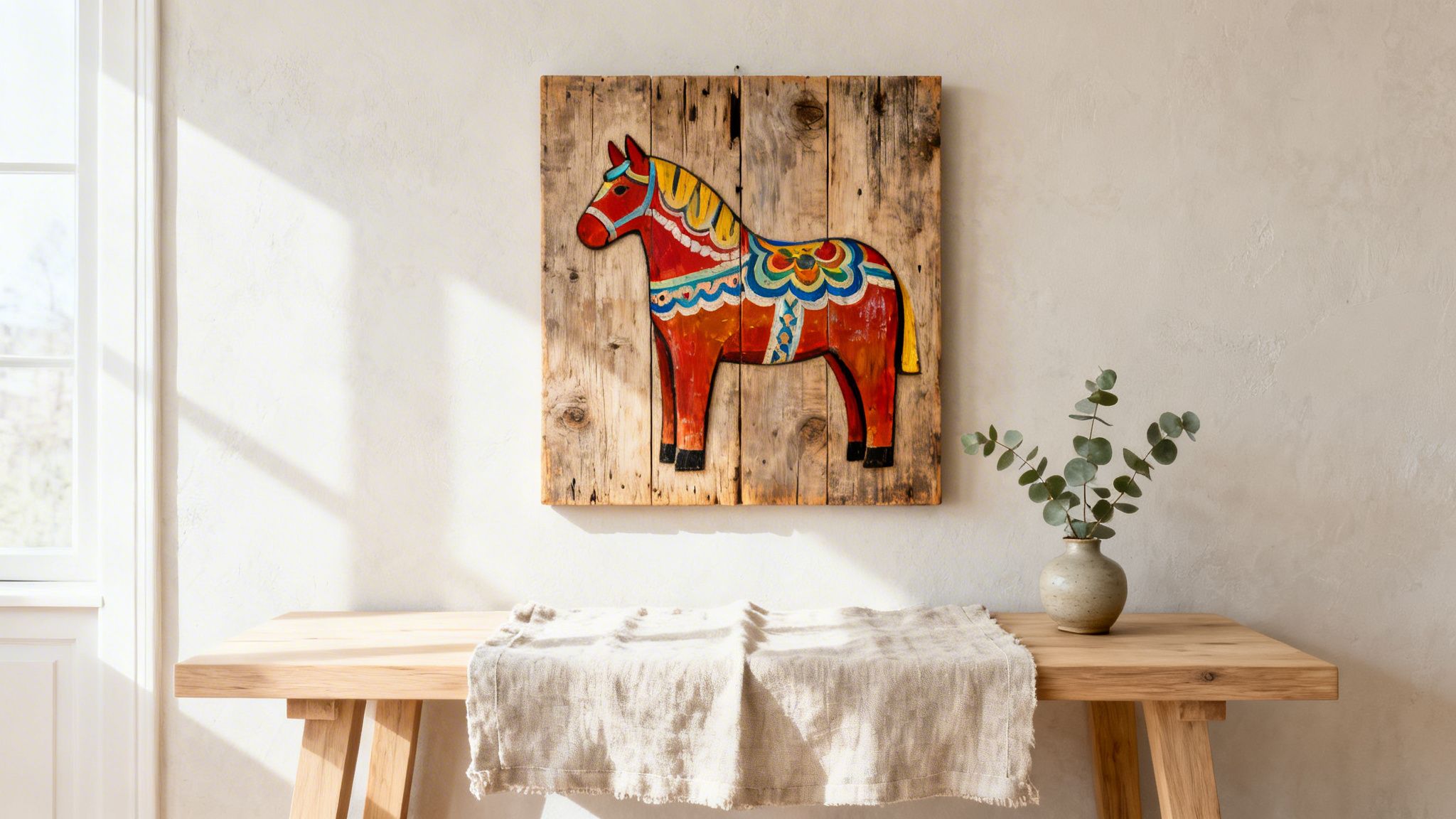
The best interiors feel like every single object is in conversation with the others, telling one cohesive story. A painting shouldn't just be an afterthought hung on a blank wall; it should feel like a crucial part of the room's narrative, elevating the entire space. The secret to a truly harmonious home is choosing paintings for wall displays that speak the same language as your existing style.
This means looking beyond the subject matter and really seeing the artwork's colours, textures, and overall mood. Think of a painting as the final, perfect guest at your dinner party—it should complement the conversation already happening between your furniture, textiles, and lighting.
Scandinavian design is loved for its clean simplicity, everyday function, and deep connection to nature. It’s all about crisp lines, neutral palettes of whites, greys, and pale woods, and an obsession with natural light. This calm, minimalist backdrop is the perfect stage for a piece of art to really shine.
This is where the vibrant, handcrafted charm of Swedish folk art—like a Dala horse or rooster—creates a stunning and intentional contrast. While the room itself might be muted and serene, the rich reds, blues, and intricate patterns of a Dala painting inject a welcome burst of life and personality.
It's a pairing that works so beautifully because it honours the core principles of Scandinavian design:
If you’re keen to explore how natural materials can transform a space, our guide to wood wall art is full of ideas. The unique texture and story behind a wooden art piece can add incredible depth.
One of the simplest and most effective ways to integrate a painting into your room is to let its colour palette lead the way. You don’t need to match everything perfectly—the goal is to create a subtle dialogue between the art and its surroundings.
A favourite trick among designers is to pull a minor or accent colour from a painting and repeat it in small doses around the room. It’s a simple technique that creates a sophisticated, intentional look that feels professionally styled.
Imagine you have a beautiful Dala horse painting with a tiny detail of deep, traditional blue in its floral pattern. You could echo that specific shade in a few throw pillows, a vase on the mantelpiece, or even the trim of a rug. This creates a visual thread that ties the whole room together, making the painting feel as though it was made for that exact spot.
The beauty of a truly versatile piece of art is its ability to adapt. While Dala art is a natural fit for Scandinavian homes, its timeless, folk-art appeal allows it to complement a huge range of design aesthetics.
The global appetite for distinctive art is growing fast. In Southeast Asia, for instance, the wall art market is booming, driven by urbanisation and a rising appreciation for unique décor. The global market is projected to hit $120.37 billion by 2035, with creative hubs like Singapore at the forefront. Events like Art SG attract over 40,000 visitors and see multi-million dollar deals, proving just how much people crave art that tells a story. You can dive deeper into these market trends on ResearchAndMarkets.com.
Ultimately, choosing paintings for wall décor is about finding a piece that you connect with—one that enhances the home you’ve so lovingly created.
So, you’ve found the perfect painting! It’s a piece that really speaks to you and feels just right in your space. But bringing art into your home doesn’t end with the purchase. How you hang and care for your new treasure is just as important, ensuring it stays a source of joy for many years to come.
Getting your paintings for wall displays secured properly is about both safety and style. The right hardware keeps your art from taking a tumble, and thoughtful placement turns it into a real showstopper. Here’s some practical advice to help you display your artwork with confidence.
The tools you’ll need really depend on your wall and the weight of your painting. A lightweight Dala rooster on recycled wood, for instance, won't need the same heavy-duty approach as a large, glass-framed canvas.
Here's a little pro tip: Always err on the side of caution. Using a hook or anchor rated for a bit more weight than your painting offers extra security and, more importantly, peace of mind.
Once the hardware is sorted, the fun part begins—the arrangement! A salon-style gallery wall is a wonderful way to show off your personality, mixing different sizes and frame styles for an eclectic, collected feel. If you prefer something a bit more formal and organised, a symmetrical grid arrangement creates a clean, modern look.
Keeping your artwork beautiful is pretty straightforward with just a little regular attention. The two biggest culprits that can harm a painting are direct sunlight and humidity, both of which can cause damage that you just can't undo.
To protect your art, try to hang it away from windows that get a lot of intense, direct sun. Those UV rays are notorious for causing vibrant colours to fade over time. It's also a good idea to avoid hanging precious pieces in high-humidity spots like bathrooms or kitchens, where moisture can warp wood and canvas or even encourage mould.
Here at Dalaart, we use high-quality, durable, and environmentally safe paints on every single piece. This commitment to great materials means your handcrafted Dala animals are built to last, but they still need your help with proper care for the long haul.
Over time, a bit of dust and grime can settle on any surface, dulling the look of your artwork. A gentle, regular clean is all it takes to keep it looking fresh.
By following these simple hanging and care steps, you’ll ensure that your chosen paintings for wall displays are not only beautifully presented but also protected for a lifetime of enjoyment.
Art is so much more than just something pretty to hang on a wall. It can be a deeply meaningful gift, a smart long-term investment, or both. When you start thinking about paintings for wall décor this way, the whole process changes. It’s no longer just a purchase; it becomes a thoughtful act of connection or a careful piece of curation. A piece of art given as a gift is a lasting symbol of a relationship or a special moment frozen in time.
When you’re picking out a painting for someone else, the trick is to step outside your own taste. Think about what will truly click with their personality. What are their passions? Their favourite colours? Is there a place that holds a special meaning for them? A handcrafted piece, like a traditional Dala horse, makes a perfect heritage gift, connecting them to a rich cultural story and the artisan who brought it to life.
The gifts we remember most and the collectibles we prize highest are always the ones with a story. This is where uniqueness, craftsmanship, and provenance become incredibly important. Instead of a generic, mass-produced item, look for pieces that have a clear origin and a human touch. These are the qualities that forge an emotional connection that truly lasts.
A collectible painting isn't just an object; it's a piece of history and artistry captured in time. Its value comes from its rarity, the skill of its maker, and the story it tells, making it a worthy addition to any collection.
When you invest in a piece from Dalaart, whether it’s a vintage find or a limited-edition design, you’re getting something with genuine provenance. Each piece we offer turns a simple decorative object into a potential heirloom. For those who love digging for unique finds, our collection of vintage posters from Sverige offers another wonderful way to bring history into your home.
There’s a real shift happening in the art world. More and more, people are looking for art that is not only beautiful but also meaningful and sustainably made. It’s a global trend, as collectors and decorators alike are seeking out pieces that come with a clear conscience.
You can see this changing demand reflected in historical shifts in Southeast Asia's art landscape. Recent data shows a staggering 74% surge in Singapore's art import values, which have doubled Japan's to reach $1.1 billion. This isn't just a number; it positions the entire region as a major force in the global demand for unique paintings for wall displays. Christie's 2024 data backs this up, showing that Asia-Pacific buyers made up 26% of their global sales. What’s more, 44% of those Asian bidders were millennials—a generation especially interested in inventive, sustainable décor, like our hand-carved Dala animals. You can read more about how Asia's art market is taking centre stage on standrewseconomist.com.
This movement towards conscious consumerism is at the very heart of what we do. Our commitment to sustainability isn't just a talking point; it's built into our process:
Ultimately, choosing a painting as a gift or a collectible is an investment in beauty, culture, and personal expression. It’s a chance to own or give something truly special—a piece with a soul, a story, and a sustainable legacy.
Jumping into the world of art for your home often brings up a few questions. It’s completely normal. Here, we'll tackle some of the most common puzzles people face when picking out and hanging paintings for wall décor, pulling together the key ideas we've already talked about.
This is a great question, and the answer might surprise you. In a smaller space, a single, medium-to-large statement piece is often recommended. It gives the room a confident focal point without a hint of clutter and can make the whole space feel bigger.
If you’d rather go with a collection, a gallery wall of smaller pieces can be just as stunning, but there's a trick to it. You need to tie them together with a common thread—maybe a consistent colour palette or matching frame style. It's best to steer away from dark, overly busy paintings, which can make a room feel a bit cramped. Lighter colours and the clean, simple joy of Scandinavian folk art are fantastic choices here.
Absolutely! In fact, it is encouraged. Mixing art styles is how you create an interior that’s genuinely personal and full of life. The secret to making it work beautifully is to find a little something that connects the pieces.
This unifying touch could be a colour they share, a similar frame, or even a subtle theme. Imagine pairing a modern, minimalist abstract print with a traditional, hand-carved Dala horse. It might sound like an odd couple, but when both are housed in simple, clean-lined frames, the result is incredibly stylish.
Mixing styles is what gives a room its unique personality. The goal is to create a curated collection that feels like you, not like a showroom.
The right light can completely change the mood and impact of your art. For focused, gallery-quality illumination, nothing beats a dedicated picture light mounted just above the frame. It’s a classic for a reason.
If that’s not an option, adjustable track lighting or even well-aimed ceiling spotlights can do a wonderful job. The one golden rule? Keep your art out of direct sunlight. Those UV rays are the enemy of vibrant colour and will cause fading over time. And for any piece behind glass, take a moment to position your lights to avoid any distracting glare or reflections.
Ready to discover that perfect, handcrafted piece to bring your own walls to life? We invite you to explore the authentic collection of Swedish folk art at Dalaart and find a painting with a story to tell. Visit us at https://dalaart.com to find your unique treasure.


.svg)


.png)


