February 15, 2026
Step into the world of Swedish porcelain, and it won’t be long before you come across the quiet charm of Rörstrand Fågel Blå. More than just a pattern on a plate, this design—whose name translates simply to 'Blue Bird'—is a small piece of Sweden’s soul, capturing a deep national love for nature with an understated elegance that feels timeless.
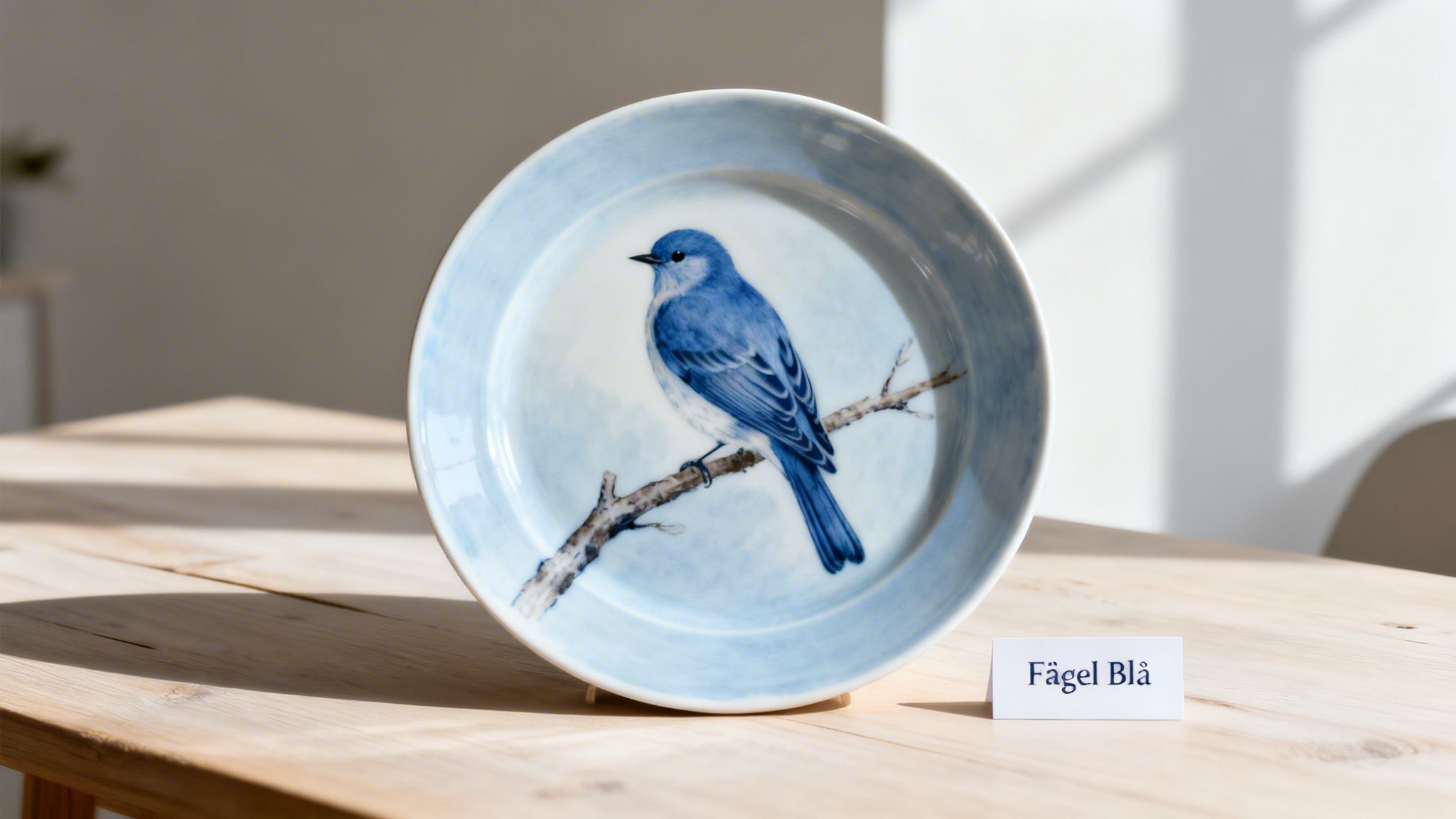
This isn’t a design that shouts for attention. Instead, it whispers a story of serene landscapes and enduring style, which is precisely why it has captured so many hearts. Its appeal is really twofold. First, there's the simple visual delight—that soft, light blue background paired with the delicate bird illustration creates a look that is both calming and incredibly versatile.
But beyond its beauty, there’s the legacy of Rörstrand itself. As one of Sweden’s oldest and most celebrated porcelain makers, the Rörstrand name lends each piece a real historical weight. You aren't just holding a cup or a saucer; you're holding a piece of design history.
The 'Fågel Blå' pattern quickly became a staple in Swedish homes throughout the 1980s. Produced for just six years, from 1981 to 1987, this flintware collection was a perfect expression of Scandinavian minimalism. Its relatively short production run is exactly why it became such a sought-after collectible almost immediately.
Today, finding a complete set is a real prize. Collector forums buzz with stories of treasured sets still in Swedish households, passed down through generations and valued as much for their heritage as for their enduring style. For a deeper dive into pieces from this era, you can find more insights about Rörstrand Sweden and their collections.
Think of each Fågel Blå piece as a snapshot of a specific design moment. It represents a return to gentle, nature-inspired motifs that offer a calming contrast to the bolder trends of its decade, securing its place as a timeless classic.
This guide will walk you through everything you need to know to identify, value, and care for these beautiful items. Whether you're just starting your collection or looking to deepen your existing knowledge, you’ll come away with a new appreciation for the quiet charm of the rörstrand fågel blå series.
To really get a feel for the rörstrand fågel blå series, you have to picture Sweden in the early 1980s. This was a moment in design where things were shifting back toward simpler, nature-inspired pieces for the home. People were looking for a sense of calm and authenticity, creating the perfect stage for a pattern like Fågel Blå to capture everyone's attention.
Produced for just a short window between 1981 and 1987, this charming collection marks a specific, cherished chapter in Rörstrand's long story. Every single piece came out of the company's famous Lidköping factory, a place absolutely steeped in ceramic tradition. You could almost think of the Fågel Blå collection as a quiet, thoughtful answer to the decade's louder, bolder trends—it was a little piece of timeless serenity that felt both modern and deeply rooted at the same time.
Understanding where Rörstrand had been is key to appreciating where Fågel Blå was going. While it was born in the 80s, the series was really standing on the shoulders of an incredible legacy. The factory’s golden era in the 1950s, also centred in Lidköping, had already built a reputation for world-class design that paved the way for later successes.
That mid-century peak saw designers like Marianne Westman creating patterns that made up an astonishing 45% of the company's total sales. But the decades that followed brought economic challenges. After being bought by Upsala-Ekeby in 1964, Rörstrand struggled with declining turnover and had to make significant job cuts in the early 1970s. The creation of Fågel Blå in 1981 feels like part of a creative comeback, a way of building on the factory's core skills while exploring a fresh new look. You can get a deeper dive into this period and the historical foundations of Rörstrand's Lidköping factory on WorthPoint.
At the end of the day, the Fågel Blå pattern is more than just pretty tableware; it’s a reflection of Swedish cultural values that have stood the test of time. Its deep connection to nature, its simple charm, and its origins at a historic Swedish company all cement its status as a beloved classic.
By placing Fågel Blå within the broader timeline of Rörstrand—from its 18th-century beginnings to its 20th-century evolution—we see it not just as a pattern, but as a piece of living history that continues to bring a touch of Swedish calm into homes around the world.
This sense of history is something shared by other iconic Swedish ceramic makers. If you're drawn to the rich story of Swedish stoneware, you'll probably enjoy our guide to Höganäs Keramik stoneware, another celebrated name in Scandinavian design.
Becoming a confident collector of Rörstrand Fågel Blå really starts with knowing exactly what you're looking for. Think of it like being a detective, training your eye to spot the small but crucial details that separate a genuine piece from the sea of other blue-and-white patterns. The best place to start is with the artwork itself.
The charm of Fågel Blå is all in its specific, delicate illustration. You want to see a single, stylised blue bird perched on a thin branch. This simple motif is always set against a signature soft, light blue background—a colour that should be consistent across the entire series. Pay close attention to this specific shade, as it's one of the pattern's key identifiers.
The real confirmation happens when you turn a piece over. The backstamp is your certificate of authenticity. For pieces made between 1981 and 1987, you’re looking for a very specific set of marks that tell the story of its creation.
A genuine Fågel Blå item will feature the iconic Rörstrand mark: three crowns sitting beside a distinctive 'R'. Just below this, you should find the words "Rörstrand Sweden" printed clearly. This combination is what confirms both the maker and the country of origin for that era. It's this exact stamp that definitively places the piece within its correct production window. If the stamp looks different, you might be looking at something from another Rörstrand period, or a different pattern altogether.
The consistency of the backstamp is your most reliable tool. It’s the maker’s signature, a guarantee that connects your piece directly to the historic Lidköping factory where every Fågel Blå item was born.
Beyond the main logo, Rörstrand often included other numbers or codes. These aren’t just random digits; they can give you a deeper look into the item's history. For instance, some pieces from this period might have three-digit codes where the first two numbers show the production year and the third represents the quarter.
This system was part of a long tradition of meticulous record-keeping at the factory. The closure of Rörstrand's Lidköping facility in late 2005 brought an end to 279 years of Swedish porcelain production, but its incredible legacy is chronicled in these stamps. Today, the Rörstrand Museum, located on the old factory site, helps to preserve the legacy of Rörstrand Sweden for future generations.
To put it all together, here are the key steps to authenticating your piece:
Mastering these details is a skill that opens up the world of collecting. Learning to read backstamps is just as important when identifying other Scandinavian classics, too. If you're interested, you can check out our guide on how to identify pieces from the iconic Royal Copenhagen Star Fluted collection. By following these steps, you can build your collection with confidence, knowing each piece is a genuine article of Swedish design history.
Diving into the world of Rörstrand Fågel Blå is about more than just finding a single dinner plate. It’s about understanding the full breadth of the collection, which can transform a simple hunt into a strategic quest to build a beautiful, cohesive set. The series was always intended as a complete dinner service, which means a wonderful variety of items were made.
This variety is exactly what makes collecting so rewarding. You can find everything from essential tableware to charming complementary pieces. Getting familiar with the typical dimensions is a huge help for identifying items correctly and making sure you’re buying the right piece to complete your set.
While it’s hard to create a totally exhaustive list, the core of the Fågel Blå series includes a versatile range of items designed for both daily use and special occasions. The most common pieces you’ll likely come across include:
This simple flowchart can help walk you through the steps for verifying a piece of Rörstrand Fågel Blå you might have found.
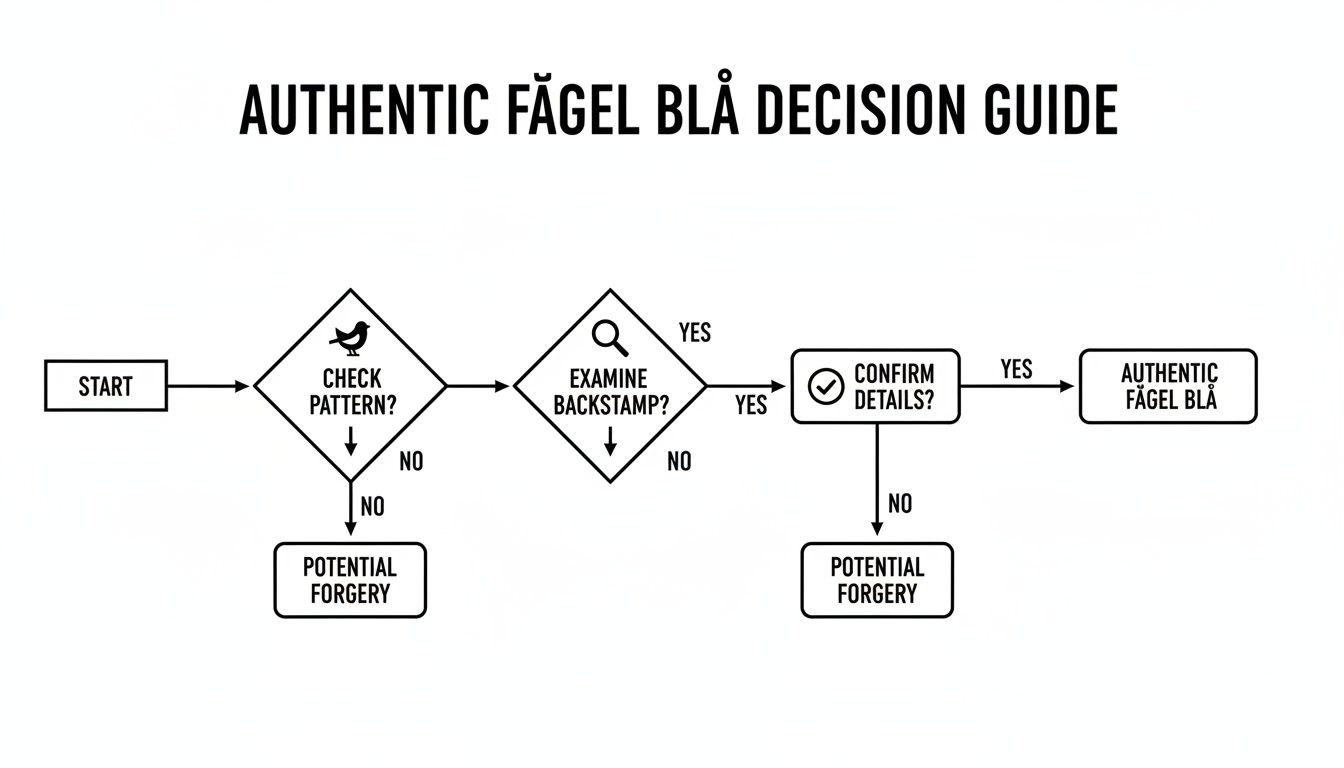
As you can see, authentication is a multi-step process. It’s all about confirming the pattern, checking the backstamp, and looking at the other key details in the right order.
One of the defining characteristics of the Fågel Blå series is just how incredibly consistent it is. Unlike many vintage patterns that saw significant changes over their production runs, Rörstrand maintained a very high standard of quality control during the 1981 to 1987 manufacturing period. The specific shade of the light blue background and the detailed bird motif remained remarkably unchanged.
However, because these pieces were individually decorated before firing, you might encounter extremely subtle, minor differences from one piece to another. Think of these not as flaws, but as tiny markers of their handmade history.
These variations are almost impossible to spot unless you’re really looking for them. For instance, the exact placement of the bird on the branch might shift by a millimetre, or the intensity of the blue might have the slightest variance depending on the specific batch. These tiny nuances don’t affect the value at all and are simply part of the charm of collecting vintage porcelain from this era. They’re a quiet reminder of the human touch involved in creating each piece.
So, what's a piece of Rörstrand Fågel Blå porcelain actually worth? Answering that question is a skill any collector can pick up. It just takes a bit of practice and a systematic eye, almost like a jeweller examining a gemstone to understand how an item’s history has shaped its present state.
Start by running your fingers gently along all the edges and surfaces. Your sense of touch is often the first tool to catch tiny imperfections that the eye might miss. Next, hold the piece up to a bright light, tilting it this way and that to see any surface flaws you might not have felt.
Think of condition as a simple grading system. A piece in "mint" or "excellent" condition is flawless. There are no chips, no cracks, no crazing (that fine network of cracks in the glaze), and the blue bird pattern is as bright and clear as the day it was made. These are the prize finds, looking almost like they just left the Lidköping factory in the 1980s.
A step down from that is "very good" condition. These pieces might show very minor utensil marks from gentle use or a tiny bit of wear on the glaze, but they’re still free of any real damage. A piece in "good" condition has lived a life and it shows – you'll see noticeable utensil scratches, some slight fading of the blue print, or maybe a very small, smooth chip on the underside that doesn't spoil its charm when on display.
Condition is the single most significant factor influencing value. A dinner plate in mint condition can be worth two or three times more than the exact same plate with visible cracks or significant fading.
Beyond its physical shape, several other factors come into play when figuring out the market value of your rörstrand fågel blå collection. Rarity and desirability have a huge say.
Getting a feel for these details gives you the confidence to make smart buying decisions. It's a similar skill set you'd need for valuing other Swedish ceramics, as many share these core principles. You can see this in action by exploring our detailed guide to the distinctive stoneware of Gabriel Sweden and its place in design history.
There's a special kind of joy in not just owning vintage porcelain, but in becoming its custodian for the next generation. Preserving the delicate beauty of the Rörstrand Fågel Blå series is part of that wonderful responsibility.
To keep that intricate blue design looking crisp, always, always handwash your pieces. Use a soft cloth and a gentle, pH-neutral soap. Anything abrasive—from scouring pads to harsh detergents—can slowly wear away the glaze and fade that iconic bird motif. A little gentle care goes a long way in keeping your collection as vibrant as the day it was made.
When it comes to storage, the main goal is to avoid chips and scratches. Never stack plates, bowls, or saucers directly on top of each other. A simple paper napkin or a soft felt separator placed between each item provides the perfect cushion to prevent wear.
I often get asked if these vintage treasures can handle modern appliances. The short and firm answer is no. Given their age and the way porcelain was made back in the 1980s, you should absolutely keep Fågel Blå pieces out of both the dishwasher and the microwave. The intense heat and aggressive chemicals can cause permanent damage to the glaze and pattern.
Think of your collection not just as artifacts tucked away in a cupboard, but as active, beautiful elements of your home’s decor. When you integrate them thoughtfully, you bring their timeless Scandinavian charm to life every single day.
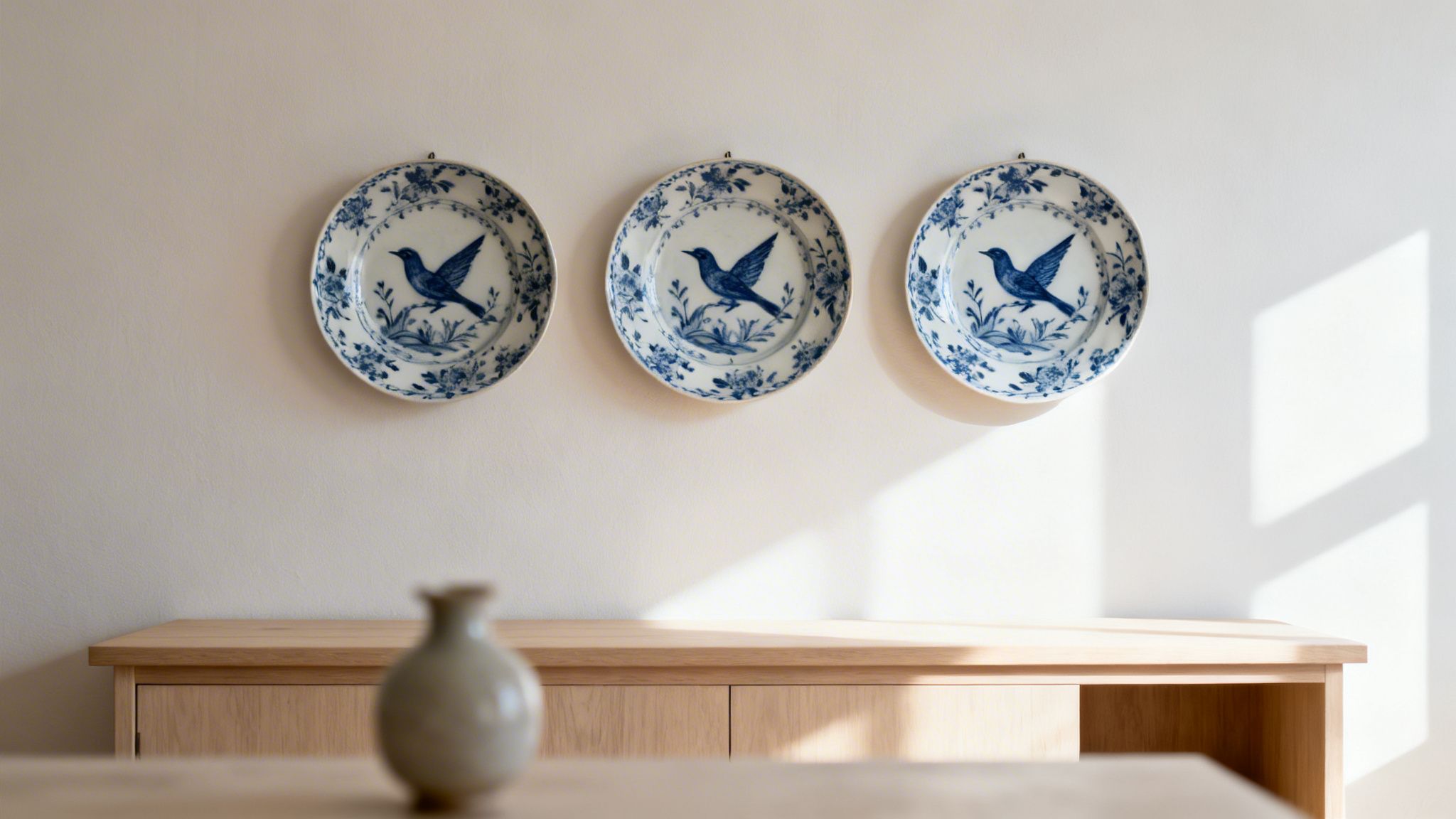
Beyond careful preservation, your collection deserves to be seen! Here are a few creative ways to display your rörstrand fågel blå porcelain and let it shine:
For anyone just starting their journey with this beautiful pattern, or even seasoned collectors looking for a quick refresher, I've put together answers to some of the most common questions that come up about Rörstrand Fågel Blå.
No, the Fågel Blå series is no longer being made. It had a surprisingly short production run, manufactured only from 1981 to 1987 at the historic Lidköping factory in Sweden.
This brief window is exactly why the pieces are so sought-after on the vintage market today. It wasn't around for long, making every piece you find a little treasure from a specific era of Swedish design.
This is a great question, as Rörstrand has many famous blue designs. The dead giveaway for rörstrand fågel blå is its unique artwork: a small, delicately drawn blue bird perched on a thin branch, all set against a soft, light blue background.
Other popular Rörstrand patterns, like the famous Mon Amie, are distinctly floral. To be absolutely certain, just flip the piece over. You're looking for the crowned 'R' backstamp that includes 'Rörstrand Sweden' from that specific 1980s period. That stamp is your guarantee of authenticity.
Just remember the formula: the specific little bird + the gentle blue background + the 1980s backstamp. No other Rörstrand pattern ticks all three of those boxes.
Jumping into a new collection can feel overwhelming, but a fantastic way to begin is by focusing on a few common, essential pieces. I always suggest looking for dinner plates or a set of coffee cups and saucers first. You'll find these are generally the most accessible and affordable.
This approach lets you get a real feel for the design in your home without a huge initial investment. As you hunt, always prioritise pieces in excellent condition—look for items free from chips, cracks, or significant fading of the blue pattern. Online marketplaces, local antique shops, and Scandinavian auction sites are all wonderful hunting grounds for your first finds.
At Dalaart, we celebrate the rich heritage of Swedish craftsmanship, from iconic porcelain to hand-carved folk art. Explore our curated collection of authentic pieces at https://dalaart.com.


.svg)


.png)


