March 26, 2026
While the name might bring to mind a great saltwater ocean, the Sea of Sweden isn’t a body of water you’ll spot on any map. It's a much more poetic and evocative term for the sprawling, interconnected network of freshwater lakes found in the heart of Dalarna county, with the magnificent Lake Siljan at its very centre.
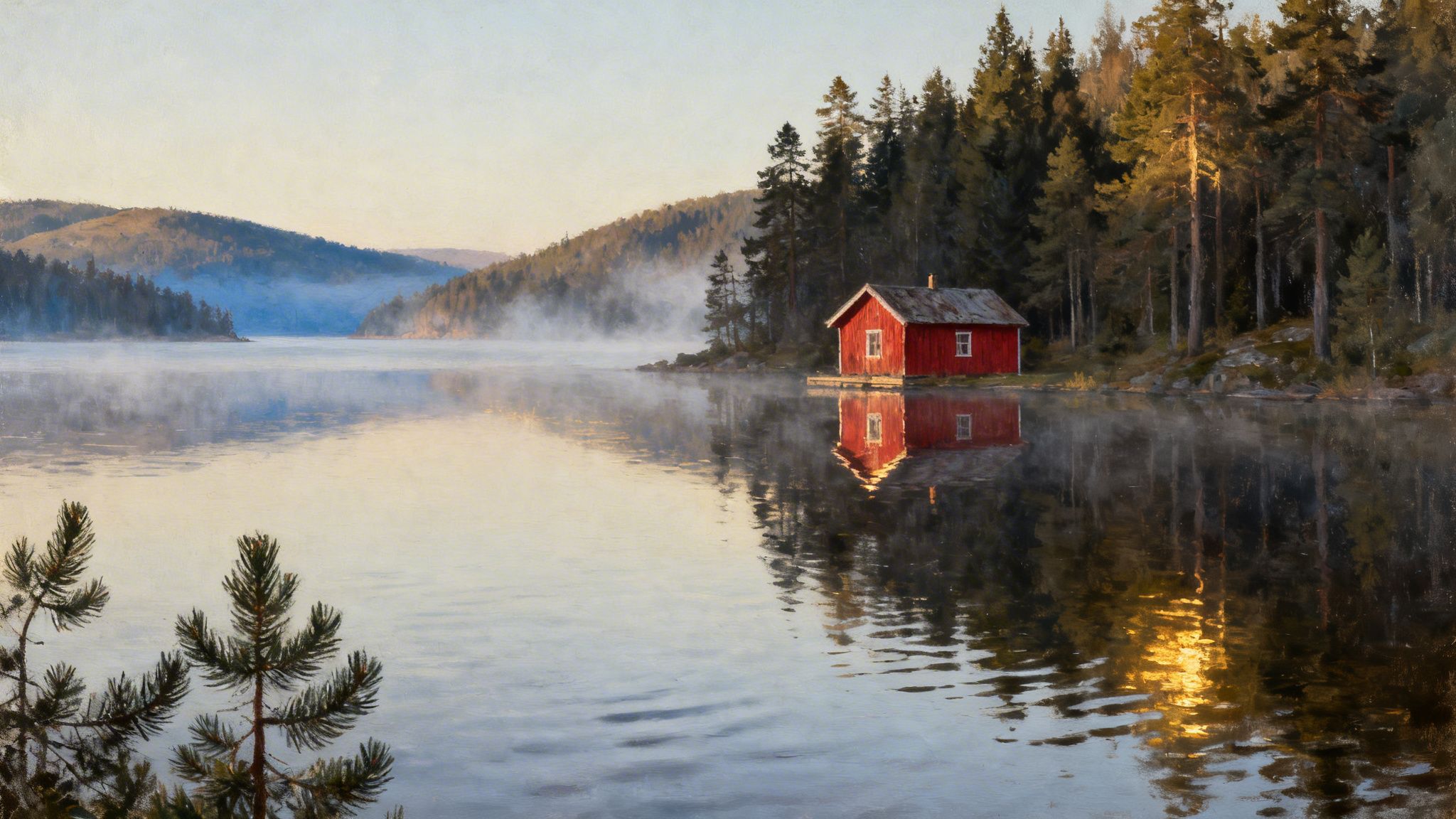
The "Sea of Sweden" is a beautiful concept, one that’s woven deep into the region's geography and cultural soul. It paints a picture of a landscape where water isn't just a feature—it's the main character. Picture deep, silent forests and rolling green hills cradling immense expanses of water that have been the region's lifeblood for centuries. This unique geography is why Dalarna is known as Sweden’s cultural heartland.
This water-centric world has shaped almost every part of life for the people here, from their daily work to their deepest beliefs and artistic traditions. To truly understand Dalarna, you have to understand its profound relationship with these lakes.
At the centre of this watery world lies Lake Siljan, Sweden’s seventh-largest lake. It was formed by a meteorite that crashed into the earth over 377 million years ago, and its shimmering surface, along with the smaller lakes surrounding it, creates a living, breathing ecosystem. This "sea" was the region's highway long before any modern roads were built.
The importance of this geography simply can't be overstated. It gave the people of Dalarna everything they needed to thrive.
Think of the Sea of Sweden not as a single body of water, but as the soul of the landscape—a powerful, ever-present force that has moulded the very character of Dalarna and its famous folk art.
This incredible setting is the key to appreciating the stories behind iconic creations like the Dala horse. The flowing lines, the specific choice of colours, and the traditional motifs all pull their energy from this lakeside life. Every hand-painted flourish is a quiet tribute to the water, forests, and sky of this enchanting region. It's this deep connection between nature and craft that gives the art its profound sense of place and authenticity.

When you picture Sweden’s landlocked heartland, a rich maritime history probably isn’t the first thing that comes to mind. But the soul of Dalarna has always been deeply tied to its vast network of lakes—a sprawling inland waterway affectionately known as the "Sea of Sweden."
Long before modern roads carved their way through the dense forests, these shimmering lakes were the region's lifeblood. They weren’t just pretty scenery; they were the bustling highways for trade, community, and everyday survival.
This complete reliance on the water fostered an intimate connection between the people and their environment. From loggers floating timber across the lakes to fishermen casting nets for their family's supper, the water was a constant, powerful presence. That daily dance with nature wove a deep respect for its rhythms into the very fabric of Dalarna's culture.
For centuries, if you wanted to get anywhere in Dalarna, you took to the water. The lakes were the threads connecting scattered villages, allowing communities to trade goods, share news, and come together for festivals and life’s big moments.
Just imagine it for a moment. The easiest way to visit your neighbours wasn't by a bumpy cart ride through the woods, but by gliding across a pristine lake in a boat. This reality shaped where people built their homes and nurtured the resilient, community-focused spirit of the people. It’s one of the many reasons you can still discover the beauty and culture of Dalarna, Sweden in such an authentic way today.
The "Sea of Sweden" evokes the vast lakes that define Dalarna's stunning landscapes, which are so integral to its appeal for Scandinavian folk art lovers. At the heart of it all is Lake Siljan, which covers an incredible 292 square kilometres and has an average depth of 34 metres. The rolling hills and deep forests surrounding it are the very same scenes that have inspired the motifs on Dala horses for generations.
Perhaps the most beautiful symbol of this lakeside heritage is the tradition of the church boats, or kyrkbåtar. These are long, graceful wooden boats, strikingly similar to Viking longships, built to carry dozens of people from several families at once.
Every Sunday, entire villages would pile into these boats and row together across Lake Siljan to reach the churches in towns like Leksand and Rättvik.
This weekly journey was so much more than just a commute. It was a powerful community ritual.
Today, the church boat races are a vibrant highlight of the summer, celebrating this unique piece of maritime history. They’re a stirring reminder of a time when a community’s social and spiritual life was literally carried on the water. This legacy is what’s carved into every Dalaart piece—not just wood and paint, but a tangible connection to the spirit of a people shaped by the beautiful and demanding Sea of Sweden.
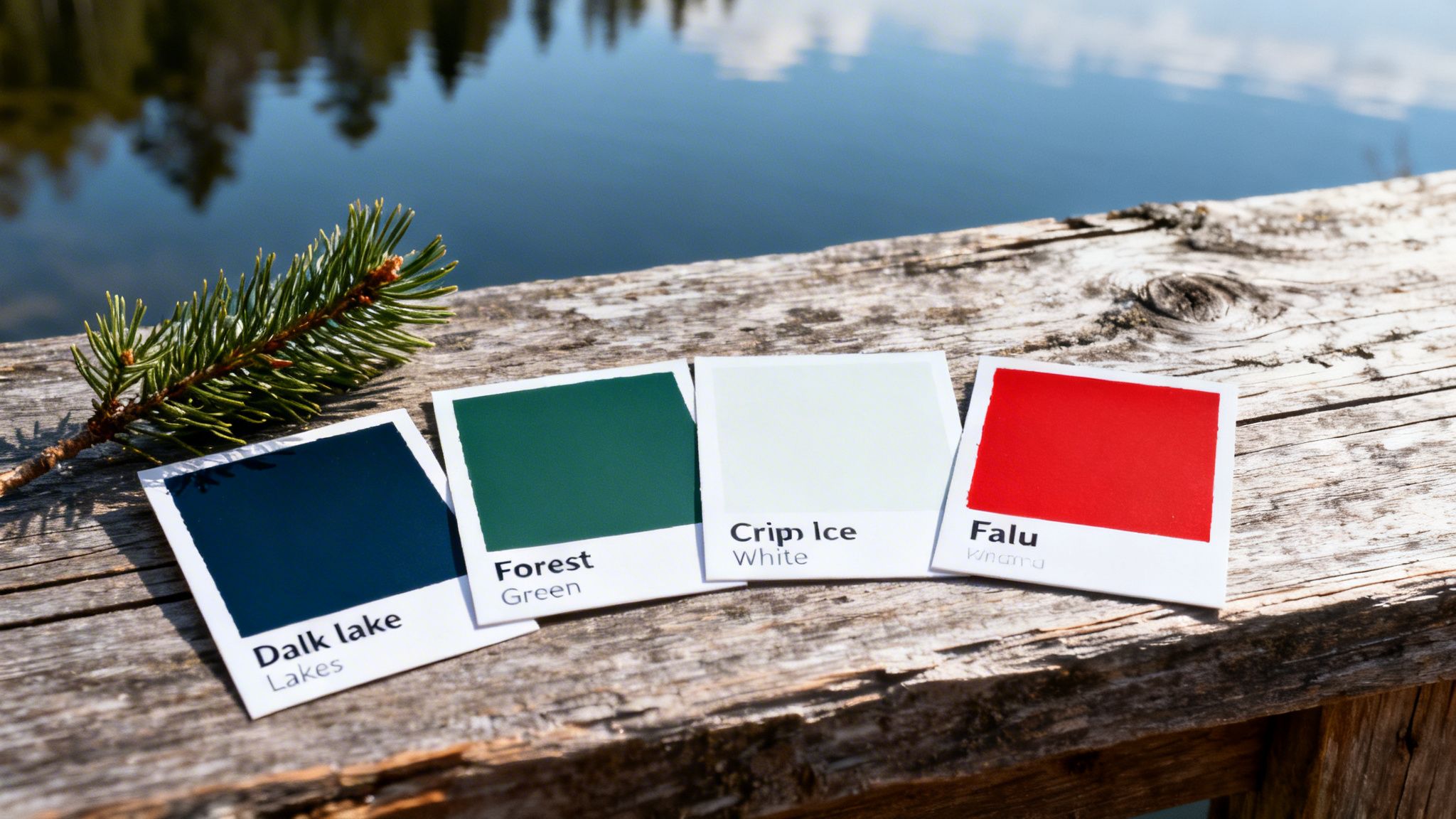
The artistry of Dalarna doesn’t just come from the idea of the "Sea of Sweden"—it pulls its entire visual language from the living, breathing landscape. To really get to the heart of this folk art, you have to learn to see the world like an artisan does. It's all about translating the natural environment into a distinct and deeply meaningful colour palette.
When a Dalarna artist looks out over the water, they don’t just see a lake. They see a canvas of shifting moods and textures that morphs with the light and seasons. It's this intimate, daily connection that breathes such authenticity into every hand-painted Dala horse, rooster, and pig.
You see, the colours you find on a Dala horse aren't just random choices. They are a direct echo of the physical world, with four foundational colours anchoring the whole aesthetic. Each one tells a piece of the region’s story.
Picture yourself standing on the shores of Lake Siljan. The very colours you see around you have defined this beloved art form for centuries.
Siljan Blue: This is the deep, soulful blue of the lake itself. It captures the endless sky overhead and hints at the mysterious depths below, reflecting both the water's serene surface and its untamed power.
Forest Green: All around the "Sea of Sweden," dense pine and birch forests stand guard. This rich, vibrant green speaks of nature's quiet strength and resilience—the colour of life itself.
Winter White: Nothing is quite like the stark, clean beauty of a Dalarna winter. This crisp white is the colour of fresh snow blanketing the fields and the thick ice that locks the lakes in place, a symbol of stillness, purity, and renewal.
Falu Red: Perhaps the most famous Swedish colour of all, Falu Röd is the deep, earthy red of the cottages and barns that dot the landscape. This historic pigment, a by-product from the Falun copper mine, has been used to paint and protect homes for over 400 years. Its warm glow reflecting on the water is the quintessential image of Dalarna.
When you see these colours on a Dala horse, you're not just looking at paint. You're seeing a story about the world it came from. The artisan is, in a way, painting their home directly onto its wooden surface.
It isn't just about the base colours, though. The famous motifs used in Dalarna folk art also spring straight from the lakeside environment. The best example is the kurbits style—a fantastical floral painting that, at its heart, is completely rooted in nature.
The flowing, gourd-like leaves and brilliant blossoms of the kurbits are often seen as a sort of dream-version of local wildflowers. But their energy and movement are just as important. The graceful, swaying lines mimic the gentle lapping of waves on the shore or the elegant curve of a branch in the wind. It’s a style that truly captures the dynamic spirit of the "Sea of Sweden."
Once you know what to look for, you'll start spotting these influences everywhere. Notice how a blue flourish on a Dala rooster curves just like a small wave, or how a cluster of painted flowers might remind you of the wild blooms growing at the water's edge. This is the living language of Dalarna's art, a beautiful story told in colour and line, inspired by the lakes that have shaped its very soul.

While the palette of the "Sea of Sweden" provides the base colours for Dalarna folk art, the real magic happens in the application. This is where you see the landscape's incredible energy captured in the flowing lines and traditional motifs of our iconic Dala horse. The art isn't just a static picture of the region; it's a dynamic expression of its living, breathing soul.
You could say every brushstroke tells a story. The signature sweeping curves of the kurbits pattern, for example, are so much more than just a pretty decoration. They are a direct echo of the gentle lapping of waves on the shore, or the graceful way reeds bend in a lakeside breeze.
Once you connect these visual dots, you start to see Dalaart products not just as beautiful objects, but as tangible pieces of the Dalarna landscape. They are a direct line to the world of the artisan, where the view from the workshop window becomes the heart of the art itself.
Picture an artisan in a small workshop, a quiet space filled with the scent of fresh pine and linseed oil. Through the window, the great expanse of Lake Siljan shimmers, its surface a shifting canvas of blues and greys. This isn't just a scenic backdrop; for the painter, it’s a creative partner.
When that artisan picks up a brush to paint a Dala horse, their hand is guided by a lifetime of watching this water. There's no need to consult a photograph; the rhythm of the lake is already part of their memory.
This intimate bond between the creator and their environment is the secret ingredient that makes every hand-painted piece so special. It’s a deeply personal interpretation of a shared heritage. An artisan might choose a deep, stormy blue to reflect a recent squall or add delicate white accents that call to mind the patterns of ice forming in early winter.
This is the very essence of authentic Dalaart. It's not about factory-like replication but about individual expression. Each piece is a unique dialogue between the artist, the wood, and the ever-present influence of the "Sea of Sweden."
This personal touch is why no two hand-painted Dala horses are ever exactly alike. One might feel serene and calm, while another crackles with the energy of a summer storm. Each is a single, unrepeatable moment of inspiration captured forever in wood and paint.
Once you know what to look for, you can start to "read" these watery influences in different pieces. It’s like learning a new visual language where lines and colours tell a story about the natural world. This is especially true for the artists who create our pieces; you can learn more about their processes by going behind the scenes with Dalaart artisans.
Here are a few concrete examples of how the "Sea of Sweden" concept comes to life in the details:
These are not just happy accidents; they are conscious artistic choices, all rooted in a profound connection to place. The artist isn’t just painting a horse; they are painting the world that horse lives in. This perspective can even offer powerful inspiration for personalising your own pieces with authentic, water-inspired motifs, making your art a true reflection of nature's endless beauty.
It’s one thing to appreciate the story behind the "Sea of Sweden" theme, but it’s another thing entirely to bring that calm, natural spirit into your own home. This is where we move from the idea to the reality, styling authentic Dalaart pieces to capture that tranquil feeling of lakeside living. It's not about perfectly recreating a Swedish cottage, but about evoking its soul.
The secret is to create small, thoughtful arrangements—or vignettes—that tell a story. By pairing a hand-carved Dala horse with just a few other natural elements, you can create a powerful focal point that anchors a room in this beautiful aesthetic.
Think of a vignette as a miniature landscape on a shelf or mantelpiece. It’s your chance to bring the quiet beauty of the "Sea of Sweden" indoors, building layers of texture and meaning around your Dalaart piece.
Start by choosing your central character—be it a classic Dala horse or a charming rooster. Its authentic, hand-painted details provide the perfect anchor for the scene you're about to build. Then, add elements that whisper of the lake district.
By thoughtfully combining these elements, you create far more than just decoration. You build a narrative that invites people to pause and feel the quiet beauty of Dalarna's natural world, making your space feel curated and full of soul.
Dalaart pieces are wonderfully versatile and can play many different roles in your home, from subtle accents to bold statements. Their authenticity also connects with a deep appreciation for cultural heritage. In fact, Dalarna, often called Sweden's cultural heart, is seeing incredible growth in visitors who want to experience the region’s genuine folk art. This trend is expected to continue its robust growth in 2026, directly supporting the local artisans behind every Dalaart piece. Discover more insights about Dalarna's cultural appeal on northtrotter.com.
For a subtle touch, try placing a single, small Dala horse on a bookshelf, nestled between your favourite books. It becomes a quiet pop of colour and character, a little secret for an observant eye to discover.
If you’re looking for a bolder approach, use a larger Dala horse as a centrepiece on a dining table or an entryway console. Its impressive size and vibrant artistry will immediately draw the eye, setting a welcoming and artful tone for your entire home. It’s the perfect way to turn an abstract design concept into something tangible and meaningful.
The captivating spirit of the "Sea of Sweden" isn’t just a beautiful artistic theme; it’s a living philosophy that guides every single creation here at Dalaart. This deep-seated respect for nature translates into a powerful commitment to both authenticity and sustainability, tying the art directly back to the Swedish land from which it came.
This isn’t just about looking good. It's a core value that truly shapes every decision we make, from how the wood is chosen to the final, vibrant brushstroke. Each Dala horse is so much more than a pretty object—it’s the story of a specific place, a skilled artisan, and a long tradition built on caring for the environment.
The artisans who craft these treasured pieces share a profound bond with the forests and lakes of Dalarna. This relationship naturally inspires a desire to protect the very landscapes that provide their inspiration and their livelihood. Because of this, sustainable practices are simply woven into the fabric of their work.
This dedication to the planet is reflected in several key ways:
When you choose a Dalaart piece, you are supporting a tradition where craftsmanship and environmental responsibility are inseparable. It’s a meaningful choice for anyone who values both authentic artistry and responsible consumerism.
This local pledge fits perfectly with Dalarna's wider ambitions. The tourism economy in the region—the very cradle of these handcrafted treasures—is focused on sustainable growth. As Sweden aims to become the world's most sustainable destination by 2030, Dalarna’s focus on protected areas and green infrastructure only strengthens its appeal, ensuring every piece tells a story backed by a real commitment to the planet. You can discover more about these sustainability goals on gowithguide.com.
In a world filled with mass-produced, anonymous goods, the concept of provenance—knowing exactly where something comes from and who made it—has become incredibly powerful. An authentic Dala horse carries its story with it. You can feel the history in the hand-carved wood and see the artist’s unique touch in every painted detail.
This is what truly sets a genuine Dalaart piece apart. It is not some anonymous product from a faceless factory. Instead, it's a tangible link to a specific artisan in Dalarna, a testament to skills passed down through centuries. This connection is what transforms a simple decorative item into a cherished piece of cultural heritage. For those interested in exploring shops that uphold these very traditions, you can read also: Leksands Hemslöjd Webshop, a champion of local craft.
Choosing an authentic, sustainably made Dala horse is a statement. It declares a preference for quality over quantity, for story over disposability, and for supporting real artisans who pour their heart and heritage into their work. It’s a celebration of the enduring connection between the people of Dalarna and their magnificent "Sea of Sweden."
After immersing ourselves in the story of the "Sea of Sweden" and its deep ties to Dalarna's folk art, a few questions often pop up. We get it! It's a captivating world. Here, we've gathered the most common queries from collectors, decorators, and fellow admirers of this unique heritage, offering the kind of straightforward advice you'd get from a friend in Sweden.
"The Sea of Sweden" is a beautiful, poetic way to describe the vast and shimmering lake district in Dalarna county, not a formal name you'll find on a map. At its very heart is Lake Siljan, Sweden's seventh-largest lake. So, to answer your question – yes, you can and absolutely should visit this breathtaking region!
The best way to experience it is to wander through the charming towns of Mora, Leksand, and Rättvik. Each one is nestled on the shores of Lake Siljan and serves as a hub for the culture and natural beauty that so deeply inspires the Dalaart artisans. A trip here is the perfect way to see and feel the landscape that breathes life into every single hand-carved piece.
Authenticity isn't just a label; it's a story of hands, heart, and home. A genuine Dala horse is always hand-carved and hand-painted by local artisans in the Dalarna region of Sweden. You can just feel the difference in a piece that has been patiently shaped by a real person.
When you're looking at a piece, keep an eye out for these tell-tale signs:
Absolutely. For our artisans, sustainability isn't a trend; it's a value that flows directly from their connection to Dalarna's nature. This deep respect for their surroundings is what drives our shared commitment to protecting it, making sure these traditions can be passed down for generations to come.
You can see this eco-friendly mindset in the way each piece is made. Artisans often give new life to recycled pine wood sourced from local industries, which helps minimise waste. Just as importantly, every Dala horse is meticulously painted with non-toxic, environmentally safe paints. This means each collectible is not only a beautiful piece of cultural heritage but also a creation made with profound respect for the planet.
Choosing an authentic Dalaart piece is a vote for sustainability. It’s a conscious decision to support a craft that honours its natural origins, from the wood it's carved from to the paints that bring it to life.
While the Dala horse is undoubtedly the most famous ambassador of the region, Dalarna's artistic soul is wonderfully diverse. You can find that same inspiration—drawn from the "Sea of Sweden"—in a whole family of folk art.
You'll discover that same love for the landscape in hand-painted wooden roosters, pigs, and even bears, each with its own special character. Beyond these beloved figures, the flowing kurbits style also finds its way onto everything from furniture and wall hangings to traditional textiles. The colours and motifs of the lake district are the beautiful, unifying thread running through all of Dalarna's folk art, with every piece celebrating that unbreakable bond between the people and their home.
At Dalaart, we feel so honoured to bring these authentic, museum-quality treasures directly from the artisans of Dalarna to you. We invite you to explore our curated collection of classic, exclusive, and vintage pieces to find the perfect expression of Swedish heritage for your home. Visit us today at https://dalaart.com and discover your own piece of the "Sea of Sweden."


.svg)


.png)


