May 6, 2026
You might be standing in front of a screen full of listings right now, trying to decide whether the dress that made your heart skip is a treasure, a gamble, or a lovely old gown with good photography. That uncertainty is common. A vintage wedding dress asks you to do two things at once: fall in love with beauty, and think like a careful collector.
That’s part of its appeal. A vintage gown doesn’t arrive as a blank object. It comes with clues. The cut of the sleeve, the weight of the lace, the placement of a zip, the way a seam was finished by hand. Each detail tells you something about the hands that made it and the era that shaped it.
For many brides, that sense of provenance matters as much as style. The broader appetite for pre-owned fashion keeps growing, and the thredUP resale overview notes that the global market for second-hand apparel is projected to grow by 127% by 2026, with more consumers seeking vintage pieces for uniqueness and sustainability. A wedding dress sits at the most poetic end of that shift. It can be worn, yes, but it can also be cherished, studied, repaired, and passed on.
Words matter when you’re shopping, especially when sellers use them loosely. A gown can be labelled vintage because it has lace sleeves, pearl buttons, or a romantic silhouette, even if it was made recently. That doesn’t make it a bad dress. It makes it something else.
The easiest way to sort the language is to think of three separate categories. A second-hand dress is pre-owned. A vintage wedding dress comes from an earlier era and carries the design language of that time. An antique dress belongs to a much older historical period and often needs to be treated more like a textile artefact than everyday clothing.
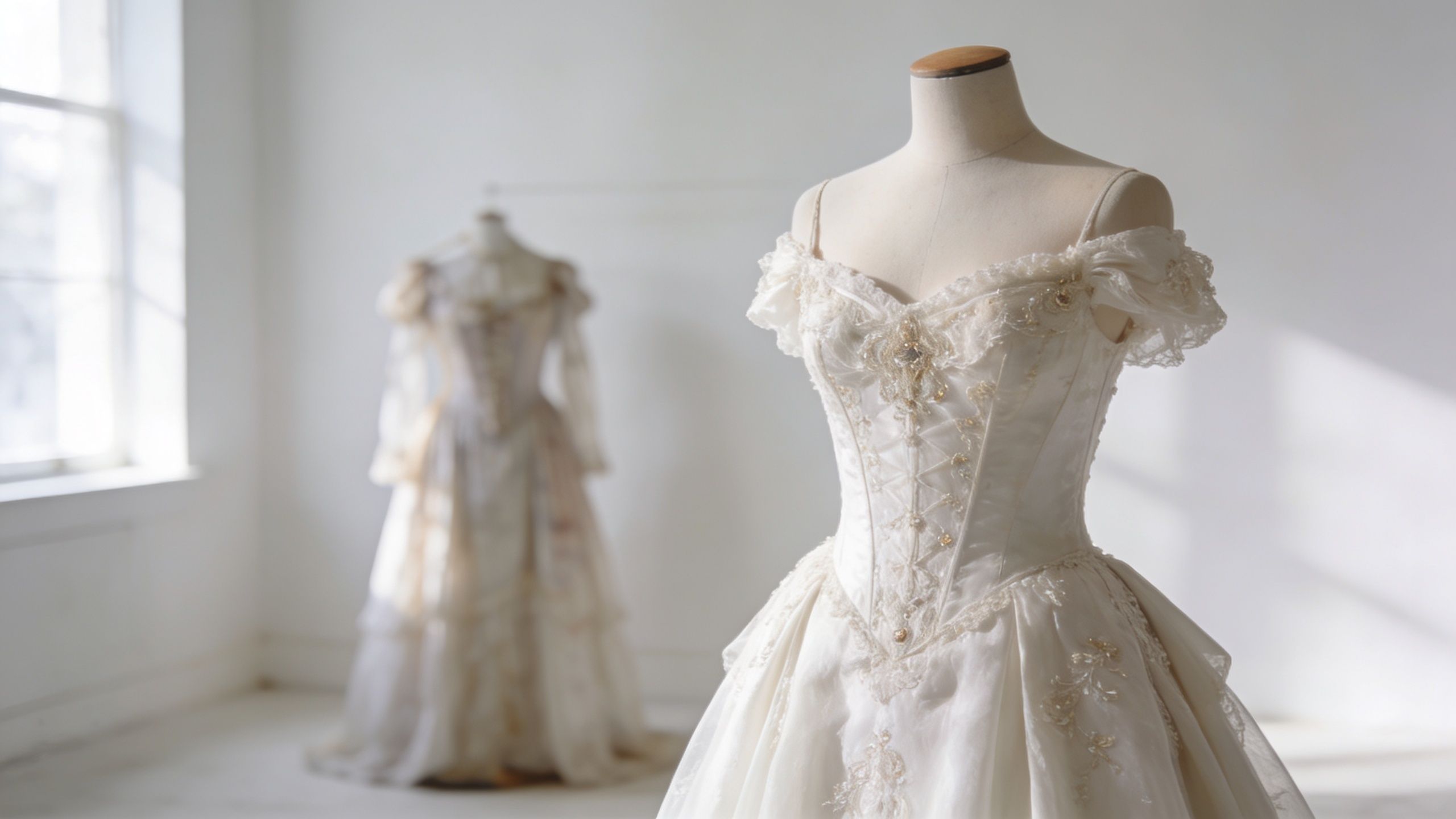
A useful analogy is furniture. A sofa from last season that someone else owned is second-hand. A teak sideboard from the mid-century period is vintage. A hand-carved Georgian chest is antique. Wedding dresses work in much the same way.
That means a gown can be pre-owned without being vintage, and vintage without being antique. It also means a newly made gown can be vintage-inspired without being vintage at all.
Practical rule: Ask two separate questions, not one. “When was this dress made?” and “What style is it referencing?” The answers aren’t always the same.
Readers often get tangled. They see a modern gown with Edwardian lace details and assume age. Or they see a gown from the early 2000s and assume “old enough” means vintage. In real buying conversations, it helps to be precise and ask for evidence rather than labels.
Age matters because materials age. Silk can weaken. Net can dry out. Interior structure can change shape after decades on a hanger. If you know a dress is old, you’ll inspect it differently and budget differently.
Style matters because each era had habits. Some decades favoured narrow silhouettes. Others embraced volume, strong shoulders, high necks, or soft drape. A true vintage wedding dress usually reflects those habits in the whole garment, not just in one decorative feature.
Here’s a simple way to read a listing more clearly:
A modern pre-owned dress is usually bought for fit, convenience, and price. A vintage wedding dress is chosen for character, craftsmanship, and historical presence. An antique bridal garment may be chosen by a collector, a conservator-minded bride, or someone planning partial reuse, such as repurposing lace or preserving it as an heirloom.
That distinction protects your expectations. If you want easy alterations and predictable fabric performance, a modern second-hand dress may suit you better. If you want a gown with soul, and you’re prepared for the quirks that come with age, vintage will feel richer.
A vintage gown also asks something of the wearer. It asks patience, curiosity, and respect. That’s not a burden. It’s part of the romance.
A vintage wedding dress becomes easier to recognise once you stop seeing “vintage” as one look. It isn’t one look. It’s a series of moods, each shaped by changing ideals of femininity, ceremony, work, glamour, and practicality.
The great pleasure of shopping by era is that it narrows the field emotionally. You stop asking, “What kind of bride should I be?” and start asking, “Which history feels like home?”
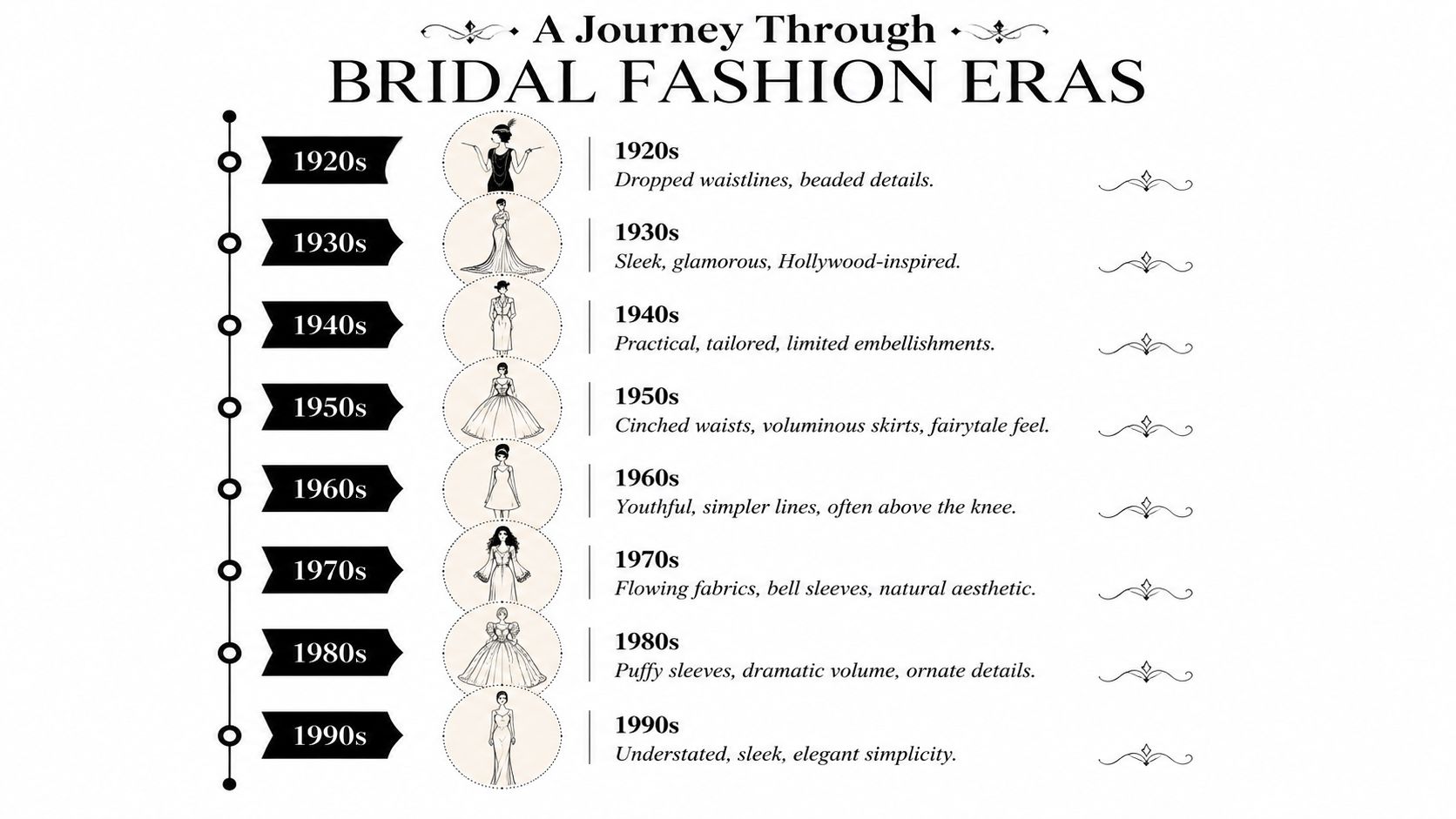
The 1920s bride moved away from the stiff formality of earlier decades. Dresses often sat lower on the body with a dropped waist, looser shape, and decoration that caught candlelight and movement. Beading, chiffon overlays, and airy veils gave the whole look a soft shimmer.
This is the decade people often recognise fastest, but they also misread it. A genuine 1920s bridal gown usually feels lighter and straighter than modern versions. It may have fragile net, delicate embellishment, and an elegance that doesn’t rely on heavy structure.
The 1930s shifted into fluid glamour. Bias-cut gowns skimmed the figure rather than standing away from it. Satin and silk moved like water. Brides from this era can look almost cinematic, with long lines, narrow hips, and details concentrated at the back, neckline, or cuff.
A 1930s gown often looks simple on the hanger and astonishing on the body. The cut does the work.
If you love understated drama, the 1930s may be your decade. These dresses reward close looking. Tiny covered buttons, cowl necks, godets, and soft trains matter more than obvious ornament.
The 1940s brought restraint and ingenuity. Bridal wear often reflected the era’s structured lines. You’ll see structured shoulders, slimmer skirts, longer sleeves, neat collars, and practical elegance. Some brides wore suits or suit-like dresses with a ceremonial touch rather than theatrical volume.
These gowns have a quiet dignity. They suit brides who love sharp seams, strong posture, and garments that feel composed rather than sugary. If you’re drawn to utility clothing, wartime tailoring, or the polish of old studio portraits, this period has enormous appeal.
By the 1950s, bridal fashion opened like a flower. Skirts widened. Waists drew in. Bodices became more sculpted. Tea-length dresses gained charm, especially for civil ceremonies and smaller celebrations, while fuller skirts and layered petticoats created that beloved storybook silhouette.
Look for details such as:
The 1950s can be ideal for a bride who wants classic femininity without excess. It’s polished, but still playful.
The 1960s split in two directions. Early in the decade, many dresses still carried the clean elegance of the late 1950s. Later on, lines became simpler, younger, and more graphic. A-line silhouettes, shorter hems, and less cumbersome skirts reflected changing ideas about mobility and modern life.
This is also a useful era for identification because labels, trims, and closures often begin to look more recognisably modern while still carrying distinct period design. If you love crisp shapes and uncluttered beauty, the 1960s can feel fresh rather than nostalgic.
The 1970s introduced a different kind of romance. Bridal fashion leaned towards softness, naturalism, and movement. Think flowing sleeves, crochet or cotton lace, prairie influence, empire seams, and a gentler, bohemian spirit. Some gowns feel almost handmade, in the best sense. They seem connected to the body rather than imposed upon it.
A 1970s vintage wedding dress often appeals to brides who want sentiment without stiffness. It works beautifully outdoors, in old houses, in gardens, and in ceremonies where intimacy matters more than spectacle.
For a broader reflection on how visual culture from past decades can shape the way we see beauty and memory, this piece on vintage posters from Sweden offers a thoughtful parallel. The same affection for age, design language, and atmosphere often draws people to period bridalwear.
The 1980s loved volume and ceremony. Sleeves expanded. Skirts swelled. Bows, appliqué, sheen, and decorative flourishes signalled occasion from across the room. These gowns weren’t shy, and they weren’t meant to be.
It’s easy to mock the excess if you only remember the most exaggerated examples. Yet many 1980s dresses have beautiful workmanship, especially in the bodice, sleeve head, and embellishment. They can also be altered with imagination. A dramatic puff sleeve can be reduced. A large skirt can be refined. The bones of the dress may be excellent.
The 1990s reacted by stripping back. Slip shapes, cleaner satins, lower ornament, and a sleeker silhouette took over. Some dresses from this decade feel almost architectural in their restraint. Others retain late-1980s influence but simplify it.
If you’re attracted to minimalism, the 1990s can be a goldmine. The best pieces look modern because their restraint has lasted well. Satin column gowns, square necklines, spaghetti straps, and uncluttered trains can feel timeless with very little styling.
When you first scroll through listings, train your eye to notice the whole silhouette before the decoration. Then look for construction clues.
A quick reading method helps:
Your first instinct may be drawn to detail, but silhouette is usually the stronger clue.
The reward of learning eras isn’t just accuracy. It sharpens your taste. Once you know what each period valued, you stop chasing a vague vintage feeling and begin recognising the exact kind of beauty that moves you.
Finding a vintage wedding dress can feel like treasure hunting. The best hunts combine delight with method. You need both. Delight helps you recognise beauty. Method keeps you from buying a gown whose condition, date, or workmanship has been overstated.
Curated vintage boutiques often provide the safest starting point for beginners. The edit is smaller, but someone has usually done an initial round of screening for age, condition, and wearability.
Online marketplaces give you reach. You’ll see more sizes, more decades, and more price points. You’ll also need better judgement. Listings can be excellent or vague. Photographs can be candid or flattering to the point of distortion.
Estate sales and local auctions can be thrilling, especially if you enjoy provenance and discovery. But they ask for confidence. You may have limited time, less documentation, and no specialist available at the moment of decision.
If you’re comparing resale channels and want a practical view of how buying older items online can work, this guide to eBay in Sweden offers useful context for browsing, judgement, and collector-minded shopping habits.
Don’t begin with romance. Begin with survival.
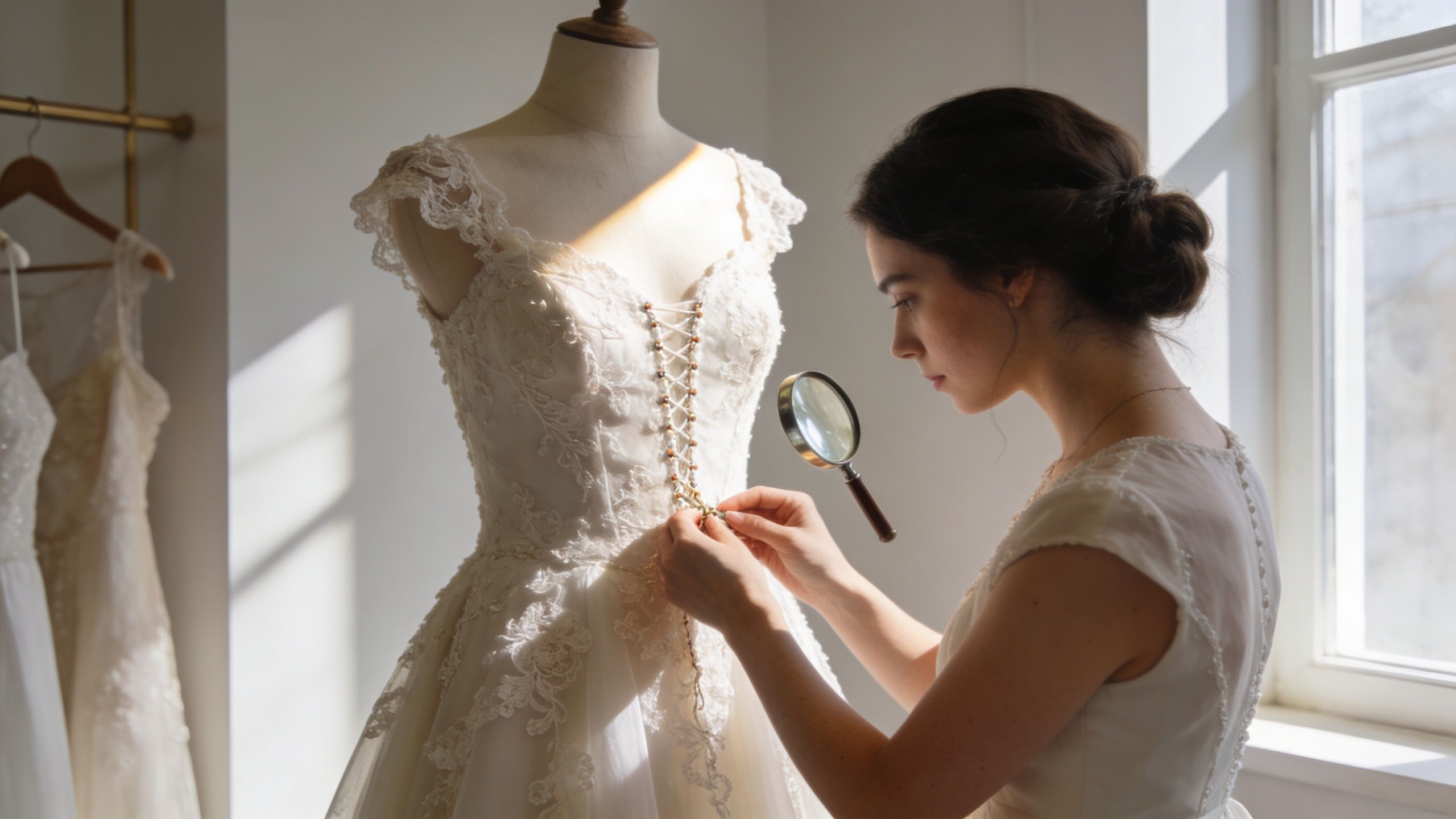
Check the underarm area, side seams, waist seam, closure, hem, and any lace motifs that sit under tension. These are common stress points. If the fabric is compromised there, repairs may be delicate or extensive.
Then study the inside. Interior construction often tells the truth more clearly than the exterior. Hand finishing, seam allowances, old boning channels, lining methods, and stitch character all reveal whether you’re looking at a well-made period garment, a later reproduction, or a costume piece.
Here’s a collector’s checklist:
Labels are not everything, but they are useful. In American-made garments, union labels can be especially revealing. The Cornell ILGWU union label timeline explains that prior to the 1960s, many high-end garments included an International Ladies' Garment Workers' Union label, and the label design changed over time, making it a helpful dating tool.
That doesn’t mean every genuine vintage gown will have one. Some dresses were custom made, altered heavily, or lost their labels over time. But when a label is present, it deserves a close look.
If a seller shows only the front of the dress, ask for the label, the zip, the inside seam finish, and the hem. Those four areas often reveal more than a full-length glamour shot.
You don’t need to sound like a conservator. You just need to be specific.
Ask when and where the dress was acquired. Ask whether any alterations were done. Ask if there are weak areas, previous repairs, missing trims, or storage odours. Ask for flat measurements rather than the labelled size.
A careful seller will answer plainly. A vague answer isn’t always dishonest, but it does mean you should slow down.
Vintage sizing humbles almost everyone. The number on the label often bears little relation to what you wear now, and that mismatch can upset buyers who assume they’ve made a mistake. Usually, they haven’t. They’re dealing with a different sizing system, different undergarments, and a garment shaped around another era’s body ideal.
That’s why measurements matter more than labels. Bust, natural waist, hip, shoulder width, bodice length, sleeve circumference, and hollow-to-hem all matter. On a vintage wedding dress, even a small mismatch in the upper bodice or armhole can change comfort dramatically.
Older gowns often have less stretch, firmer waist placement, and more precise shaping through the ribcage. Some are cut for posture that feels more upright than modern ready-to-wear. Others assume structured undergarments that a modern bride may not plan to wear.
The result is that a dress can technically “fit” your measurements but still feel wrong on the body. The bust point may sit too high. The shoulder may pull. The waist seam may land above or below your natural waist. These are not small details. They affect the whole look.
A useful approach is to compare three things at once:
Buy for the body you have now, not the body you hope to negotiate with later.
Good alterations can rescue a promising dress. They can’t perform miracles without consequence. The older and more delicate the gown, the more every decision matters.
Hems are often manageable, though lace edges and scalloped borders require care. Taking in side seams may be straightforward if the fabric is sound and the structure allows it. Sleeve reshaping, neckline refinement, or replacing a damaged lining can also be possible with the right specialist.
Bustle work, strap adjustments, and modesty additions are common modern needs. These can be done sympathetically when the seamstress understands period proportion and doesn’t force a contemporary bridal template onto the gown.
Letting out a bodice is often the first heartbreak. Many vintage dresses have little spare seam allowance. Even when there is allowance, old stitch marks can remain visible, and weakened fabric may object to being reopened.
Major silhouette changes can also distort the dress’s character. Turning a full 1950s gown into a narrow column, or stripping an 1980s bodice of all its support and ornament, may cost more in integrity than it gains in modernity.
Be especially careful with:
Not every brilliant bridal tailor is the right person for vintage. Ask whether they’ve worked with antique lace, aged silk, rayon linings, hand-finished seams, or fragile net. Ask how they test fabric strength before proposing changes.
A strong specialist will often suggest the least invasive path. That’s a good sign. They’re treating the gown as an irreplaceable object, not a generic alteration job.
Bring the shoes, undergarments, and any planned accessories to fittings. A small change in foundation garments can alter how the dress hangs. Vintage bodices notice everything.
Budgeting for a vintage wedding dress means separating purchase cost from ownership cost. Cleaning, repairs, replacement fastenings, custom support, and specialist pressing can all appear after the initial excitement fades.
It helps to think in layers rather than one total figure. There’s the acquisition cost, then the stabilising cost, then the fitting cost, and finally the styling cost. If all four fit comfortably within your plan, you’ll enjoy the process. If you spend everything on the purchase itself, the dress can start to feel demanding.
A wise vintage buy isn’t always the cheapest gown. It’s often the one with the clearest path to wearability.
The most beautiful vintage bridal styling doesn’t look theatrical. It looks coherent. The dress, hair, jewellery, shoes, flowers, and setting all seem to belong to the same emotional world, even if they don’t all come from the same decade.
That balance matters because a vintage wedding dress already carries visual information. If every accessory shouts as loudly as the gown, the look becomes costume. If the accessories ignore the gown entirely, the look loses its spell.
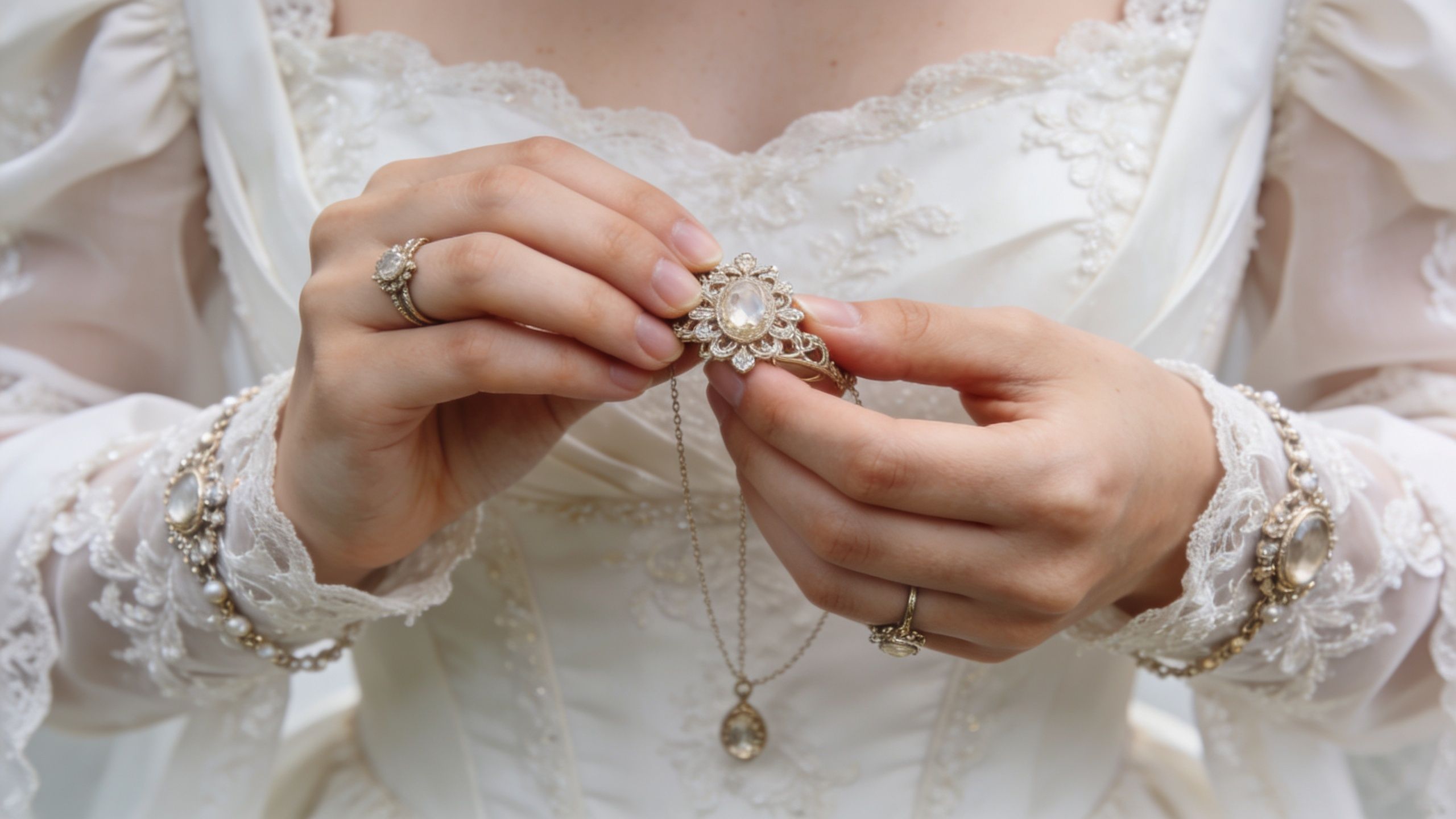
A 1930s satin gown asks for a different beauty language than a 1970s lace prairie dress. The first may suit soft waves, restrained jewellery, and a long clean veil. The second may welcome looser hair, softer makeup, and accessories with a handcrafted feel.
Start by identifying what the gown is already saying. Is it formal or intimate? Architectural or flowing? Innocent, sensual, dramatic, or pastoral? Once you answer that, styling becomes easier.
A simple method helps:
Era references work best when they are selective. Finger waves, a bouffant, or a birdcage veil can be beautiful. A full head-to-toe reconstruction can feel stiff unless that level of historical dressing is your style.
Jewellery should respect the neckline. High necks usually prefer earrings or bracelets over necklaces. Open necklines can carry a pendant, a strand of pearls, or nothing at all. Shoes can either disappear gracefully or become part of the story, especially with tea-length hems.
For brides who love heritage dressing beyond bridalwear, this reflection on Scandinavian style clothing is a lovely reminder that traditional influence often feels strongest when it’s edited, tactile, and personal rather than literal.
Choose one anchor of authenticity. It might be the veil, the hairstyle, or the jewellery. Then let the rest stay quiet.
A vintage gown can influence more than your wardrobe. It can shape the atmosphere of the day. Old silver, handwritten place cards, inherited linen, pressed flowers, velvet ribbon, and candlelight all echo the values of age and craft without turning the venue into a stage set.
Personal heritage can be incorporated beautifully. A bride wearing a 1940s-style dress might pair it with décor that honours family migration, regional craft, or folk art traditions. Scandinavian painted objects, embroidered cloths, and hand-finished details can bring depth to a wedding without overwhelming it.
The guiding question is simple: does each element feel chosen, or merely themed? Chosen always wins.
A vintage wedding dress has already survived one lifetime before it reaches you. After your wedding, it deserves more than hurried storage and good intentions. Preservation is not fussiness. It is stewardship.
The greatest damage usually comes from neglect disguised as convenience. A dress is left uncleaned after a celebration, folded in ordinary tissue, sealed in plastic, or pushed into a loft where temperature and humidity swing wildly. Fabrics remember that treatment.
Have the gown assessed and cleaned by a specialist who understands older textiles and bridal construction. A standard dry cleaner may be excellent with everyday garments and still be the wrong choice for aged lace, silk, net, or beadwork. If there are weak seams or fragile areas, the cleaner should know before any process begins.
Don’t delay longer than necessary. Marks that seem invisible at first can settle over time, and creases can become harder to relax if the gown stays folded in the wrong way.
The safest storage materials are archival ones. Acid-free tissue helps support folds and reduce stress. A proper archival box protects the dress without trapping it against damaging plastics or unstable paper products.
Storage location matters just as much. Keep the gown in a stable, dark, dry interior space. Avoid garages, lofts, damp basements, and anywhere exposed to heat spikes or moisture.
A few rules are worth keeping in mind:
A preserved gown is not hidden away from history. It is being prepared for its next meeting with history.
If you hope your dress will become an heirloom, treat the written story as part of the preservation too. Add a note with names, date, place, any alterations you made, and what you know of the gown’s earlier life. Future wearers and future caretakers will value that record as much as the fabric itself.
A wedding gown can hold memory in a rare way. It carries touch, movement, ritual, and hope. To preserve it carefully is to honour not only your own day, but also the unknown seamstress, the earlier bride, and the long chain of hands that brought the garment this far.
If you’re drawn to objects with provenance, handcraft, and a sense of lived history, Dalaart is worth exploring. Their collection of authentic Swedish Dala horses and companion figures celebrates the same values that make a vintage wedding dress so moving: artistry, regional tradition, collectible beauty, and the kind of soul that only careful workmanship can hold.


.svg)


.png)


