February 28, 2026
Choosing a real wood bed frame isn't just about buying a piece of furniture; it's about making a long-term investment in your bedroom’s comfort and style. It brings a unique warmth and connection to nature that you simply don’t get from metal or upholstered alternatives, setting the foundation for a peaceful, well-designed space.
Picking a solid wood bed frame is about more than just a place to sleep—it’s about establishing the very heart of your bedroom. Unlike other materials, real wood has an organic warmth and a grain pattern that’s entirely unique, meaning no two pieces are ever exactly the same. This natural character brings a sense of calm and heritage into your personal sanctuary.
A well-crafted wooden frame isn't a purchase for today; it's an investment for tomorrow. The natural durability of woods like oak, walnut, or even high-quality pine means your bed can last for generations, eventually becoming a cherished family heirloom. This focus on longevity and craftsmanship is what truly sets it apart.
A quality bed frame made from solid wood is foundational to your sleep and your room's aesthetic. It’s a piece you interact with daily, so choosing one based on durability, style, and natural materials is a decision that pays dividends in comfort and lasting beauty.
This infographic really gets to the core of why a wooden bed frame is such a compelling choice, focusing on its blend of strength, style, and natural connection.
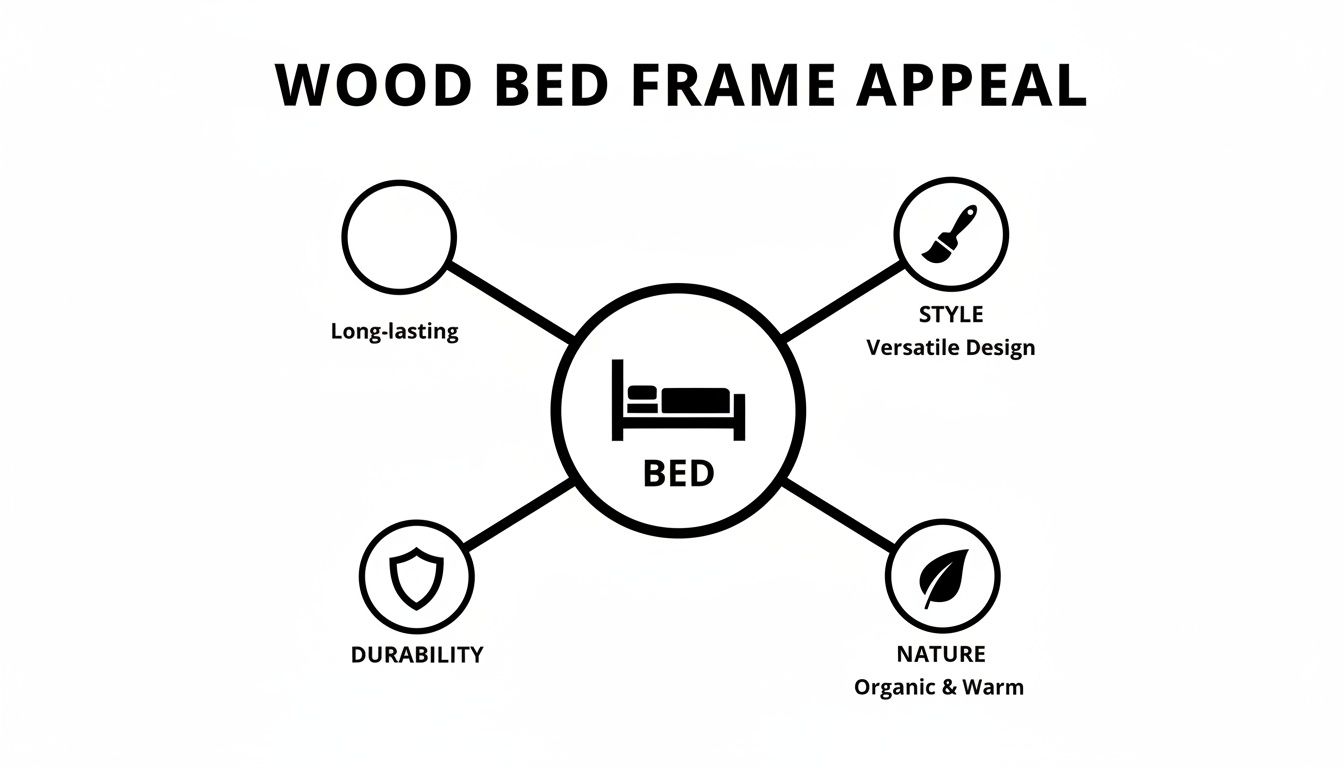
As you can see, these three pillars—enduring strength, timeless style, and an inherent link to the natural world—work together to make a wooden bed frame a superior choice for any home.
Think of your bed frame as the anchor for your entire bedroom's design. A solid wood frame provides a sturdy, reliable base that supports not just your mattress, but the whole room's aesthetic. Its benefits go far beyond simple utility:
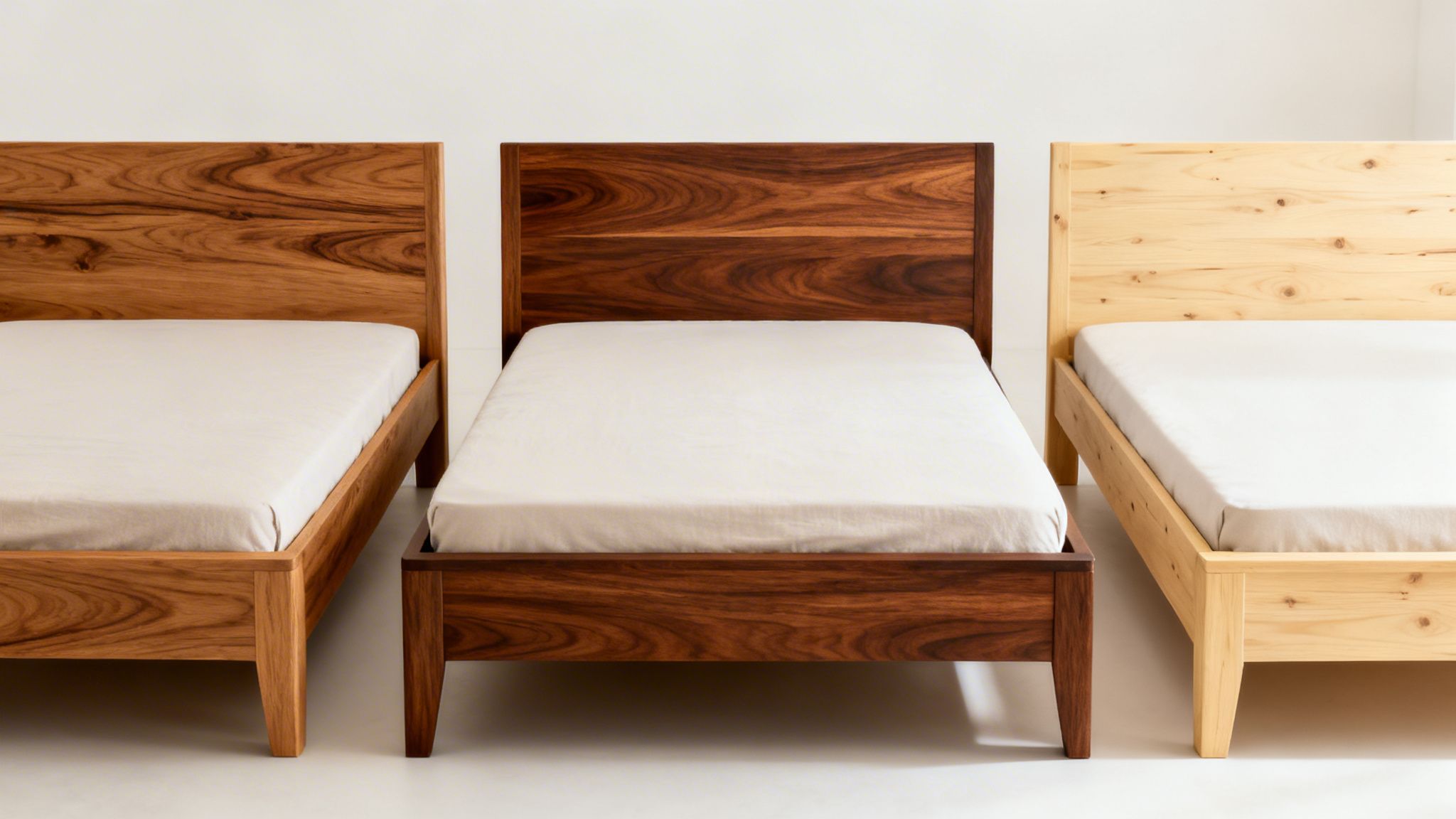
Choosing the right wood for your bed frame goes far beyond just what looks good. It’s a decision about longevity, character, and how the piece will feel in your home for years to come. Woods are typically grouped into two main camps: hardwoods and softwoods. Getting to grips with this fundamental difference is the first real step in finding your perfect match.
This distinction has nothing to do with how hard the wood feels if you rap your knuckles on it. Instead, it’s all about the tree’s biology. Hardwoods come from deciduous trees (the ones that lose their leaves each autumn), while softwoods come from coniferous trees (think pines with their needles and cones). This one biological difference is what gives each type of wood its unique personality.
Hardwoods like oak, walnut, and maple are famous for their density and sheer strength. Picture an oak bed frame as a kind of stone fortress—it’s built to last, designed to shrug off decades of use, and might just become a family heirloom.
These woods are much less likely to get dented or scratched, which is a massive plus for anyone with kids, pets, or just a generally bustling household. Their tight, fine grain patterns also give them a more formal and refined appearance. The deep, rich colour of a walnut bed frame, for example, can anchor a bedroom with a sense of pure sophistication, whereas oak brings a classic, dependable feeling with its strong, visible grain.
Here’s a quick rundown of popular hardwoods:
On the other side of the spectrum, you have softwoods like pine. If an oak bed is a fortress, a pine bed is more like a cosy, welcoming cabin. It's lighter, wonderfully adaptable, and brimming with rustic charm.
Softwoods are generally much more affordable, and because they’re lighter, moving and assembling them is a whole lot easier. While they are more prone to dents than hardwoods, many people find that these little imperfections are what give the wood its character over time, creating a warm, lived-in feel. Pine is a superstar in Scandinavian and farmhouse design, where its light hue and visible knots are celebrated for their natural, minimalist beauty. It also takes paint beautifully, opening up a world of personalisation. You can see similar principles of celebrating wood character in our guide on the beauty of end-grain chopping boards.
Choosing between hardwood and softwood for your bed frame wood isn't about which is "better," but which is better for you. It's a balance between your budget, desired style, and how you envision the piece fitting into your life.
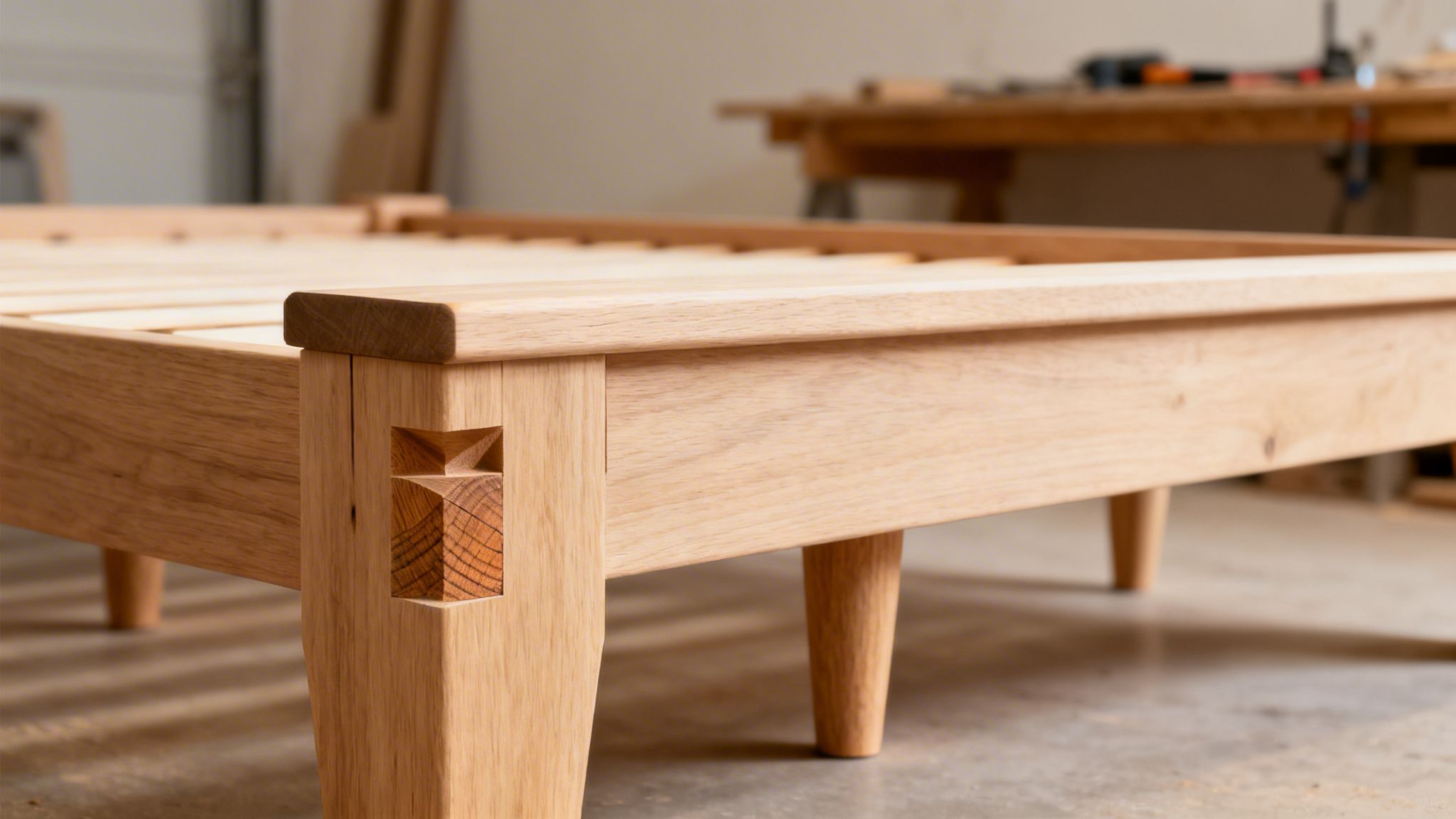
While the type of wood sets the visual tone of your bedroom, it's the frame's construction that truly makes or breaks the bed. This is the unsung hero, the part you don't always see, that ensures quiet, stable nights for years to come. After all, a beautiful frame is worthless if it squeaks, sags, or wobbles.
Learning what goes into a well-engineered frame is the key to choosing a piece that will genuinely last a lifetime.
The most crucial detail of a sturdy wooden bed frame is its joinery—the methods used to connect the different pieces of wood. Lower-quality frames often just use simple screws and glue. These can loosen over time as the wood naturally expands and contracts with changes in humidity, leading to that dreaded midnight squeak.
For lasting stability, you want a frame that uses traditional woodworking joints. These clever techniques are designed to lock pieces of wood together mechanically. It's the difference between interlocking puzzle pieces and just taping two bits of paper together; one creates a powerful, durable bond that resists movement and noise, while the other is a temporary fix.
Some of the best types of joinery to look for include:
Beyond the corner joints, the support structure directly under your mattress is absolutely critical. A weak foundation is the number one cause of mattress sagging, which can ruin even the most luxurious mattress and wreck your sleep quality. This is especially true for larger beds.
A high-quality wood deserves an equally high-quality support system. For any bed size queen or larger, a robust centre support rail with at least one or two additional legs is not a luxury—it's an absolute necessity for proper mattress support and longevity.
These centre legs are vital. They stop the middle of the bed from dipping under the weight of the mattress and sleepers, guaranteeing an even, supportive surface. They work by distributing the load across the entire frame, which takes a huge amount of stress off the side rails and corner joints.
Finally, you need to know exactly what you’re buying. Solid wood means the entire piece—say, a headboard post—is made from a single, solid piece of lumber from top to bottom.
In contrast, veneer is a very thin slice of real, attractive wood that has been glued onto a core of a cheaper material, like particleboard or MDF.
How can you spot the difference? Look at the edges of a component. On a solid wood bed frame, you'll see the end grain. It will look different from the surface grain, but the pattern will be continuous, flowing from the top over the edge. With a veneer, you will often see a thin seam where the decorative layer ends, or the grain pattern might look suspiciously perfect and repetitive across a large surface. Solid wood also just feels heavier and more substantial—a true mark of lasting quality.
A bed frame is so much more than just a place to put your mattress; it’s a statement piece. When you choose a frame, you’re deciding on the kind of atmosphere you want to build, not just in your bedroom but in the world at large. This is where the clean, intentional principles of Scandinavian design meet the growing desire for sustainable, eco-conscious living.
The entire Scandinavian aesthetic is built on a foundation of simplicity, function, and a real connection to the natural world. It’s a style that embraces clean lines, uncluttered spaces, and the kind of natural materials that bring a sense of warmth and light indoors. It’s no surprise, then, that a simple, beautifully made wooden bed frame is a cornerstone of this look.
Light-coloured woods, in particular, just feel right for this design philosophy.
These woods are the perfect materials to capture that sense of hygge (the famous Danish concept of cosy contentment) and lagom (the Swedish ideal of living in balance). If you’re looking for more ways to bring this natural warmth into your home, you might find some inspiration in our ideas for wood wall decor.
Beyond just looks, the modern way to choose a bed frame is with its environmental story in mind. More and more of us are looking for furniture that is not only beautiful but made responsibly. This means seeking out wood from sources that are renewable and managed with care.
Choosing a sustainable bed frame isn’t just about making an eco-friendly purchase. It's about investing in a piece with a story, one that respects the material’s origins and supports a tradition of resourceful craftsmanship that will last for generations.
Making a sustainable choice is easier than you might think. Look for wood that is FSC-certified (Forest Stewardship Council), which guarantees it comes from forests managed to meet high environmental and social standards. Another brilliant option is recycled or reclaimed timber, which breathes new life into old wood and drastically cuts down on waste.
This tradition of making the most of every resource is deeply woven into the fabric of Swedish craftsmanship. In the heart of Dalarna, Sweden, historical records from as early as the 17th century show forest workers carving essential furniture—like bed frames—from scrap wood during the long, harsh winters. This legacy is still alive and well. Data from 2026 shows that 85% of wooden bed frames produced in the region now incorporate recycled pine, the very same material used for the iconic Dala horses. This practice reduces waste by an incredible 40% compared to using imported alternatives. You can learn more about this rich tradition and the history of the Dala horse by visiting The Swedish Wooden Horse website.
When you choose a sustainable wood bed frame, you’re not just buying furniture. You're becoming part of a long legacy of mindful, resourceful creation.

The moment a flat-pack wooden bed frame arrives is one of pure potential. With just a few tools and a clear afternoon, you can build the very foundation of your sleep sanctuary. This isn't just about assembly; it's the first step in making a piece of furniture truly your own.
The key to a frustration-free build is all in the preparation. Before you even touch a screw, unpack every piece and lay it all out. Carefully check everything against the parts list in your manual. It's a simple step, but it can save you a massive headache halfway through the project.
Building your bed frame isn't a race. Work methodically, don't fully tighten the bolts until the very end, and always hand-tighten screws first to avoid stripping the wood. A little patience now ensures a stable, quiet, and perfectly aligned final product.
Following the instructions carefully will give you a sturdy and reliable structure. Once everything is in place and squared up, go back and tighten all the hardware securely. A well-assembled bed frame wood is a quiet frame.
Now for the really creative part—personalisation. An unpainted wooden bed frame is a blank canvas, inviting you to add your unique story and style. This is your chance to turn a functional item into a meaningful piece of art for your home.
For this, Swedish folk art provides a wonderful wellspring of inspiration. The tradition of painting furniture is deeply rooted in regions like Dalarna, where craftsmanship is a way of life. This heritage is most famous for the Dala horse, but the art form extends far beyond those charming wooden toys.
In fact, historical records show that in the 17th century, hand-built wooden bed frames actually outsold toys 3:1 in some Dalarna villages. By the 19th century, these beautifully painted beds were popular souvenirs, a testament to their cultural and artistic value. The tradition continues today, with modern polls showing that 88% of collectors value the uniqueness of hand-carved and painted items over mass-produced ones. You can find more about this rich history from hhhistory.com.
Embracing this tradition can turn your bed into the true centrepiece of your room. Here are a few ideas to get you started:
If you enjoy working with your hands to create something special for your home, you might be interested in a similar project. You can check out our guide on a DIY wine rack for more inspiration.
A well-made wooden bed is more than just furniture; it's a lifelong companion. And thankfully, protecting this investment isn't about hard work. It's about forming a few simple habits that will preserve the wood's natural beauty and ensure your frame becomes a cherished heirloom for years to come.
First things first, routine cleaning is what keeps your bed frame wood looking its absolute best. A quick dusting with a soft, microfibre cloth about once a week is usually all you need to stop dust from building up. This gentle touch protects the delicate finish from tiny abrasive particles that can cause fine scratches over time.
For any stickier spots, you can slightly dampen your cloth with plain water. Always wipe in the direction of the wood grain, never against it. Once the spot is gone, immediately dry the surface with a separate clean, dry cloth. This simple step prevents moisture from seeping into the wood, which could otherwise cause swelling or damage the finish.
The environment in your bedroom plays a surprisingly big role in the long-term health of your bed frame. Remember, wood is a natural material that breathes and reacts to its surroundings, especially sunlight and humidity.
Think of your wooden bed frame like a fine piece of art. Positioning it away from direct sunlight and sources of extreme temperature change is the simplest way to protect its colour and structural integrity for years to come.
Prolonged exposure to the sun’s UV rays can slowly fade or discolour the wood’s beautiful finish. Likewise, placing your bed right next to a radiator or a powerful air conditioning vent can cause the wood to expand and contract too quickly. This can put unnecessary stress on the joints. A stable, consistent environment is what your bed frame loves most.
Even with the most careful ownership, small accidents can happen. A dropped book, a stray vacuum cleaner... life happens! The good news is that minor damage is often quite easy to sort out yourself, keeping your frame looking pristine.
Following these simple tips will ensure your wooden bed frame stays just as strong and beautiful as the day you first put it together.
Choosing a new bed frame is a big decision, and it’s natural to have a few lingering questions. To help you feel completely confident in your choice, I’ve put together some straight answers to the most common queries I hear about wooden bed frames.
Not necessarily. It really comes down to a trade-off between sheer resilience, your personal style, and your budget.
Hardwoods like oak are incredibly dense and tough, making them a fantastic choice if you're looking for something that will resist dents and last a lifetime. On the other hand, a bed frame wood like pine (a softwood) is often much more affordable and lighter to move. Its rustic, airy feel is also a cornerstone of styles like Scandinavian and farmhouse design.
The "better" choice is the one that fits your home and life.
A bed frame is a long-term companion, and its durability often defines its true value. The heritage of wooden craftsmanship, especially in places celebrated for their quality timber, tells a story of longevity.
Take Sweden's Dalarna region, for example. Wooden bed frames are practically a way of life there, making up 92% of frames in rural households as of 2023. The durability is astonishing: 95% of Dalarna wooden beds from the 19th century still in use show less than 5% wood degradation, thanks to time-honoured, environmentally safe pine treatments. You can dive deeper into this incredible Swedish folklore and craftsmanship on scandinaviangiftoutlet.com.
Get up close and personal with it. On a solid wood piece, the grain pattern will flow naturally and consistently right over the edges. If you look at the end of a board, you’ll see the "end grain," which looks a bit like a bundle of tiny straws – a dead giveaway for solid wood.
A veneer, which is a very thin slice of real wood glued onto a core material like particleboard, will often have seams where the sheets meet. The grain pattern on the surface might also look a little too perfect or repetitive.
The easiest test? Give it a lift. Solid wood is noticeably heavier and feels much more substantial.
A well-made wooden bed frame should be silent for years. Squeaks are almost always a sign of two things: weak joints or hardware that has worked its way loose.
When you're shopping, look for frames built with robust joinery, like mortise-and-tenon joints. Once it’s home, just make it a habit to periodically check that all the bolts and screws are snug. A quality frame is engineered from the very beginning to stay quiet, so you can enjoy peaceful nights.
Discover a piece of this authentic craftsmanship at Dalaart, where every hand-carved creation tells a story of Swedish heritage. Explore our collection at https://dalaart.com.


.svg)


.png)


