February 26, 2026
When you hear the name Lapidus of Sweden, you're hearing a story of cherished folk art, a tradition passed down through generations. The brand is most famous for bringing the iconic Dala horse to the world, a symbol that springs directly from the heart of the Dalarna region.
These aren't just pretty objects for a shelf; they are living pieces of Swedish heritage. Each one is a testament to masterful craftsmanship, celebrated for its timeless feel and the vibrant, hand-painted details that bring it to life.
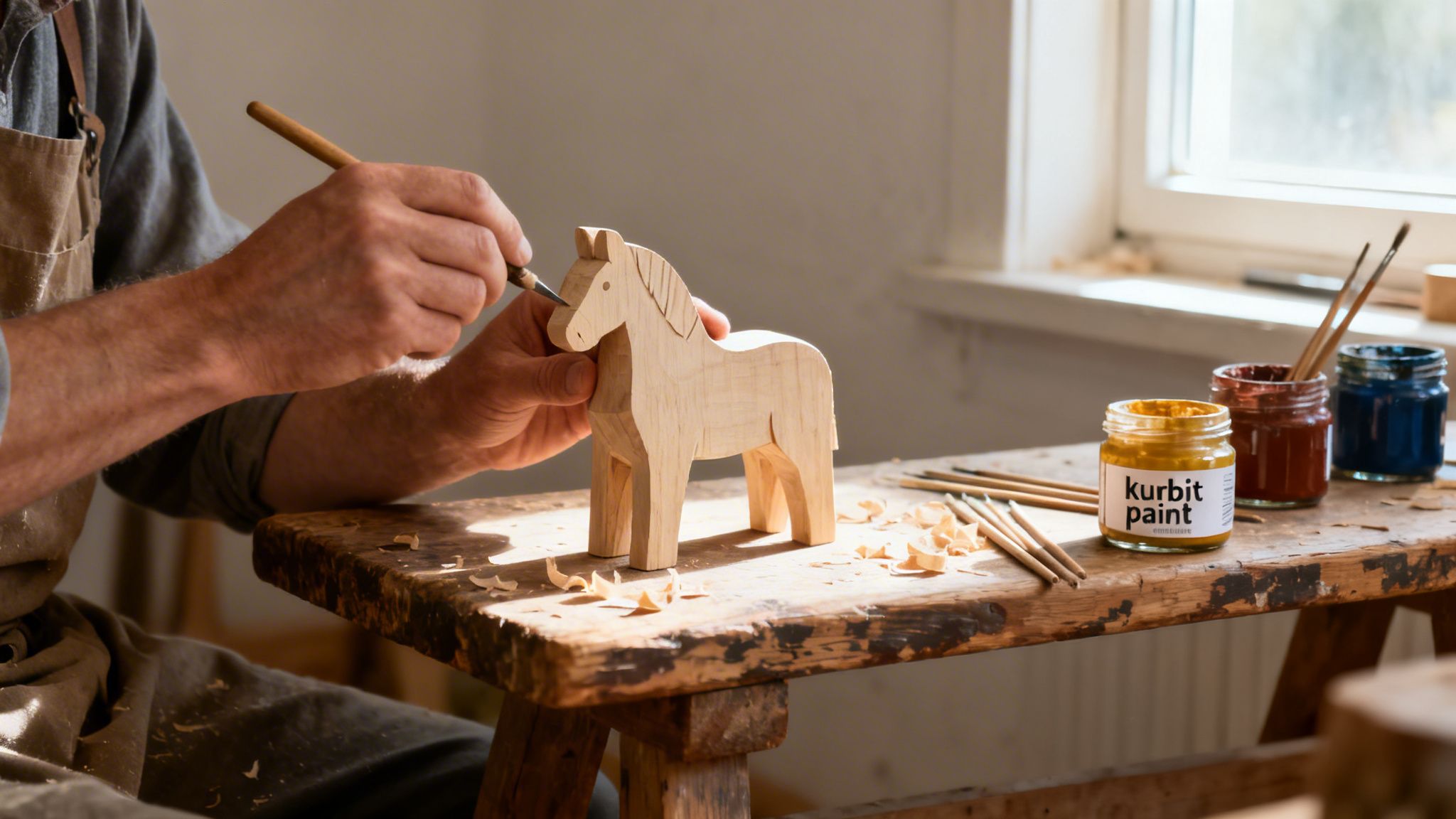
To really get what makes a Lapidus of Sweden creation special, you have to go back to its roots—deep in the cultural heartland of Sweden. This artistic legacy was born from the forests and steadfast traditions of Dalarna, a place known for its breathtaking landscapes and tough, resilient people. Think of the long, dark winter evenings and the abundance of local wood; this was the perfect recipe for a rich carving tradition to take hold.
For centuries, artisans in tiny workshops would take simple blocks of wood and coax expressive figures from them. This was so much more than a hobby. It was a way to capture the spirit of their world and create things with real beauty and meaning. Every piece they made was a tangible link to their culture.
What truly pulls you into Lapidus of Sweden folk art is its absolute dedication to hands-on creation. Unlike something spat out by a machine, every single curve and brushstroke on these pieces reflects the skill and soul of an individual artist. It’s this human touch that gives each item its own unique personality.
The journey often started with locally sourced timber, chosen with a careful eye for its grain and feel. Artisans then picked up traditional tools to carve out the distinctive shapes—a skill passed lovingly from one generation to the next. This deep respect for heritage is what elevates these pieces far beyond simple souvenirs.
The real, lasting value of Lapidus of Sweden art is its authenticity. It’s a quiet celebration of slow, deliberate artistry in a world that’s always rushing.
These folk art pieces are powerful symbols of Swedish heritage. The Dala horse, for instance, is recognised the world over as an emblem of Sweden itself. To own a Lapidus piece is like holding a little piece of that national story in your hands.
Their designs are known for a few key things:
Understanding this history is the first step. It gives you the foundation you need to start spotting the finer details—the signature styles and authentic marks that tell you you've found a genuine Lapidus of Sweden treasure. We'll dive into exactly that in the next section.
Every Lapidus of Sweden piece tells a story. It’s not written in words, but in the curves of the wood, the choice of colours, and the swirl of a painted flower. To really appreciate these pieces, you need to learn how to read this unique artistic language, and it all starts with the carving.
Take a close look at the woodwork. You’ll see a fluid, almost soft quality to the carving. While the shapes are bold and confident, they steer clear of hard, geometric lines. This gives each figure—whether it's a horse, rooster, or pig—a wonderful sense of life and gentle energy, setting them apart from more rigid folk art styles.
This beautiful carving is then brought to life with traditional painting, a clear homage to the famous kurbits style of Dalarna. This isn't just slapping on some colour; it's storytelling with a paintbrush.
Colour is at the very heart of the Lapidus identity. The artisans pull from a specific, recognisable palette that feels both historic and wonderfully vibrant. While you'll find plenty of variations, a few core combinations are true hallmarks of their work.
These colours aren't just thrown together. They're chosen with care to create a sense of harmony and make the details of the carving and painted patterns pop.
Beyond the colour palette, you’ll start to notice specific motifs that pop up again and again. These designs are much more than just decoration; they are symbols deeply rooted in Swedish culture and the natural world.
The real magic of Lapidus artisans is how they blend simple forms with such intricate details. A single piece can feel both rustic and refined at the same time—a balance that is incredibly difficult to strike.
The most famous figure is, of course, the Dala horse, a powerful symbol of strength and courage. But the Lapidus of Sweden family extends to other beloved creatures from the farm and forest. You'll often find proud roosters and charmingly stout pigs in their collections.
Each animal is then decorated with intricate patterns, usually on its harness or body. These swirling floral designs and delicate lines are direct descendants of the kurbits painting tradition. Getting a feel for these specific details is the best way to confidently spot a true Lapidus creation. If you want to dive deeper, you might enjoy our guide to the Swedish artistic lexicon, which explains some of these traditional terms.
For any collector, knowing how to spot a genuine treasure from a clever lookalike is the name of the game. When it comes to Lapidus of Sweden, authenticating a piece is all about knowing which subtle clues the artist left behind. Think of it like being a detective—this guide will give you the tools you need to confidently identify the real deal.
Your investigation should always start with the maker’s marks. While not every single piece was signed, many have a distinct mark, a signature, or even an old paper label on the underside. These marks changed over the years, so getting familiar with them can help you place a piece in a specific time period and confirm where it came from.
The materials themselves have a story to tell. Lapidus artisans were known for favouring specific local woods, prized for their tight grain and how smoothly they could be carved. Over decades, this wood gets a unique patina—a gentle, warm glow that simply can’t be faked. New reproductions often look a bit flat or have an artificial, uneven finish meant to mimic age.
Take a close look at the paintwork, too. Original paint will show its age gracefully, perhaps with some very fine cracking (known as craquelure) or a slight, mellow fading where it’s been touched by the sun. These aren't flaws; they're signs of a life well-lived.
The most reliable sign of an authentic Lapidus of Sweden piece is the evidence of the human hand. Look for the tiny imperfections—a slightly asymmetric carving or a brushstroke that shows individual character—that mass-produced items lack.
This simple decision tree helps visualise the key characteristics to look for when identifying authentic Lapidus of Sweden art.
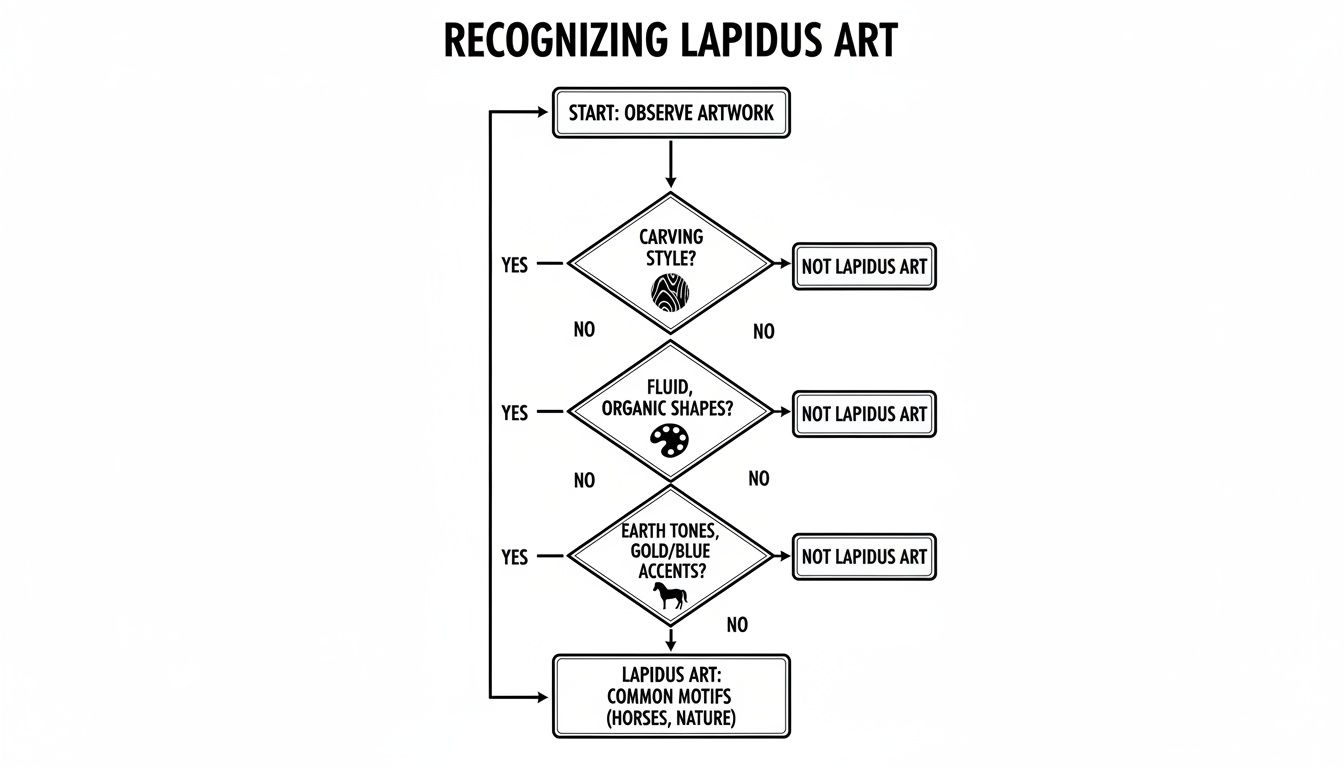
This flowchart shows that authentic pieces are typically defined by a combination of fluid carving styles, traditional colour schemes, and iconic motifs like the Dala horse.
The term "Lapidus of Sweden" can sometimes trip up new collectors, as it's not a widely documented historical brand in the way Dala horse traditions are. Often, this means you have to rely on recognising a distinct artistic "family resemblance" between pieces from certain workshops rather than a single, universal mark. While records on some smaller artisan groups can be hard to find, the physical evidence in the artwork itself is always your best guide.
By building a mental checklist, you’ll soon learn to assess a potential find with a discerning eye.
Turning a casual interest in Lapidus of Sweden into a meaningful collection is a deeply rewarding journey. Whether you’re hunting for that single, perfect piece for your mantelpiece or hoping to gather a diverse group that tells a broader story, you first need to understand what makes these pieces tick. Figuring out what drives their value is the key to collecting with confidence.
It's not just about how old a piece is, though. The real value is a mix of things: its rarity, its condition, the specific artist who made it, and the quality of the work itself. A piece in pristine condition from a well-known carver will always be more sought-after than a common, damaged item from an unknown hand.
When you’re looking at a potential new piece for your collection, a few key things really influence its worth. Learning to spot these qualities will help you make smarter choices and truly appreciate the art you’re bringing home.
Here’s what to keep a keen eye on:
A common mistake is to focus too much on age alone. An older piece in poor condition might actually be worth less than a more recent, but perfectly preserved, example from a notable artist.
You don’t have to be an expert overnight. Building a collection can start small, and you’ll develop a sharper eye over time. The most successful collectors are patient and do their homework, focusing on pieces they genuinely love rather than just what’s trendy. At the end of the day, a well-curated collection should be a reflection of your own personal taste.
A focused approach often works best. You could decide to collect only roosters, or pieces from a specific decade, or maybe the works of a particular artist whose style you really admire. This helps narrow your search and lets you become a true expert in your niche. By understanding what makes a Lapidus of Sweden piece desirable, you can build a collection that is not only beautiful but also a sound investment for the future.

When you own a piece from Lapidus of Sweden, you become the current caretaker of a small piece of history. These handcrafted items are so much more than beautiful objects; they’re tangible links to a rich folk art tradition. Looking after them properly ensures their story can be enjoyed for generations to come. Thankfully, proper care is straightforward and makes all the difference in keeping their beauty and value intact.
The most frequent task you'll have is a gentle dusting. Use a soft, dry microfibre cloth or even a clean, natural-bristle paintbrush to carefully lift away any surface dust. This simple act stops grit from settling into the delicate paintwork, which can cause almost invisible scratches over time.
If a piece needs a bit more than a light dusting, you need to be very careful. Never, ever reach for commercial furniture polishes, wood cleaners, or all-purpose sprays. These products are packed with solvents, silicones, or oils that can permanently damage the delicate, hand-painted finish. They can cause the surface to become dull, sticky, or even start to lift away from the wood itself.
For a bit of minor grime, you can slightly dampen a soft cloth with distilled water—never tap water, which can leave behind mineral deposits. Wring it out until it’s almost dry, then gently dab the soiled spot.
The golden rule for cleaning any antique or vintage painted wood is to always start with the least invasive method. Aggressive cleaning can easily do more harm than the dirt itself.
And it should go without saying, but never submerge the piece in water or let any liquid sit on its surface. Wood is porous; it will swell or crack if it absorbs too much moisture, which compromises both the wooden structure and the beautiful painted decoration on top.
Where you choose to display your Lapidus of Sweden art plays a massive role in its long-term health. The two biggest environmental enemies are sunlight and wild swings in humidity.
To protect the vibrant, hand-painted colours from fading, just follow these key guidelines:
By following these simple steps, you'll protect your treasures from environmental damage. It’s the best way to ensure your collection remains a beautiful and cherished part of your home for many, many years.
Now that you can spot a genuine Lapidus piece from a mile away and know just how to care for it, the real fun begins: the hunt. Finding these unique bits of Swedish folk art is a genuinely rewarding experience, but knowing where to look is the key to tracking down high-quality, authentic items without any fuss.
The search for these treasures usually takes collectors down a few different avenues, each with its own perks. A great place to start is with specialised antique dealers who have a focus on Scandinavian folk art. These experts have a trained eye and almost always guarantee the authenticity of what they sell, giving you valuable provenance and, most importantly, peace of mind with your purchase.
Navigating the market for these pieces requires a bit of savvy. While you might just get lucky and stumble upon one at a local car boot sale, you’ll have much better results if you focus your energy on more reliable sources.
When you're buying online, good communication is your best friend. A reputable seller will always be happy to answer your questions and send over extra photos to help you feel confident about a piece's origin.
Ultimately, the best place to find Lapidus of Sweden art really comes down to your personal collecting style. If you love the thrill of the chase and want a wide variety of options, exploring different shops and online platforms is the way to go. For more insights on sourcing from dedicated craft stores, take a look at our guide on the Leksands Hemslöjd webshop.
To wrap things up, let's tackle some of the questions that pop up most often for both new and seasoned collectors. Getting a handle on these points will build your confidence and help you appreciate the finer details of Lapidus of Sweden folk art.
Not always. It’s a common misconception. While plenty of creations from the well-known artisans have a painted mark, a signature, or even a paper label, it was never a universal rule. You’ll find that many older or smaller pieces were often left unsigned.
This is where the real art of collecting comes in. When there's no signature, you have to rely on your eye and knowledge of the craft. You'll need to look for other key identifiers—the distinctive carving style, the traditional colour palette, and the specific motifs the artist was known for. An unsigned piece that perfectly matches the known work of a Lapidus artisan is often considered authentic based on this kind of strong stylistic evidence.
This is a fantastic question because it gets right to the heart of the tradition. The easiest way to think about it is that "Dala horse" is the broad, general category for any carved wooden horse from the Dalarna region. A "Lapidus horse," on the other hand, is a specific artistic interpretation from within that bigger family.
The difference really comes down to the refined details and artistic flair. A Lapidus piece might feature a more elegant or slender carving style, a departure from the stockier, more rustic form you see in a generic Dala horse. The painting style is also a dead giveaway; the intricate kurbits-inspired flourishes on the harness and body are often far more detailed, executed with a unique artistic signature that truly sets it apart.
Think of it this way: a Dala horse is a symbol of Swedish heritage in general, but a Lapidus horse is the specific creative voice of a particular artist or workshop, telling their own version of that story.
Learning to assess the paint is one of the most crucial skills you can develop. A piece's originality is a massive factor in its value and historical integrity, and authentic, aged paint has a look and feel that's impossible to fake. Spotting these signs is like being a historical detective.
First, look for a gentle, mellowed surface known as a patina. Over many decades, the original paint develops a soft lustre that brand-new finishes just can't replicate. You might also spot a fine, web-like cracking called craquelure, which is a perfectly natural result of the paint shrinking as it ages.
On the flip side, a repaint often betrays itself with clumsy, tell-tale signs. Be suspicious of colours that seem too bright or glossy for the piece’s supposed age. Look for brush strokes that carelessly cover the aged, darkened wood underneath. If the finish just feels wrong for its era, it’s worth taking a much closer look.
Ready to find your own piece of Swedish heritage? Dalaart offers a curated collection of authentic, hand-carved folk art directly from master artisans in Dalarna. Explore our unique selection and bring home a timeless treasure. Discover authentic Swedish folk art at Dalaart.


.svg)


.png)


