February 25, 2026
When you hear the name Björn Ramel, you’re hearing about a pivotal figure in Swedish glass design. The pieces he created, especially during his time with the iconic Gullaskruf glassworks, are the very essence of mid-century Scandinavian modern design. His work is celebrated for its clean, functional lines and a wonderfully subtle use of colour, making his glass highly prized by collectors today.
Step into the world of Björn Ramel, a true visionary who helped shape the aesthetic of mid-century Swedish glass. His legacy wasn't just confined to his time at the famed Gullaskruf glassworks; he was an artist whose entire philosophy of simplicity and function became woven into the fabric of the Scandinavian design movement.
His work never shouts. Instead, it captures a quiet, confident spirit through its organic shapes and understated colours. Think of it this way: if some art glass screams for attention from across the room, a Ramel piece speaks in a calm, compelling voice that draws you closer. This artisanal touch connects his work to the broader story of Swedish craft, making it a cornerstone for any serious collector of vintage design.
So, what is it about Björn Ramel's creations that makes them feel so fresh, decades after they were first made? It all comes down to a perfect, delicate balance between artistry and everyday utility.
Ramel's true genius was in his restraint. He understood that genuine elegance didn't need complexity; it needed a clarity of form and an honest connection to the material. This is precisely why his glass feels as modern today as it did back in the 1950s.
This commitment to craft placed him within a vibrant, though competitive, national industry. The Swedish glass sector has certainly evolved over the years, but its heart—a focus on niche, quality-driven production—remains. In fact, there are roughly 245 active glass manufacturing enterprises in Sweden as of 2023, fostering a moderately competitive environment where artisanal producers like Gullaskruf could truly shine. You can learn more about Sweden's modern glass industry landscape from Statista.
Learning to spot a genuine Björn Ramel piece is an acquired skill, one that gets easier and more intuitive the more you handle his work. It’s a bit like learning to recognise an artist’s signature brushstrokes; Ramel’s own handwriting is in the form, the colour, and even the very feel of the glass itself.
Authentic Björn Ramel glass has a satisfying weight to it, a substantial quality that speaks to the high standards at Gullaskruf. His forms are almost always organic and fluid. You'll often notice a slight, deliberate asymmetry that gives his work a soft, natural character. Forget razor-sharp edges and severe angles—instead, look for gentle curves and an overarching sense of harmony.
Getting to know his two most famous series, ‘Randi’ and ‘Ballad,’ is the perfect place to start. They each have distinct features that are fantastic markers for identification.
The ‘Randi’ Series: This is perhaps his most iconic line from the 1950s. 'Randi' is immediately recognisable by its unique ribbed texture. This isn’t just a visual trick; the vertical ribbing is a tactile element that feels wonderful in your hand and plays with light in a truly beautiful way. The forms are typically simple and functional, covering everything from vases and bowls to drinking glasses.
The ‘Ballad’ Series: This collection often features smooth surfaces but is defined by elegant, elongated shapes and a more muted colour palette. Keep an eye out for pieces in smoky greys, deep ambers, and subtle greens. The forms are graceful and clean, capturing the essence of Scandinavian modernism. To learn more about other artists who shaped this era, you might enjoy our guide on Orrefors designer Anne Nilsson and her impact on Swedish glass.
The base of a piece often holds the most definitive clues. Many of Ramel's production items were sold with just a foil or paper sticker that, unsurprisingly, is often long gone. However, some pieces do have more permanent marks. While a missing signature doesn't automatically mean it's not his work, finding one is fantastic confirmation.
When you're examining a piece, remember that handcrafted glass will always have subtle imperfections. These aren't flaws. They are the charming signs of its artisanal origin—things like tiny air bubbles trapped within the glass or a slightly uneven pontil mark on the base where it was detached from the blowpipe.
Look for an engraved signature, which could be a simple "Ramel" or "B. Ramel," sometimes with "Gullaskruf" included. The style of the engraving can vary, but it should look fluid and naturally inscribed, not mechanically perfect.
This simple decision tree can help you quickly place a potential find within the wider Scandinavian design world.
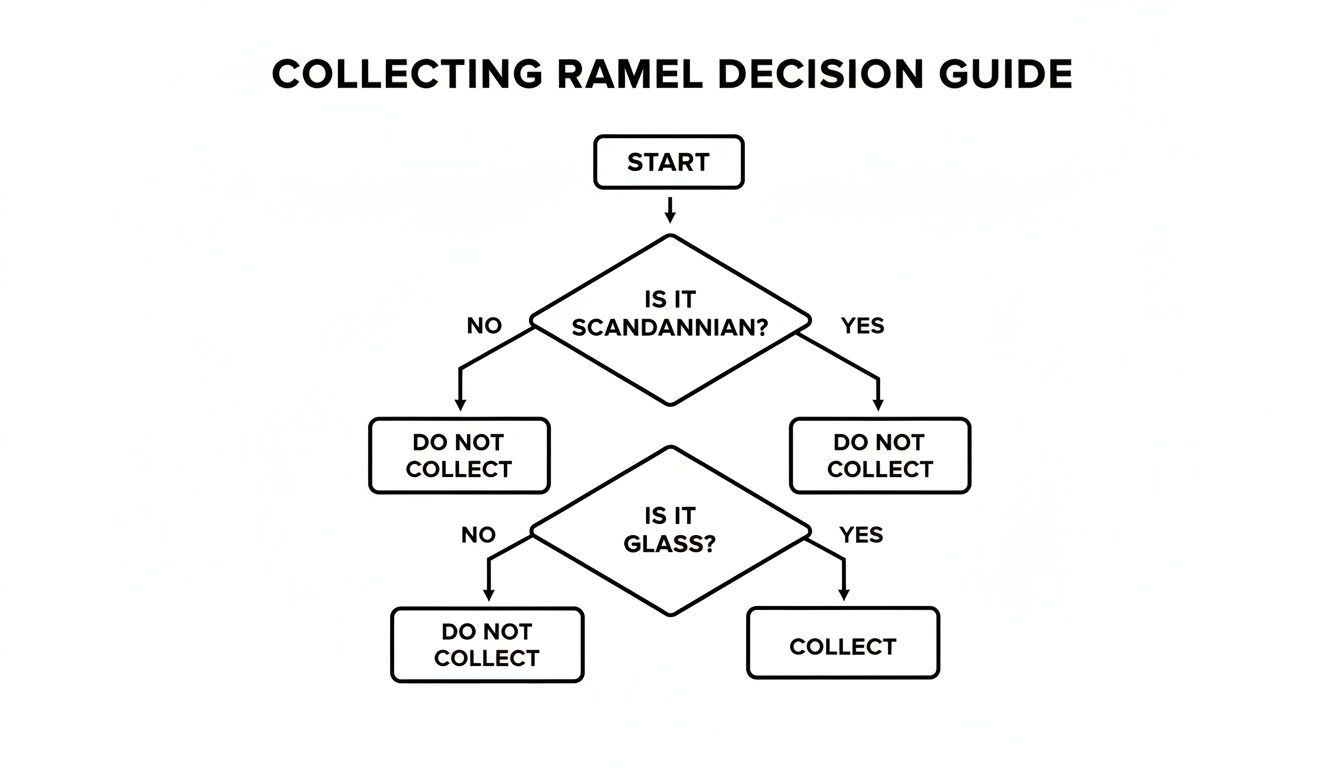
As the flowchart shows, the first steps to identifying Ramel's work are simple: confirming its Scandinavian origin and the material itself. This makes the initial assessment much easier for new collectors just starting their journey.
To really get a feel for Björn Ramel's glass, you have to understand his time at the Gullaskruf glassworks. This wasn't just another job for him; it was the creative furnace where his most iconic work was forged, right in the middle of the post-war Scandinavian design explosion. The years from 1953 to 1977 represent the very heart of his career, a time when the artist and the manufacturer were in perfect step.
This was an electric era for design. The focus was shifting towards creating beautiful, functional objects that everyday people could enjoy in their homes. Gullaskruf, like many Swedish glassworks, was keen to ride this modern wave. They gave Ramel the technical muscle and the skilled hands he needed to transform his organic, nature-inspired ideas into reality.
The relationship was a two-way street. Ramel gave Gullaskruf a unique artistic voice, and in return, the glassworks gave him the space to experiment. This wasn't a case of a big company telling an artist what to make; it was a genuine collaboration where Ramel's vision was respected and brought to life with incredible skill.
This marriage of artistic flair and industrial might is a story you see time and again in the history of Swedish glass. If you're curious about this, you can learn more about the heritage of SEA Glasbruk and its Kosta connection in our other article.
Knowing about the Gullaskruf years adds a vital layer of context to any piece of Björn Ramel glas. It answers the 'why' behind the design—the cultural shift, the artistic philosophy, and the industrial partnership that made it all happen.
When you hold a piece of Ramel's glass from this period, you are holding a fragment of design history. It represents a golden age when artistry and manufacturing came together to produce objects of enduring beauty and purpose.
This historical backdrop adds so much value beyond the physical object itself. It provides a story, a provenance, that makes collecting so much richer. Knowing that your vase or bowl was born during this innovative time at Gullaskruf elevates it from simple glassware to a tangible piece of the Scandinavian modern legacy.
Figuring out what a piece of Björn Ramel glas is worth goes far beyond just its age or how beautiful it is. Think of it more like being a detective; you're piecing together clues like rarity, the popularity of a specific series, colour, and of course, its overall condition to build a case for its value on the current market.
A piece from a well-known series like 'Randi' in a rare or unusual colour will almost always fetch a higher price than a more common item. Rarity is a huge driver of value, so a limited-production run or an experimental design is a fantastic find. Naturally, the overall economic climate for collectibles also plays its part in influencing what buyers are willing to pay.
The wider market for Swedish glass reflects these trends. Producer prices in Sweden's glass manufacturing sector hit 143.80 points in May 2025. While this was a slight dip from the previous month, it shows incredible growth from a historical low of just 67.20 points back in April 1992. That's more than double the value in just three decades. You can find more details on Swedish glass manufacturing price trends from Trading Economics.
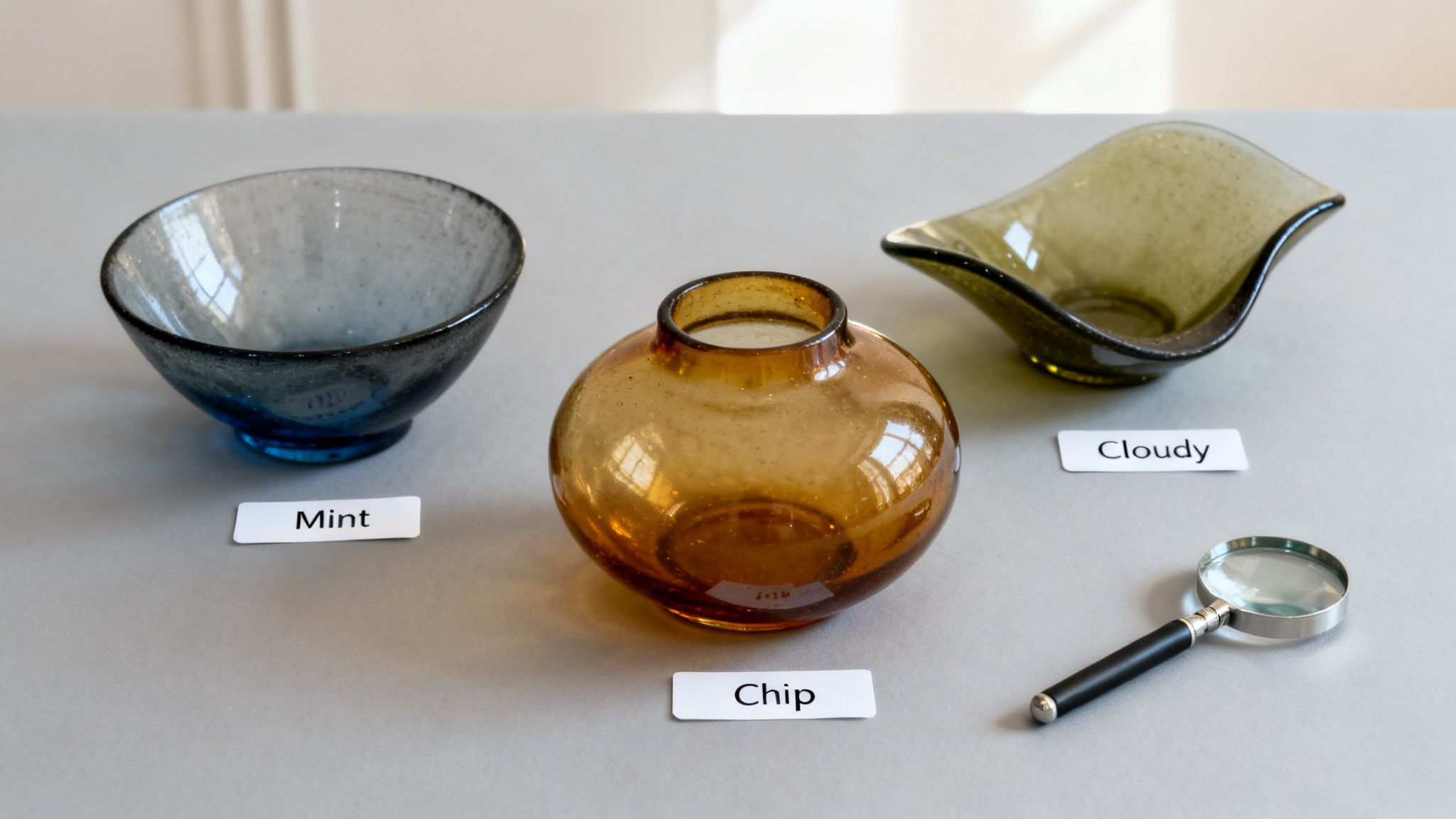
The physical state of your glass is, without a doubt, the single most critical factor affecting its market value. Even the tiniest flaw can dramatically reduce what a serious collector is willing to pay. A careful, hands-on inspection is your first and most important job.
You need to gently run your fingers along every single rim and edge, feeling for any hint of roughness. Even a minuscule chip, what collectors often call a "flea bite," can detract from its value. Use a magnifying glass under good, bright light to hunt for subtle scratches or cracks that your naked eye might miss.
A piece in mint, or 'as-new,' condition is the absolute gold standard for collectors. Any signs of wear, damage, or heaven forbid, a repair, will almost always lower its financial worth, no matter how rare the piece is.
Knowing exactly what to look for helps you assess a piece with confidence. Here are the most common issues you'll come across with vintage glassware and how they impact the value of your Björn Ramel glas.
This careful assessment puts you in a much stronger position, whether you're looking to add to your collection or preparing to sell a piece. For those interested in broadening their expertise on notable Swedish artists, our guide on the glass sculptures of Mats Jonasson is a great next step.
When you bring a piece of Björn Ramel glas into your home, you become its steward. Proper care isn't just about a quick wipe-down; it’s about preservation, making sure the glass stays as vibrant and captivating as the day it left the studio.
The golden rule for any vintage art glass is a gentle touch. Think of it like hand-washing a classic car instead of blasting it through an automatic wash. The intense heat and harsh chemicals in a dishwasher can cause permanent clouding, so always wash by hand.
Keeping your glass looking its best is simple when you know how. A soft hand and the right materials are all it takes to protect its shine and integrity for years to come.
If you have stubborn residue inside a vase, try this trick: add a small amount of uncooked rice and some lukewarm water. A gentle swirl will let the rice act as a soft abrasive, lifting the grime without scratching the glass. Just remember to rinse it all out completely.
This is where the magic happens. How you display your collection is how you bring Ramel's designs to life. Your two most powerful tools are placement and lighting, which work together to showcase the unique organic shapes and subtle colours of his work.
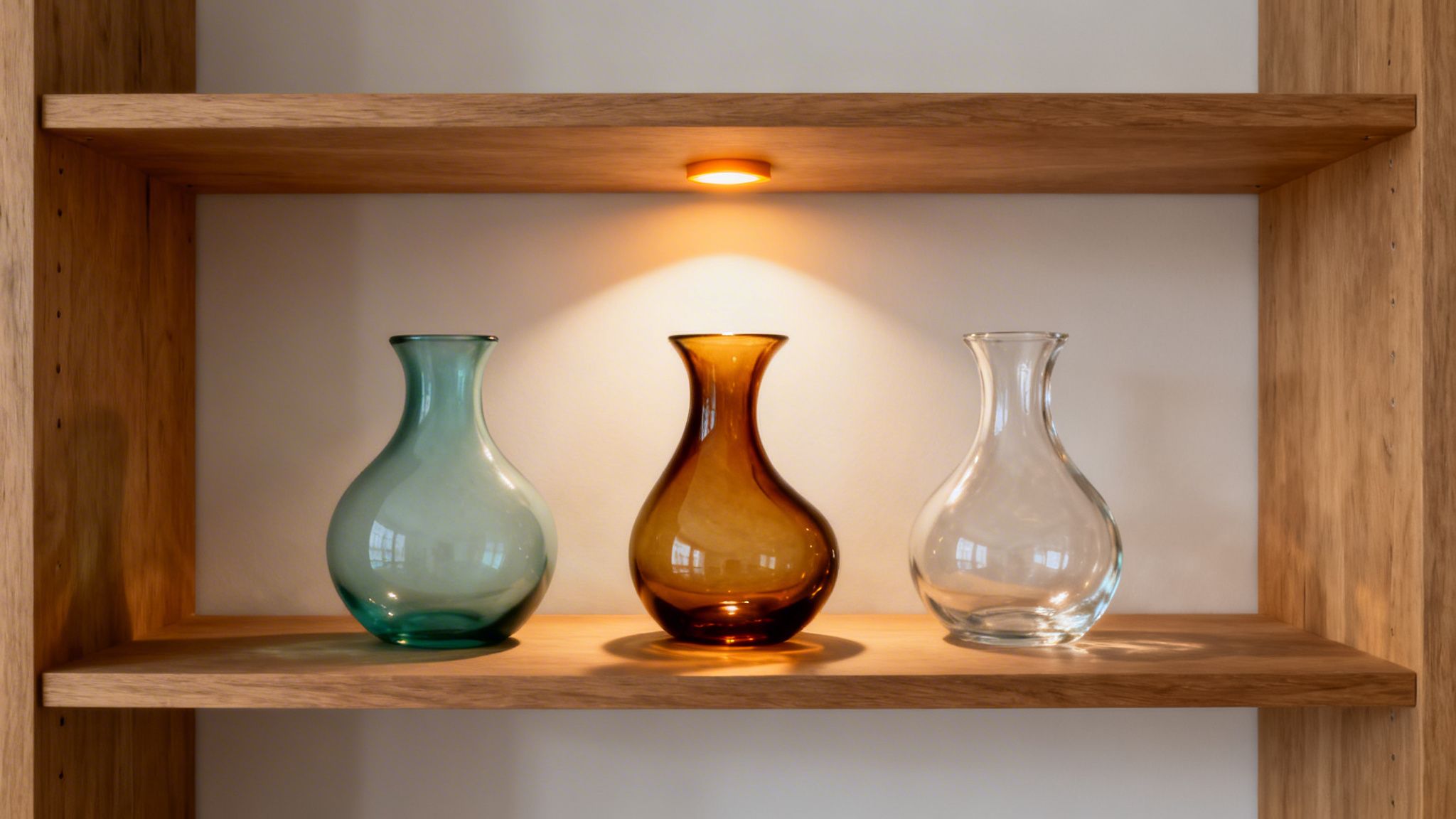
The real beauty of Björn Ramel's glass is its interaction with light. He designed with an understanding of how form and colour could be amplified by illumination, making display as much a part of the art as the piece itself.
Try placing pieces where they can catch natural daylight; you’ll see all the incredible nuances in the colour. For an evening display, a simple, well-placed spotlight can throw dramatic silhouettes and draw attention to the elegant curves and textures.
Don't be afraid to group pieces of different heights and shapes. This creates a dynamic arrangement that draws the eye in, allowing every single item in your collection to be seen and admired.
Since new pieces are no longer being made, tracking down genuine Björn Ramel glas is a hunt that requires a bit of patience and a good eye. The good news is that there’s a lively secondary market out there for collectors who know where to look.
Your best bet is often a specialised antique shop, particularly one that focuses on Scandinavian design. These dealers live and breathe this stuff. They’ve built their reputations on knowing the difference between the real deal and a lookalike, and they can usually share some of the piece’s history, or provenance, with you. Authenticity is their business, so they tend to be very upfront about an item's condition.
Of course, the internet has opened up a world of possibilities, with online marketplaces and auction sites listing a wide range of Ramel's work. This route, however, calls for a much more careful approach. It's up to you to really dig into the listings and ask the right questions before you commit.
To help you shop with more confidence, here are a few red flags to watch out for:
When you invest in a piece of Björn Ramel glass, you’re not just buying an object; you’re acquiring a small piece of Swedish design history. Always stick with sources that are transparent and willing to stand behind the authenticity of what they’re selling.
This careful approach is more important than ever. Sweden’s historic Glass & Glass Product Manufacturing industry has faced challenges, seeing its business numbers decline at a compound annual rate of 1.9% between 2020 and 2025. This downturn reflects the broader economic pressures on traditional craft industries. You can learn more about Sweden's glass industry trends from IBISWorld.
When you first dip your toes into the world of Björn Ramel glas, a few questions almost always pop up. It happens to new and seasoned collectors alike, so getting some clear answers can give you the confidence you need to start or grow your collection of this iconic Swedish glassware.
Let's walk through some of the most common queries. Think of this as a quick guide to help you navigate the vintage market with a little more certainty and really enjoy the hunt for your next piece.
No, and this is probably the most important thing to get your head around as a collector. While many of his one-off artistic pieces or earlier works might have an engraved "Ramel" or "Gullaskruf" on the base, a huge amount of his factory-produced glass was only sold with a simple foil or paper sticker. As you can imagine, most of those stickers didn't survive the last 50-70 years.
So, the lack of a signature is definitely not proof that a piece isn't genuine. You'll need to be a bit of a detective and rely on the other clues you’ve learned about, like:
Hands down, that would have to be the 'Randi' series. Designed back in the 1950s, it’s the perfect snapshot of the Scandinavian modern style with its gorgeous ribbed texture and simple, practical shapes. The series was massive, covering everything from single vases and bowls to entire sets of drinking glasses.
The 'Randi' series is loved for its timeless look and how wonderful it feels to hold. Its incredible popularity has made it a true benchmark for mid-century design and one of the top collections for fans of Björn Ramel glas.
Telling Ramel’s designs apart from his contemporaries can be a bit of a challenge, especially since many Swedish designers of the time shared a similar vibe. The secret is learning to spot his unique design language. Pay attention to his refined, often earthy colour palette—smoky greys, ambers, and deep blues are tell-tale signs.
Your best bet is to simply look at as much of his confirmed work as you can. Spend time browsing reputable online design archives or collector's books. By constantly comparing a piece you're considering to verified examples, you’ll slowly train your eye to pick up on the subtle details that make his contribution to Swedish glass history so unique.
At Dalaart, we celebrate the rich legacy of Swedish craftsmanship, from iconic glass to hand-carved folk art. Discover our curated collection of authentic, artisan-made treasures at https://dalaart.com.


.svg)


.png)


