December 4, 2025
In lands defined by long, dark winters, candles of Scandinavia are so much more than a simple decoration. They are an essential part of daily well-being, a flickering flame that represents a deep-seated cultural tradition. It’s a way of life that turns inward to find light, warmth, and connection when the sun is scarce—a ritual woven into the very fabric of Nordic homes.

Step into any home from Copenhagen to Stockholm, and you'll quickly realise that candlelight is a constant, quiet companion. It isn't just saved for special occasions or romantic dinners. Instead, lighting a candle is a daily practice, part of breakfast on a dark Tuesday morning or a quiet evening spent with a good book.
This daily ritual is the physical embodiment of cherished Nordic concepts like Danish hygge and Swedish mys. Both terms defy a perfect translation but speak to a profound sense of cosiness, contentment, and serene togetherness. Lighting a candle is almost always the first step in creating that atmosphere.
In Scandinavia, a candle’s glow does more than just illuminate a room; it completely transforms it. It softens the clean, sharp lines of minimalist design, adds a layer of warmth to neutral colour palettes, and creates an inviting focal point that encourages people to gather and connect.
The act itself is a mindful one—a signal to slow down, be present, and appreciate the simple comfort of a gentle flame. This tradition is particularly visible during significant cultural moments.
In Sweden, All Saints' Day is less about mourning and more about remembering with peace and gratitude. It’s about connection, memory, and finding light in the darkness.
This deep-rooted appreciation for candlelight extends beautifully into festive periods. The way Swedes use light to create a welcoming holiday atmosphere is a perfect example of this cultural practice in action. You can explore more about these specific traditions in our guide to authentic Swedish Christmas decorations.
Ultimately, the importance of candles in Scandinavia lies in their ability to foster a specific state of mind. They are a simple, accessible tool for crafting an environment of peace and serenity. Forget fleeting trends; in the Nordic world, the humble candle is a timeless and indispensable part of living well, turning any space into a sanctuary of warmth and calm.
To really get why candles are so woven into the fabric of Nordic life, you have to look back. The story of candlemaking in Scandinavia isn't just about cosy evenings; it's a tale of survival, clever innovation, and the deep-seated human need for light in the face of long, dark winters. This all began out of sheer necessity, not a desire for ambience.
Way before the slim, elegant tapers we see today, the earliest light sources were pretty basic. Inside Viking longhouses and medieval farmsteads, the main glow came from open hearths or simple lamps that burned animal fats and fish oils. They cast a smoky, often smelly light—a world away from the clean burn of modern candles of Scandinavia.
The first real candles were a huge improvement. Crafted from tallow—which is just rendered animal fat—they were a practical fix but still came with a lot of smoke and odour. The craft was purely functional, all about pushing back the shadows during those months when daylight felt like a rare and fleeting gift.
The big shift in Nordic candlemaking happened when better materials came into play. Beeswax, a precious and expensive resource, offered a much cleaner, sweeter-smelling flame, but it was mostly kept for churches and the very wealthy. The real game-changer for everyone else was the invention of stearin wax in the early 19th century.
Stearin, which is derived from animal and vegetable fats, created a hard, drip-free, and incredibly clean-burning candle. This single innovation made good quality light accessible to far more households across the region. It marked the moment a candle went from being a basic tool to an object of craft, and even beauty.
The leap from smoky tallow to clean-burning stearin wasn't just a tech upgrade; it was a cultural one. It allowed light to become a source of comfort and atmosphere, not just a means of survival. This really laid the foundation for the modern idea of hygge.
As the candles themselves got better, so did their role in Nordic society. Light became deeply connected with hope, celebration, and moments of quiet reverence. You can see this most beautifully in one of Sweden's most beloved traditions: Saint Lucia's Day.
Celebrated on December 13th, right at the peak of winter's gloom, the festival centres on a young woman in a white gown who leads a procession with a crown of lit candles on her head. It's a powerful image, symbolising the return of light and hope during the darkest time of the year.
This celebration, and others like it, truly cemented the candle's place in the heart of Nordic culture. It stopped being just a light source and became a powerful symbol.
This rich history is the backdrop for the minimalist candle aesthetic we see today. The clean lines and simple shapes of modern Scandinavian candles aren't just a design choice; they are the end result of a centuries-long journey. They reflect a deep respect for function, a love for quality materials, and a cultural story shaped by the profound relationship between light and life. This connection to heritage is visible across many Swedish crafts, and you can explore more about the rich culture of Dalarna, a region known for its artistry.
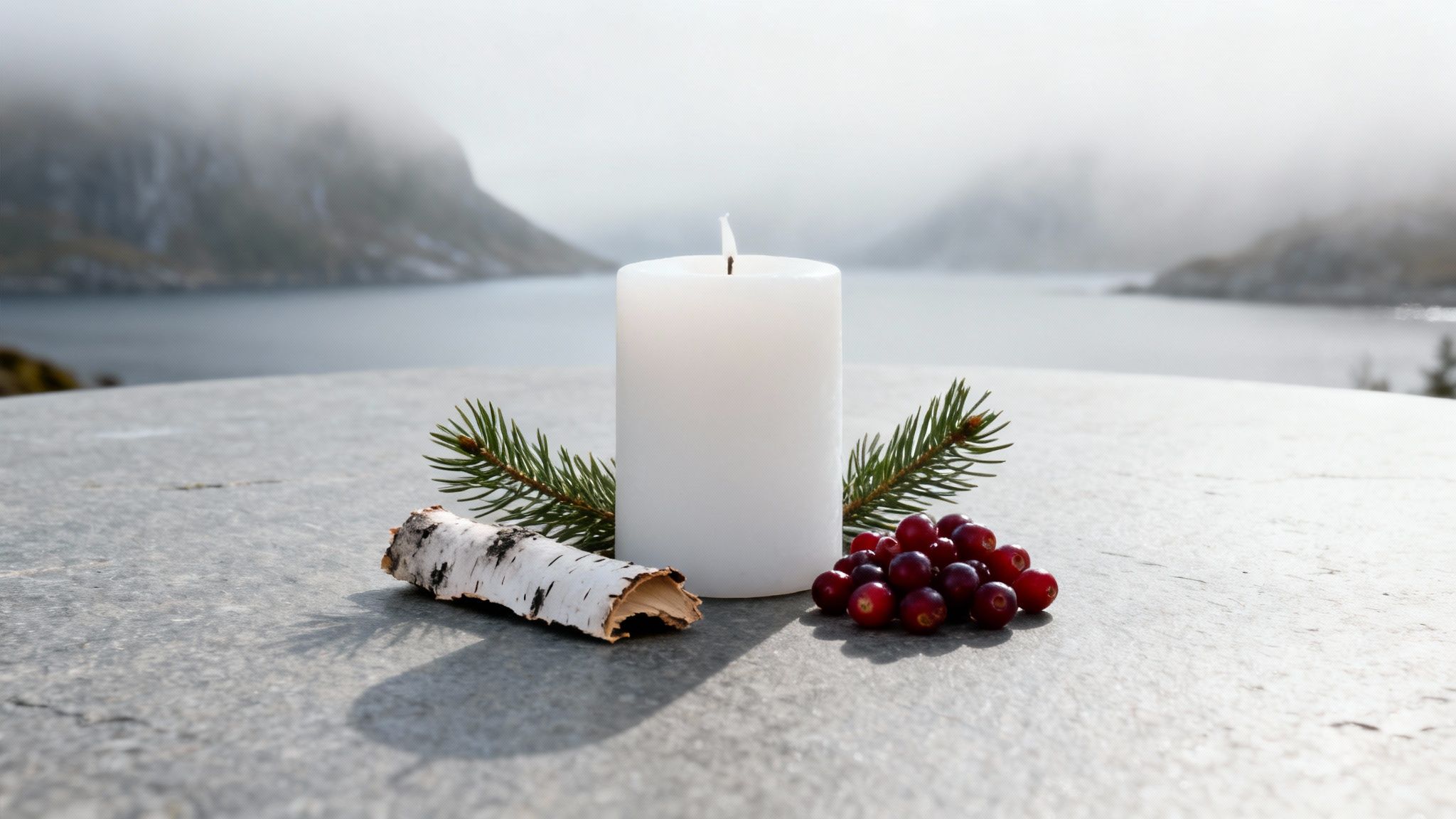
What does Scandinavia really smell like? It’s a question that goes far beyond generic “pine” or “winter spice.” The true scents of the North are much more complex, capturing the very soul of the region’s vast, untouched landscapes—from deep boreal forests to misty coastal fjords.
The fragrance profiles of authentic candles of Scandinavia are like stories told through scent. Each one is carefully composed to transport you to a specific place and time. Think of it as an invitation to experience the Nordic wilderness, all from the comfort of your own home.
The forest is the beating heart of many signature Scandinavian scents. Imagine the sharp, clean air that hangs in a dense pine forest just after a rain shower. This is the world that Nordic perfumers work to bottle, blending notes that evoke not just the towering trees, but the rich, damp earth beneath them.
These woody and green fragrances are the foundation of the region’s scent identity. They're layered and nuanced, designed to feel utterly natural and grounding, never artificial or overpowering.
Common forest-inspired notes include:
The goal is to recreate an entire sensory experience. A great Scandinavian forest candle should make you feel like you are taking a deep breath of cool, clean air while walking through a quiet, secluded wood.
This profound connection to nature is what makes these candles so calming. They tap into our primal appreciation for the outdoors, creating a tranquil retreat in any room and offering a perfect way to de-stress and reconnect with a sense of peace.
Beyond the deep woods, Scandinavia’s scent profile stretches to its rugged coastlines and wild meadows. These fragrances are typically lighter and more subtle, capturing the fresh, open-air feeling of the Nordic landscape. Picture the clean, salty breeze coming off the North Sea, or the delicate sweetness of wildflowers blooming during the short but vibrant summer.
These scents are designed to energise and uplift. They can make a space feel brighter and more open, bringing a touch of the wild, untamed elements right indoors.
Key notes from these environments are:
Ultimately, the signature scents of the North are all about authenticity and balance. They take you on an olfactory journey through a landscape that is both majestic and deeply serene. By carefully blending these natural aromas, the makers of candles of Scandinavia offer more than just a product; they provide a connection to a place, a mood, and a way of life rooted in the quiet beauty of the natural world.
In a Scandinavian home, nothing is there by accident. Every single object has a purpose, a reason for being. The guiding principle is simple: things should be both beautiful and useful, never just for show. This is precisely where candles of Scandinavia find their natural home, acting as more than just a light source. They are essential tools for sculpting atmosphere and bringing a human touch to minimalist spaces.
Styling with candles in a Nordic interior is all about being intentional. It's a way of using their soft, organic glow to balance the clean, sometimes even stark, lines of the design. That gentle flicker introduces a bit of life and movement, instantly transforming a carefully arranged room into a warm, inviting sanctuary.
It’s an approach that goes far beyond just setting a candle on a table. It's about thinking how that light will play with different textures, colours, and shapes to create a space that feels both perfectly balanced and deeply peaceful.
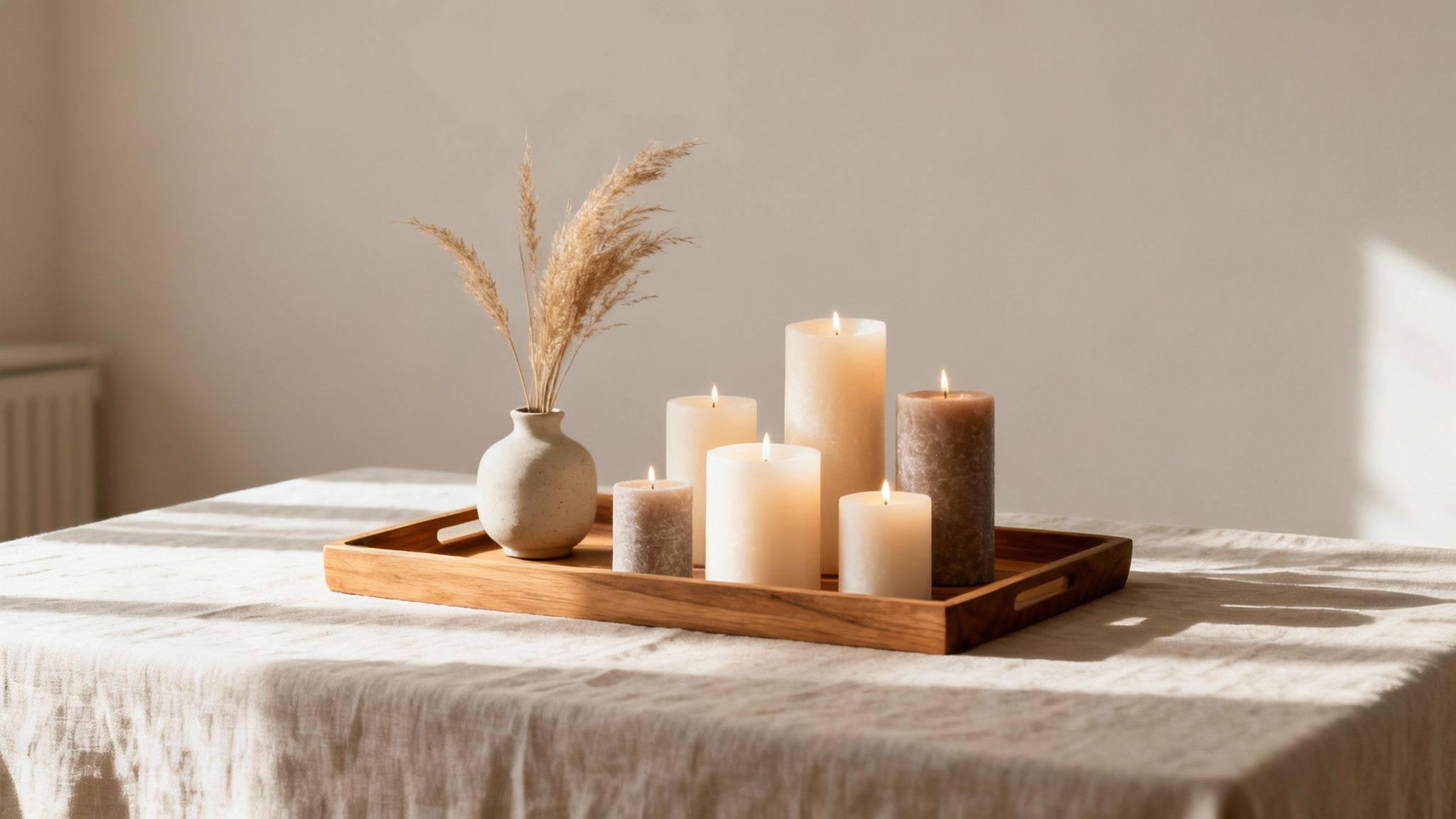
A central idea in Scandinavian styling is stilleben, the Danish and Swedish term for "still life." Forget stuffy, formal paintings; this is about creating small, thoughtful groupings of objects that tell a little story and create a beautiful focal point. Candles are the perfect anchor for these arrangements.
To make your own stilleben, just start with a simple base—a wooden tray, a ceramic plate, or even a few stacked books will do. From there, you can start layering in your candles. The secret is to create visual interest through variety, but without ever tipping into clutter.
This technique is incredibly versatile. A well-placed stilleben can bring life to an empty mantelpiece, add character to a coffee table, or create a moment of calm on your bedside stand. It’s all about crafting a little pocket of beauty that draws you in and adds to the room's quiet feel.
At its heart, Scandinavian design is deeply connected to the natural world. To make your candles feel like a seamless part of your home, pair them with materials that echo the Nordic landscape. This helps create a cohesive look that feels grounded and completely authentic.
Think about the textures and colours you find in nature. Warm woods, soft textiles, and cool ceramics are the perfect partners for candlelight, as they help to diffuse the glow and dial up the feeling of warmth.
The real magic happens when the warm, living light of a candle flame meets the cool, honest surfaces of natural materials. This contrast is fundamental to creating the cosy yet uncluttered feeling that defines Nordic interiors.
Here are a few simple but incredibly effective pairings to try:
By keeping these ideas in mind, you can turn candles of Scandinavia from simple objects into powerful design elements. They become that final, essential touch that softens sharp lines, creates inviting focal points, and fills your home with the quiet, intentional warmth that is the true signature of Nordic living.
A true Scandinavian candle is really a blend of two things: quality craftsmanship and a deep respect for nature. Choosing an authentic one means looking beyond just a pretty shape or a nice scent. It’s about becoming a more discerning buyer, someone who understands what goes into making a superior, clean-burning, and sustainable product.
Once you know what to look for, you can pick candles that genuinely reflect Nordic values of environmental consciousness and thoughtful production. By learning to read the labels and understand the materials, you’re ensuring the candles you bring into your home are as good for the planet as they are for creating a cosy atmosphere.
The foundation of any great candle is its wax. For years, paraffin wax—a byproduct of petroleum—was the industry standard, but it’s far from the best choice for your home's air quality or the environment. True Scandinavian quality is all about cleaner, renewable alternatives that offer a far superior burn.
The wax you choose directly impacts the candle's performance and your home's environment. Opting for a natural, plant-based wax like rapeseed or soy is the first and most important step in selecting a high-quality, sustainable candle.
Think of the wick as the engine of your candle, and its material is non-negotiable for a clean burn. Always look for candles with lead-free wicks made from 100% cotton or natural wood. These materials ensure the flame burns evenly without releasing harmful toxins into the air. A poor-quality wick is the culprit behind excessive smoke, soot, and a candle that tunnels down the middle.
Beyond the materials, a brand's commitment to sustainability is a huge indicator of quality. Look for transparency in how they source their ingredients and make their products. Many Nordic brands pride themselves on their ethical approach, from using locally sourced ingredients to partnering with small, family-run suppliers. You can often discover incredible craftsmanship at local shops that prioritise these values, much like those found in the artisan communities of Sweden. You can learn more about these creative hubs in our feature on the Leksands Hemslöjd webshop.
This focus on quality and local sourcing reflects a broader consumer trend. In Sweden alone, revenue from candle sales was estimated at approximately US$46.7 million, with projections indicating steady growth as people continue to invest in decorative and scented products for their homes. You can find more insights about the Swedish candle market on Statista.com.
Finally, take a look at the packaging. Scandinavian design values minimalism and function, and that extends to how products are presented. Seek out brands that use simple, recyclable, or reusable packaging, like glass jars that can be repurposed or minimalist cardboard boxes. This final detail is often the sign of a brand’s holistic commitment to sustainability, from the wax right down to the wrapping.
https://www.youtube.com/embed/f6sJHL8HzGc
Getting the most from your candle takes a little more finesse than just striking a match. If you want to fully enjoy the calming glow of authentic candles of Scandinavia, proper care is the secret to a longer, cleaner, and safer burn.
This all starts with the very first light. Believe it or not, this initial burn is the most important one of all, as it sets the stage for the candle’s entire lifespan.
Your goal is simple: let the wax melt completely to the edges of the container, creating an even, liquid pool. It can take a few hours, but your patience pays off. This single step prevents tunnelling—that frustrating habit where a candle burns straight down the middle, wasting all that lovely wax along the sides and dimming its glow.
Once you've created a good "burn memory," a couple of simple habits will keep your candle performing beautifully. The most crucial one? Trimming the wick before every single use.
A long, overgrown wick is the number one cause of that unsightly black soot and a flame that dances around too wildly. Keeping the wick trimmed to about 5mm ensures a steady, clean flame and stops smoke from staining your container or, even worse, your walls.
Just as important is how long you let it burn. A good rule of thumb is to never burn a candle for more than four hours at a time. This keeps the container from getting dangerously hot and helps preserve the integrity and scent of the wax.
This handy diagram breaks down the key choices when you're selecting a new candle, zeroing in on wax and wick types.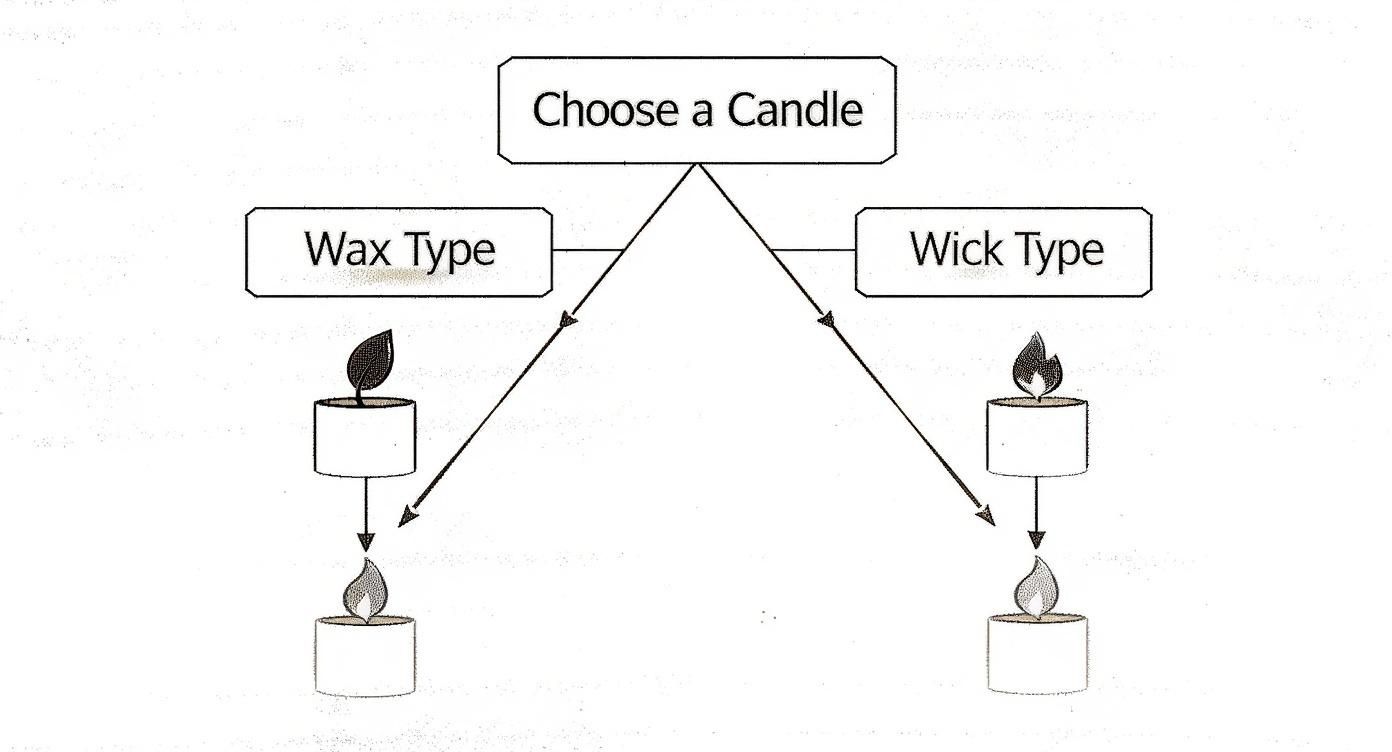 As you can see, prioritising natural waxes and lead-free wicks is the direct path to a higher-quality, cleaner-burning experience.
While candles create a wonderfully serene atmosphere, they are still an open flame that demands respect. A few fundamental safety rules will ensure you can relax and enjoy them with complete peace of mind.
These practices are straightforward, but they are absolutely vital for preventing accidents.
This careful, thoughtful approach to enjoying candles is part of a wider appreciation for quality home goods. It's no surprise that the Swedish candle market is projected to reach US$48.73 million soon, with a steady annual growth of 4.30%. You can discover more insights about the Swedish candle market on Statista.com.
To help you get the most out of your Nordic candle experience, let's clear up a few common questions. Think of this as a quick guide to understanding the little details that make these candles so special, ensuring you know exactly what to look for.
It’s less about where the candle was made and more about the philosophy behind it. A true Scandinavian candle embodies Nordic design principles: clean lines, minimalist shapes, and a soothing, neutral colour palette.
But it goes deeper than looks. There's a real commitment to quality and sustainability. That means you’ll find clean-burning natural waxes like soy or rapeseed instead of paraffin, and the packaging is almost always simple and eco-friendly. The scent is the final piece of the puzzle. Forget overpowering, artificial fragrances. Candles of Scandinavia are all about capturing the authentic, subtle scents of the Nordic landscape—the crisp air of a pine forest, the smell of damp earth after rain, or the fresh, salty breeze from the coast.
Tunnelling is that frustrating moment when your candle burns a narrow hole straight down the middle, leaving a thick wall of unused wax clinging to the sides. It's a problem for a few reasons: it wastes a huge amount of wax, which means you're not getting the full life out of your candle. It also creates a weak, flickering flame because the wick is essentially drowning in its own little pool of wax.
The good news is, it's completely preventable. The secret is to let the very first burn go long enough for the entire top layer of wax to melt right to the edges of the container. This creates a "burn memory," setting the candle up for a perfect, even burn every time after.
A proper first burn is the single most important step in candle care. It sets the stage for the candle's entire lifespan, ensuring you get the maximum value and enjoyment from your purchase.
One isn't necessarily "better" than the other; they just offer completely different experiences. It really comes down to what you're looking for.
Both are excellent choices as long as they're made from high-quality, lead-free materials. The most important thing is that the wick is the right size for the candle's diameter, which is what ensures an even melt. The real enemy is a cheap, poor-quality wick, which will soot and burn unevenly no matter what it's made of.
At Dalaart, we celebrate the artistry and tradition behind authentic Scandinavian crafts. Explore our collection of hand-carved Dala horses and other treasures that perfectly complement the warm glow of candlelight. Discover authentic Swedish craftsmanship at Dalaart.


.svg)


.png)


