March 7, 2026
Tired of the same old mass-produced phone cases everyone else has? Your phone is with you constantly, so why shouldn't its case be as unique as you are? This is your chance to turn a purely functional item into a small, portable piece of art that tells a story.
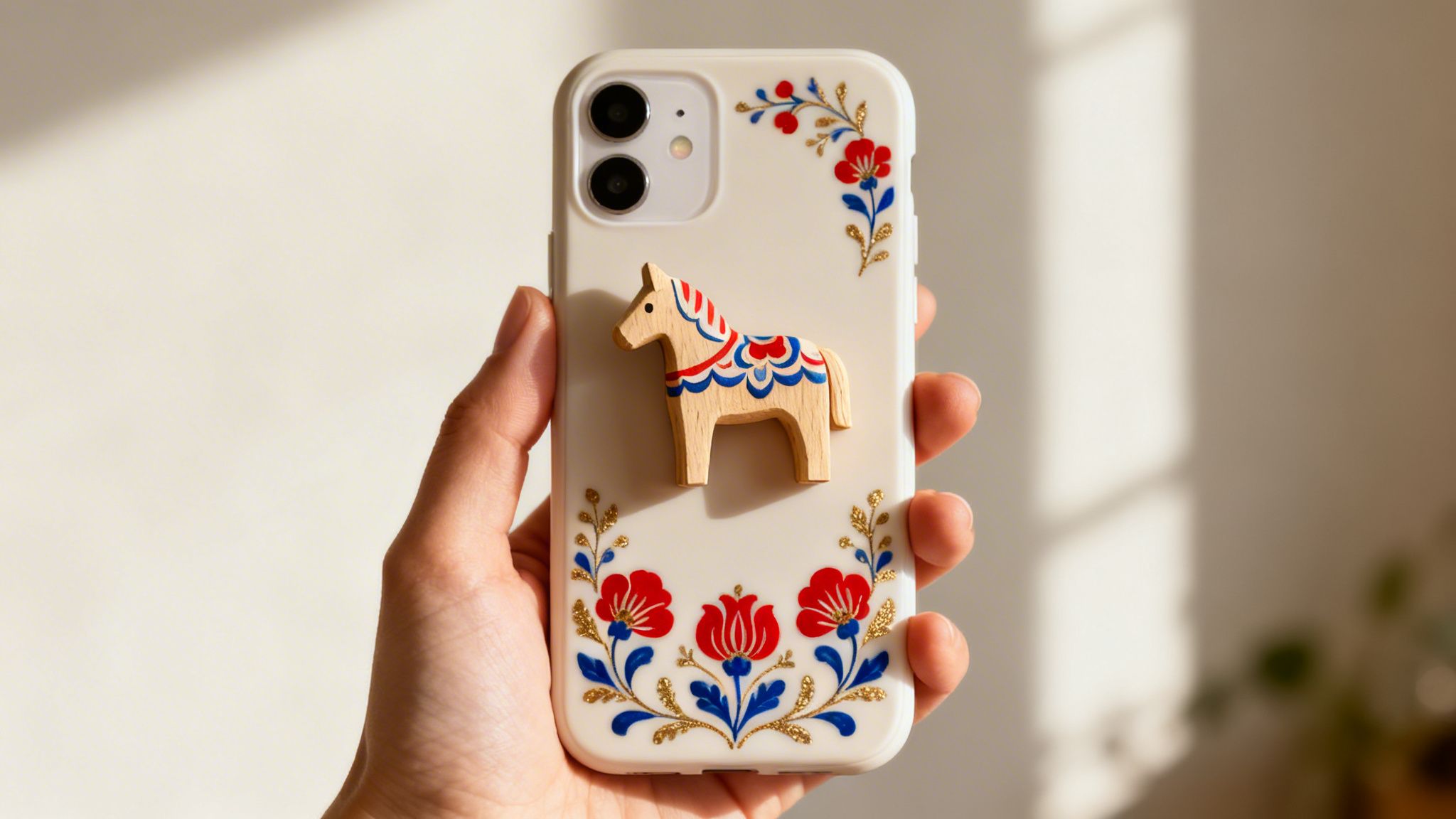
Forget scrolling through endless pages of generic designs. This guide is all about blending the hands-on satisfaction of a DIY project with the timeless charm of Swedish folk art. We'll walk through how to create an accessory that’s a true reflection of you—something that doesn't just protect your phone, but starts conversations.
When you use authentic Dalaart elements, like our unpainted miniatures and traditional colour palettes, you're not just decorating—you're creating. You transform a simple phone case into a little masterpiece, giving you a chance to connect with a rich cultural heritage while making something completely modern.
I've found that people are drawn to this project for a few key reasons:
Just imagine carrying a small piece of Dalarna's history with you every day. It's a symbol of strength and beauty, right in your pocket.
This project is more than just protecting your phone; it's about connecting with centuries of craftsmanship to create a modern, functional accessory that feels personal and unique.
A custom Dalaart phone case quickly becomes a part of your personal narrative. You could, for example, feature a single, bold Dala horse to symbolise resilience. Or perhaps a small cluster of tiny figures to represent your family. Every choice you make, from the colours to the placement, adds another layer of meaning.
Ultimately, this creative journey allows you to craft a high-quality, durable accessory that truly stands out from the crowd. You’re in complete control of every detail, ensuring the final piece is not only beautiful but a perfect fit for your own taste. Let's begin this artistic adventure together.
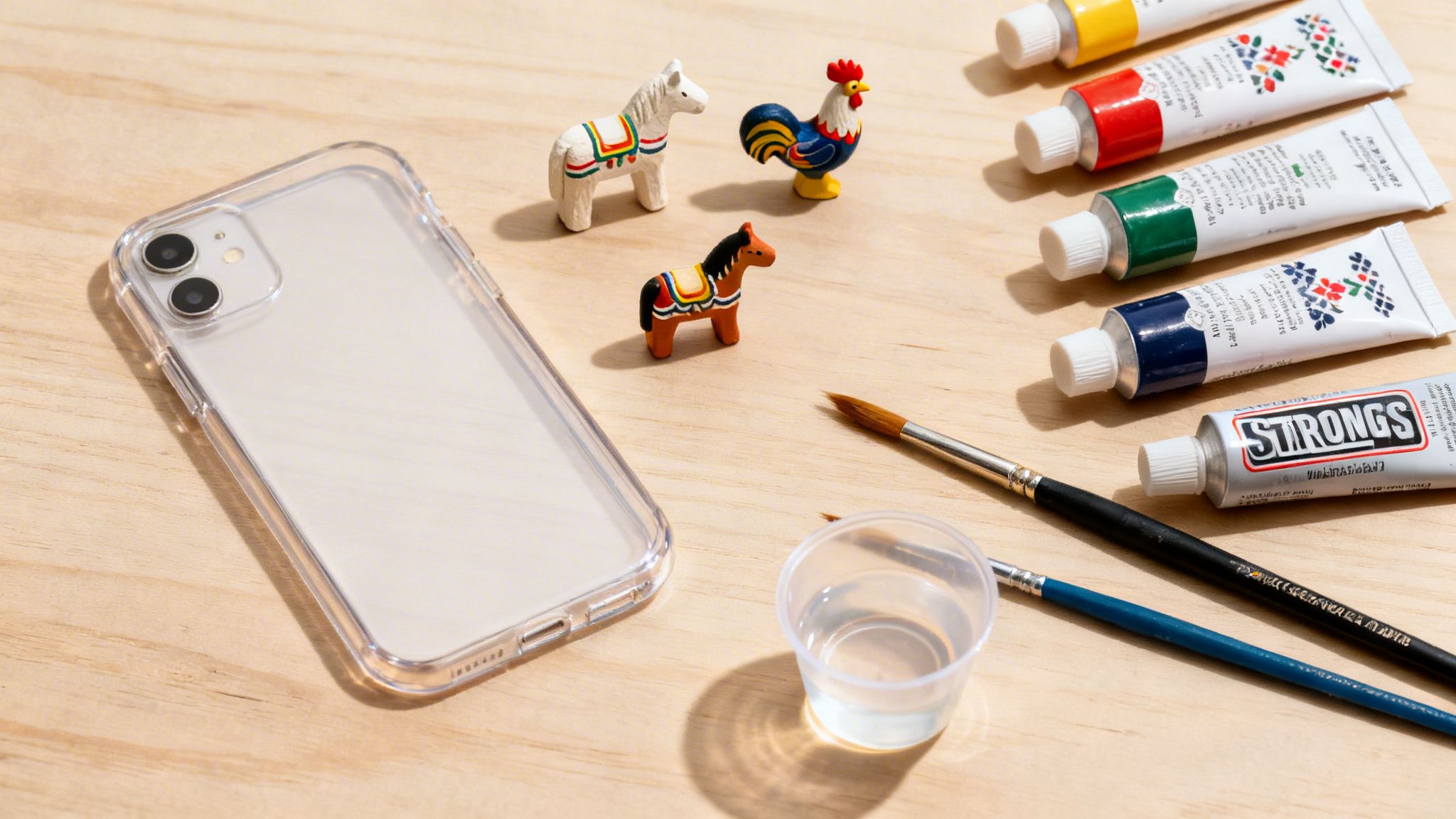
Any crafter will tell you that a beautiful project starts with the right materials. This is especially true when you’re creating a custom phone case that needs to be both a work of art and a durable, everyday accessory. Think of it like a chef sourcing the best ingredients—quality supplies make all the difference.
Your journey begins with the canvas: the blank phone case. Not just any case will do for this kind of detailed work. I always recommend starting with a hard, smooth case made from polycarbonate (PC) or thermoplastic polyurethane (TPU). These materials have a non-porous surface that gives paint and adhesives a solid foundation to grip onto.
A clear case is a fantastic choice if you want to create a design with a delicate, "floating" effect. On the other hand, a solid-coloured case provides a bold backdrop that will really make your artwork pop. I've learned from experience to steer clear of the very soft, flexible silicone cases. Paint tends to peel right off, and most glues just won't form a permanent bond.
Now for the part that brings that authentic touch of Swedish tradition to your creation—the Dalaart miniature. Choosing a raw, unpainted figure gives you total creative freedom. Whether you fall for the iconic Dala horse or one of the charming roosters, these hand-carved pieces are a joy to work with. The natural wood grain is a beautiful canvas in itself.
If you’re ready to start your project, our authentic, uncarved Dala horse figures are perfect for personalising.
Once you have your miniature, you’ll need just a few more items to bring your vision to life. Here’s a quick list of what I always have on my workbench for this kind of project:
A common mistake I see is people reaching for standard craft glue. It simply isn’t strong enough to handle daily wear and tear. Choosing a strong, two-part epoxy is the single best decision you can make to ensure your creation lasts.
By gathering these specific, high-quality supplies before you even begin, you're setting yourself up for a much more enjoyable and successful crafting session. With the right tools in hand, you’re ready to move on to the fun part—designing your one-of-a-kind layout.
Before you even think about unscrewing a paint cap or mixing your resin, there’s a crucial step that can make or break your project: the design. I’ve seen it time and again—the most beautiful, personal phone cases are the ones that were thoughtfully planned from the very beginning. This is where you transform a simple blank case from a piece of plastic into a true statement.
A great layout always starts with an idea, a story you want to tell. What’s the feeling you’re going for? Sometimes, a single, bold Dala horse is all you need. Placing it in the centre creates a powerful focal point, a little symbol of strength you can carry everywhere. The minimalist approach can be incredibly striking.
On the other hand, you could create a whole narrative scene with several smaller miniatures. I love seeing a tiny Dala horse and rooster arranged to look like they’re interacting, or a small family of figures that represent your own loved ones. This approach turns your case into a miniature diorama, telling a story with just a glance.
If I can offer one piece of advice, it’s this: always sketch your ideas on paper first. It’s a simple trick that has saved me countless times. Just lay your phone case on a sheet of paper and trace its outline, making sure to mark where the camera and buttons are. This template is your risk-free playground.
Sketching lets you experiment with different arrangements and see how the elements really fit together. You’ll know right away if a design feels too cluttered or unbalanced. It’s also the perfect time to play with your colour palette using markers or coloured pencils.
A quick sketch is your most valuable tool. It helps you solve design problems on paper, saving you the headache of repositioning sticky miniatures or painting over mistakes later on.
Using your paper template, you can also explore traditional Swedish folk art patterns, like the beautiful, flowing vines and flowers of the kurbits style. See how these patterns might frame your centrepiece or fill in the background. If you're looking for inspiration on classic pairings, our guide on traditional Dalaart colour mixing is a great place to start.
As you refine your sketch, always keep the practical side of things in mind. The goal, after all, is a phone case that’s as functional as it is beautiful. Here are a few key things I always consider:
This careful planning is what helps you bring your vision to life. You're not just creating a one-of-a-kind handmade item; you're also tapping into a huge global passion for mobile accessories. The market for phone cases is massive, with most of the focus on standard protective covers. It's fascinating to see how your personal creation fits into this worldwide trend toward personalisation.
Once you’ve settled on a design, it's time for the real magic to begin. This is where your creative ideas take physical form, and your phone case starts its transformation. To help you along, we’ll walk through three different creative methods, each with its own unique charm for showcasing Dalaart style.
The path you choose will really depend on the final look you’re after and which materials you feel most comfortable working with. The creative journey itself can be broken down into three key stages.
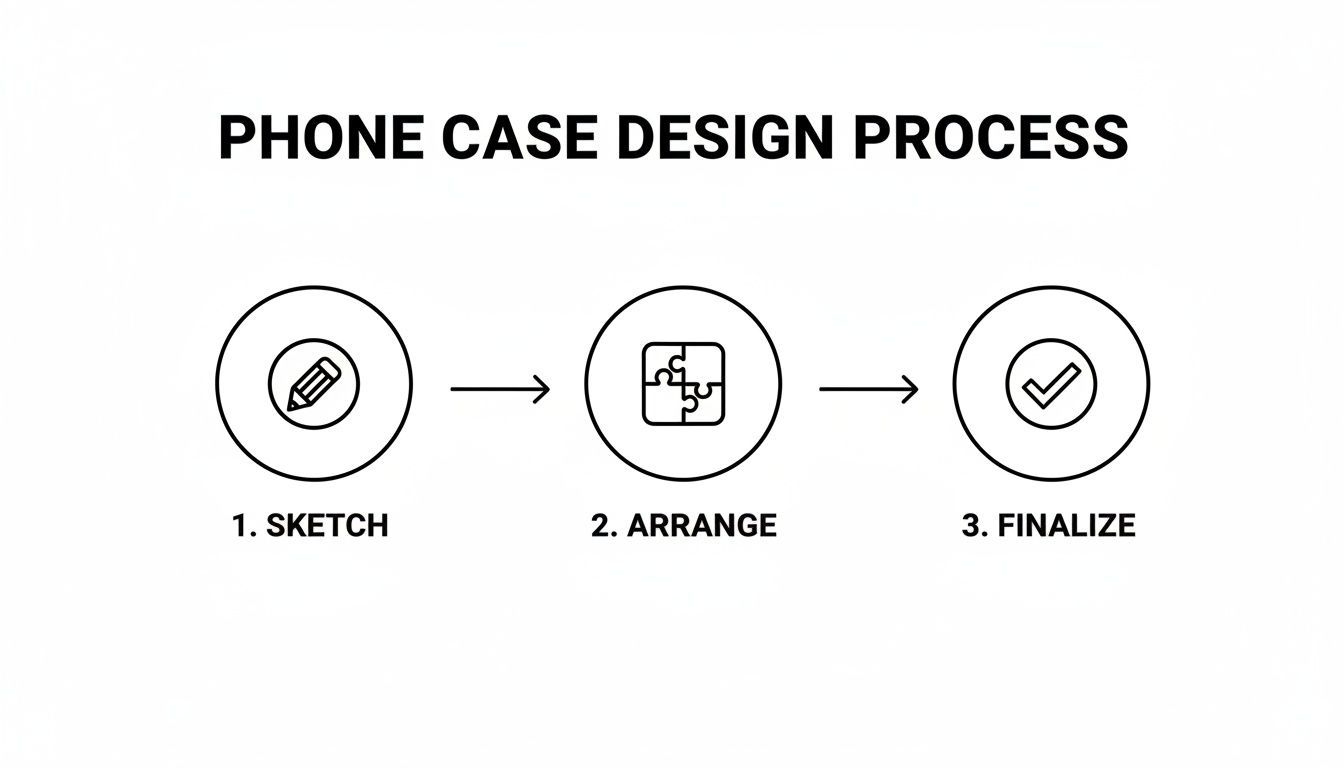
Think of this as your roadmap. Every great project starts with a concept, moves into arranging the elements, and finishes with a balanced, beautiful layout. This core process is the foundation for all three of the techniques we're about to explore.
This approach is for anyone who loves the direct, hands-on connection of a paintbrush. You'll be painting classic kurbits-style florals and patterns straight onto your blank phone case. The secret here is to build your design up in layers, allowing each one to dry completely before starting the next.
Begin with your largest shapes and background colours. Once they’re dry to the touch, you can switch to your fine-tipped brushes to add those wonderful, intricate details—the delicate lines, dots, and flourishes that are the very soul of Swedish folk art. It's a truly meditative process that lets you connect with the art form. For a little inspiration, it’s always helpful to see how traditional Dala horses are made and learn more about the style’s rich history.
For the sharpest, cleanest lines, try not to overload your brush with paint; a little really does go a long way. I also find that lightly sanding the case surface with fine-grit sandpaper beforehand gives the paint a much better surface to grip onto.
If you're aiming for a bold, three-dimensional effect, this is the perfect method. You’ll be securely attaching a pre-painted Dalaart miniature to your case, turning it into the undeniable star of the show. The most important part of this process is creating a permanent bond.
To get it right, you need to prepare both surfaces. Lightly scuff the back of your miniature and the spot on the case where it will sit. This rough texture gives the adhesive something to lock onto. Apply a strong, two-part epoxy, press the miniature down firmly, and give it at least 24 hours to fully cure. Be patient here; this curing time is what ensures your beautiful artwork won’t pop off with daily use.
For the truly adventurous crafter, embedding your design in resin offers a stunning, glass-like finish that is hard to beat. This technique allows you to create a mini diorama, sealing a Dalaart miniature and other decorative bits like tiny dried flowers or glitter under a crystal-clear, protective dome.
Working with resin requires precision and a bit of care. Always work in a well-ventilated space and wear protective gloves. Be sure to mix your two-part epoxy resin exactly according to the manufacturer’s instructions—getting that ratio just right is crucial for a proper cure.
This technique transforms a simple phone case into a small, captivating world you can carry with you. Each of these methods will leave you with a durable and deeply personal accessory you’ll be proud to show off.
After pouring your creativity and effort into designing a one-of-a-kind phone case, the final, crucial step is making sure that beautiful work lasts. Protecting your design is about more than just a quick finishing coat; it’s about adopting a few simple habits to preserve your portable piece of art as it navigates the rigours of daily life.
Your first and most important line of defence is a high-quality sealant. Applying a final top coat is the single best thing you can do to guard against chips, scratches, and the yellowing that can happen from sun exposure. This step effectively shields your paintwork and any embedded miniatures from the elements, locking in the vibrancy of your design for good.
When it comes to a top coat, you generally have two fantastic options: matte or gloss. A gloss finish, often created with epoxy resin or a high-gloss spray, results in a brilliant, glass-like surface. This finish has a way of making colours appear richer and adds a real sense of depth, which is absolutely stunning for designs where you’ve embedded miniatures.
A matte finish, on the other hand, gives you a modern, non-reflective surface that feels soft and almost velvety to the touch. It’s an excellent choice for painted designs where you want the artwork to have a more subtle, hand-painted feel without any distracting glare. Your choice really just comes down to the aesthetic you’re aiming for with your final piece.
My personal preference for any design featuring miniatures is a high-gloss resin. Not only does it offer superior protection, but the way it magnifies the tiny details of a Dalaart figure is truly beautiful. For purely painted cases, a matte spray sealant can look incredibly elegant and understated.
Ongoing care is just as vital as the initial sealant you apply. Even the toughest finish can be compromised by rough handling or harsh chemicals. Fortunately, keeping your custom phone case looking pristine is easy with a few mindful practices.
For routine cleaning, all you need is a soft, damp microfibre cloth. Gently wipe away any smudges or dirt that accumulate. If you encounter a more stubborn spot, a tiny drop of mild dish soap mixed with water will do the trick, but be sure to wipe it clean with a fresh damp cloth afterwards to remove any residue.
Here are a few key things to avoid at all costs to keep your case in perfect condition:
The global interest in personalised phone accessories continues to expand, with the Asia Pacific region being a significant market. While specific data for Southeast Asia is limited, the desire for unique, self-expressive products is a worldwide trend. You can discover more about the global market for mobile covers on towardspackaging.com. By following these simple protection and care tips, your unique creation will remain a standout piece for years to come.
When you dive into a new creative project, it’s natural to have a few questions. I get asked a lot about the nitty-gritty details of making these custom cases, so I've gathered the most common queries right here. My hope is to help you sidestep any little hiccups and make the whole process a joy from start to finish.
Your choice of case is everything—it’s the canvas for your art. For the kind of detailed work we’re doing, you’ll want a hard, smooth polycarbonate (PC) or thermoplastic polyurethane (TPU) case. These materials give paint and glue a solid, non-porous surface to cling to for a lasting finish.
Clear cases are brilliant if you want to create a design that seems to float or if you're embedding miniatures in resin, letting your phone's own colour shine through. On the other hand, a solid-coloured case can create a stunning, high-contrast backdrop that really makes a single painted miniature stand out.
A little word of warning from my own trials and errors: I strongly suggest you steer clear of those very soft, flexible silicone cases. Paint, glue, and even some sealants just can't get a permanent grip on that slick surface, which often leads to peeling and a lot of creative heartache later on.
Absolutely! If you're not quite ready to jump into working with resin, a few even coats of a clear, non-yellowing acrylic sealant spray work wonders. It’s a fantastic option for purely painted designs, offering great protection from everyday scuffs and moisture without any mixing involved.
It's worth remembering, though, that nothing quite matches the durability and gorgeous depth of a two-part epoxy resin for embedding miniatures. It’s the secret to that thick, glossy, glass-like finish that gives your case a truly professional, handcrafted feel.
This is probably the biggest worry I hear, but I promise it's simpler than it sounds. Getting your Dalaart miniature to stay on for good just comes down to a little prep work and using the right glue.
First, you'll want to create some texture for the glue to grab onto. Gently scuff the back of your miniature and the spot on the case where it will sit with a bit of fine-grit sandpaper. This creates an almost invisible roughness that makes a huge difference.
Next, reach for a two-part epoxy adhesive or a high-quality super glue that’s made for both plastic and wood. Apply the glue, press the miniature firmly into place, and then comes the most important part: let it cure. Be patient and give it the full time recommended by the manufacturer, which can often be up to 24 hours. This patience is what guarantees your custom piece will stand up to daily life.
Ready to start a unique project of your own? Find authentic, uncarved figures and plenty of inspiration at Dalaart to craft a custom phone case that truly tells your story. Explore our collection at https://dalaart.com.


.svg)


.png)


