March 6, 2026
You might know them as push in pins, or maybe you’ve just seen them used for hanging delicate items and wondered what they were. These small but mighty fasteners are a game-changer for anyone who loves decorating, especially when you want a secure hold without the visual clutter of a regular thumbtack.
Think of a push in pin as the elegant, stronger cousin of the thumbtack you’d find on an office bulletin board. Its design is brilliantly simple: a small, discreet head attached to a sharp, sturdy metal point. This construction makes it perfect for jobs where you need both strength and subtlety.
If you’ve ever wanted a way to hang something that felt as easy as a thumbtack but as strong as a tiny nail—without needing a hammer—then you already understand the magic of a push in pin. With just a firm push, you can secure items to surfaces like drywall, cork boards, and even soft wood. The result is a clean, almost invisible anchor that keeps the focus right where it belongs: on the beautiful object you’re displaying.
This is exactly where they shine compared to their more common relatives. While standard tacks and drawing pins are fine for paper, their wide, flat heads can be distracting. That’s why so many interior stylists and collectors prefer push in pins; their barely-there profile doesn’t compete with the art or decor.
Here’s why they’re a favourite for creative projects:
For collectors and decorators, the goal is often to make the mounting hardware disappear. A push in pin achieves this perfectly by providing a secure anchor point without drawing attention to itself. This allows the artwork or object—like one of our lovely miniature Dala horses—to be the true hero.
Ultimately, these pins are the go-to choice when you need a firm grip with a flawless finish. They create a reliable hold that’s strong enough for your favourite lightweight decor but delicate enough to leave only a tiny, easily hidden mark behind. This simple tool truly is a must-have for any creative home.
Picking the right push-in pin might seem like a small detail, but it’s where your project’s practical needs and creative vision come together. Not all pins are created equal, and the right choice can mean the difference between a fastener that simply does the job and one that perfectly complements your display.
For those projects needing a bit more muscle, steel pins are a fantastic choice. Their strength makes them perfect for holding slightly heavier pieces or for pressing into softer woods, ensuring your decor stays exactly where you want it. This reliability often comes from industry leaders in quality materials. For instance, the renowned Swedish steel company SSAB is a key player, supplying the high-grade steel found in countless products around the globe.
When you start looking closely, you'll find each material offers its own unique charm and set of benefits. It really comes down to what you value most for your specific piece:
This simple flowchart can help you think through whether a push-in pin is the best starting point for your fastening needs.

As you can see, for any non-permanent display where you might want to make changes later, a push-in pin is a highly recommended path.
The pin’s size should always match the weight of the object you’re hanging. Delicate paper crafts will only need a tiny pin, but for mounting a beautiful lightweight wooden piece, like a small Dalaart horse, you'll want something a bit more substantial.
The head shape is a crucial aesthetic choice. A flat head offers a nearly invisible finish, while rounded or decorative heads can become a subtle but stylish accent, complementing the item on display.
Ultimately, choosing a pin isn’t just a practical task—it's a design choice. By thinking about the material, finish, size, and head shape, you’ll find a push-in pin that not only works perfectly but also adds to the beauty of your home and your art.
It's time to think beyond the corkboard and see your push in pins as a key part of your home décor. Far from being just simple office supplies, these little fasteners are a stylist's secret for creating beautiful displays with very little fuss. Their strength and subtle design are perfect for adding a personal touch to any room.
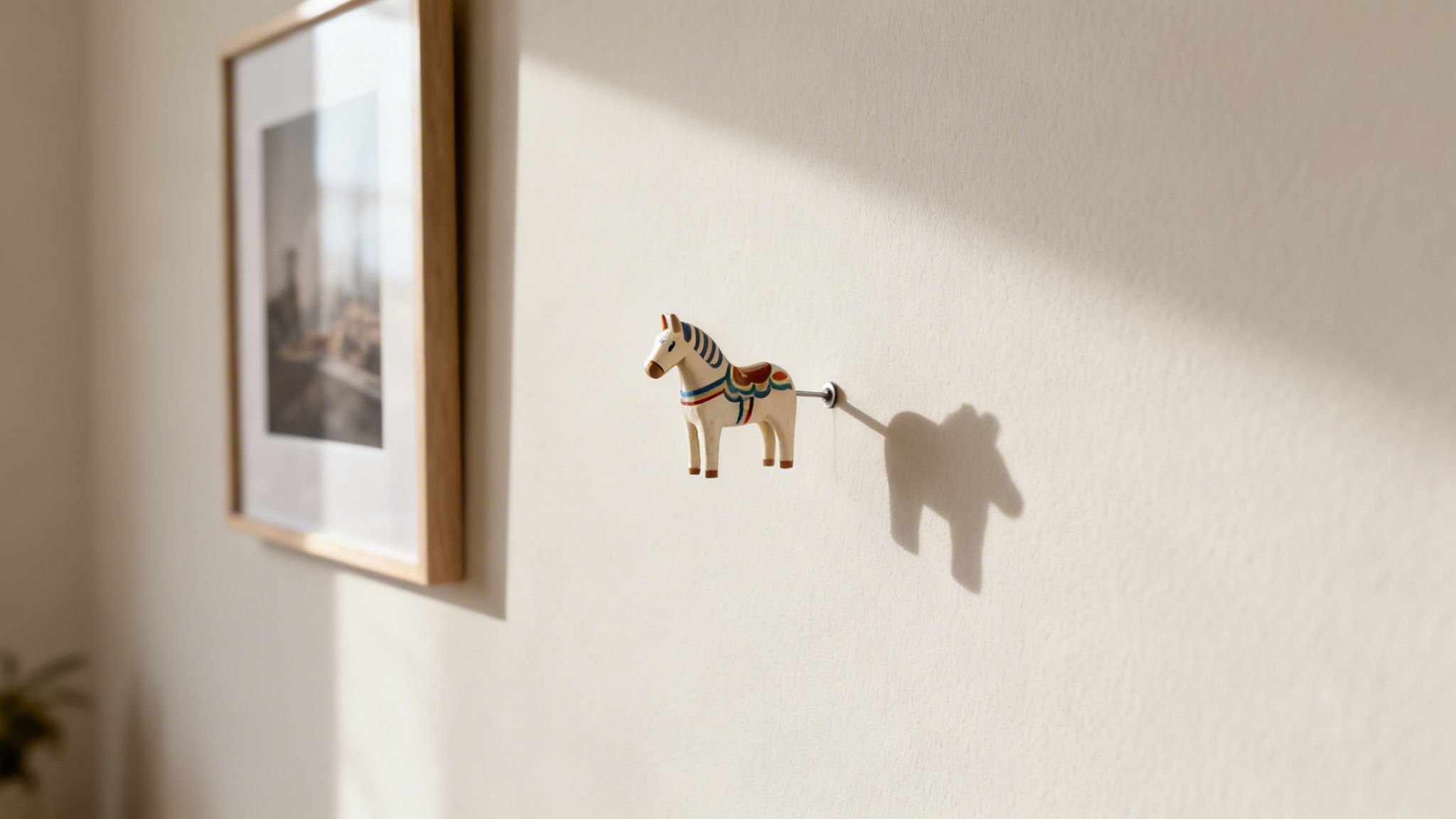
Have you ever wondered how to create a 'floating' gallery wall? By using tiny, flat-headed pins to hold unframed prints or photographs, you can make your art seem to hover against the wall. This gives your display a wonderfully modern and airy feeling, and it’s incredibly easy to change things around whenever inspiration strikes.
For those of us who love interior design, a physical mood board is a must. Instead of just tacking up ideas, try artfully arranging your fabric swatches, paint chips, and inspiration photos with decorative push in pins. The pins themselves can become part of the aesthetic, adding a touch of metallic texture to your creative vision.
These pins truly shine when it comes to displaying small, lightweight treasures. If you’re a collector of Swedish crafts, they offer a wonderfully secure and elegant way to mount a miniature Dala horse. You can create a beautiful focal point by pinning it against the back of a bookshelf or inside a deep shadow box, letting its handcrafted beauty stand out.
The Dala horse is a powerful symbol of Swedish heritage and a cherished part of the culture. Displaying one is a nod to the deep history behind the craft, a tradition we are passionate about sharing with fellow enthusiasts.
For a touch of whimsical charm, try using push in pins to hang delicate string lights. Just position the pins along a wall or around a window frame and drape the wire over them. You'll create a soft, magical glow without reaching for nails or sticky tape.
Ultimately, we want you to see these small fasteners as a core part of your decorating toolkit. They have the power to elevate your displays from ordinary to something truly special. If you're looking for more ideas, be sure to explore our guide on creating beautiful wood wall art. With a little creativity, a simple pin can make all the difference in your home.
One of the biggest worries we hear from fellow decorators is the fear of leaving behind unsightly marks on the wall. The great thing about a push-in pin is that it lets you create stunning displays without the collateral damage you get from nails or screws—as long as you use the right touch. This approach keeps your walls and your treasured items, like a new Dala horse, in perfect condition.
First things first, take a moment to get to know your wall. These pins are absolutely perfect for drywall, soft woods, and cork boards, where they slide in with just a little effort. You'll want to avoid trying to force them into hard surfaces like plaster, concrete, or brick, which can end up damaging both the pin and your wall.
For most soft walls, a firm and steady press with your thumb is all it takes. But if you meet a little resistance, don't worry, and definitely don't force it. There's a simple trick.
The secret to a clean entry is all about control. Think of it less like driving a nail and more like guiding a needle through fabric. Slow, steady pressure works much better than a sudden, hard push.
When it's time to rearrange your decor, getting the pin out cleanly is just as important as putting it in. Simply yanking it out can make the hole bigger or tear the wall's surface.
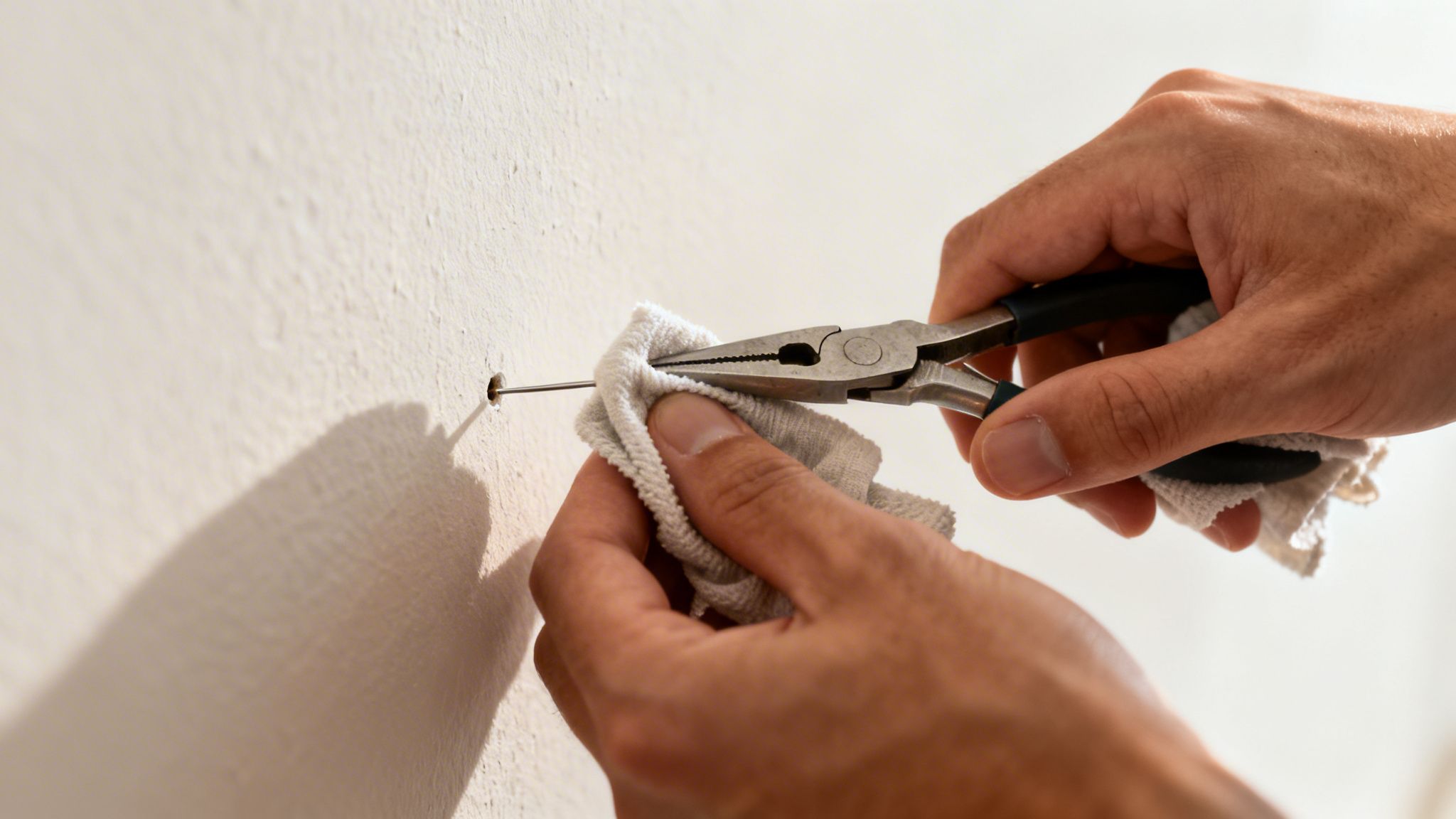
Instead, take a pair of needle-nose pliers and gently grip the head of the pin. To keep your wall pristine, place a small, folded piece of soft cloth between the pliers and the wall. Then, just pull the pin straight out. This technique leaves a hole so tiny it's practically invisible, ensuring your walls stay looking their best. Mastering these little methods is key to creating beautiful, damage-free displays, much like the ones you see with professionally installed paintings for walls.
Your Dalaart masterpieces are a testament to artistry, and they deserve a display that honours their unique craftsmanship. Choosing the right push in pins is a crucial final step, ensuring your collection is both secure and beautifully presented without any visual distraction. The perfect pin acts as a silent partner, allowing your Dala horses to take centre stage.
For your finished and painted Dala horses, the goal is often invisibility. A pin with a tiny, flat head in a classic metallic finish like brass or steel can blend almost seamlessly into your wall. This simple choice keeps the focus right where it belongs: on the intricate hand-painted designs and classic form that make each horse so special.
When you’ve painted your own Dala horse, selecting a pin transforms from a practical task into an exciting creative decision. This is a fantastic opportunity to further personalise your display. You could, for example, pick a pin with a coloured head that perfectly matches or boldly contrasts with your unique design, turning the hardware itself into a subtle decorative accent.
Consider the pin's finish as the final touch on your masterpiece. Just as you select paint colours, the pin's colour and texture can tie the whole look together. This careful attention to detail is a hallmark of quality craftsmanship.
This same principle of precision and finish can be seen in other areas of Swedish craftsmanship. For example, the world of Swedish automotive restoration is filled with classic cars that are celebrated for their authenticity and detailed work. Discover more about this dedication to quality in Swedish restoration projects.
Beyond the look of the pin, the technical details are absolutely vital for creating a secure and lasting display. You’ll need to match the pin’s length and strength to both the weight of your Dala horse and the type of wall you're mounting it on.
Here’s a quick guide to get you started:
Taking a moment for this final check guarantees your display is not just beautiful, but completely safe. For those ready to embark on their next creative project, our DIY uncarved Dala horse offers the perfect canvas, just waiting for you to paint and display it with the perfect pin.
Even the simplest tools can bring up a few questions, and when it comes to displaying your treasured pieces, it’s only natural to want to get it right. Having clear answers to these common concerns helps you decorate with confidence, so let's walk through some of the most frequent queries we hear from stylists and collectors.
One of the first questions people ask is whether these pins are suitable for hard surfaces like plaster or concrete. The short answer is no. Push-in pins are designed specifically for softer materials such as drywall, wood, and corkboards. Trying to force one into a hard wall will almost certainly bend the pin without giving you a secure hold. For those tougher surfaces, you'll have much better results with a small drill bit and a wall plug.
Another practical question we often get is about weight. How much can a push-in pin actually hold? While there’s no single, universal answer—it depends on the pin's quality and the wall material—a good rule of thumb is to reserve them for your most lightweight items. Think unframed prints, delicate string lights, or small wooden crafts like a miniature Dala horse. For anything with more heft, it’s always safer to upgrade to a nail or screw.
Will push-in pins leave a big hole in my wall? This is a huge concern for many, but the great news is that the hole is incredibly small—often no bigger than a pinprick. When you remove it correctly, the mark is usually so tiny it can be smoothed over with just a fingertip.
Finally, people wonder if the pins are reusable. High-quality metal pins are absolutely reusable, especially if they haven't been bent during removal. However, if a pin's point becomes dull or it shows any sign of bending, it’s always best to use a fresh one. This small precaution helps ensure a clean entry and a secure hold for your next project, keeping both your walls and your decor in pristine condition.
Ready to display your art with the perfect, subtle fastener? Explore the world of authentic Swedish craftsmanship at Dalaart and find beautiful pieces to showcase in your home. Visit us at https://dalaart.com.


.svg)


.png)


