January 30, 2026
The LEGO Star Wars helmet collection is a fantastic series of detailed, buildable models aimed squarely at adult collectors. It captures the iconic headgear of characters we all know and love, like Darth Vader, Boba Fett, and the classic Stormtroopers. Since their launch in 2020, these sets have become a massive hit, blending complex building techniques with truly authentic designs.
These aren't your typical kids' toys. They're sophisticated decorative pieces, perfect for fans looking for a real, tangible connection to the Star Wars saga.
The journey of the LEGO Star Wars helmet is a brilliant story of evolution. What started as simple elements for minifigures in children's playsets has blossomed into a dedicated line of premium collectibles. This change perfectly reflects a bigger trend: more and more adults are getting back into hobbies that mix nostalgia with a satisfying creative challenge. LEGO saw this happening and created something special—sets that feel more like intricate puzzles or high-quality model kits than simple toys.
Each helmet is a small feat of engineering. You'll use advanced techniques to replicate the complex curves and signature details of the on-screen props. You’re not just stacking bricks; you're carefully constructing a piece of cinematic history. This process beautifully bridges the gap between childhood play and an adult's appreciation for fine craftsmanship.
A huge part of the appeal behind the LEGO Star Wars helmet collection is how it satisfies that modern desire for display-worthy objects. These sets are designed from the get-go to be admired on a shelf, desk, or in a display case. They’re fantastic conversation starters and can easily become a focal point in your home decor, letting you showcase your passion in a stylish, curated way.
The success of the helmet line proves there's a strong market for collectibles that offer an engaging building experience and result in an aesthetically pleasing final product. It's a tangible piece of pop culture art.
The collection's popularity has also turned it into a global phenomenon. In the vibrant pop culture markets of Southeast Asia, for instance, the LEGO Star Wars helmet has become a top collector's item among urban families. Market analysis shows this region brings in significant sales revenue, with strong growth projected for the future. It really highlights the collection's expanding worldwide appeal. You can dig deeper into these trends in this report on the Asia Pacific LEGO market.
Ultimately, each helmet tells a story. Building the battle-worn dents of Boba Fett’s helmet or capturing the imposing, glossy black finish of Darth Vader's is a deeply personal experience. It connects you to your favourite moments from the films in a unique, hands-on way.
It’s this perfect blend of nostalgia, intricate design, and display value that elevates the LEGO Star Wars helmet from a simple product to a genuine cultural touchstone for fans everywhere.
When you dive into the LEGO Star Wars Helmet Collection, you’re looking at a carefully chosen lineup of the galaxy's most famous headgear. The series kicked off in 2020 with a trio of iconic designs that immediately set a high bar for the detail and display quality collectors have come to love. Each set is a real deep-dive into a character's design, offering a building experience that's completely its own.
From the very beginning, this collection was made with adult fans in mind. The first wave brought us the menacing TIE Fighter Pilot (75274), the classic Stormtrooper (75276), and the legendary bounty hunter Boba Fett (75277). These initial models established the signature style: a detailed, bust-like helmet on a sleek black stand with a printed plaque. Perfect for showing off.
The Empire and its remnants have been a huge focus for the collection, giving us some of the most striking designs out there. Darth Vader's imposing helmet (75304) is a massive fan favourite, using clever techniques to get those compound curves and glossy finish just right. In a similar vein, the Scout Trooper (75305) offers a completely different challenge with its unique shape and narrow visor.
More recently, the collection has grown to include some of the more specialised imperial forces.
These sets really show LEGO's dedication to exploring both the big names and the more niche corners of the Star Wars universe. It gives collectors a fantastic opportunity to build a truly complete Imperial display.
The image below breaks down why people are so drawn to these sets—from the fun of the build itself to their incredible value as display pieces and even as potential investments.
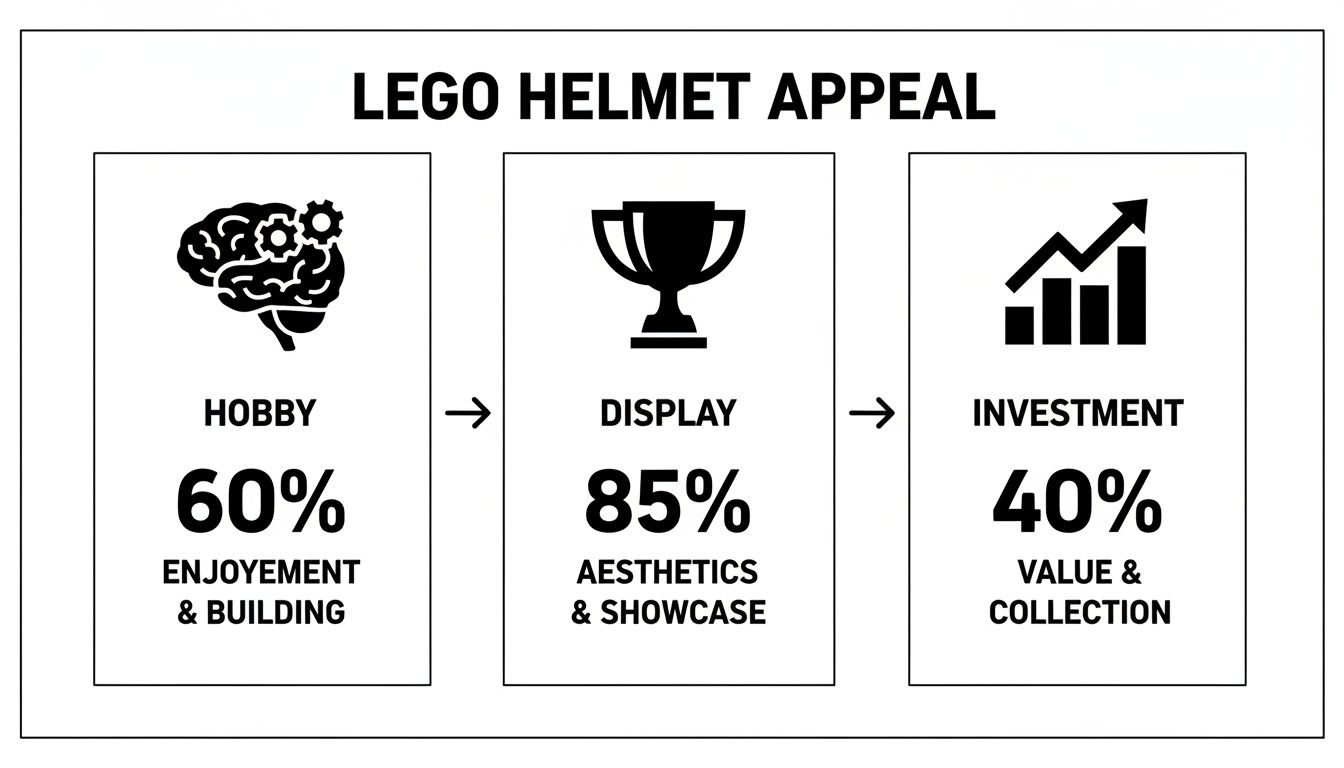
It’s pretty clear from this data that while many enjoy the building process, what really drives the majority of fans is how good the finished model looks as a high-quality decorative piece.
While the villains often get the most memorable helmets, the good guys are definitely well-represented. Luke Skywalker's Red Five X-Wing Pilot (75327) helmet was a landmark set. It was the first open-faced design in the collection and brought a much-needed splash of colour to the lineup.
The Clone Wars era has also gotten a lot of love, a move that fans of the prequel trilogy and the animated series have really celebrated.
The introduction of characters like Captain Rex and Commander Cody shows LEGO is listening to fan demand. They're bringing beloved heroes from animation into the physical world of brick-building, and it’s brilliant.
The Captain Rex (75349) and Clone Commander Cody (75350) helmets are absolute masterclasses in detail. They feature unique markings, rangefinders, and even battle-worn weathering effects that tell a story. These sets not only look incredible but also involve some of the most intricate and rewarding builds in the entire series.
With every new release, whether it's from the dark side or the light, LEGO continues to push the boundaries of what's possible with bricks, ensuring this collection remains a must-have for any dedicated fan.
As your collection of LEGO Star Wars helmets grows, you’ll naturally want to protect your investment. The secondary market can be a treasure trove for rare finds, but it’s also a place where counterfeit sets pop up. Learning to tell the difference between a genuine LEGO product and a convincing fake is probably the most important skill a collector can develop.
Your detective work starts before you even see a single brick. Take a good look at the box. Authentic LEGO packaging has a certain high-quality feel to it, with printing that’s sharp and vibrant. Counterfeit boxes, on the other hand, often look a bit off – think blurry images, spelling mistakes, or colours that seem washed out and dull.
Another giveaway is the factory seal. Official LEGO sets are sealed with either small, clear circular stickers or those satisfying thumb-punch tabs. If a box is just held together with regular tape or shows signs of being clumsily re-glued, that’s a major red flag.
Once you have the set in hand, the real inspection can begin. The single most reliable way to verify an authentic LEGO Star Wars helmet is to check the individual pieces themselves.
Every genuine LEGO brick, with very few exceptions for the tiniest parts, will have the official LEGO logo stamped right on each stud. This detail is always crisp, clear, and perfectly uniform. Fake bricks either won't have the logo or will have a poorly moulded, blurry imitation.
Beyond the logo, pay close attention to the plastic itself.
The instruction booklet is another great clue. Official manuals are printed on quality paper with steps that are crystal clear and easy to follow. Knock-off versions often use cheaper, flimsy paper, and the printing might be faint or misaligned.
When you’re buying a used or pre-owned LEGO Star Wars helmet, authenticity is just one piece of the puzzle. The set's condition is just as important. Even genuine sets can suffer from wear and tear over time, which can really impact their display quality and value. We touch on similar principles of assessing colour and condition in our guide to curating display-worthy art, like these Keith Haring posters.
A common issue with older sets, especially those with lots of white or light grey pieces, is yellowing. This usually happens after being left in direct sunlight for too long. Check carefully for any discolouration, as it can really detract from the helmet's clean look. Also, give the set a thorough once-over for missing pieces—especially unique or printed parts, which can be a pain (and expensive) to replace. Finally, ask about the state of any original stickers; for serious collectors, peeling or damaged decals can be a deal-breaker.
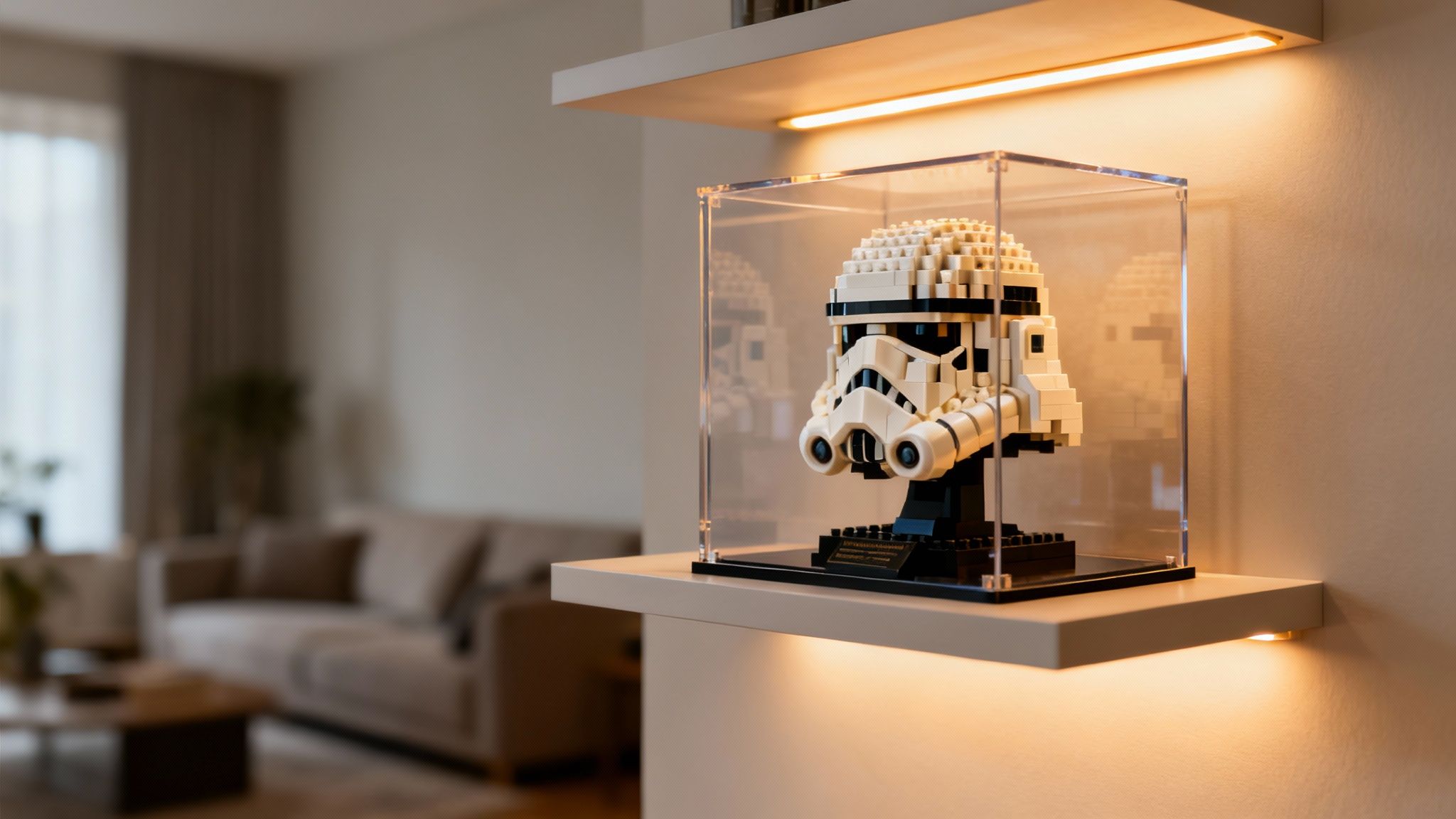
So, you’ve placed the final brick on your LEGO Star Wars helmet. The next thrilling challenge is figuring out the best way to show it off. These models aren’t just collectibles; they're pieces of art, and they deserve a presentation that elevates them into genuine home decor. Moving beyond the standard bookshelf is the key to transforming your collection into a stunning visual centrepiece.
The goal here is to create a curated focal point that showcases your passion without overwhelming your living space. Think like a museum curator. This means carefully considering things like spacing, lighting, and balance to give each helmet the spotlight it deserves.
One of the most effective ways to get that clean, modern look is with floating shelves. They create a wonderful illusion that your helmets are suspended against the wall, offering a minimalist aesthetic that pulls your focus right to the models themselves. You can arrange them in a neat, symmetrical grid for a more formal look, or stagger their positions for a dynamic, playful feel.
For a truly premium presentation, acrylic display cases are the way to go. These individual enclosures do two very important things: they keep your LEGO Star Wars helmet safe from dust, and they give each piece a distinct, gallery-like presence. Many companies now offer cases sized specifically for the helmet collection, some even with optional mirrored backs or built-in lighting to add that extra bit of drama.
A well-lit display can completely change how your collection feels in a room. Strategic lighting brings out the intricate details and contours of each helmet, turning a passive display into an active and engaging part of your room's atmosphere.
This whole approach of turning functional items into decorative art is a cornerstone of modern design. You can find more inspiration on blending unique pieces into your decor by exploring how different materials can be used, like with metal artwork for wall displays.
How you arrange your helmets is just as important as where you put them. Fight the urge to cram them all together! Giving each model some breathing room allows its unique design to stand out and really be appreciated. As a good rule of thumb, try to leave at least 10-15 cm of space around each helmet.
Lighting is your most powerful tool for creating mood and focus. Here are a few practical ideas to get you started:
By thoughtfully combining these display strategies, you can strike a beautiful balance between your collection and your existing decor. The idea is to create a harmonious space where your passion for Star Wars is presented with style and sophistication, making your LEGO Star Wars helmet collection a true conversation starter in your home.
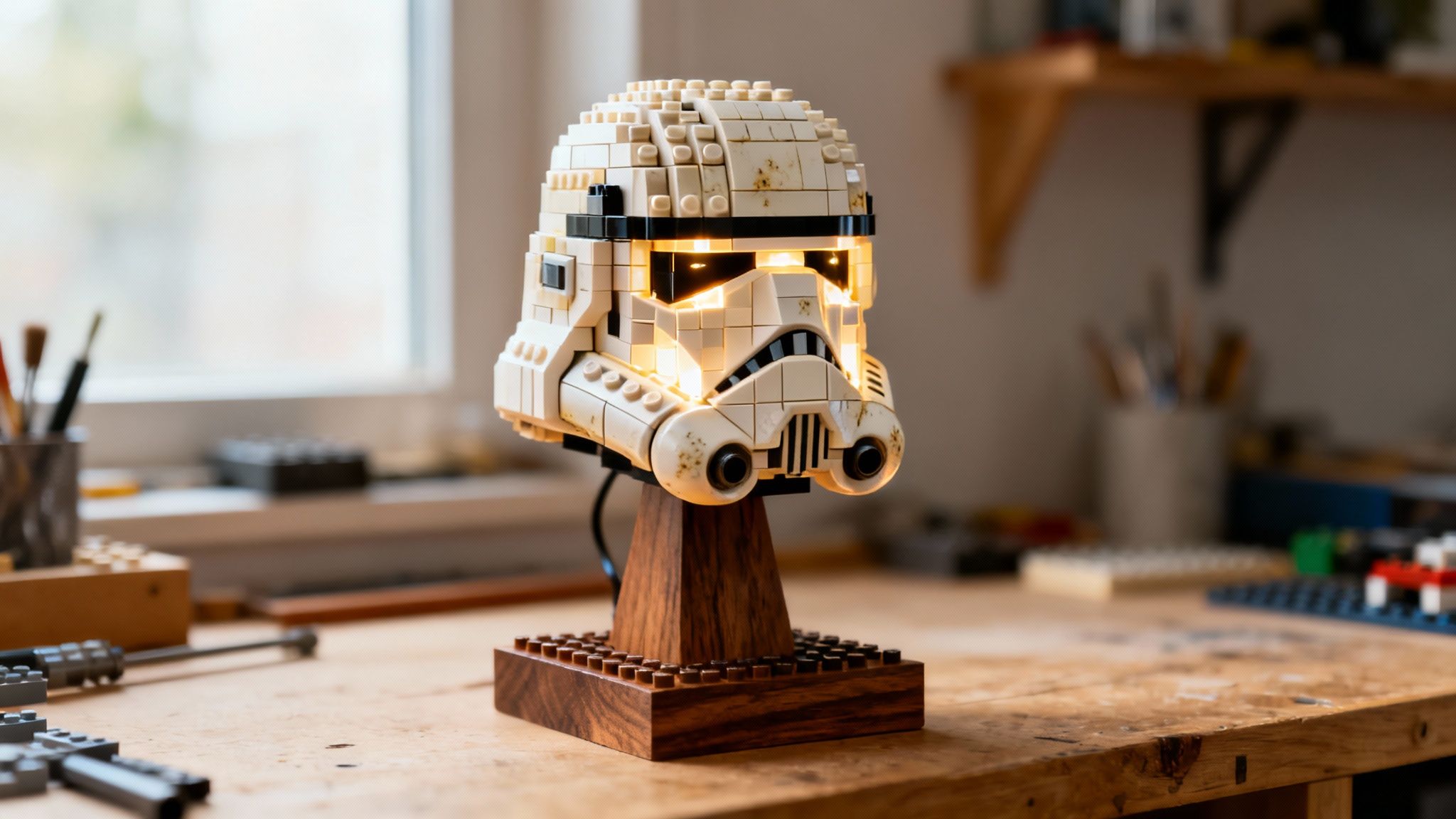
While building an official LEGO Star Wars helmet is incredibly rewarding, the true creative journey often begins right where the instruction manual ends. For many collectors, the standard build is just a canvas. This is your chance to transform your models into unique pieces that really reflect your own personal style.
By stepping beyond the official guide, you enter the exciting world of LEGO modifications—or 'modding'. These tweaks can range from small, subtle changes to complex overhauls that make your collection truly one-of-a-kind. It’s a brilliant way to turn your display pieces into a dynamic, personalised art project.
One of the most powerful ways to customise a LEGO Star Wars helmet is by adding custom lighting. A handful of third-party companies produce fantastic LED lighting kits designed specifically for these sets. These kits usually include tiny, easy-to-install lights that can illuminate visors, targeting systems, or internal parts, bringing a character like the Dark Trooper to life with menacing red eyes.
Another popular technique is weathering, which gives a helmet that authentic, battle-hardened look. This isn't about damaging the bricks, but rather cleverly adding extra pieces to simulate wear and tear.
This level of detail elevates a standard model into a piece of storytelling. A weathered Boba Fett helmet, for example, feels more like a genuine artefact from his many bounty-hunting escapades across the galaxy.
Figuring out how to add these details is a creative exercise in itself. For inspiration on how small additions can alter the entire look of a piece, check out our guide to colour mixing charts, which explores how even subtle changes can make a huge impact.
The standard black stand included with every LEGO Star Wars helmet is sleek and does the job, but creating a custom stand is a fantastic way to match your collection to your home's aesthetic. Here's where you can really experiment with different materials and designs that complement your personal decor.
Imagine your Scout Trooper helmet mounted on a rustic, live-edge wood slice to evoke the forests of Endor. Or perhaps Darth Vader’s helmet would look even more imposing on a stand made of polished black slate. These custom solutions not only enhance the display but also integrate your collection more seamlessly into your living space, turning your hobby into a sophisticated decorative statement. The possibilities are truly endless.
Diving into the world of Lego Star Wars helmet collecting can bring up a few questions. Maybe you're deciding which iconic character to build next, or perhaps you're wondering how to best care for your growing display.
To help you build your collection with confidence, we’ve gathered answers to some of the most common queries from fans, new and old. Think of this as your handy guide to everything from investment potential to keeping them looking pristine.
While the pure joy of building is why most of us start collecting, it's true that many Lego sets appreciate in value, especially after they've been retired. The investment potential for any specific Lego Star Wars helmet really depends on its rarity, overall condition, and the current market demand.
A great example is a discontinued set like the TIE Fighter Pilot (75274), which has seen its value climb significantly on secondary markets. The best advice is to collect what you love first; any potential financial gain should be seen as a happy bonus. The timeless popularity of the Star Wars saga gives these sets a solid foundation for holding their value over time.
Keeping your helmets dust-free is key for a sharp-looking display. For regular upkeep, a gentle dusting with a soft-bristle brush (a clean makeup brush is perfect) or a can of compressed air works wonders. Just be sure to hold the can upright and spray from a distance to avoid damaging any pieces.
If a deeper clean is in order, you can carefully take the model apart and wash the bricks in lukewarm water with a bit of mild soap.
It's absolutely crucial to avoid harsh chemicals, abrasive sponges, or hot water. These can permanently damage or warp the plastic. And please, never put your Lego bricks in a dishwasher or washing machine! Let every piece air-dry completely before reassembling your helmet.
Once a Lego Star Wars helmet is retired, it vanishes from regular retail stores. This is your cue to head to trusted online marketplaces like BrickLink or eBay, which are fantastic hubs for collectors. When buying second-hand, it's vital to check the seller's reputation and read through their recent feedback.
Always review the item description and photos carefully. Look for details on the set's condition, whether it's complete, and if it includes the original box and instructions. For the more valuable or rare sets, using a payment service with buyer protection adds a welcome layer of security to your purchase.
This is a really common question among collectors. The Ultimate Collector Series (UCS) sets are in a league of their own – they're generally much larger, far more complex, and have a significantly higher piece count. UCS sets often represent entire vehicles, like an X-Wing or the Millennium Falcon, and are designed to be the definitive, most detailed version of that subject.
The Helmet Collection, on the other hand, is specifically focused on creating displayable, bust-style models that are all at a consistent scale. While both series are aimed at adult collectors, the helmets are more accessible in size, build time, and cost. This makes them much easier to collect and display as a cohesive and stylish series.
Discover authentic, hand-crafted Scandinavian decor to complement your collection at Dalaart. Explore our unique pieces at https://dalaart.com.


.svg)


.png)


