April 7, 2026
You are probably standing in one of two places right now, at least in your mind. You are either planning a walk through central Stockholm and wondering whether svensk hemslöjd stockholm is worth a stop, or you have already seen Swedish folk craft online and want to understand what is authentic, what is regional, and what belongs in your home.
That is a good question to ask before you buy anything.
Svensk Hemslöjd is not a typical souvenir stop. It belongs to a deeper Swedish tradition in which objects are expected to do more than look attractive on a shelf. A woven runner, a carved spoon, a painted wooden horse, or a hand-stitched textile carries skill, place, and memory. You can often feel that difference before you can name it.
Stockholm is a fine place to begin because the city gives the tradition a public face. Yet many visitors soon realise that the broad Stockholm view and the specialised regional view are not always the same thing. If your heart is set on Dalarna craft, especially a Dala horse or a hands-on painting project, it helps to know where the general story ends and the regional story begins.
A visitor walking along a polished shopping street in Stockholm may expect glossy fashion windows, design chains, and predictable tourist gifts. Then they step into Svensk Hemslöjd and the pace changes. The room feels quieter. The objects ask for closer looking.
A carved wooden piece shows the knife marks of the maker. Linen hangs with a softness that factory cloth rarely has. Embroidery appears measured and deliberate, not mechanically repeated. The effect is less “gift shop” and more “small public gallery where everything is allowed to go home with you”.
That difference matters. Svensk Hemslöjd represents a craft tradition that treats handmade work as part of Swedish cultural life, not as a decorative afterthought. It remains visible in modern Stockholm too. According to Visit Stockholm’s listing for Svensk Hemslöjd, it ranks #73 of 145 shopping spots in central Stockholm, which says something important about its staying power among both residents and visitors.
Several things make the experience distinct:
For many travellers, this is the moment Swedish handicraft stops being an abstract idea and becomes tangible. A spoon can show restraint. A woven band can show local identity. A painted horse can show both playfulness and lineage.
Hemslöjd is often translated as home craft or handicraft, but that translation is too thin. The word points to a whole way of thinking about making.
A useful comparison is terroir in French wine. Terroir is not just soil. It is the total environment that gives a wine its character. Hemslöjd works in a similar way. It brings together local material, regional habit, learned technique, and everyday use.
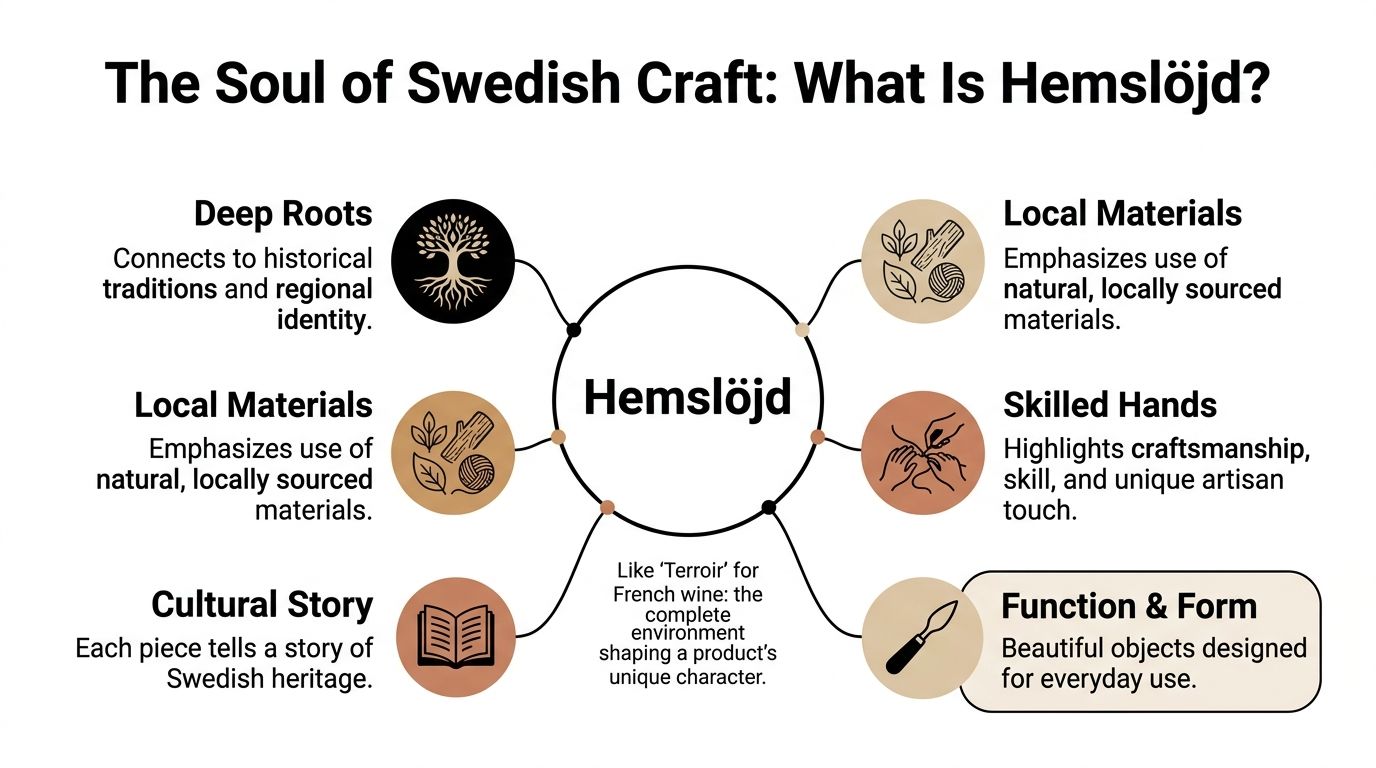
A hemslöjd object is not only handmade. It is shaped by a tradition of making.
Many readers get caught on one point. If something is handmade at home, is it automatically hemslöjd?
Not quite.
Hemslöjd usually carries a stronger connection to inherited methods, regional design, and material honesty. A mug printed in a folk pattern may be charming, but that does not make it part of the hemslöjd tradition. By contrast, a handwoven runner made from linen, using a known local pattern family, sits much closer to the heart of it.
When you want to understand hemslöjd, start with these qualities:
Svensk Hemslöjd gives this philosophy a public home. On its own about page, the organisation describes its role in sourcing “tidlös slöjd”, or timeless handicraft, from artisans around Sweden while maintaining a quality benchmark tied to natural materials and traditional techniques through Svensk Hemslöjd’s description of its approach.
A quick test helps. Ask yourself, “Would this still make sense if no label were attached?” Authentic craft usually survives that question well.
Modern shoppers often live among flat surfaces, short product cycles, and objects that are replaced rather than repaired. Hemslöjd offers a different rhythm. It asks you to notice grain, stitch tension, pigment, and proportion.
That is why a simple carved butter knife or a woven wall piece can feel unexpectedly moving. These objects do not shout. They reward attention.
Step into a long-running craft shop in Stockholm and you are stepping into an argument from the past. The shelves may look calm, but the ideas behind them were shaped during a period when machine-made goods were spreading quickly and many local making traditions were losing ground.
In response, advocates for Swedish craft worked to give handmade work a public future. One of the key figures was Lilli Zickerman, who helped found the Föreningen för Svensk Hemslöjd in 1899. The organisation set out to record regional traditions, support skilled makers, and create a market for their work, as described in Svensk Hemslöjd’s historical background.
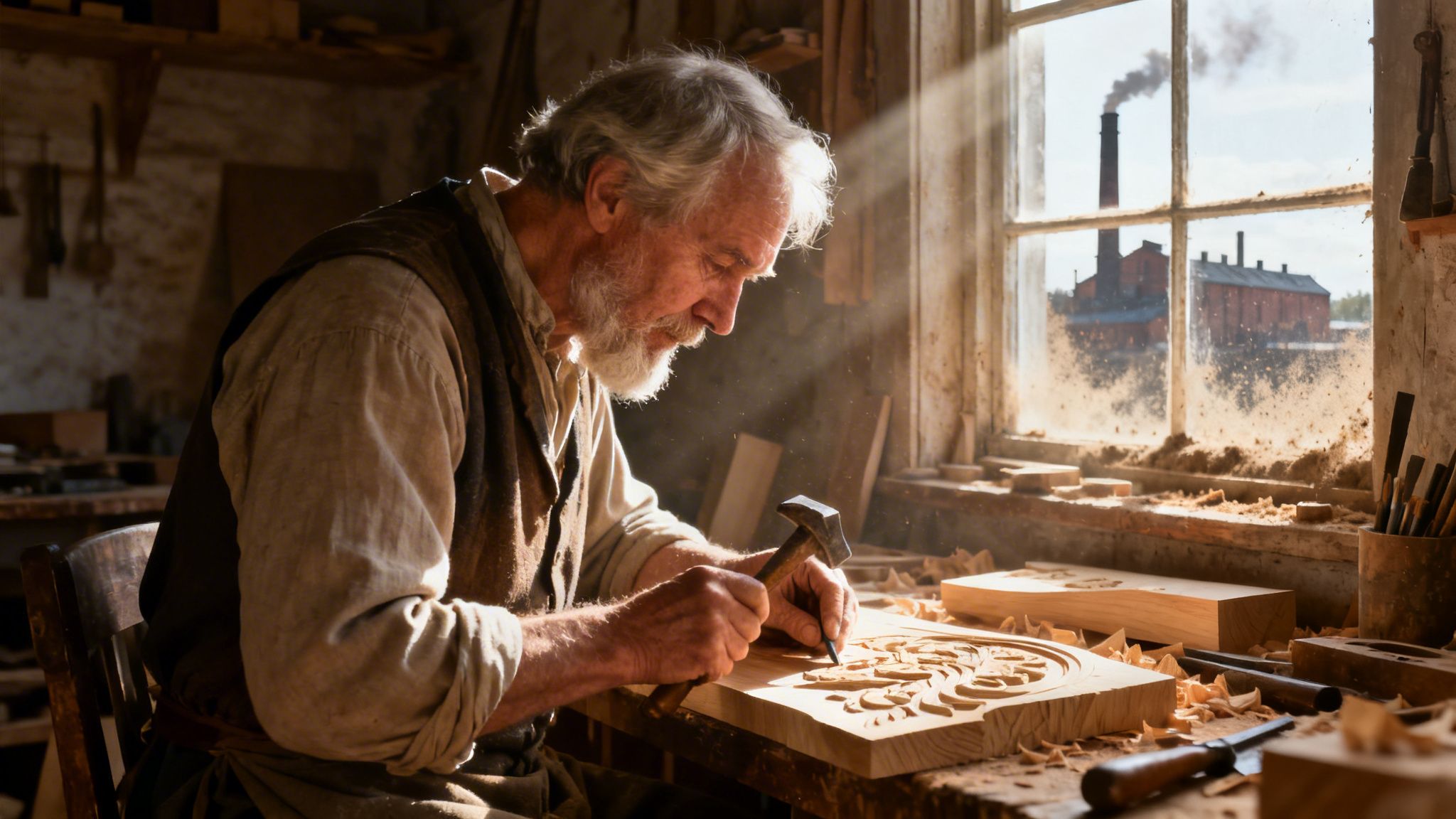
The goal was preservation through use. A pattern saved in a notebook matters, but a pattern still woven, carved, stitched, and sold has a stronger chance of surviving. That is what made the Stockholm setting so important. It gave regional craft traditions a visible address in the capital, where visitors, collectors, and everyday buyers could encounter them directly.
A hemslöjd shop, in that sense, works like a living archive. Instead of storing knowledge behind glass, it lets knowledge remain active in household objects, textiles, and tools. A buyer does more than admire a tradition. The purchase helps keep materials, techniques, and regional styles in circulation.
Dalarna helps explain this larger story. The province became one of the most recognisable carriers of Swedish folk craft, especially through painted wooden horses, decorative painting, and strong textile traditions. If Stockholm is where many visitors first meet Swedish handicraft in person, Dalarna is often where they begin to understand its regional depth. For a broader sense of that cultural setting, Dalaart’s overview of Dalarna’s craft culture and identity is a useful companion.
That connection matters today. You might first handle a handcrafted object in Stockholm, notice the tool marks or painted surface, and only later realise that its visual language comes from a place with its own local history. Online specialists such as Dalaart make that next step easier by bringing Dalarna-focused craft and DIY materials within reach, so the experience does not end at the shop counter. It continues at home, where curiosity can turn into collecting, learning, or making with your own hands.
A well-made hemslöjd object carries two histories at once. The history of a region, and the history of the movement that helped keep that regional knowledge visible.
The easiest way to understand svensk hemslöjd stockholm is to look at the kinds of objects that appear on the shelves. Each category teaches you a different lesson about Swedish making.
Textiles are often the quiet stars of a craft shop. You may see handwoven table runners, cushion covers, embroidered cloths, or narrow woven bands. At first glance, some seem restrained.
Then the details start to emerge. A border pattern repeats with tiny variation. The linen has body without stiffness. The colours often feel earthy, clear, and balanced rather than loud.
Textile traditions also help you notice region. Some areas are associated with particular embroidery habits, colour relationships, or weave structures. Even when you do not know the exact province, you can sense that the design language belongs somewhere specific.
Many visitors arrive looking for a Dala horse. That is understandable. The painted wooden horse is iconic.
But do not stop there. Swedish woodcraft also includes spoons, bowls, knife handles, small boxes, decorative figures, and household tools. Some pieces are smoothly finished. Others retain a more direct carved character, where the maker’s hand is still visible.
What matters is not only ornament. In hemslöjd, a wooden object often succeeds because it sits well in the hand, balances properly, or ages beautifully with use.
Some of the most compelling pieces feel almost spare. Small pouches, belts, sheaths, and useful accessories can show how older craft traditions valued durability and fitness for purpose.
In northern traditions, you may also encounter work using horn, leather, and other materials tied to local ways of life. These pieces often carry a strong sense of adaptation to climate, the natural environment, and long use.
Painted and glazed work adds another register. Folk painting can be cheerful and rhythmic, while pottery often reveals the Swedish preference for simple forms with daily use in mind.
If you are browsing, keep these questions in mind:
A small embroidered band may end up meaning more to you than a larger showpiece. A hand-carved spoon may become a favourite object because you use it every day. Hemslöjd earns affection through contact.
Most first-time buyers worry about making the wrong choice. That is sensible. Stockholm has excellent craft, but it also has polished tourist retail. The skill lies in reading objects well.
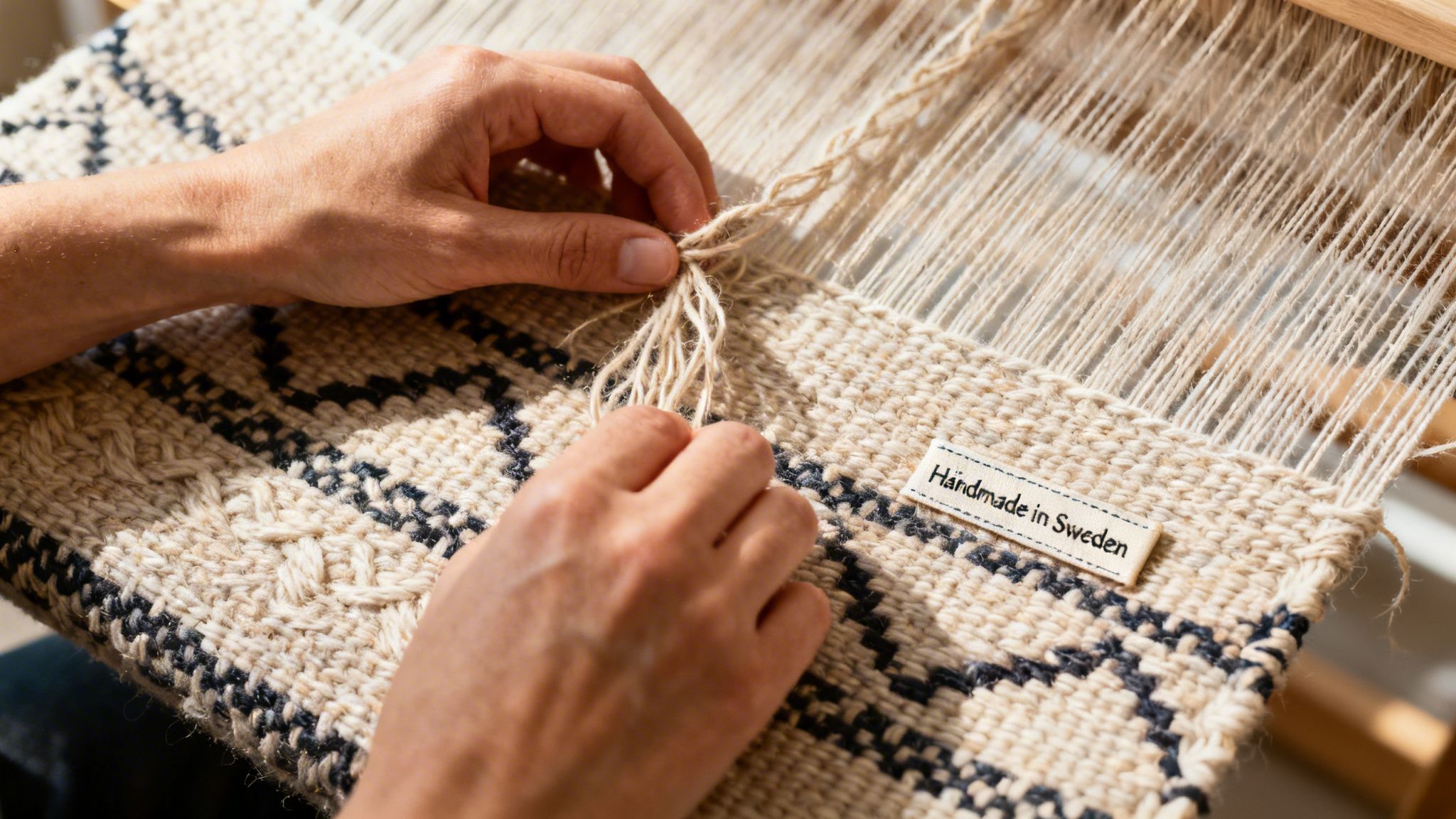
Authentic hemslöjd usually begins with material honesty. Linen should not feel synthetic. Wool should have life in it, not the flat slickness of imitation fibres. Wood should show grain, weight, and variation.
If a piece seems designed to imitate craft rather than embody it, pause.
A handcrafted item rarely looks machine-perfect from every angle. That is not a flaw. It is evidence.
Look for signs such as:
Shops rooted in real craft can usually answer practical questions about origin, material, or method. You do not need specialist vocabulary. Ask where the piece was made, what it is made from, and whether the pattern or form belongs to a known tradition.
If your interest leans toward folk figures, this beginner’s guide to collecting Dala horses is useful for learning what to look for in carving, painting, and provenance.
If you feel nervous buying a higher-priced handmade object, compare it to jewellery rather than to a souvenir magnet. You are paying for labour, judgement, and continuity of knowledge.
A common shopping mistake is buying several inexpensive “folk-style” items instead of one well-made piece. Authentic hemslöjd tends to reward patient selection.
Choose the object that keeps drawing you back. It may be the woven table runner with balanced colours. It may be the carved bowl that feels right in your hands. It may be a small painted figure whose brushwork shows confidence.
A good piece often reveals itself slowly.
Handmade objects last well when you treat them according to their material rather than according to convenience. That is the basic rule.
Keep carved and painted wooden pieces away from strong direct sun, radiators, and damp corners. Sudden shifts in heat and humidity can stress wood and painted surfaces.
Dust with a soft dry cloth. Avoid soaking or aggressive cleaning products.
Handwoven linen and wool deserve careful handling. Shake out dust lightly, air them when needed, and fold or roll them without crushing sharp creases for long periods.
If washing becomes necessary, be conservative. Mild treatment is usually better than frequent cleaning.
A craft object changes when it is used, and that is often part of its beauty. A spoon can deepen in tone. A woven runner can soften. A painted figure can become more meaningful because it marks a room you live in every day.
A few habits help:
Hemslöjd was never meant for disposable living. Care is part of the tradition.
You leave Svensk Hemslöjd with your head full of patterns, painted wood, woven linen, and ideas. Then a more specific wish appears on the walk back through Stockholm. You do not want just any craft object. You want a Dala horse blank to paint yourself, the right traditional colors, or a figure that speaks clearly in the visual dialect of Dalarna.
Stockholm is excellent at introducing the wider world of Swedish handicraft. A regional specialist serves a different purpose. It helps you continue from admiration to selection, or from selection to making.

This distinction is useful to understand. Bibliotekstan’s description of Svensk Hemslöjd presents the shop as a broad craft destination, and that breadth is part of its strength through Bibliotekstan’s Svensk Hemslöjd listing. Yet visitors who become especially interested in Dalarna often begin looking for narrower materials and motifs than a general store is built to center.
A first encounter in Stockholm often works like a museum gallery. It teaches your eye. You start noticing brushwork, carved contours, floral painting, and the difference between a general folk style and a place-specific tradition.
Making a Dalarna project at home asks for something more precise. The shape of the blank matters. The painting style matters. Even the feeling of starting with an object rooted in the right making tradition matters.
For that reason, specialized online sources can complement the store visit directly. A shopper may discover hemslöjd in Stockholm, then turn to a regional maker for Dalarna-focused materials, finished figures, or beginner-friendly DIY options.
One example is Dalaart’s behind-the-scenes look at its work with Swedish folk craft. The focus stays on Dala horses and related animal figures from Dalarna, including finished pieces and DIY models, so the online experience feels less like a substitute for Stockholm and more like the next room in the exhibition.
That is the most natural connection between the two. Stockholm gives you range. Dalaart gives interested shoppers a more concentrated path into one of Sweden’s most recognizable regional craft traditions, especially if they want to make something with their own hands.
The national view helps you recognize Swedish handicraft. The regional view helps you understand why one painted horse from Dalarna can carry its own local character.
It is often pricier than mass-produced souvenirs because you are paying for handwork, materials, and skill. Think of it as buying a made object with cultural depth, not a quick travel trinket.
No. Bargaining is generally not part of the shop culture in this context. Prices normally reflect the work and the retail setting.
Choose one piece that feels both beautiful and usable. Textiles, small wood objects, and painted figures are often easy starting points.
No. Folk-inspired design and authentic handicraft can overlap, but they are not always the same. Material, making quality, and provenance matter.
Ask about packing and shipping options at the shop. For regional or specialised items, online ordering after your trip may be the easier route.
If your visit to svensk hemslöjd stockholm leaves you wanting a more focused look at Dalarna folk art, Dalaart offers an online way to continue that journey through hand-carved, hand-painted Dala horses, companion animal figures, and DIY pieces grounded in Swedish craft tradition.


.svg)


.png)


