May 16, 2026
You're probably looking for a bag that can do two jobs at once. It needs to carry the ordinary things, your book, lunch, notebook, market finds, but it also needs to feel like you. Not bland. Not disposable. Not the sort of thing you forget on the back of a chair because it never had any character to begin with.
That's where the tote bag patterned style becomes so appealing. A good one isn't only practical. It acts like a small piece of everyday art, something you take into the street, onto the train, into the bakery, and home again. The pattern carries mood, memory, humour, craft, and sometimes even a trace of heritage.
For anyone drawn to Scandinavian folk art, that appeal runs even deeper. A repeating floral vine, a crisp geometric print, or a Dala-inspired motif can turn a simple cloth bag into an object with presence. It still carries your essentials. It just does so with far more beauty.
A patterned tote often enters life in a very ordinary moment. You need a bag for the library, for work papers, for groceries on the walk home, or for the spare scarf and water bottle that never fit in your coat pockets. You start by searching for something useful, then realise most options are either too plain or too trend-driven to live with for long.
The charm of a patterned tote is that it solves both problems at once. It remains useful, but it also says something gentle and specific about your taste. A floral print can feel welcoming. A bold abstract repeat can feel modern and lively. A folk motif can feel rooted and storied.
In Sweden, that kind of design-led product has room to flourish because digital shopping is woven into daily life. 91% of the population used the internet daily in 2024, which helps niche visual products such as patterned totes find their audience through imagery and storytelling, especially in markets that value strong design identity, as noted in this overview of Sweden's digital engagement and design-led tote demand.
A tote becomes more meaningful when you choose it the way you'd choose a print for your wall. You live with it, notice it, and carry its colours through your day.
That's why it helps to stop thinking of the bag as a mere accessory. Think of it as a companion object. It moves with you through errands, travel, work, gifting, and daily routines. The pattern isn't extra decoration sitting on top. It's part of the object's identity.
When people talk about wanting pieces with personality, this is often what they mean. They want usefulness with soul.
Patterns speak before we do. You can spot a tote across a room and immediately get a sense of its mood. Some feel orderly. Some feel playful. Some feel handcrafted in a way that invites a second look.

A useful way to understand a tote bag patterned design is to sort it by visual language.
Each family creates a different relationship between object and user. A geometric tote can feel composed and urban. A floral one can feel domestic and generous. An abstract print can feel contemporary and artistic. A conversational print can feel personal, almost like a badge.
Swedish and broader Scandinavian design traditions give patterned totes a special depth. These traditions value simplicity, function, and a close connection to nature. That combination is why a Scandinavian-inspired tote rarely feels overworked, even when the pattern is vivid.
The best examples usually balance three things:
That's part of why folk-inspired prints sit so comfortably on totes. The bag is already an everyday tool. Scandinavian design tends to honour tools that are beautiful enough to keep.
For readers who enjoy tracing visual traditions across surfaces and decorative objects, this discussion of William Morris wallpaper patterns offers a helpful parallel. It shows how repeated motifs can carry history, mood, and craft without losing function.
Practical rule: If a pattern still looks balanced when the bag is folded, slouched, or half full, it's usually a strong pattern.
Dala-inspired design belongs to a folk tradition that values colour, rhythm, and handwork. On a tote, that might appear as painted horses, curling leaf forms, petal repeats, or border-like motifs that echo carved and painted wood traditions.
What matters isn't only the symbol itself. It's the feeling of the composition. Dala-inspired patterns often feel celebratory and grounded at the same time. They're decorative, yes, but never empty. They connect daily life with cultural memory.
That's why a patterned tote can carry more than belongings. It can carry a sense of place.
Pattern attracts the eye first, but material decides whether the bag becomes a favourite or a frustration. Two totes may share a lovely print and still behave completely differently in use. One holds its shape, takes a heavy book, and ages well. The other twists, sags, or fades too quickly.
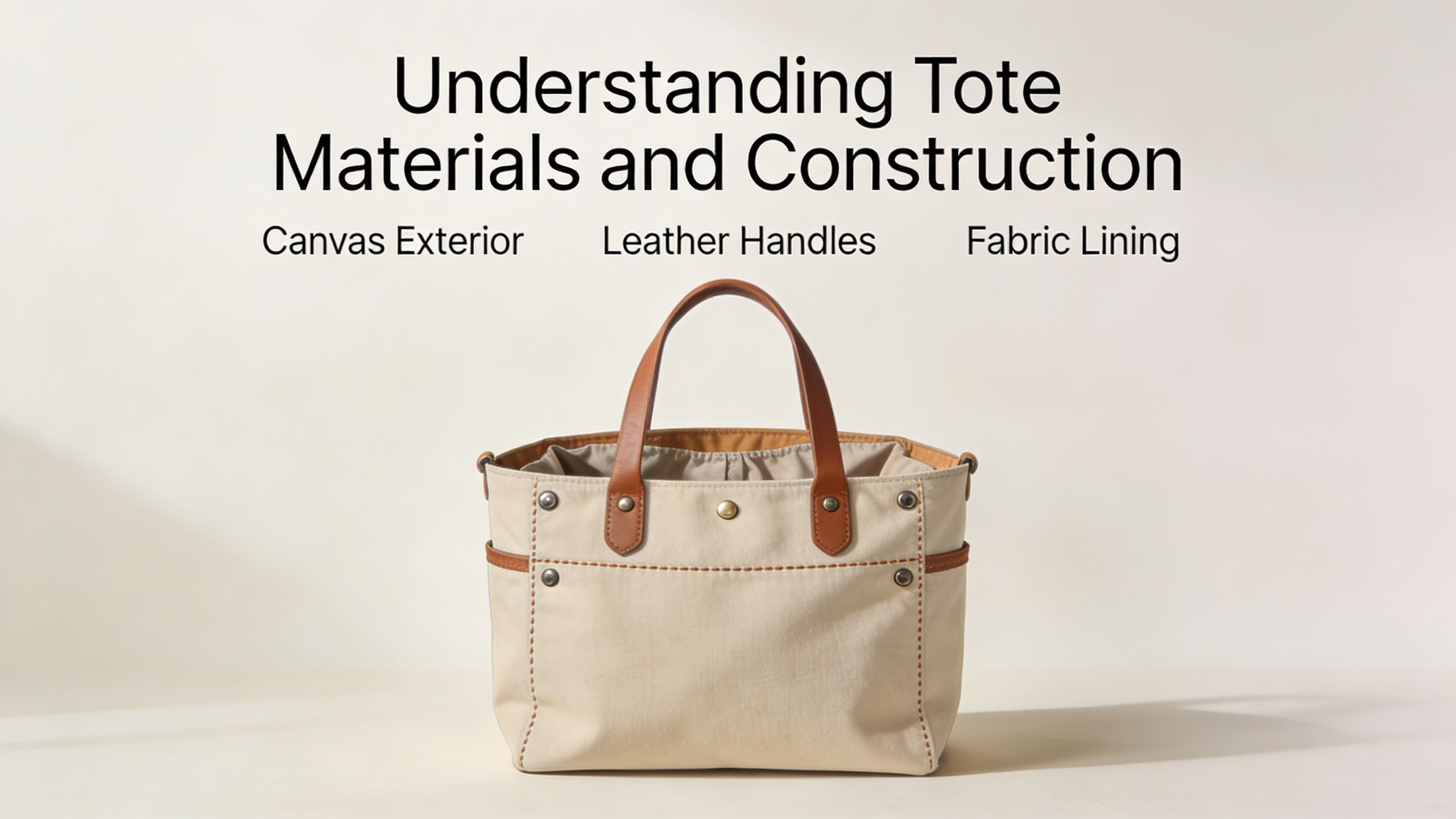
Think of fabric as the ground beneath the artwork. It affects sharpness, texture, and the overall personality of the tote.
Construction matters just as much. Reinforced seams, stable handles, a lined body, and thoughtful interfacing all help a patterned tote survive daily use. If the print is charming but the structure is weak, the object won't fulfil its promise.
In Sweden, reusable accessories carry added meaning because they sit within a culture that values sustainability and long life. 66% of Swedish waste was recycled or composted in 2023, and that broader context supports durable reusable items over throwaway alternatives, as noted in this discussion of Swedish sustainability and patterned totes.
A well-made tote isn't only prettier over time. It's more aligned with that practical ethic of reuse.
Washability and strength are design decisions, not afterthoughts. A beautiful bag that can't stand ordinary life hasn't been finished properly.
When you assess quality, look for signs that the maker expected the bag to be used often. Handles should feel secure where they join the body. The fabric should suit the load. If the bag is soft and decorative, it should at least be honest about that purpose.
For people who like organising the inside of a bag as carefully as the outside, a bag-in-bag organiser guide can help you think about shape, pockets, and how structure supports everyday use.
There isn't one correct fabric. There's only the right match between pattern, purpose, and preference.
A heavy canvas tote with a bold print suits commuting, books, and regular shopping. A linen tote with a painterly motif suits lighter carry and a softer aesthetic. A recycled-textile tote may appeal most when you value narrative and resourcefulness as much as visual polish.
The best choice often comes down to one question. Do you want the bag to behave like a tool, like a textile artwork, or like both?
You are heading out on an ordinary Tuesday. Keys, notebook, water bottle, scarf, maybe a small bunch of flowers from the market. The right patterned tote should carry all of it with ease and still feel like something lovely to live with, like a small piece of everyday art at your side.
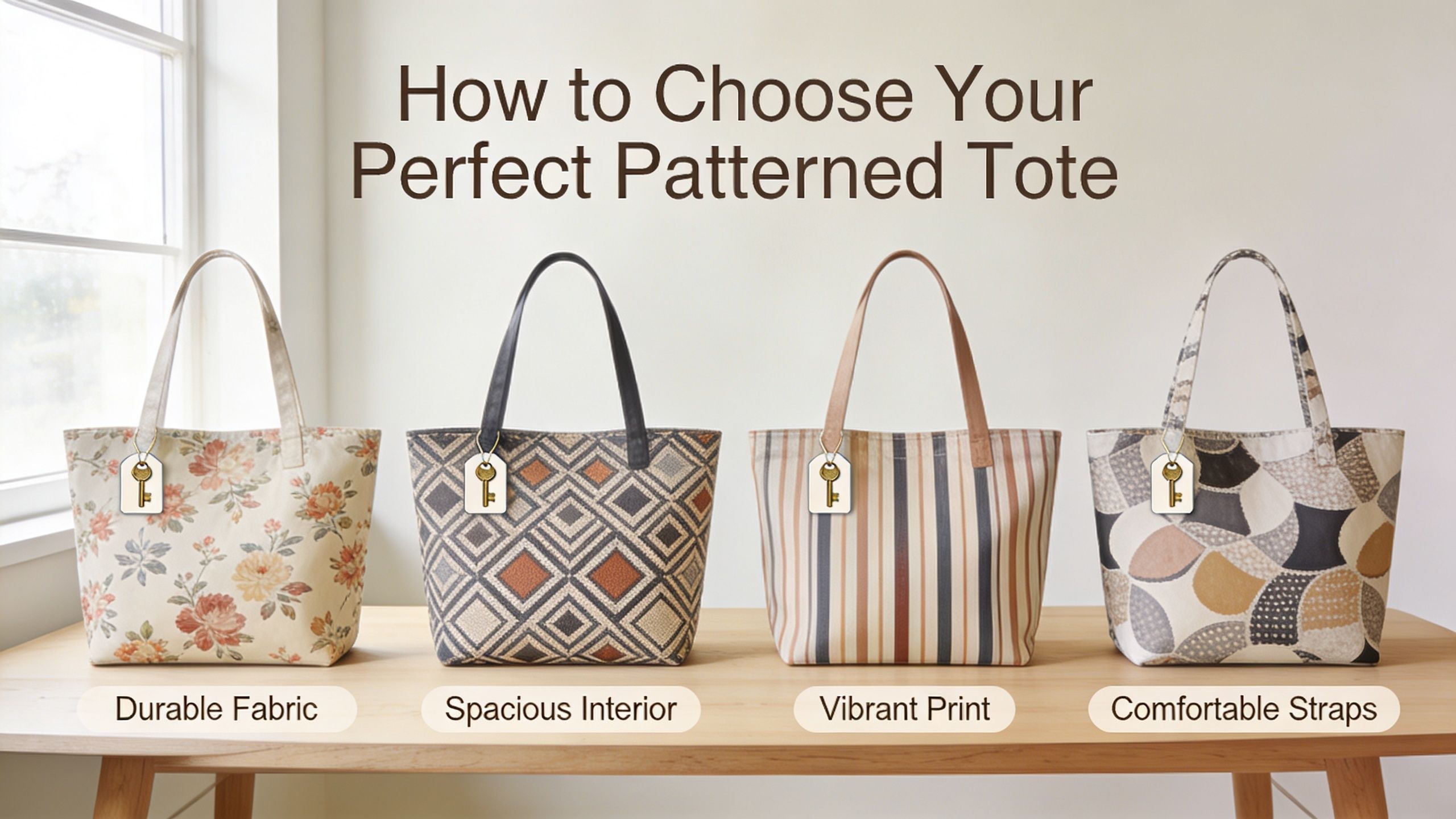
A good choice begins with use. Before colour or motif, ask what the bag needs to carry and how often you will reach for it.
A market tote benefits from a flat, stable base and room for awkward shapes. A work tote needs enough structure that papers, chargers, or a laptop sleeve do not slump into a heap. A bag for knitting, sketchbooks, or library visits can be softer, because its job is gentler.
This part matters because a patterned tote is a textile object, not just a printed surface. The pattern may catch your eye first, but shape decides whether you keep using it.
If measurements are listed, read them slowly. Width and height tell you the outline. Depth, often called the gusset, tells you how the bag behaves once it is filled. A narrow tote can look generous when empty and feel surprisingly limited in use, rather like a beautiful cupboard with shallow shelves.
Pattern has a language of its own. Some totes speak in a low whisper. Others sing.
If your wardrobe is mostly plain coats, denim, knitwear, and neutral shoes, a folk-inspired print can bring warmth without feeling fussy. Repeated flowers, stylised leaves, hearts, and horse motifs often work this way. They add character, yet they also carry the calm order found in Scandinavian decorative traditions.
If you already wear stripes, checks, or bold colours, a simpler tote may serve you better. It gives the eye a place to rest.
Scale helps too. Small dense repeats can feel intricate, almost like printed embroidery. Larger motifs often feel clearer and more relaxed from a distance. People sometimes assume big patterns are louder, but the opposite is often true.
A useful test is this: would you still enjoy the print hanging by the door on a rainy morning, not only in a styled photo? That is when you know the design has lasting charm.
Small construction choices change the whole experience of carrying a tote.
Check these details carefully:
Handmade or artisan-style totes deserve an extra moment of attention. Look at how the print sits on the fabric. A well-placed motif feels considered, much like a border in folk painting or the balanced repeat in a cross-stitch sampler. If you enjoy that tradition, browsing folk-style cross stitch patterns inspired by Scandinavian craft can sharpen your eye for symmetry, spacing, and motif rhythm.
Some people want a tote that blends in and works hard. Others want one that carries a sense of heritage, something touched by the logic of handwork and ornament. Both are valid.
The Scandinavian and Dala-inspired aesthetic offers something special here. These patterns are often decorative, but they are rarely careless. They come from traditions where beauty lived on useful things. Painted furniture, woven bands, carved horses, apron borders. The tote follows that same idea. Daily life deserves pattern.
Dalaart is one example of that visual tradition in a contemporary setting, and the reference can be helpful if you are drawn to Nordic motifs with a clearer cultural root than generic floral prints.
Choose the tote you will keep using. The best one usually balances three things at once: enough room for your real life, a pattern that still pleases you after repeated use, and construction that respects the simple dignity of a bag made to be carried often.
There's a special pleasure in taking a plain bag and giving it a voice of its own. You don't need advanced sewing skills, a studio, or expensive tools. A few simple techniques can turn a blank tote into something that feels personal, giftable, and full of story.
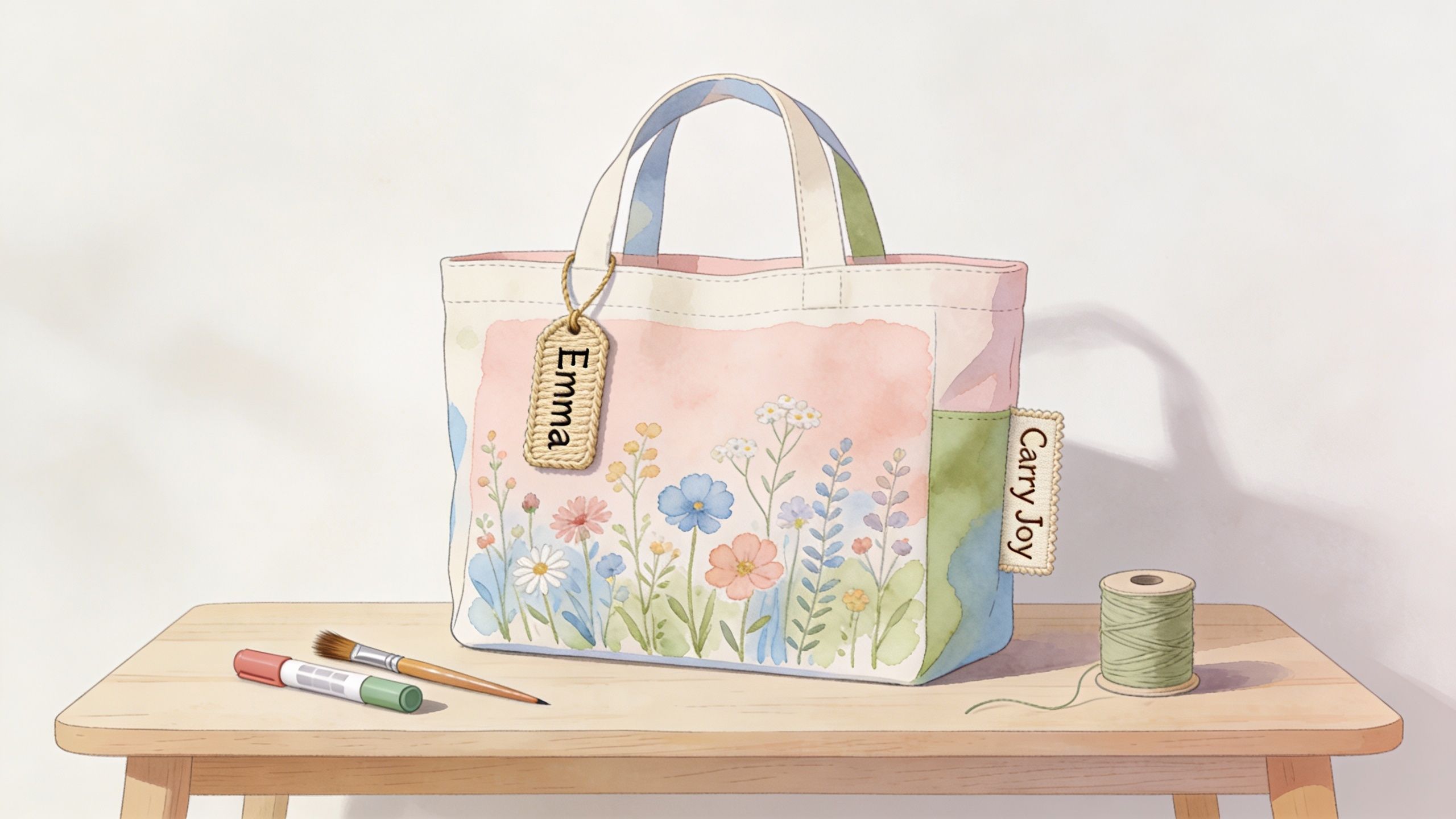
A Scandinavian spirit in DIY doesn't require perfection. In fact, a little irregularity often makes the work more charming.
Try one of these:
These methods suit beginners because they don't ask for total precision. They ask for rhythm, patience, and a willingness to let the hand show.
For readers who enjoy counted thread work and folk-inspired surface decoration, these cross stitch patterns can spark ideas for motifs that adapt beautifully to tote pockets, labels, or small embroidered panels.
Building the bag yourself introduces another layer of satisfaction. The pattern on the outside becomes only one part of the design. You also choose the shape.
One efficient drafting method uses a rectangle for the body, then removes corner squares equal to half the desired depth to form the gusset. This creates a repeatable structure and helps you aim for familiar sizes such as 15" W x 16" H x 5" D, as shown in this tote drafting tutorial on proportional pattern-making.
That sounds technical at first, but the idea is friendly once you see it in practice:
A handmade tote feels more polished when the shape is planned before the decoration goes on. Structure first, then surface.
The easiest DIY mistake is adding lovely decoration without considering where the bag folds, stretches, or rubs. Place your main motif where it can be seen when the bag hangs naturally. Keep dense paint away from bulky seams. If you add embroidery, reinforce the back neatly so the inside remains usable.
The result doesn't need to look factory-made. It should look cared for. That's a different kind of beauty, and often a more lasting one.
A patterned tote lasts longer when you treat it like a textile object rather than a casual afterthought. That means checking the fabric before washing, avoiding harsh cleaning that can dull printed surfaces, and reshaping the bag as it dries so the body and handles don't twist. If the tote is structured, store it upright or lightly filled to help it keep its form.
A durable, washable tote also fits a broader reuse mindset. In Sweden, tote bags are closely tied to replacing disposable carriers, and choosing reinforced construction supports a longer product life within circular design habits, as discussed in this guide to handmade tote durability and reuse.
Some bags stay with you because they're useful. Others stay because they hold a memory. The most collectable totes usually do both.
You may find yourself keeping:
Collecting totes can be surprisingly meaningful. They don't need to sit behind glass to count as art. They can hang by the door, carry apples and sketchbooks, travel to the station, and still hold cultural value.
A collection of totes can become a small gallery of your tastes, journeys, and favourite forms of making.
When you choose carefully and care for them properly, these bags become more than storage. They become a record of what you find beautiful in ordinary life.
If Scandinavian craft, Swedish folk motifs, and thoughtful handmade objects are part of what drew you to patterned totes, explore Dalaart. The shop focuses on authentic Swedish Dala horses and companion animals, along with DIY and collectible pieces that reflect the same love of colour, pattern, and everyday artistry.


.svg)


.png)


