May 17, 2026
Morning light is pouring across your windows. It catches the grain of a painted wooden tray, the curved back of a birch chair, and the bright red of a Dala horse on the sill. The room feels exactly right. Calm, airy, Scandinavian.
Then the practical worry arrives. Too much sun can bleach colour, flatten painted detail, and make a beautiful room uncomfortably hot. Heavy curtains solve one problem by creating another. You protect the objects, but lose the light that gives the space its character.
That's why film for windows has become such a thoughtful choice for Nordic-inspired homes. It isn't only about dark tint or privacy. The best versions work in the background, helping you keep daylight, reduce glare, and protect delicate finishes without changing the spirit of the room.
A lot of people reach window film after trying the usual fixes first. They lower the blind halfway. They move the painted wood horse away from the glass. They shift the reading chair out of the afternoon sun. The room stays bright, but never fully settled.
In a Scandinavian interior, that tension matters more than it might elsewhere. Light isn't decoration. It's part of the architecture of the home. White walls, pale wood, woven textiles, and folk-art accents all depend on daylight to feel alive.
Window film has a longer and more practical history than many homeowners realise. The technology goes back to 1966, when 3M received its first patent for sun-control window film. By the 1970s, insulation films had been developed to reflect heat back indoors during winter, which is one reason the material makes sense in climates with strong seasonal change, as outlined in this history of residential window film.
That history feels especially relevant in a Swedish-style home. You're often balancing two opposite needs. Summer sun can overheat a room, while winter makes every bit of useful daylight feel precious.
Practical rule: If you love the look of bare windows but worry about sun exposure, film is often the least visually disruptive solution.
The nicest part is that film for windows can support a home's beauty rather than fight it. In a room with painted furniture, carved ornaments, or old glass, you don't want a fix that looks technical or harsh. You want something discreet.
That's also why people who care about fragile objects often think about the whole setting, not just one item. If you've ever tried repairing a cracked glass vase, you already know that prevention is kinder than repair. Sun damage works the same way. It happens gradually, and by the time it's obvious, some of the original character has already gone.
Film lets you keep the room open to light while placing a quiet layer of protection between your treasures and the glass.
Before you choose anything, it helps to sort window film by job. Most confusion starts when people compare products that are solving completely different problems. One film is made for privacy. Another is made for heat. Another is there to help hold glass together.
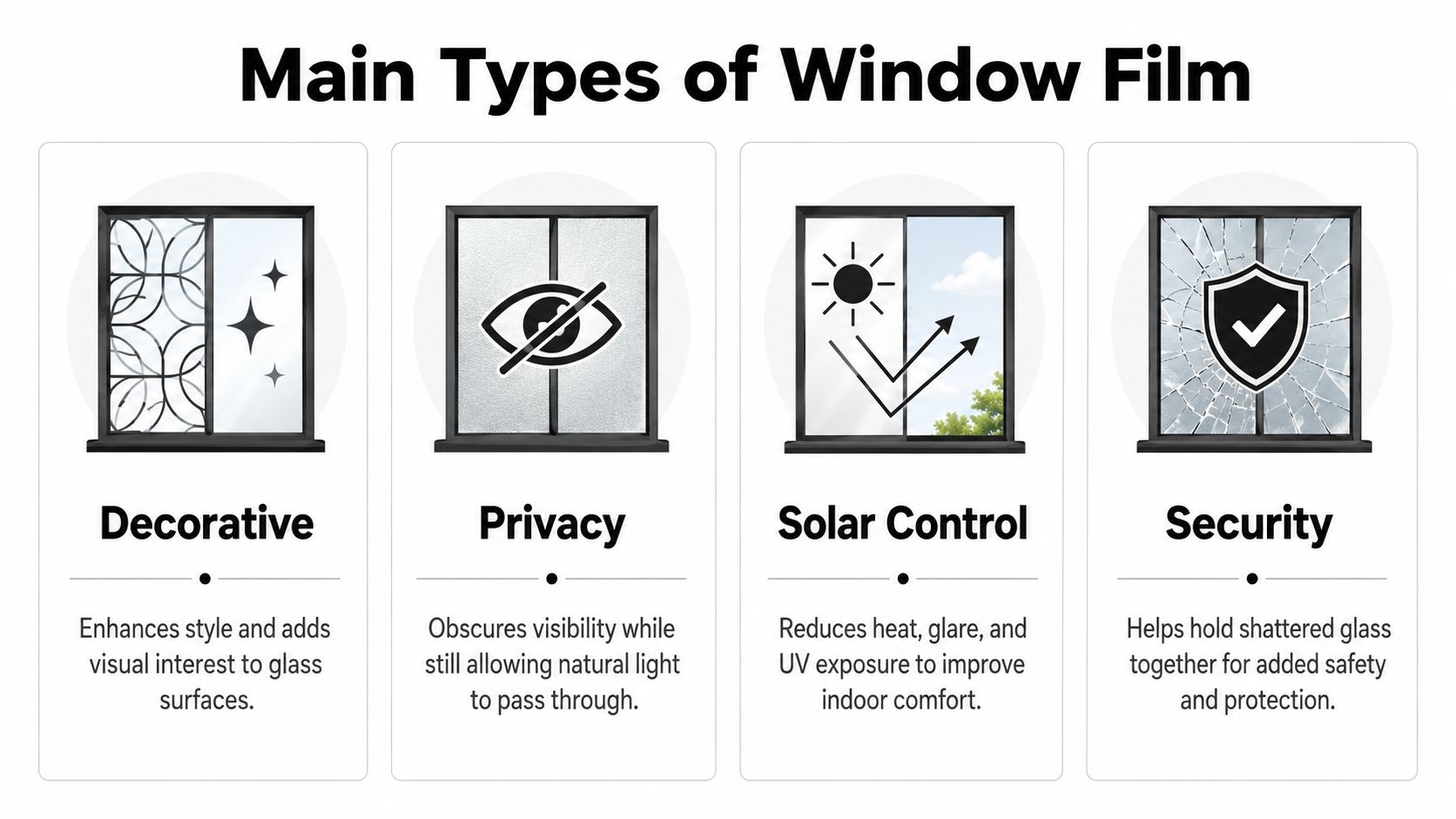
Think of decorative film as art for glass. Its main role is visual. It can soften a plain pane, mimic etched glass, add pattern, or bring texture to a cupboard door, internal partition, or bathroom window.
This category is useful when a room feels too open or too stark. A simple reeded or floral effect can make a modern window feel warmer and more intentional, especially in interiors that mix clean Nordic lines with hand-crafted objects.
Decorative film isn't usually the first choice when your main goal is strong heat control. It's more about atmosphere.
Privacy film is the one people often picture first. It blurs the view through the glass so people can't see in clearly, while still letting light pass through.
It works well in:
For a Scandinavian-style home, frosted film can be gentler than curtains. It keeps windows feeling clean and uncluttered.
A room can feel private without feeling shut in. That's the real appeal of frosted film.
This is the category I think of as sunscreen for your home. It's designed to reduce the impact of sunlight on the room, which can mean less glare, better comfort, and more protection for furnishings and painted surfaces.
Some solar films are visibly tinted or reflective. Others are far more discreet. The difference matters if you care about preserving a soft, natural look indoors.
This is usually the right family of products when your problems sound like this: the sofa gets hot by mid-afternoon, the TV is hard to watch because of glare, or a collection on the sill gets too much direct sun.
Security film does a different job again. It's made to help hold broken glass together after impact. That can reduce flying fragments and create more resistance when someone tries to force entry.
Its history is quite specific. Security film was first developed in 1969 in response to bombings in Europe, as a thick, clear layer designed to hold shattered glass together. That European security lineage is outlined in this brief history of security film.
For a home, security film can make sense on vulnerable ground-floor glazing, glazed doors, or shopfront-style windows. It's also attractive when you want protection without changing the building's appearance.
People often get stuck at this point. They assume they must choose one category only. In reality, many modern products combine roles. A film might reduce solar gain and UV exposure while staying nearly clear. Another might offer privacy with a decorative finish.
The key is to start with the main problem. If you know what the glass needs to do, choosing the right product category becomes much easier.
The strongest case for film for windows isn't that it adds another feature to your home. It's that it helps the room stay usable and beautiful through the day, and helps the objects inside it age more gracefully.
If you collect folk art, wooden decor, or vintage textiles, light protection matters. Painted finishes can lose depth over time, especially in the spots that catch direct sun day after day. Natural materials also show wear unevenly, which can make one side of a room age faster than the other.
That's why solar-control film often feels less like a gadget and more like a preservation layer. It's especially appealing in rooms where you display hand-painted objects near windows because it protects the setting without asking you to hide the objects away.
Comfort is the second big benefit. A bright room can still feel tiring if glare is constant. You notice it when a laptop screen becomes hard to read, when the dining table feels harsh at lunch, or when you keep lowering blinds and raising them again.
A well-chosen film softens that cycle. It can reduce the intensity of sun on the glass so the room feels calmer and easier to live in.
Common day-to-day gains include:
Curtains and thick shades create privacy by blocking the window. Film can create privacy while still letting light through, which is a very different feeling.
That matters in a Nordic interior, where daylight is often treated as something to preserve, not merely control. A frosted lower pane in a street-facing room, for example, can give you a sense of enclosure while leaving the upper part of the window bright and open.
Design insight: The best functional upgrade is the one that preserves the original mood of the room.
Nordic homes ask more from their windows than many other homes do. You may want relief from strong summer sun, but you don't want to make the room dim and flat for the rest of the year. You may also want a quieter visual effect than blinds or external add-ons.
That's where film earns its place. It supports a home that needs to feel light-filled, organised, and restful, while also protecting the objects that make it personal.
Morning light pours into the sitting room, catches the painted curves of a Dala horse on the shelf, and turns a pale timber floor almost silver. By late afternoon, that same window can feel less generous. The room grows hot, the glare sharpens, and the objects you love sit in stronger sun than you would ever choose for them. Choosing window film well means keeping the first feeling and reducing the second.
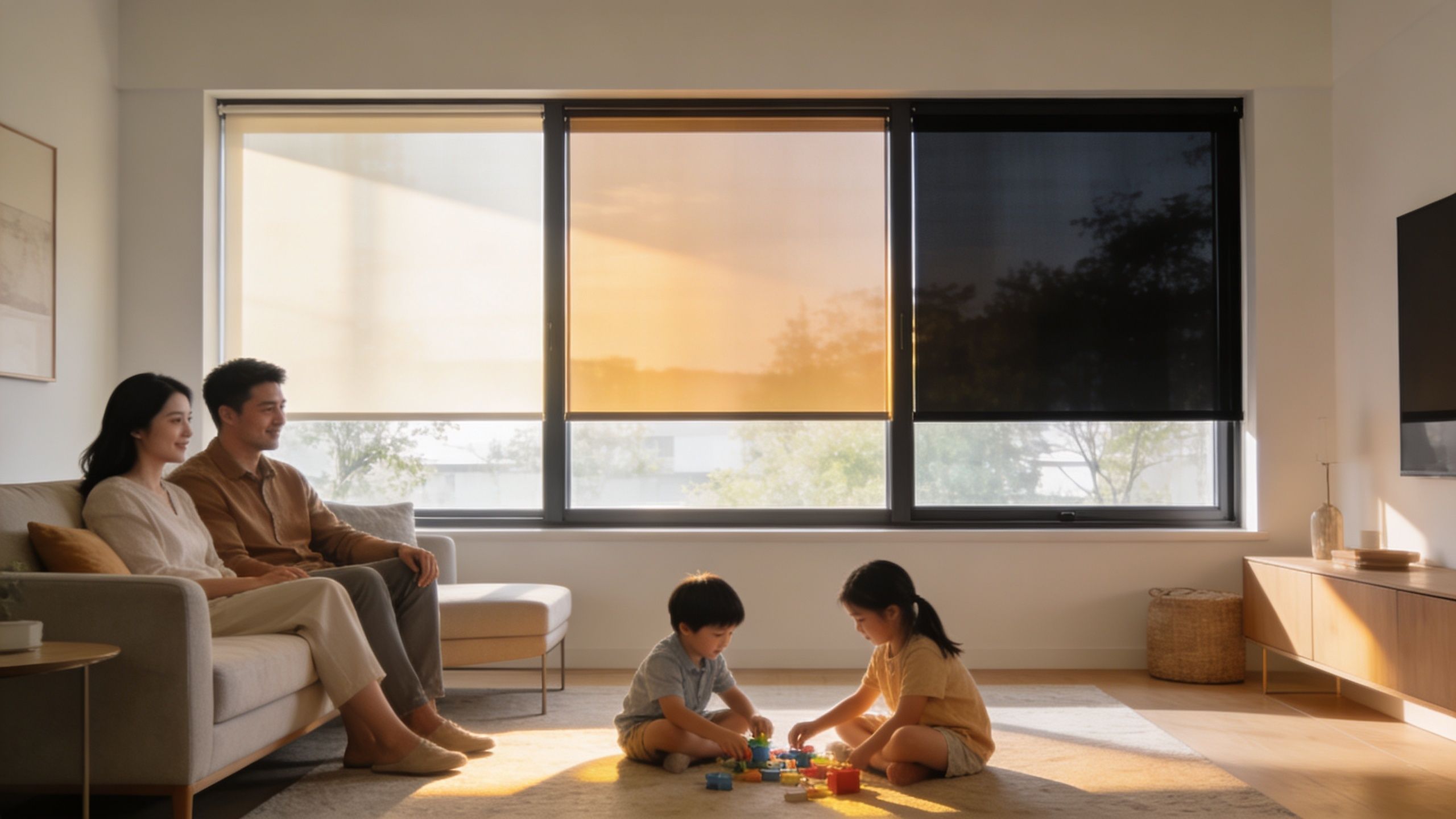
Product names can be vague. Rooms are honest.
A bathroom window may need privacy with a gentle glow. A west-facing flat may need relief from late-day heat. A corner with folk-art pieces, painted horses, embroidered linens, or sun-sensitive textiles may need protection that leaves colours looking natural.
Start by naming the first problem you notice in daily life:
If several apply, begin with the one that changes how you use the room. That usually leads you to the right category faster than comparing technical sheets too early.
Visible light transmission, or VLT, sounds technical, but the idea is simple. It tells you how much visible daylight still passes through the glass after the film is applied.
A high VLT usually suits Scandinavian interiors because these rooms depend on soft, open light. Pale walls, ash or pine furniture, and chalky painted surfaces all respond beautifully to daylight. If the film is too dark, the room can lose that quiet, lifted quality. If the film is too weak for the exposure, the space may stay bright but still feel tiring and hot.
A useful way to judge film is to ask two questions at once. How will this change the light? How will this protect the room?
The same film will not suit every window in the home. Sun direction matters because each façade creates a different pattern of light and heat.
This is similar to choosing textiles in a Nordic home. You would not use the same weight of wool throw in every season or every room. You match the material to the conditions. The same logic helps with glass.
If you are already layering softness with natural textiles, a guide to Scandinavian pillows and throws can help you keep the room balanced once the window performance is addressed.
Many homeowners compare film only by heat rejection or privacy level. The better question is how the window will look at noon, on a grey morning, and during the blue light of winter afternoon.
In a Scandinavian or folk-art interior, the best film is often the one that disappears. Clear or nearly clear solar films tend to work well where you want painted furniture, carved wood, woven runners, and collected objects to remain visually central. Frosted or patterned films can work beautifully too, but they need a clear purpose and a setting that welcomes that extra layer.
A simple rule helps here. If the room already has character through wood grain, textiles, and handcrafted pieces, keep the glazing treatment quiet.
Film selection is also a technical match. Large panes, older sealed units, tinted glazing, and certain insulated glass setups can react differently to added film, especially where heat builds up.
That is why broad promises such as “works on any window” deserve caution. Good choices balance design goals with the type of glass already in place. If you are unsure, ask for the film to be specified for your exact glazing, not just for the room problem you want to solve.
A well-chosen film should feel like a respectful edit. The light stays generous, the room becomes easier to live in, and the pieces that carry memory and heritage get a better chance of lasting.
On a bright winter morning, the room you want is easy to recognize. Light lands on the pine table, the linen curtain glows softly, and the red paint on a Dala horse stays rich instead of fading year by year. Window film supports that kind of room best when it behaves like good Scandinavian styling. Quiet, useful, and respectful of what already matters.
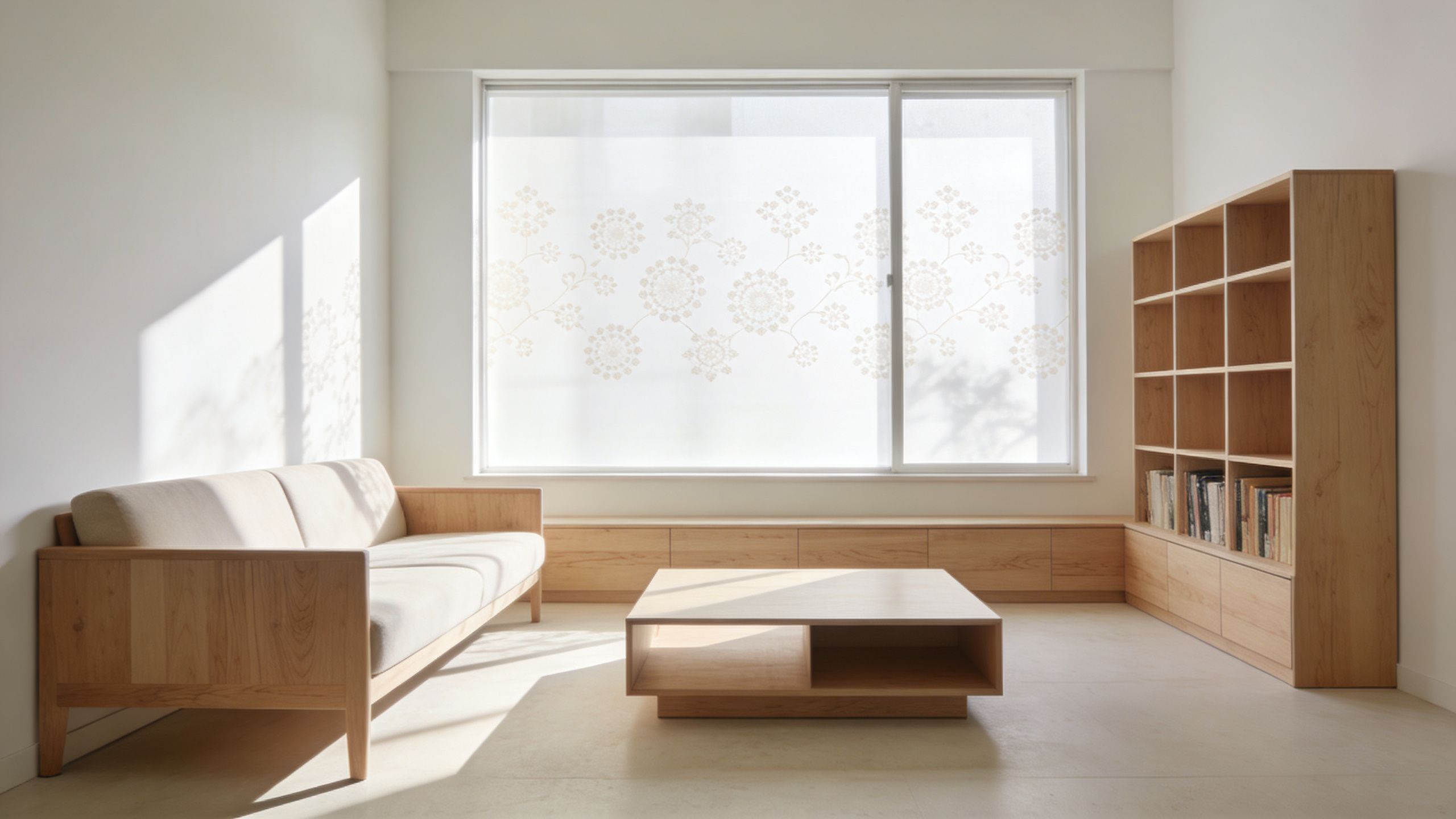
Many Nordic interiors depend on a simple idea. Let daylight do the decorating, then support it with honest materials and a few well-loved objects. Glass should help with that.
In practice, that often means choosing a film that is barely noticed once it is installed. A clear solar film protects painted wood, woven textiles, and folk-art pieces from the hard edge of sun exposure without putting a tinted veil over the room. If your window ledge holds carved figures or hand-painted horses, the view should still feel open and calm.
Clear film works like a museum frame with low-reflection glass. The protection matters, but the eye stays on the object.
Decorative film has a place in Scandinavian homes, especially in spaces that need privacy or a gentle layer of texture. The key is restraint. Folk-art interiors already contain rhythm through florals, curves, stitched motifs, and painted surfaces. If the window repeats all of that at full volume, the room starts to feel crowded.
A few applications usually feel natural:
The simplest test is useful here. If the film competes with your textiles, it is doing too much.
Scandinavian rooms are rarely only visual. They are tactile. Birch, soap-finished pine, wool, linen, leather, and matte pottery all absorb light in a gentle way, so a glossy or reflective film can feel out of tune even if its performance is good.
That is why finish matters as much as function in a styled room. Clear, matte, softly frosted, and lightly diffusing films usually sit more comfortably beside natural materials than shiny surfaces do. If you already layer softness through textiles, such as pillows and throws in Scandinavian styling, the window should support that same mood rather than interrupt it.
The goal is visual quiet.
Window film offers more than just a technical upgrade. In a home shaped by heritage, protection is part of styling. You are not only managing glare or privacy. You are helping favorite pieces stay beautiful in the place where they are meant to be seen.
A painted Dala horse can remain on the sill. A runner woven by a grandparent can stay near the light. A small collection of folk ceramics can still catch the morning sun without taking the full force of it day after day. As noted earlier, some high-clarity films are designed to reduce UV and heat while keeping the glass visually quiet, which suits rooms that depend on brightness and simplicity.
That balance is very Scandinavian. Beauty stays useful. Protection stays discreet.
Buying the right film is only half the job. Installation decides whether the result looks elegant or irritating. A bubble, a crooked edge, or the wrong product on the wrong pane can undo all the care you put into choosing it.

DIY installation can work on small, simple panes if you're patient and precise. It's often most realistic for removable privacy films on uncomplicated windows where a tiny flaw won't bother you.
Professional installation earns its value when the glass is large, prominent, or technically uncertain. That includes insulated glazing, darker existing glass, oversized panes, and windows where thermal stress could become an issue.
Manufacturer guidance matters here. Avery Dennison's film-to-glass application chart notes that some films can only be used on darker tinted glass if the glass is fully tempered or there is written technical approval, and it also sets constraints for large panes over 11.5 ft (3.5 m) edge dimension and double-pane surfaces over 40 sq ft (3.7 sqm). Those compatibility limits are described in the Avery Dennison film-to-glass chart.
Installation note: Applying the wrong film to the wrong glass can increase thermal stress and raise the risk of cracking.
A good installer doesn't just smooth film onto glass. They check the window itself.
They'll typically look at:
That technical check is one reason professional work often feels calmer from the start. You're not guessing whether a product is compatible.
For a visual sense of the process, this installation video is useful:
Once installed, most window film is easy to live with. The main rule is not to treat it like bare glass on day one. Let the film settle as directed by the installer or manufacturer before cleaning.
After that, keep the routine simple:
If you like coordinated surface details elsewhere in the home, the same mindset applies to film as to finishes such as decorative decals for tiles. Clean gently, avoid scratching, and treat applied surfaces as finished design elements, not utility zones.
Well-installed film should disappear into daily life. You notice the comfort, the softened glare, and the way your treasured pieces stay easier to enjoy.
If you love creating a home that feels rooted in Swedish craft, Dalaart offers authentic hand-carved and hand-painted Dala horses and companion animals that bring warmth, history, and colour into light-filled interiors. Explore their collection if you want decor with real provenance, made in Sweden by skilled artisans who carry folk tradition forward.


.svg)


.png)


