January 3, 2026
Even though there isn't one single, universal symbol for family, you'll see common emblems pop up across cultures. Think of the classic family tree or interlocking circles—they all speak to connection, heritage, and the unbreakable bonds that tie us together. These images are a beautiful, simple way to capture the complex relationships that mean the most to us.
Why do we look for a single image to represent something as massive and messy as family? It’s a deep-seated human need, really. We crave connection, identity, and a sense of our place in the world. These symbols are so much more than just pretty designs; they're powerful anchors to our past and hopeful promises for our future.
A family symbol is like a visual story. One simple design can hold generations of love, strength, laughter, and shared history. It becomes a quiet narrator, reminding us where we come from and who we belong to. In a world that often feels rushed and disconnected, having that visual touchstone can bring a huge amount of comfort.
The right symbol strengthens our identity and gives us that deep feeling of belonging. It’s a shorthand for “us”—a unique emblem that sets our little tribe apart from the rest of the world while celebrating everything that holds us together. This can take many forms:
A family symbol is the silent keeper of memories, a visual promise that no matter where life takes you, you are part of something enduring. It’s a way of saying “we are one” without speaking a single word.
In this guide, we'll take a trip around the globe to explore some of these powerful emblems. We’ll dig into their histories, unpack their meanings, and help you find or even create a symbol that truly tells your family’s one-of-a-kind story.
Some symbols just feel universal. They speak a language of connection that cuts across cultures and borders, tapping right into the heart of what it means to be a family. Think of them as a visual shorthand for love, for lineage, and for those invisible threads that bind us together.
Getting to know these timeless emblems can help you find a design that feels deeply personal yet is understood by all. They give you a foundation of shared meaning that you can either adopt as is or tweak to tell your own family’s unique story.
This is exactly why we're so drawn to these kinds of symbols—they connect directly to our fundamental human need for heritage, belonging, and a solid sense of identity.
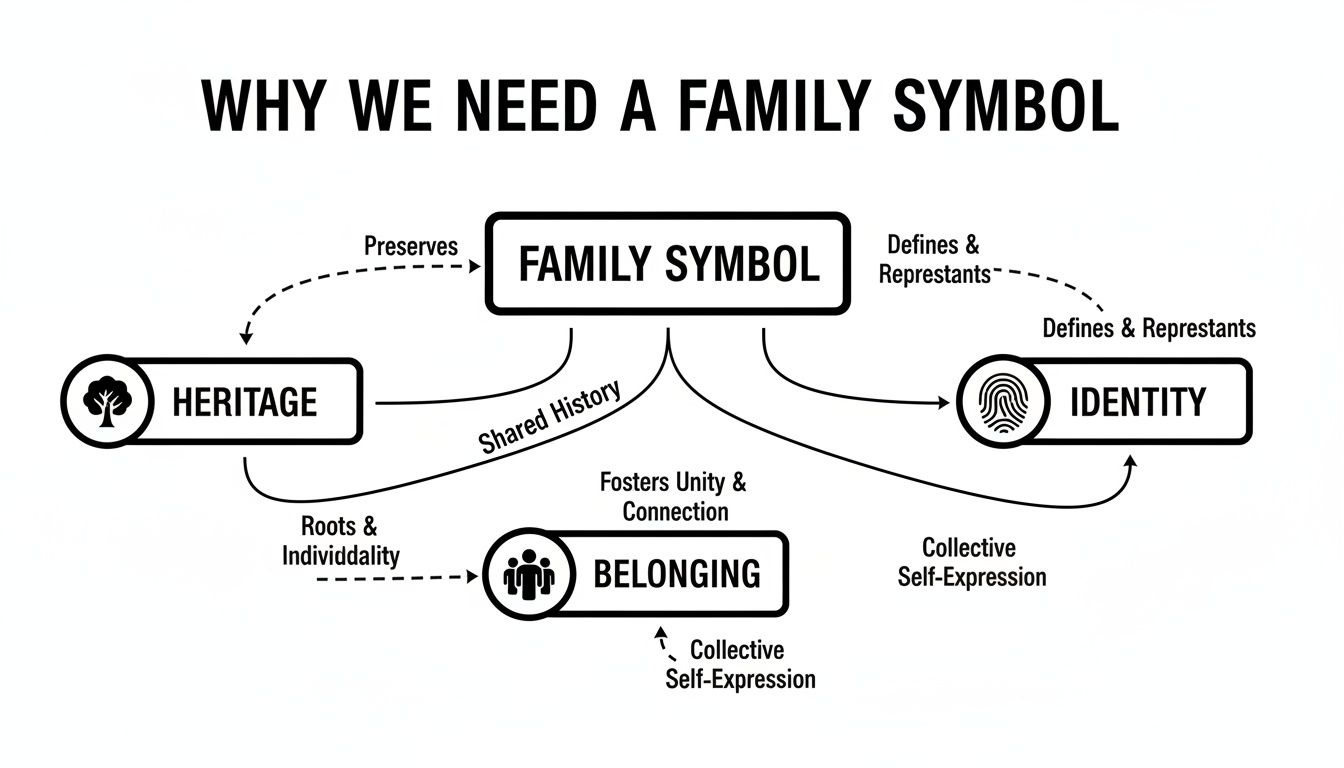
As you can see, a family symbol acts as a powerful anchor. It grounds our own story within the much larger narrative of where we come from.
If you had to pick just one, the mighty tree is probably the most intuitive symbol for family out there. It’s a metaphor that just makes sense because we see it in nature every day. The roots dig deep, grounding the tree and representing our ancestors—the foundation they built for us.
The sturdy trunk is the core family unit, the source of our strength and stability. From there, the branches reach out and grow, symbolising new generations and the ever-expanding family line. You can even imagine each leaf as an individual person, unique but still part of the whole.
Another powerful image is that of interlocking circles or rings. You see this in Celtic knots and even in simple, overlapping loops. These designs have no beginning and no end, which perfectly captures the idea of eternity and a bond that can’t be broken.
Each circle can stand for a different family member—distinct, yet completely linked to the others. Where the circles overlap, that’s the sweet spot of unity and shared life. It's a visual reminder of loyalty and the unspoken promise to stick together, no matter what.
A symbol like an eternal knot isn't just a pattern; it's a visual promise. It declares that the family connection is a continuous, unbroken loop of support and love that withstands the tests of time.
The heart is often tied to romance, but it's also a profound symbol of family love. This classic shape represents the unconditional affection, compassion, and emotional centre that holds a family together.
It really signifies the "heart of the home"—that feeling of warmth, safety, and total acceptance. When used as a family symbol, the heart moves beyond romantic love to represent the deep, nurturing bond between parents, children, and siblings. It’s a simple but potent reminder that love is the true glue.
While universal symbols like the family tree connect with people everywhere, many cultures have their own unique and powerful emblems to honour kinship. These designs are steeped in local history and tradition, offering a rich tapestry of meaning. Exploring these cultural treasures can help you find a symbol that speaks directly to your own heritage or personal values.
Each cultural symbol tells a story—not just of family, but of the environment, beliefs, and history that shaped it. From the rolling green hills of Ireland to the vast forests of North America, these emblems show how humanity has always sought to visualise its most important connections.
One of the most beloved cultural symbols is the Irish Claddagh. It’s much more than just a piece of jewellery; it’s a profound declaration of the key elements in any strong family bond. The design features two hands clasping a heart that is topped with a crown.
Every part of this iconic ring has a special job to do:
Together, these elements create a beautiful and simple story about what it takes to build a lasting family unit. It’s a powerful reminder that love, friendship, and loyalty are the cornerstones of a happy home.
In many Indigenous cultures, especially those of North America, totem animals are profound spiritual emblems of family and clan lineage. These aren't just mascots; they are deeply respected spiritual guides and protectors that embody the core characteristics of a family group.
A clan might identify with the wolf for its loyalty and communication, the bear for its strength and protective nature, or the eagle for its wisdom and connection to the Creator. These totems are passed down through generations, linking individuals to their ancestors and their community's collective identity.
For many Indigenous peoples, a totem is a living symbol of ancestry and belonging. It is a sacred representation of the family’s spirit, values, and enduring place within the natural world, linking the past, present, and future.
Not all family symbols are ancient artifacts or intricate designs. Some are living, breathing representations of family bonds, like the Sempervivum plant, more commonly known as Hen and Chicks. This hardy succulent perfectly illustrates the nurturing side of a family.
The main "hen" plant sends out small offshoots, or "chicks," which stay connected to the mother plant as they grow. Over time, a single plant can produce a thriving colony, creating a beautiful, living cluster. This botanical symbol is a wonderful metaphor for a matriarch surrounded by her growing family—each member independent yet forever linked to the source. It’s a gentle, natural reminder of how families grow and multiply while staying beautifully connected. Delving into cultural emblems often reveals surprising connections, much like discovering the deep artistic roots in regions like Dalarna, Sweden.
This brightly painted wooden horse is far more than just a charming toy; it's a cherished Scandinavian emblem and a powerful symbol for family strength. The story of the Dala horse doesn't start in a factory but in the cosy cottages of 17th-century Dalarna, Sweden. It was here, during the long, dark winters, that families first began carving them as beacons of resilience and hope.
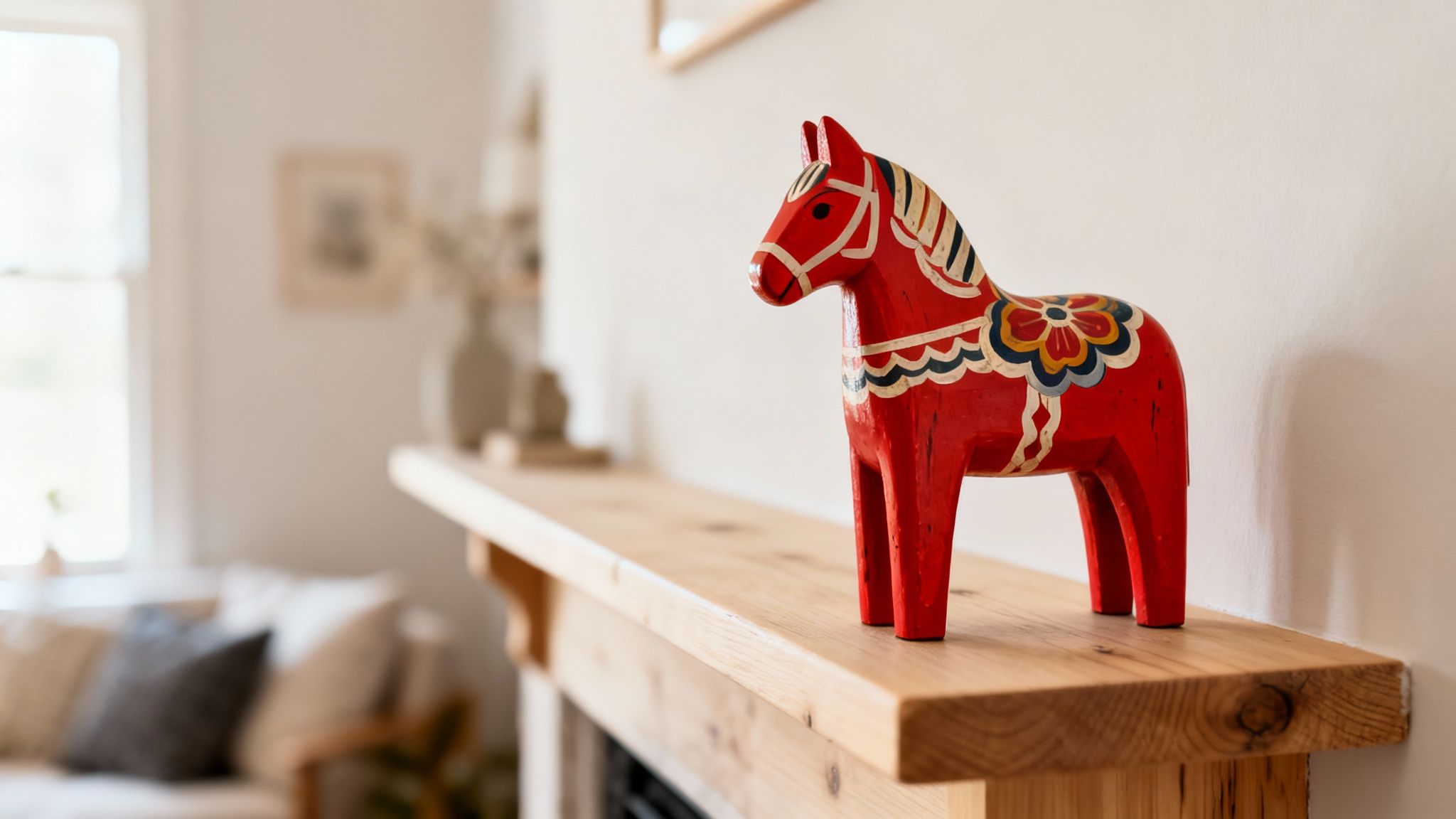
This humble tradition turned simple scrap wood into a treasured object that came to represent family pride and, often, a means of economic survival. The craft was passed down from one generation to the next, becoming a central part of family life and turning quiet evenings into moments of shared purpose and creativity.
The Dala horse first appeared out of necessity in villages like Nusnäs and Bergkarlås, where families would whittle figures from leftover wood. These weren't just playthings for children; they embodied the deep bond between family members and their heritage, mirroring the vital role that real horses played as prized possessions in rural life.
By the 18th century, it was common for forest workers to carve them on winter evenings, transforming family time into an artistic tradition. This practice became so ingrained that even children as young as 13 and 15 started their own businesses. One famous example is the Olsson family, who started their workshop in 1928—a business still thriving in Nusnäs today.
Why a horse? In a hardworking agricultural society, a horse was a family’s most valuable asset. It was a partner in labour, a mode of transport, and a true symbol of wealth and endurance.
Carving its likeness was a way of honouring the very qualities that helped a family thrive: strength, loyalty, and unwavering perseverance. Each hand-carved figure became a small, silent tribute to the family's collective spirit.
The distinctive, colourful painting style, known as kurbits, also carries deep meaning. The vibrant floral patterns and flowing lines were not just decorative—they were a way for families to bring warmth and life into their homes during the stark Scandinavian winters.
Creating a Dala horse often became a collaborative family effort:
This shared creation process turned each horse into a physical manifestation of family unity. Every Dalaart horse made today is connected to this rich history, continuing a legacy of artistry and the enduring strength of the family unit. To appreciate this intricate work, you can explore more about the making of the Dala horse the traditional way in our detailed guide.
Placing a Dala horse in your home is more than a decorative choice; it's an embrace of centuries of tradition. It's a piece of heritage that honours the resilience, creativity, and unbreakable bond of family.
Once you've landed on a symbol that truly speaks to you, the real fun begins. It's time to take that idea from a concept in your mind to a tangible part of your everyday life. After all, a symbol for family is meant to be seen and felt, not just understood. Integrating it into your world is what transforms a simple design into a living, breathing reminder of the people you hold dear.
Whether you've chosen a classic like the family tree or designed something deeply personal, there are so many creative ways to make it a constant presence. This isn't just about decoration; it's about weaving your family's unique story into the very fabric of your home and life.
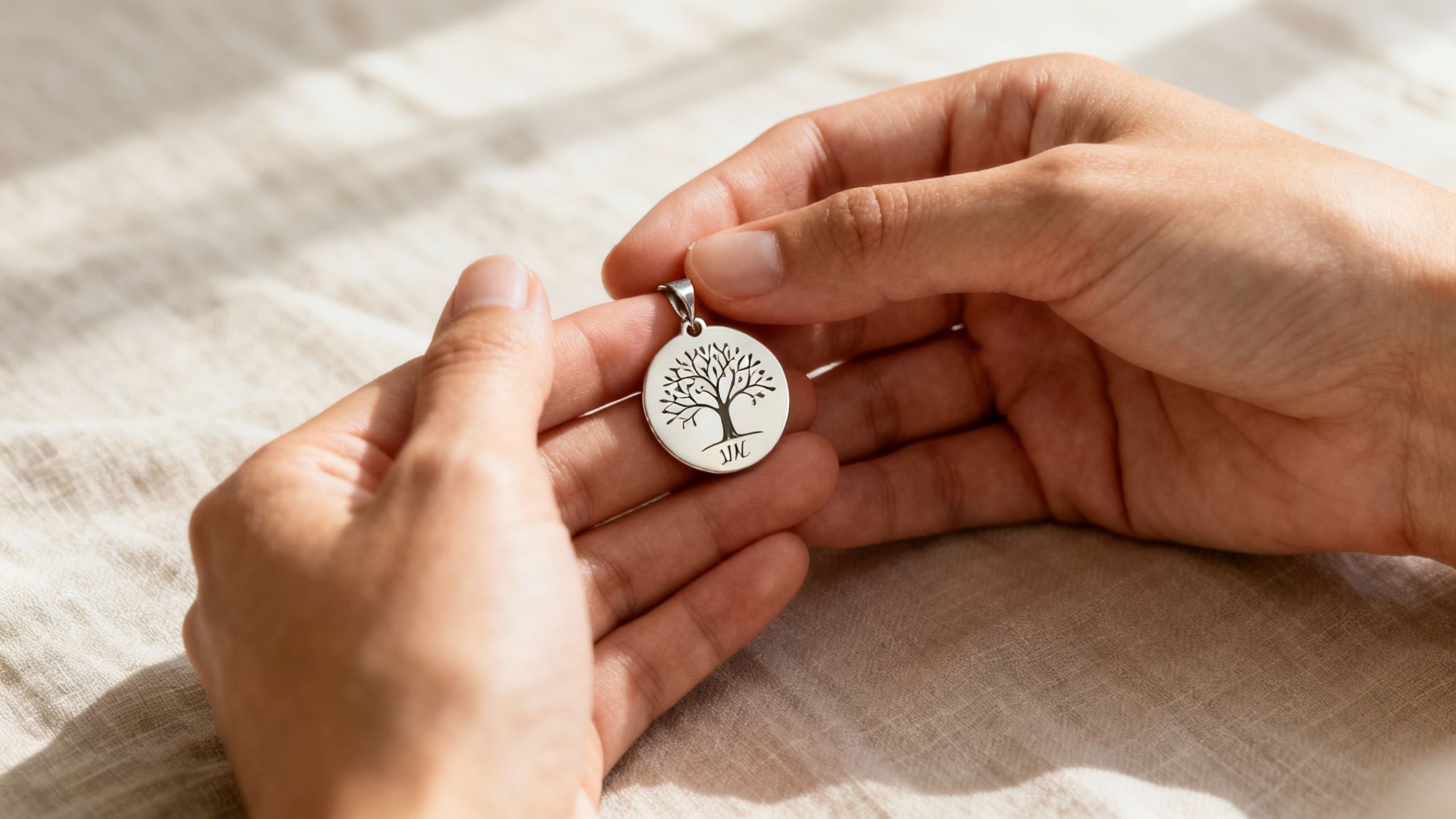
One of the most meaningful ways to use your family symbol is to create a modern heirloom. These aren't just objects; they become vessels for memory, designed to be passed down from one generation to the next. Think beyond what you might typically consider an heirloom and imagine creating something new that tells your family's story right now.
For those milestone moments—anniversaries, graduations, or the arrival of a new baby—consider these ideas:
An heirloom isn’t defined by its monetary value, but by the story it carries. By embedding your chosen symbol into a cherished object, you create a tangible piece of your family's legacy for future generations to hold.
Your home is the heart of your family life, making it the perfect canvas for your symbol. When you integrate it into your décor, it acts as a daily, visible reminder of your unity and shared identity. It’s what helps turn a house into a home filled with personal significance.
You can be subtle about it or go for a bold statement piece. A beautifully crafted Dalaart horse sitting on the mantelpiece, for example, instantly brings centuries of Swedish family tradition and strength right into your living space. You could even get creative with colour—if you're thinking of painting your own, you can learn more from our guide to colour mixing.
For some, there's no deeper expression of a value than a tattoo. Inking your family symbol onto your skin is a powerful, permanent way to honour your roots and the people who have shaped you. The design can be as simple and discreet as you like—a small Celtic knot on the wrist, perhaps—or it could be a more elaborate piece that tells a much bigger story.
Placement and design are everything here. Think about a location that feels personal to you, whether that’s over your heart, on your forearm for everyone to see, or somewhere private, known only to you. This choice makes the symbol a constant, intimate part of who you are.
Choosing a symbol for family isn’t just another decision—it's a deeply personal journey. The right emblem for you is one that feels completely authentic. It should echo your shared history, your values, and all the unique stories that make your family yours.
Think about the invisible threads that tie you all together. Is it a fierce resilience that sees you through tough times? Maybe it’s a shared sense of humour, or a powerful connection to your cultural roots. Talking about these core values as a family is the perfect starting point and can often point you directly to the symbol that’s been waiting for you all along.
This isn’t just about picking an image; it’s a chance to create something together that will be loved for generations. Honestly, the process of choosing can become a treasured memory in itself.
To find an emblem that truly fits, it helps to explore a few key areas. Asking these questions as a family can bring a lot of clarity and make sure the final choice is something everyone feels connected to.
The most powerful family symbol isn't necessarily the most well-known one—it's the one that tells your story. Authenticity is far more important than universal recognition.
Once you have an idea, the real fun begins: customisation. This is where you can weave in personal details to make the symbol uniquely yours. For example, you could subtly work the initials of family members into the twisting branches of a family tree design.
The Dala horse also offers a wonderful canvas for your family’s story. It's more than just a charming figure; in the forests of Dalarna, it evolved from a simple toy into an economic lifeline, becoming an enduring symbol for family prosperity. Families relied on carving these horses for extra income, and it wasn't uncommon for children to help, boosting household earnings by 20-30% in lean times. You can read more about this incredible history and discover the journey of the Dala horse.
You can honour this legacy by choosing specific colours to represent different family members or values. Even better, painting a DIY Dalaart model together transforms the symbol into a hands-on project, creating a true family heirloom filled with shared memories before the paint even dries.
As you explore the world of family symbols, a few questions naturally pop up. I've put together some straightforward answers to help you on your journey to finding an emblem that feels just right for your story.
If you had to pick just one, the Family Tree is arguably the most universally understood symbol for family. It’s a beautiful, intuitive metaphor that just clicks with people everywhere.
The deep roots represent your ancestors, the strong trunk is the core family unit, and the branches reaching for the sky are the descendants. This simple picture of lineage, strength, and connection is recognised and cherished across countless cultures.
Absolutely, and I highly encourage it! Creating your own custom symbol is a deeply personal process. It’s a chance to craft something that truly captures the unique spirit of your family.
You could blend elements from different traditional symbols that resonate with you, or you could start from scratch. Think about a shared memory, a family joke, an inside motto, or a place that holds special meaning.
A symbol’s real power comes from the personal meaning it holds for you and your loved ones. An original design often becomes the most cherished kind of heirloom.
It really depends on the symbol. For something universal like a family tree, there are no hard and fast rules for colour. You can let your creativity guide you.
However, for specific cultural emblems like our beloved Dala horse, colour is everything. The traditional Falu red is deeply tied to its Swedish origins and history. When you're designing your own symbol, you can assign special meaning to colours to represent different family members or important shared values like courage, loyalty, or joy.
At Dalaart, we celebrate the story of every family with our authentic, hand-painted Dala horses, crafted by artisans right here in Sweden. Find a timeless piece of heritage that tells your story at https://dalaart.com.


.svg)


.png)


