April 6, 2026
Swedish clogs are so much more than footwear. They’re a genuine piece of cultural heritage, a symbol of sustainable craft, and an icon of effortless style. Known in Sweden as Träskor, these famous shoes have a simple, rugged elegance that has charmed people for generations.
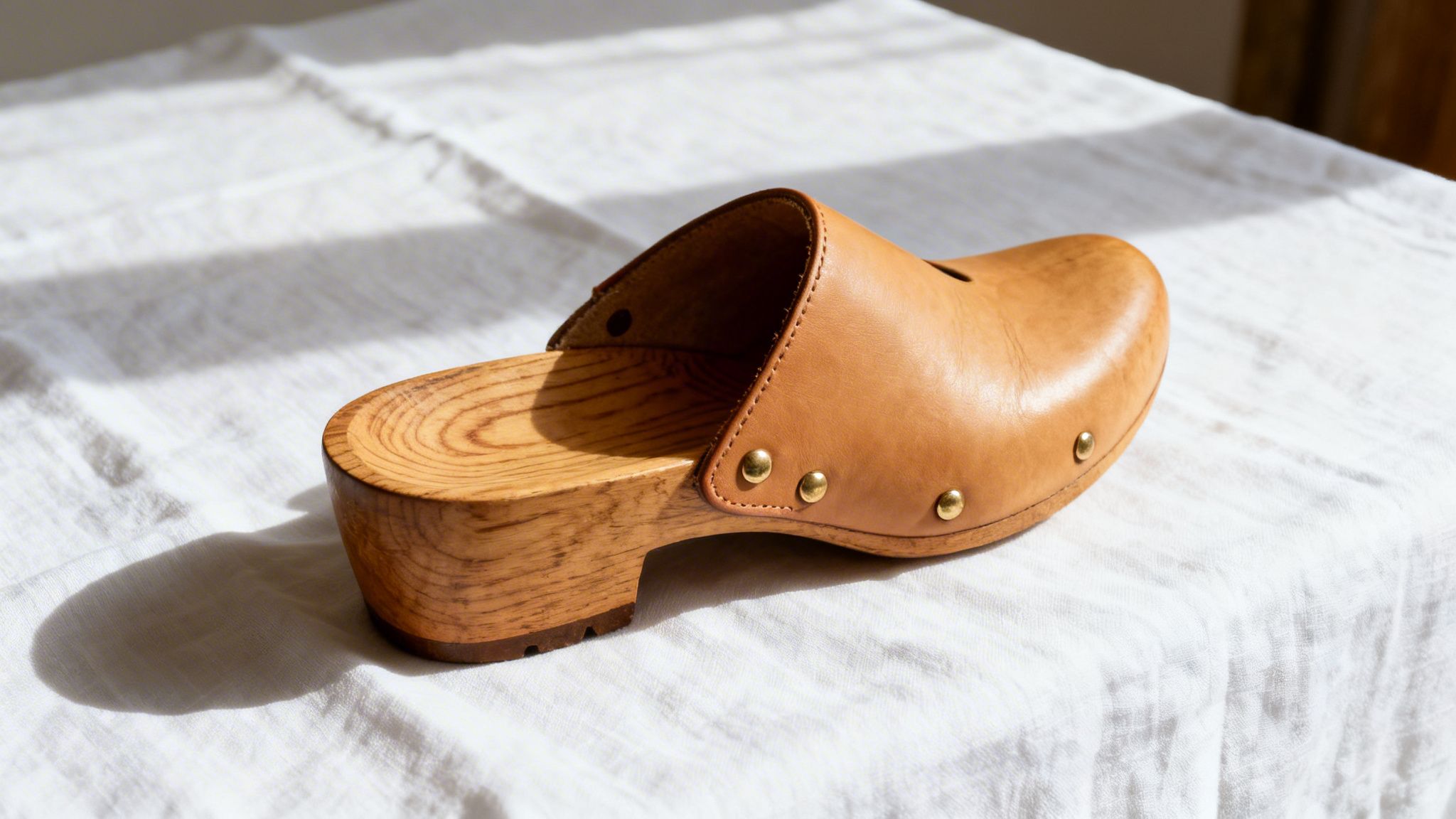
When you slip on a pair of Swedish clogs, you're not just wearing a shoe; you’re stepping into a story. These are wearable pieces of history, connecting the hardworking past of rural Sweden with the fashion-conscious present. Their story didn't start on a runway, but in the fields and workshops of the Swedish countryside centuries ago.
These humble wooden shoes were truly born from necessity. Carved from local timber like alder and birch, they gave farmers and factory workers the sturdy protection they needed for a long day's work. Just think of the solid wooden base as the foundation of a traditional Swedish cottage—purpose-built and made to last.
While their origins are practical, the story of Swedish clogs took an exciting turn. During the 1960s and 70s, a new generation discovered their rustic charm, and clogs exploded onto the global fashion scene. They quickly became a staple of bohemian style, embodying a free-spirited attitude that proved their design was as versatile as it was tough.
This dual identity is what makes them so special today. They have a rare combination of qualities that few other fashion items can match:
The real appeal of Swedish clogs lies in their authenticity. They aren't just shoes, but a narrative of culture, a testament to durable design, and an invitation to own something with genuine soul.
In this guide, we’ll explore every aspect of these remarkable shoes. We’ll dig into their rich history, show you what makes a pair authentic, and offer practical advice on sizing, styling, and care. Whether you’re a collector, a gift-giver, or simply someone who appreciates timeless design, you’ll discover why the charm of Träskor continues to endure.

To really get the story behind clogs of Sweden, you have to imagine what life was like in the early 20th century. Think of the Swedish countryside, a place of deep forests, rolling fields, and the first stirrings of industry. Life was tough, and your footwear had to be tougher.
This is where Träskor, the classic Swedish wooden shoe, found its footing. For farmers trudging through damp fields or factory workers on unforgiving floors, these clogs weren't a fashion choice—they were essential gear. They were a form of everyday armour that simple leather just couldn't provide.
Carved from hardy local woods like alder and birch, Träskor were built to last. The solid wood base was a shield against moisture, cold, and anything sharp underfoot. It was the shoe of the working person, a practical piece of equipment created straight from the Swedish landscape.
The story of the clog goes much deeper than just practicality. As Sweden navigated economic hardship and sweeping social change, more than 1.3 million Swedes left for a new life in America between the 19th and early 20th centuries. For many, a pair of Träskor was one of the few things they packed.
These simple wooden shoes became a powerful symbol of who they were and where they came from. They were a real, tangible link to the families and villages they had left behind. A pair of clogs wasn't just an object; it was a cherished keepsake, a reminder of their resilient roots.
You can see how central these shoes were just by looking at the industry of the time. Around the turn of the 1900s, southern Sweden was a bustling hub of clog making, with 22 factories churning out Träskor. This focus shows just how woven they were into the region's culture, especially for emigrants like Sven Gustaf Peterson, who brought his clogs to America in 1906. You can read more about his personal story and its surprising connection to fashion's evolution on reddytowear.wordpress.com.
For generations of Swedes, the distinct clomp-clomp of wooden clogs on cobblestones or a workshop floor was simply the sound of everyday life. It was the rhythm of hard work and community.
This history explains why clogs of Sweden are so much more than shoes. Their story is part of the nation’s story, representing both the industrious spirit of its people and the deep emotional ties of those who left. To see how these traditions influence Swedish art, you might be interested in discovering the beauty and culture of Dalarna, Sweden, where many folk art traditions originate.
For decades, Träskor were seen as a symbol of rural, working-class Sweden. Then, the 1960s and 70s happened. The counter-culture movement was all about authenticity, natural materials, and a simpler way of life, and suddenly, the humble Swedish clog found a brand-new audience.
Almost overnight, these functional shoes were catapulted onto the world's fashion stage. They became the footwear of choice for the bohemian, free-spirited style of the era, worn by musicians, artists, and trendsetters.
This wasn't just a fleeting trend—it was a full-blown commercial phenomenon. Swedish clog importers couldn't keep up with the demand. One New York-based importer, Ulla Olsenius, saw her sales jump from 5,000 pairs in 1963 to an incredible 23,000 pairs a month by 1969, sourced from eight different Swedish factories. This boom cemented the clog's place as a true fashion staple, proving its timeless design was as enduring as it was tough.
To tell the difference between true craftsmanship and a mass-produced imitation, you have to look closely at the details. An authentic Swedish clog is so much more than its simple shape; it’s a perfect harmony of specific elements working together, born from a deep-rooted tradition of practicality and comfort.
The heart and soul of every genuine Swedish clog is its wooden base. This isn't just any block of wood. Traditionally, it's carved from a single piece of timber, specifically chosen for its unique qualities.
The most common woods you'll find are:
This solid base creates that iconic rigid structure and provides the excellent arch support that clogs are famous for. Unlike a flexible shoe, the wooden sole is meant to stay firm, which naturally encourages better posture. Many will have a rubber tread on the bottom—a modern addition to improve grip and soften the classic "clomp."
Firmly attached to the wooden base is the upper, which is traditionally crafted from high-quality leather. The leather is thick and built to last, yet it's soft enough to gradually mould to the shape of your foot, creating a fit that feels completely custom over time.
Pay close attention to how the upper is attached to the base. On real Swedish clogs, you’ll see a neat row of staples or nails, hammered in by hand. This technique is a hallmark of traditional clog-making, ensuring a secure bond between leather and wood that you just won't find on glued, mass-market versions.
The combination of a solid wood foundation and a durable, stapled leather upper is the fundamental DNA of an authentic Swedish clog. It's a design born from practicality, built to protect the foot while offering surprising comfort and support.
While the core construction is steeped in tradition, the world of Swedish clogs has blossomed far beyond the simple work shoe. Today, there's a style for almost any taste, from wonderfully rustic to elegantly refined.
Modern designers have introduced a fantastic variety of new shapes, colours, and details. You can see how deeply Swedish design principles—where function and beauty meet—have influenced these modern takes by exploring the world of Färg & Form Sweden and its iconic designs.
Here are some of the most popular variations you're likely to come across:
The colour palette has also exploded. While classic brown, black, and red are forever popular, you can now find clogs of Sweden in a rainbow of vibrant shades, playful patterns, and even metallic finishes. These modern twists let you express your own style while enjoying the heritage of a true Swedish clog.
Figuring out the right size for wooden clogs of Sweden can feel a bit unusual compared to buying your everyday shoes, but it's much more straightforward than you might imagine. The secret is knowing they aren't meant to fit like a pair of trainers or soft leather pumps. A proper clog fit is its own special experience, offering a whole new world of comfort once you get the hang of it.
Unlike shoes that flex with your foot, the solid wooden base of a clog is completely rigid, and that's by design. As you walk, your heel should actually lift up out of the back of the shoe, creating that classic "clomp" sound that is so beloved. Many people new to clogs think their heel should stay put, but a small gap is the true sign of a great fit.
This little gap, usually about a finger's width, is crucial. It gives your foot the space it needs to move naturally on the clog's firm, supportive base. Think of it less like a snug shoe and more like a platform that moves with you.
To find your perfect clog size, an accurate foot measurement is a must. Don't just guess or go by your usual size in other brands, as sizing can differ. Just follow these simple steps to get it right.
Even with the right size, remember that the fit is what truly matters. If you find yourself between two sizes, it's almost always better to size up, especially if you love wearing thick, cosy socks. You can find some wonderful options in our guide to the best Socks of Sweden to pair with your new clogs.
Just like a high-quality leather handbag, your new clogs will have a short breaking-in period. The wooden base will stay as solid and supportive as ever, but the leather upper will slowly soften and mould to the unique shape of your foot, creating a fit that feels custom-made.
Start by wearing them for short spells around your home. This gives the leather a chance to stretch and adapt to your foot without any discomfort. In time, you'll feel the clogs become more and more a part of you, offering that perfect blend of sturdy support and personalised comfort that will last for years.
This tradition of durable, handcrafted footwear is woven deep into the country's history. In fact, around the peak of production in 1906, there were 22 different factories in southern Sweden dedicated solely to making these essential shoes, a testament to how important they were long before becoming a global fashion staple. You can read more about this fascinating history on us.toa.st.
Swedish clogs are so much more than just a comfortable shoe; they're a surprisingly versatile style statement. With their clean, solid form, they manage to walk the line between casual ease and a kind of chic sophistication, making them a secret weapon in just about any wardrobe. Learning how to style them is really about learning to play with their unique character.
Think of clogs of Sweden as the perfect anchor for an outfit. Their substantial shape offers a wonderful contrast to softer textures and different silhouettes. Whether you're putting together a relaxed weekend look or something a bit more polished, there’s a way to make clogs fit right in.
Their recent return to the fashion spotlight has seen designers get creative, but the core appeal hasn't changed. They give you height and presence, but without the formal feel of a traditional heel.
For a simple, go-to outfit, you really can’t beat pairing classic clogs with your favourite jeans. A straight-leg or a wide-leg cut that just grazes the top of the clog creates a lovely long, lean line. Throw on a simple t-shirt or a cosy knit jumper, and you’ve got an effortlessly cool look.
In the warmer months, clogs really come into their own next to flowing summer dresses and midi skirts. The solid, earthy feel of the wooden sole is a beautiful counterpoint to lightweight fabrics like cotton and linen. A pair of tan leather clogs with a floral dress is a timeless combination that just feels like bohemian charm.
And don't for a second think you can't dress your clogs up. A sleek, black leather clog can look incredibly sharp paired with tailored trousers and a blazer. This combination creates a powerful, modern silhouette that’s perfect for a creative workplace or a stylish evening out. The trick is to pick a clog with a clean, more refined shape.
The real secret to styling clogs is all about contrast. When you pair their rustic, chunky form with more delicate or structured pieces, you create a balance. That's what makes the outfit so interesting and visually appealing.
This unique blend of folk tradition and high fashion has a surprisingly deep history. In Sweden's cultural landscape, träskor (the Swedish word for clogs) represent a heritage that has truly endured, with 22 factories churning them out in the southern regions around 1906. By the 1970s and 80s, thanks to icons like ABBA, they became a global fashion staple. The artisanry behind träskor is a lot like other beloved Swedish crafts, such as the hand-painted Dala horses. You can dive deeper into this rich cultural connection and see how it inspires modern artisans and collectors on americanhistory.si.edu.
But the charm of Swedish clogs doesn’t have to stop with your wardrobe. Their beautiful, sculptural shape makes them fantastic decorative pieces, perfect for bringing a touch of that Scandinavian rustic warmth into your home. A single, well-loved clog can find new life in all sorts of creative ways.
Here are just a few ideas to get you started:
Whether they're on your feet or on your shelf, clogs of Sweden are a celebration of timeless design, functionality, and heritage. They offer a truly unique way to express your personal style, both in what you wear and how you decorate your living space.

When you own a pair of authentic clogs of Sweden, you hold a piece of genuine craftsmanship. Think of them as an investment—not just in footwear, but in a tradition. With just a little bit of care, your beloved Träskor can last for decades, becoming more beautiful with every year that passes.
Taking care of them means giving a little attention to both the wooden base and the leather upper. Each has its own needs, but keeping them happy is simpler than you might think. It’s a small ritual that keeps them looking their best and feeling comfortable for all your adventures.
Your clogs are made of two distinct, natural materials that face different elements of the world. The strong wooden base might get scuffed on your journeys, while the leather needs to stay supple to hug your foot just right.
For the leather, a gentle wipe-down with a soft, damp cloth is usually all it takes to handle daily dust and dirt. If you come across a more stubborn spot, a good quality leather cleaner will lift it away without harming the leather's natural oils.
The wooden base asks for a slightly different approach. You can easily buff out light scuffs on unfinished wood with a small piece of fine-grit sandpaper. And if you get caught in a downpour? Resist the urge to place them by a heater or in the sun. That kind of intense, direct heat can make the wood crack. Instead, just let them air dry in a spot with good circulation.
Proper care is less about intensive cleaning and more about consistent, gentle maintenance. Think of it as protecting a piece of handcrafted furniture—a little attention goes a long way in preserving its character and integrity for years to come.
Beyond just keeping them in good shape, the wooden sole of your clogs is a beautiful, blank canvas. Painting your Träskor is a wonderful way to connect with Swedish folk art, transforming your footwear into a piece of wearable art that is 100% you.
This tradition has deep roots in Swedish folk art, particularly the iconic kurbits painting style that originated in the Dalarna region. These flowing, brightly coloured floral and gourd-like motifs are famous for a reason, but don’t feel like you have to be a master painter. Simple geometric patterns or even minimalist modern designs can look just as stunning.
Ready to make your clogs your own? It’s a deeply rewarding project, and you only need a few simple things to get started.
By caring for and customising your clogs of Sweden, you do more than just own them. You participate in their story, making them a true reflection of your own style and spirit.
As you explore the wonderful world of Träskor, a few questions naturally pop up. Whether you're thinking about your first pair or are a long-time collector, we've gathered some of the most common queries to help guide you on your journey.
It's the first question on everyone's mind, and the answer is a resounding yes! Many people are amazed at how comfortable they are once they get used to the unique feel. The solid wooden base offers fantastic arch support, which can work wonders for your posture and ease the strain of being on your feet all day.
The secret is getting the sizing just right—you want a little bit of a gap at the heel. A clog isn't meant to be rigid like a ski boot; your heel should lift slightly with every step you take. As you wear them in, the leather upper softens and moulds perfectly to your foot, making them more comfortable over time. They might feel a bit different at first, but you'll soon join the legions of fans who swear by them.
So many people make the mistake of buying clogs that fit snugly like a pair of trainers. The real magic is in that little bit of room that lets your foot move naturally on the supportive wooden base.
This is a great question, and it's easy to see why the two get confused. The key difference really comes down to how they're made. Traditional Dutch clogs are what you might call a "whole-foot" clog—they’re carved from a single piece of wood and cover the entire foot.
Swedish clogs, our beloved Träskor, are a "half-clog" style. They have a wooden sole, but the top part is made from a separate piece of leather, suede, or fabric. This upper is then neatly stapled or nailed to the base, leaving the heel open (though some styles have a handy ankle strap). This design makes the clogs of Sweden much lighter and gives them a versatility that has made them a fashion staple.
Spotting a pair of authentic Swedish clogs is all about looking for the signs of genuine craftsmanship. Real Träskor are almost always handmade in Sweden, a point of pride for any reputable brand.
Here are a few things to keep an eye out for:
If you see a pair with a plastic or composite sole, or if the upper feels synthetic and looks like it's just glued on, chances are you're looking at a mass-produced imitation, not the real deal.
It's probably best to save your clogs for drier days. While they are certainly durable, the natural wood and leather aren't big fans of getting soaked. Too much water can make the wood swell, change colour, or even crack, and it can leave the leather feeling stiff and damaged.
If you do get caught in a downpour, don't panic. Just let them air dry slowly and naturally, keeping them away from direct heat like a radiator or a sunny windowsill. For a little extra protection, you can treat the leather with a quality water-resistant spray to help fend off light showers.
Ready to explore the timeless beauty of Swedish craftsmanship? Discover authentic, hand-painted Dala horses and other treasures at Dalaart, where every piece tells a story of heritage and artistry. Find your perfect piece of Sweden at https://dalaart.com.


.svg)


.png)


