April 1, 2026
If you came of age in the late 90s or early 2000s, the name “Go Go's toys” will almost certainly spark a flicker of recognition. These were the small, colourful plastic figures known as Gogo's Crazy Bones, a collectible craze that took playgrounds by storm across the globe. They were so simple, but utterly captivating.

Do you remember the sheer thrill of tearing open one of those shiny foil blind bags? The anticipation was half the fun. You never knew which little character was hiding inside, making each one a tiny, exciting lottery. This element of surprise was a masterstroke and a huge part of what made these collectibles so special.
But these little figures weren't just for collecting dust on a shelf; they were catalysts for imagination and social connection. Children everywhere were inventing their own games—lining up their favourite Go Go's toys for epic battles, flicking them toward a chalk-drawn line, or just trading them during lunch breaks. The rules were fluid, often unwritten, and could change completely from one schoolyard to the next.
A massive part of the Gogo's Crazy Bones phenomenon was the art of collecting itself. With hundreds of unique characters released over multiple series, each boasting its own quirky design and personality, completing a set felt like a truly monumental achievement. This deep-seated desire to "collect them all" is a powerful force.
The entire experience was fuelled by the hunt for specific figures:
The simple joy of collecting, trading, and playing with Go Go's toys created a shared cultural moment for an entire generation. It was never just about the plastic figures themselves, but about the community and the friendships built around them.
This impulse to gather and cherish special objects is a universal human trait. While Gogo's were a modern craze, this same passion connects to far older traditions of collecting. As we delve deeper, you'll see how the excitement of finding a rare Gogo echoes the pursuit of timeless, handcrafted art, bridging the gap between a playground fad and centuries-old craftsmanship. This shared sense of nostalgia and the thrill of the find are where our story truly begins.
What is it that connects a plastic toy craze from the 2000s with a folk art tradition that's centuries old? At first glance, not much. But when you look closer, the answer is found in the simple, universal joy of collecting.
It’s a powerful human impulse that has us gathering, organising, and cherishing things that spark something special in us.
Think back to the excitement of finding that one rare Gogo's Crazy Bone you were missing—the one with the unique colour or that glittery finish. That exact same passion is what fuels art lovers and heritage enthusiasts searching for a one-of-a-kind, hand-painted Dala horse. The objects couldn't be more different, but the emotional thrill of the hunt is identical.
This shared desire is about more than just the items themselves. It’s about curating a personal history, one piece at a time. Whether it’s a nostalgic toy from childhood or a piece of artisanal heritage, each addition tells a story and holds deep personal value.
Collecting is almost never a solitary hobby; it truly comes alive within a community. From playground trading sessions for Go Go's toys to online forums where Dala horse aficionados share their latest finds, these passions build powerful connections. We bond over shared knowledge, the excitement of a rare discovery, and a mutual appreciation for beautiful design.
This sense of community was a massive part of the global success of Gogo's Crazy Bones. While PPI Worldwide first launched the toys in the 1990s, it was the vibrant market in Southeast Asia that turned them into a multi-million unit phenomenon by the early 2000s. In countries like Indonesia and the Philippines, where over 40% of the population was under 25 at the time, the collectible and social side of Gogo's was a perfect fit. By 2010, the brand had brought in over USD 50 million in cumulative revenue in the region, proof of the timeless appeal of unique, handcrafted-style figures that mirrors the passion for Dalaart's hand-painted horses. You can learn more about this in this report on the Southeast Asia toys market.
The true value of a collection isn’t just in the objects themselves, but in the stories they tell and the human connections they forge. It's about preserving a moment, a memory, or a piece of cultural history.
This passion for building a meaningful collection is a journey. Each new piece adds another chapter to your personal narrative, creating a curated world that reflects your unique tastes and values. For those looking to begin their own journey with Swedish folk art, our team has put together a helpful resource.
Check out our guide on collecting Dala horses for beginners to start your own adventure. Whether you're driven by nostalgia for Go Go's toys or a deep appreciation for artisanal craftsmanship, the collector's mindset is a celebration of what makes an object truly special to you.
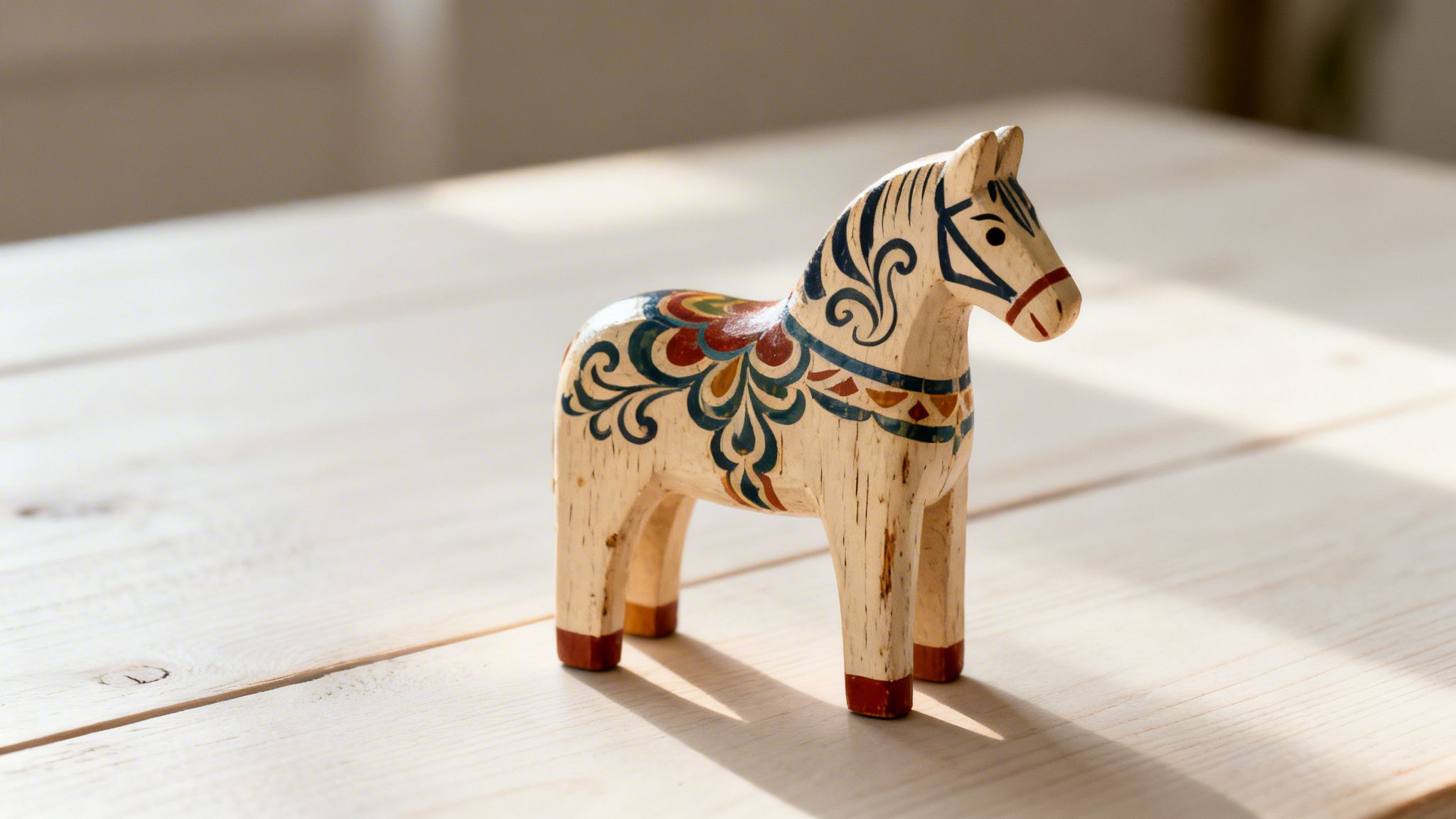
While the appeal of collecting Go Go's toys was all about modern, mass-produced fun, we're now shifting our focus to a tradition that is much quieter and centuries older. Imagine leaving the bustling playgrounds of the 2000s and travelling back to the dense forests of 17th-century Sweden. It's here that a different kind of treasure was born—not from a plastic mould, but from a simple woodcarver's knife.
This is the enchanting world of the Dala horse, or Dalahäst as it’s known in Swedish. It’s a cultural icon that began its life as a humble wooden toy, representing a beautiful shift from a fleeting trend to a timeless piece of artisanal history.
The story starts in the province of Dalarna. During the long, dark Scandinavian winters, woodsmen working in remote forest cabins would whittle away the hours by carving small figures from scraps of wood. These simple, unpainted horses were tokens of affection, brought home as precious gifts for their children.
Unlike the explosive, worldwide popularity of Go Go’s, the Dala horse’s journey to fame was a slow burn. It took centuries to become the cherished symbol it is today. At first, the horses were plain wood, but by the 19th century, furniture painters in the region began adding their own vibrant flair.
This is when the iconic look we now treasure began to emerge. The artists applied the distinctive kurbits style—a type of fantasy folk art filled with flowing gourds, leaves, and flowers—directly onto the horses, turning a simple carving into a true work of art.
Two moments in particular helped cement the Dala horse's place in history:
The Dala horse is so much more than a souvenir; it is a tangible piece of Swedish history. Each hand-carved and hand-painted horse carries the legacy of the artisans who came before, connecting the owner directly to a rich folk tradition.
Every groove from the knife and every stroke of the brush tells a story. This deep dedication to craftsmanship is what elevates the Dala horse from a simple toy to a masterpiece. The small imperfections you might notice—a slightly different curve in the neck or a unique flourish in the paint—are not flaws. They are the hallmarks of its authenticity and charm, a guarantee that no two are ever truly identical.
This profound connection to heritage and handiwork stands in stark contrast to the mass-produced joy of Go Go's toys. While both can inspire a collector's passion, the Dala horse offers a different kind of value—one rooted in history, artistry, and the enduring spirit of a nation. If you're fascinated by this process, you can get a wonderful glimpse into the artisans' world by reading more about what goes on behind the scenes at Dalaart.
For any collector, knowing you have the real thing is everything. It’s a feeling that connects you to the history and artistry of the piece. While a collection of something like Go Go's toys was about the fun of finding mass-produced rarities, appreciating a Dala horse is about embracing genuine, handcrafted tradition. This guide will walk you through what to look for, helping you tell a true artisanal Dala horse from a simple imitation.
It might seem daunting at first, but telling a true piece of Swedish folk art from a lookalike is easier than you think once you know the secrets. The key is to use your senses and look for those subtle, human touches that a machine just can’t copy. These are the details that hold the story of the horse's journey from a block of wood to a work of art.
The first and most telling clue is the material. An authentic Dala horse is always hand-carved from a single piece of wood, usually pine or fir. It should feel solid in your hand but have a surprising lightness, a tell-tale sign of the slow-growing timber from Scandinavian forests. Look closely, and you should see the faint lines of the wood grain just beneath the paint—the fingerprints of the forest, proving your horse started as a piece of nature, not a moulded composite.
Next, take a close look at the shape and form. Because every single horse is carved by hand, you’ll find what some might call "perfect imperfections." No two authentic Dala horses are ever exactly alike. One might have a slightly stockier neck, another a more pronounced curve to its back. These aren't mistakes; they are marks of individuality, the clearest sign that an artisan's hands, not a machine, brought this piece to life.
The real beauty of a Dala horse lies in the small variations that make each one unique. These nuances are a direct connection to the carver and a testament to the hands-on tradition of the craft.
The paintwork is another crucial piece of the puzzle. A genuine Dala horse is decorated in the traditional kurbits style, a type of floral folk painting. This means the brushstrokes are applied freehand, so they look fluid, confident, and full of energy. Pay attention to how the colours blend and the lines flow, especially in the beautiful floral patterns on the horse's body. Mass-produced versions will often have patterns that are stamped or stencilled on, and they look flat and lifeless in comparison.
Finally, flip the horse over and check for a maker's mark. While not every single artisan signs their work, many do, and it's a great sign of authenticity.
This passion for collecting authentic, artisanal treasures is a worldwide phenomenon. Interestingly, Gogo's Crazy Bones sparked a similar collecting craze across Southeast Asia in the mid-2000s. Just like Dala horse lovers, a new generation of collectors now seeks out vintage Gogo's, connecting with a piece of their own heritage through play. As the kids' toys market in the region continues to expand, projected to hit USD 3.74 billion by 2033, this appreciation for unique collectibles is a wonderful way to support local creators. You can learn more about the evolving toy market in Southeast Asia.
You don’t need to be a seasoned collector to bring this wonderful Swedish tradition into your own home. While hunting for rare vintage pieces has its own thrill, there's another, equally special way to connect with the craft: by becoming a creator yourself. Getting your hands on a DIY kit to personalise your own Dala horse is a modern, hands-on way to honour this beloved folk art.
This approach offers a unique and personal entry into the world of Swedish craftsmanship. When you start with a plain, unadorned wooden horse, you get a real feel for the simple, elegant form that carvers have been perfecting for centuries. It gives you a much deeper appreciation for the skill involved before a single drop of paint even touches the wood.
Painting your own horse means you're not just observing the legacy—you're participating in it. You can challenge yourself by trying to master the classic ‘kurbits’ style, with its beautiful flowing lines and floral patterns, or you can let your imagination run wild and create a design that is completely and uniquely yours. This process turns the horse from a simple collector's item into a true personal treasure.
It’s a wonderfully mindful activity, perfect for a relaxing personal hobby or even a new family tradition to be passed down through the generations. Just imagine gathering with your loved ones to paint, with each person adding their own special touch. It's a fantastic way to create lasting memories and future heirlooms.
This guide will help you understand the key features that define an authentic Dala horse, which can serve as great inspiration for your own creative work.
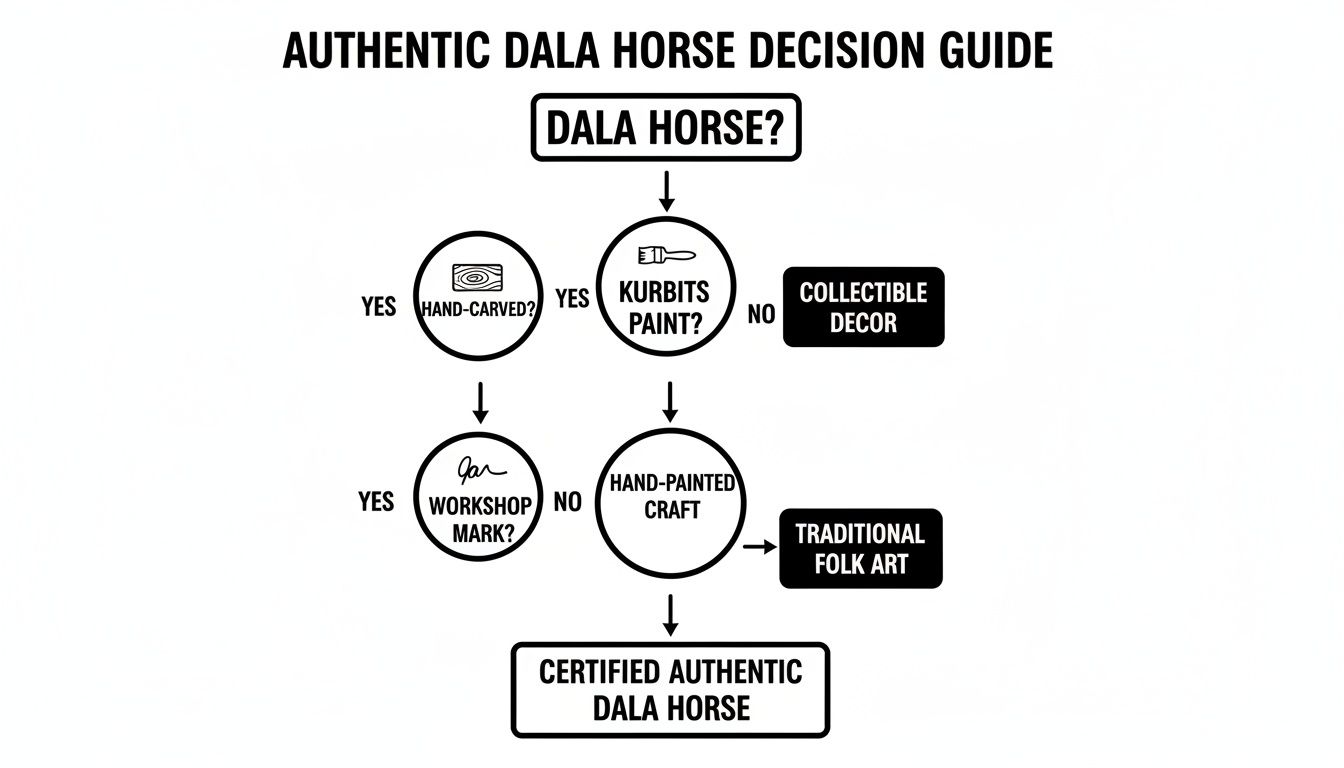
This little decision tree shows the main questions to ask when you're looking at a traditional Dala horse, zeroing in on hand-carving, the kurbits paint style, and any workshop marks.
Whether you decide to meticulously follow tradition or invent a completely new style, the act of painting connects you to all the generations of artisans who have kept this beautiful art form alive. It's a journey that takes you beyond simply owning an object and into a much richer understanding of its story and soul.
Engaging with the craft firsthand—much like playing with Go Go's toys instead of just collecting them—builds a much more profound and personal connection. You're no longer just an admirer; you become a participant in the tradition.
Starting with a DIY Dala horse isn’t just about making a decoration; it’s about making a memory. Every single brushstroke adds to its story, turning a simple piece of wood into something that is uniquely yours and filled with personal meaning. It’s an accessible and deeply rewarding way to bring a piece of authentic Swedish heritage right into your home.
Your Dala horse is so much more than a simple decoration; it’s a piece of Swedish heritage, meant to be passed down and treasured through generations. Unlike the fleeting fun of plastic Go Go's toys that are here today and gone tomorrow, a handcrafted wooden horse is a timeless keepsake. A little bit of thoughtful care will keep its charm alive for many years.
Keeping the hand-painted details looking pristine starts with a gentle approach to cleaning. Dust is the main culprit, and a soft-bristled brush or a dry microfibre cloth is all you need. It’s best to avoid water or any chemical cleaners, as moisture can easily damage the wood and cause those vibrant, classic paints to fade or even peel away.
The spot you choose for your Dala horse has a huge impact on its longevity. Wood is a natural material that breathes and responds to its surroundings, so finding that perfect place is crucial.
Sunlight: Direct sunlight is the biggest enemy of your horse's brilliant colours. Over time, UV rays can cause the paint to fade quite dramatically. To keep its classic kurbits patterns looking fresh, pick a spot that gets plenty of indirect light.
Humidity: Big swings in humidity can be surprisingly harmful. If the air is too dry, the wood might develop cracks. On the other hand, high humidity can make it swell. Try to find a stable spot indoors, away from radiators, air conditioning vents, or damp areas like basements.
Think of your Dala horse like you would a fine painting. You wouldn't hang a priceless canvas in a sunny, damp room, and the same idea applies to this wonderful piece of folk art. A little consideration truly goes a long way.
Working these wooden treasures into your home decor is one of the real joys of owning them. Their timeless design fits beautifully with almost any style, from a rustic farmhouse look to clean, modern minimalism. A single, colourful horse on a mantelpiece or bookshelf can create a stunning focal point. If you’re looking for more ways to bring natural textures into your space, you can find some great ideas in our post on beautiful wood wall decor.
We've travelled from the nostalgic playgrounds of our youth, full of Go Go's toys, all the way to the historic workshops of Dalarna, Sweden. It's quite a journey! To clear up any final thoughts, let's tackle some of the most common questions that pop up.
No, they are completely different worlds. Gogo's Crazy Bones, which many of us remember as "go go's toys," were those little mass-produced plastic figures that were a collecting craze in the late 1990s and 2000s.
A Dala horse, on the other hand, is a piece of traditional Swedish folk art. Each one is carved by hand from wood and then painstakingly painted by an artisan. The connection we're drawing is about the pure human joy of collecting—that same thrill of the hunt for a rare plastic toy is mirrored in the search for a unique, handmade Dala horse.
A true Dala horse is born and raised in Sweden. To be more specific, they come from small, family-run workshops in the Dalarna region, the very heartland where this beautiful tradition began centuries ago.
An authentic Dala horse isn't just a decoration; it's a guarantee of origin. Each one is hand-carved from local Swedish wood and then brought to life with a paintbrush by a skilled artisan, making it a genuine piece of cultural heritage.
While most artisans pour their energy into preserving the classic, traditional Dala horse designs, some workshops are open to special requests. The best approach is always to ask a reputable artisan or seller directly. They can tell you if a custom piece is possible and how it might fit within their unique crafting style.
Ready to find a piece of Swedish craftsmanship to call your own? We invite you to explore the curated collection of classic, vintage, and DIY Dala horses at Dalaart. Start your collection today by visiting https://dalaart.com.


.svg)


.png)


