January 11, 2026
Stuffed animal toys are soft, fabric companions filled with a huggable, flexible material, often made to look like real animals or whimsical characters. But they're so much more than simple playthings. Think of them as crucial developmental aids that provide comfort, encourage emotional expression, and spark whole new imaginative worlds for children and adults alike.
From the well-loved teddy bear passed down through generations to the brightly-coloured plush character a toddler won't let go of, stuffed animal toys hold a special place in our hearts. They're often our very first friends—silent confidants who listen without judgment and are always ready with a soft embrace when we're feeling unsure.
This deep connection isn't just about feeling sentimental; it's deeply rooted in developmental psychology. For a young child, a stuffed friend often acts as a transitional object, creating a sense of security and stability, especially when separating from a parent. This soft companion becomes a real, tangible source of comfort, helping a child learn to self-soothe and navigate new emotions. It’s a relationship that builds a foundation for empathy and social skills down the line.
Beyond the emotional support, these toys are incredible tools for imaginative play. A simple stuffed bear can become a brave explorer trekking through the jungle, a royal guest at a garden tea party, or a very patient patient in a make-believe vet clinic.
It’s through these made-up scenarios that children get to practise social interactions, problem-solving, and storytelling in a completely safe space. They learn what it means to care for something other than themselves, which is a massive step in developing a sense of responsibility.
A stuffed animal is the physical embodiment of unconditional love and security. It represents a safe space where a child can project their feelings, fears, and joys, making it an essential tool for emotional regulation and development.
That bond doesn't just disappear with age. Many of us keep our childhood stuffed animals as cherished keepsakes—they're symbols of comfort and happy memories. A high-quality, thoughtfully chosen companion is more than just a toy; it’s an heirloom in the making.
Understanding the difference between a mass-produced item and a piece crafted with love is the key to finding a friend that will last a lifetime. It’s the same timeless appeal found in handcrafted companions like the classic Dala Bear from Sweden. This guide is here to help you choose a companion that is safe, durable, and destined to be treasured for years to come.
That first moment you connect with a stuffed animal is usually visual, but the real magic happens when you pick it up. The feel of the toy—its "skin" and stuffing—is what truly defines it. This choice of material dictates everything from softness and durability to how you'll care for it, making it one of the most important parts of your decision.
Think of the material as the toy's personality. A classic polyester plush is like that dependable, ever-ready friend. It’s soft, incredibly durable, and can handle countless adventures and trips through the washing machine. This synthetic fabric is the undisputed workhorse of the stuffed toy world, celebrated for holding vibrant colours and resisting wear and tear for years.
Natural fibres, on the other hand, offer a completely different experience. Cotton, for instance, has a classic, breathable texture that’s wonderfully gentle on sensitive skin, making it a fantastic choice for newborns.
Venturing into natural materials opens up a whole new world of textures and benefits. Wool is a premium option, known for its luxurious softness and natural resistance to dust mites and bacteria. It also has a comforting weight and warmth that many people find incredibly soothing.
The trade-off? Natural fibres often need a bit more TLC. Unlike sturdy polyester, wool and some delicate cottons might need to be spot-cleaned or hand-washed to keep their shape and softness. It’s a balance between easy maintenance and the unique, gentle qualities that natural materials bring to the table.
When you see a label like 'organic,' it means the cotton was grown without synthetic pesticides or fertilisers, making it a healthier choice for both your child and the environment. 'Hypoallergenic' signifies that the materials used are less likely to cause an allergic reaction, often avoiding common irritants like certain dyes or chemicals.
These labels aren't just buzzwords; they empower you to make a choice that truly aligns with your family’s health and values.
What's on the inside is just as important as the outer fabric. The filling dictates the toy's "huggability" and how well it stands up to being squeezed and loved over time.
The chart below shows the core roles these companions fill in our lives, from a simple friend and comforter to a playful partner and a treasured keepsake.

This hierarchy makes it clear: while these toys serve many functions, their primary job is often to be a trusted friend. The materials chosen directly impact how well a toy can fill these roles. A soft, huggable fabric enhances its comforting abilities, while a durable build supports endless hours of imaginative play.
Choosing the perfect stuffed animal is about more than just finding the cutest face on the shelf. Beneath that soft, fuzzy exterior, the real quality is in the safety and construction—especially when it's a gift for a child. A well-made companion is built to survive years of enthusiastic hugs, grand adventures, and the occasional tumble down the stairs.
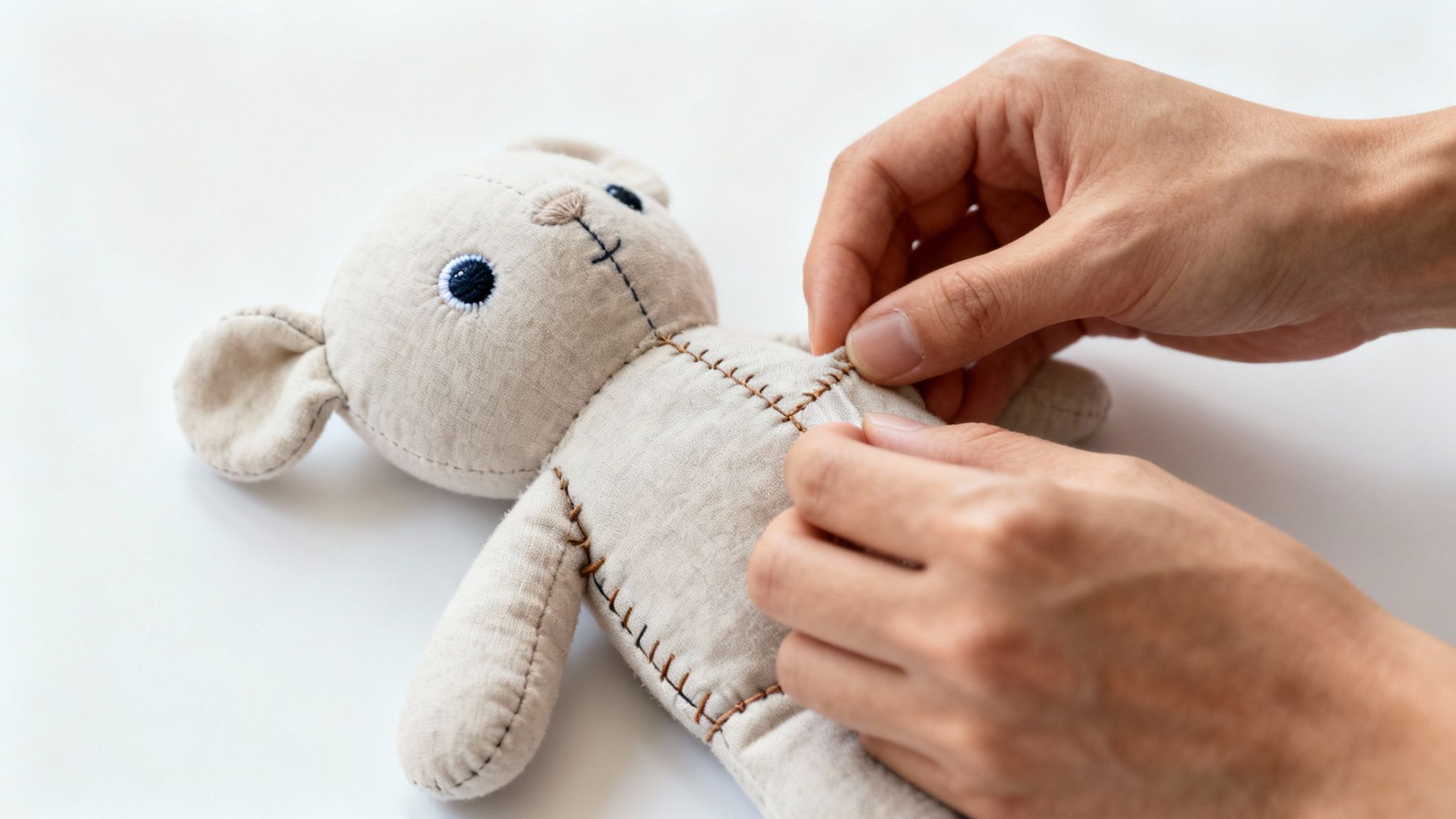
Before you bring a new friend home, put on your friendly inspector hat. Gently tug on the seams, the ears, and the tail. Do they feel solid? Reinforced, double-stitched seams are a hallmark of a quality toy, ensuring it won’t burst open during playtime and turn its stuffing into a choking hazard. This simple tug test is your first line of defence against a shoddily made toy.
For babies and toddlers under three, every tiny part of a toy needs careful thought. This is the age of exploration by hand and mouth, making any small, detachable pieces a serious risk.
When you're picking out stuffed animal toys for this group, always look for features that are stitched right into the toy itself. Here’s what to focus on:
Toy safety isn’t just about spotting obvious dangers; it’s about thinking like a child. A truly safe toy is designed with the most curious, unpredictable little user in mind.
As children get older, the world of toys they can safely enjoy gets bigger, but that doesn't mean you can let your guard down. For kids over three, plastic safety eyes and noses—which are fastened with a locking washer on the inside—are generally considered safe. Still, the fundamental rules of good construction always apply.
Give the toy a good squeeze. The stuffing should feel firm, not lumpy or sparse, which tells you it will hold its shape through plenty of play. You'll also want to make sure there are no sharp wires or stiffeners hidden inside that could eventually poke through the fabric.
Finally, always check the label for official safety certifications. Standards like the CE mark in Europe or ASTM F963 in the United States mean the toy has been tested for specific safety criteria, like flammability and chemical content. These labels give you an extra layer of reassurance, helping you feel confident that the companion you’ve chosen is not just delightful but designed to be a safe and cherished friend.
Let’s be honest, the conversation around the toys we bring into our homes is changing. As more of us think about our environmental footprint, we’re looking for toys that aren’t just delightful and safe, but also kind to the planet. This shift towards sustainability is reshaping the entire industry, pushing aside disposable trends in favour of things built to last.

This growing desire for eco-friendly options isn’t just a passing fad; it's a real market force. In places like Southeast Asia, for example, the expanding toy economy is being shaped by the launch of sustainable products. It’s a trend that highlights a worldwide appreciation for items that feel premium and are environmentally responsible. You can learn more about how these trends are influencing the multi-billion-dollar toy market in Southeast Asia.
A truly eco-conscious toy is more than just a green label slapped on a box. It's a promise of sustainability from the ground up—from the raw materials used to its potential for a long and treasured life.
Here’s what to look for in a genuinely sustainable toy:
The most sustainable toy is one that is loved and kept for a lifetime, not one that is quickly discarded. Durability, timeless design, and emotional connection are the cornerstones of true eco-consciousness.
This idea of longevity and mindful buying is exactly what makes heirloom-quality pieces so incredibly special.
While a soft, plush friend offers comfort and endless cuddles, there's another path to companionship that celebrates both sustainability and artistry. Handcrafted wooden companion animals, like the ones we create here at Dalaart, embody a different kind of connection. They aren't meant to replace a child's favourite teddy bear, but to stand alongside it as a timeless piece of art.
These figures are born from a philosophy rooted deep in tradition and craftsmanship. Carved from recycled wood and painted with non-toxic paints, they connect us to generations of artisans. Their real appeal is in their story and their permanence, attracting people who want meaningful gifts and collectables that stand apart from mass-produced plastic. It’s an approach that reminds us of the cultural value placed on handmade goods, something we explore in our article on the symbolism of Swedish socks.
Choosing a handcrafted wooden animal is an investment in durability and tradition. It’s a wonderful way to introduce a child to the beauty of art and the importance of caring for our planet. These pieces aren't just designed for a childhood, but for a lifetime, becoming treasured heirlooms that carry stories forward for the next generation to enjoy.
Giving a stuffed toy isn’t just about handing over a fluffy object; it’s about creating a moment of connection. When you set out to find that perfect companion, you’re looking for more than just a cute face. You’re looking for a friend built to last through countless hugs and grand adventures.
A simple, hands-on inspection tells you almost everything you need to know. Pick up the toy and give it a gentle squeeze all over. Does the stuffing feel consistent and pleasantly firm, or are there sparse, lumpy patches? High-quality stuffed animal toys are filled evenly, which helps them hold their shape and stand up to years of affection.
Next, have a look at the craftsmanship. Give the seams a light tug, paying close attention to the arms, legs, and ears. Strong, reinforced stitching is a clear sign of durability. It’s the difference between a friend that lasts a season and one that lasts a childhood.
The real art of gifting a plush friend is in connecting its character to the recipient's spirit or the theme of the event. A thoughtful choice can transform a simple toy into a deeply meaningful keepsake.
Here are a few ideas to get you started:
The best gifts are often stories in disguise. A stuffed fox for a clever child or a sturdy bear for a little one needing comfort tells them you see and celebrate who they are.
For a gift that feels truly memorable, consider looking beyond mass-produced plushies towards handcrafted and collectible pieces. While most plush toys are made for play, artisanal creations offer a tangible connection to tradition and artistry, making them stand out in a crowded market.
The global supply chain for stuffed and plush toys is immense. You'll see regions like Southeast Asia expanding rapidly, with market analyses showing the Asia-Pacific stuffed toys market growing at a 7.5% CAGR. This has positioned the area as a major hub for both production and consumption. You can discover more insights about the expanding plush toy market on htfmarketinsights.com. In such a busy landscape, a unique, handcrafted piece like a Dala animal from Sweden offers a distinct and artistic alternative.
These collectible companions resonate deeply with people who value heritage and design. They aren't just toys; they are pieces of folk art that carry a rich history with them. For more ideas on sourcing these kinds of unique treasures, check out our guide on finding the best gifts from Sweden. A gift like this becomes a cherished heirloom, a celebration of craftsmanship that lasts a lifetime.
Even the most thorough guide can leave a few lingering questions. When it comes to choosing, caring for, or gifting a stuffed animal, some specific queries pop up time and time again. Let’s tackle some of the most common ones so you can feel completely confident in your choices.
The best way to wash a well-loved plush friend really depends on what it’s made of and how it was put together. Before you do anything, your first port of call should always be the care tag – the manufacturer knows best.
For most modern toys made from polyester or cotton, a gentle trip through the washing machine is usually fine. To give it a bit of protection from the rough and tumble, pop it inside a mesh laundry bag or a pillowcase you can tie shut. Then, just run it on a delicate cycle with cold water. Easy peasy.
But what about vintage toys, electronic pals, or anything with delicate bits and bobs? For those, you’ll want to stick to surface cleaning. Just mix a tiny bit of mild soap with water, dip a cloth in, and gently scrub the toy’s surface. To "rinse," wipe it down with a fresh, damp cloth and then let it air dry completely. This last step is crucial to stop any mildew from setting in.
There’s an undeniable nostalgic charm to vintage stuffed animals, but they’re generally best kept as collectibles, not playthings for young children. The simple reason is that they were made long before today's rigorous safety standards came into effect.
Many older toys have small, hard plastic eyes or noses that can pop off and become a serious choking hazard. The stuffing inside might not be hypoallergenic or fire-retardant, and the seams often aren't reinforced to withstand the enthusiastic play of a modern toddler. For your peace of mind, it’s always safest to stick with a contemporary toy that has been properly tested and certified for child safety.
Here's a quick distinction: 'Stuffed animal' specifically means a toy shaped like an animal. 'Plush toy' is a broader term for any toy made from soft, piled fabric. So, a teddy bear is both, but a plush rocket ship is just a plush toy.
That price tag on a stuffed animal often tells a story about its quality, the materials used, and the sheer artistry that went into it. A few key factors contribute to a higher cost, and understanding them helps you see the real value you’re getting.
First up are the premium materials. Using organic cotton, hypoallergenic fibrefill, or sustainably sourced wool simply costs more than standard synthetic fillers. These materials are chosen for their superior safety, feel, and their lighter footprint on the environment.
The complexity of the design also plays a massive role. Intricate patterns, detailed embroidery, and hand-stitched features all require more skill and time to produce. On top of that, licensed characters from popular films or books carry a higher price because of branding rights. And finally, you have collectible or limited-edition pieces—including artisanal creations—which are valued for their rarity, artistic merit, and the skilled craftsmanship that makes each one unique.
For a gift that embodies artistry, sustainability, and timeless tradition, explore the handcrafted wooden companion animals at Dalaart. Each piece is a unique celebration of Swedish heritage, designed to be treasured for a lifetime. Discover the collection at https://dalaart.com.


.svg)


.png)


