May 5, 2026
A small pony turns up when you’re clearing a loft, sorting a drawer, or opening one of those old biscuit tins that somehow became the family storage chest for tiny treasures. Its mane is tangled. The vinyl is a little dusty. But the moment you see that familiar pose and bright flank symbol, you’re no longer just tidying. You’re handling a piece of personal history.
That’s where many serious collections begin. Not with a grand investment plan, but with recognition.
Vintage my little pony collecting rewards that kind of feeling, yet it also asks for a sharper eye. The best collectors learn to look beyond nostalgia and notice craftsmanship, paint, mould, provenance, and condition. In that sense, these ponies belong in the same conversation as folk art. They were made for play, yes, but they also carry the design language of their era and the marks of their journey through time.
A seasoned appraiser doesn’t dismiss an object because it was once common or beloved by children. Quite the opposite. Objects that were heavily used, widely loved, and strongly remembered often become powerful cultural artefacts later. A vintage pony with its original hair ribbon, clean symbols, and known history can feel as meaningful as any hand-painted decorative figure kept in a family for generations.
A reader once described finding her old pony in a cardboard box of school books and knitted jumpers. She remembered the pony at once, though not its name. The colour came back first, then the scent of old plastic and shampoo, then the feeling of brushing the mane on the sitting room carpet while the television hummed in the background. That chain of memory is part of the object’s appeal.
Collectors often start there, with one survivor from childhood. They keep it on a shelf, then begin asking ordinary questions that lead to a deeper hobby. Is it original. Was it part of a set. Why does this one look different from another pony of the same colour. Why do some examples seem treasured while others look altered beyond repair.
Those questions matter because vintage my little pony isn’t only about owning things. It’s about learning to read them. A pony’s scuffs, faded symbols, or carefully preserved packaging can tell you whether it was cherished, displayed, repaired, or passed from hand to hand. Provenance doesn’t have to mean museum paperwork. Sometimes it means a note from a parent, an old Christmas photograph, or a complete group kept together for decades.
A collectible becomes more interesting when you know where it has been, not just what it is.
That’s why many thoughtful collectors treat these toys with the same respect given to regional carvings, hand-painted ornaments, or other domestic art forms. They may be factory made, yet they still hold design heritage, social memory, and a distinct visual language. Once you begin seeing them that way, the hobby changes. You’re no longer just gathering ponies. You’re curating a small archive of joy.
A collector who learns the history of Generation 1 starts seeing more than a pretty toy on a shelf. The shape of the body, the style of the symbols, even the ambition of the accessories begin to make sense as part of a particular period in design. G1 is the name collectors give to the original era of My Little Pony, and it marks the foundation of the whole hobby.
The story begins just before the familiar ponies arrived in shops. Hasbro first introduced My Pretty Pony in 1981, a larger precursor that tested the appeal of a brightly coloured horse toy with brushable hair. In 1982, the smaller My Little Pony line followed, opening with six Earth Ponies: Cotton Candy, Butterscotch, Blossom, Blue Belle, Minty, and Snuzzle, as outlined in the My Little Pony overview.
Those first releases established the design language that still guides collectors. Soft vinyl bodies gave the figures a gentle, rounded look. The brushable mane and tail invited play, but they also gave each piece a textile quality that collectors often respond to in the same way they respond to ribbon work, painted ornaments, or other domestic folk objects. The flank symbol tied colour, name, and theme together, almost like a maker's motif on a traditional decorative piece.
That unity of design is part of G1's charm.
Generation 1 continued through 1992 in the United States, and over that decade the line grew into a surprisingly varied body of work. Earth Ponies remained the backbone, but Pegasus Ponies, Unicorns, Sea Ponies, and many themed sub-lines widened the visual world. For a collector, this matters because G1 is not one look. It is a whole family of forms, each reflecting changing tastes in fantasy, colour, and play.
The line's popularity also shaped how these ponies are collected today. Animated specials, a feature film, and television episodes fixed many characters in memory, while playsets and accessories gave the toys a richer setting. That is why provenance can feel so meaningful with G1 pieces. A pony with its original comb, ribbon, or matching set companion carries context, much like a carved folk figure is more informative when it keeps its original paint and regional details.
Mid-1980s releases often draw special interest from collectors because the range became especially imaginative during that period. Designs grew more confident. Themes became more decorative. Playsets, accessories, and character groupings added a sense of world-building that still appeals to adults who now collect with a curator's eye.
You can usually see that maturity in a few clear ways:
A seasoned collector does not read that history as a simple timeline. They read it the way an appraiser reads a school of folk art. Early pieces often carry the freshness of a founding idea. Later pieces show expansion, experimentation, and regional production differences. Both can be desirable, but for different reasons.
That is why G1 matters. It is the starting chapter of the brand, but it is also a record of design history, childhood culture, and mass-produced craftsmanship at a very specific moment. When you hold a Generation 1 pony, you are holding an object from a line that shaped play for years and still rewards careful study today.
When someone says, “I’ve found an old pony,” my first response is never “What’s it worth?” It’s “Let’s identify it properly.” Value comes later. Identity comes first.
Treat the pony like a small detective case. One clue rarely solves it. Several clues, read together, usually do.
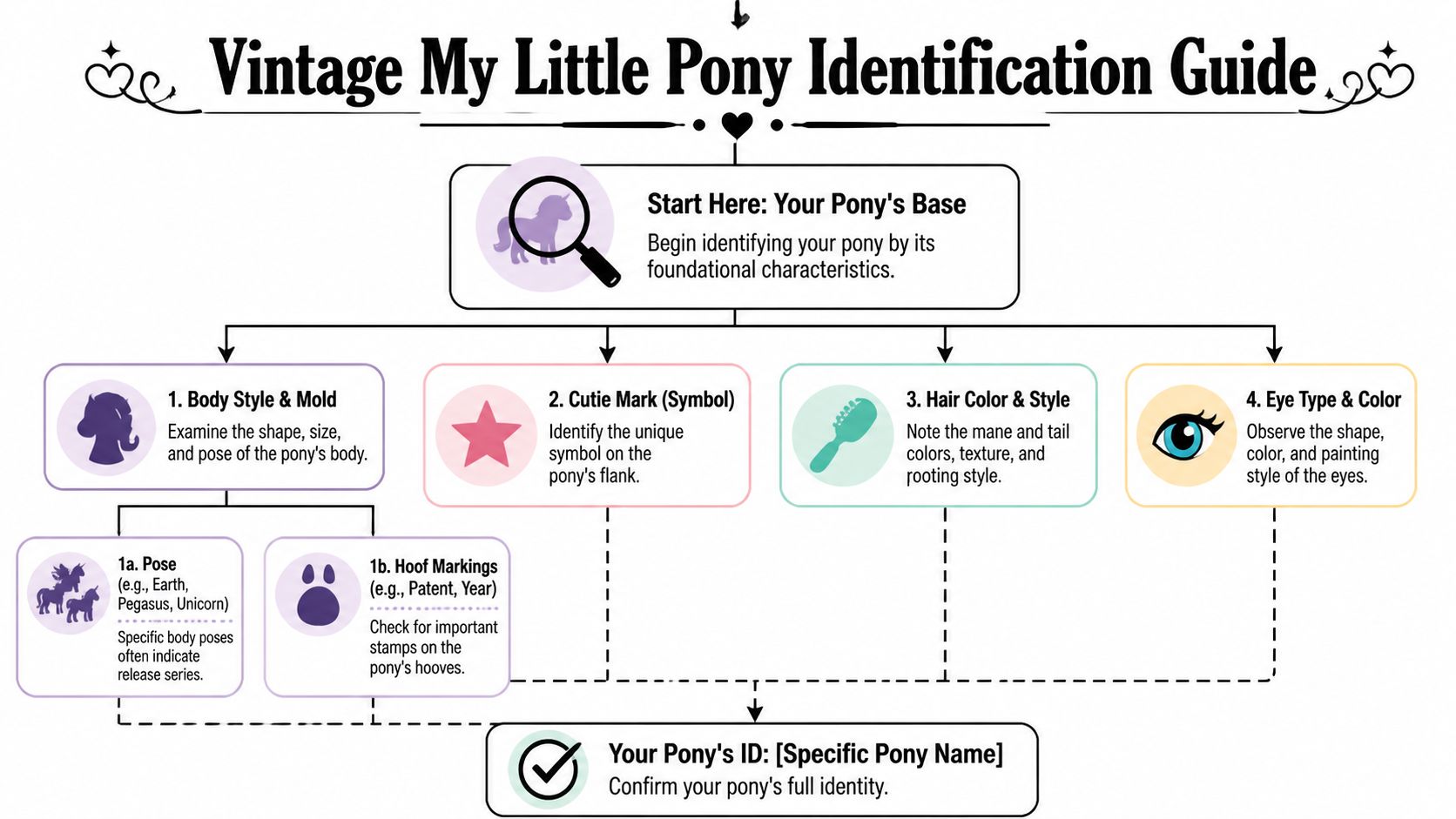
Turn the pony gently and inspect the underside of the hooves. Collectors often find moulded text there, such as a copyright year or country of manufacture. New collectors get confused here, because the date stamped on a hoof doesn’t always mean the exact retail year of that individual pony. It usually points to the mould or copyright period, not the whole story.
Still, the hoof marks are a strong starting point because they help narrow the era and production origin.
Look for details such as:
If the letters are faint, use indirect daylight rather than a harsh flash. Flash can flatten shallow moulded text and make it harder to read.
Many beginners identify by colour first. That’s understandable, but it can mislead you. Fading, discolouration, and altered hair can confuse the issue.
Body shape is often more dependable. Ask basic structural questions.
The pose matters. Head tilt, leg stance, and overall silhouette can separate one release family from another. Some ponies feel delicate and upright. Others are rounder, lower, or more animated in stance.
Many identifications gain precision. Eye style can place a pony in a particular sub-line. Some have the more standard painted eye style. Others belong to themed groups known for more distinctive eye treatments, such as Twinkle Eye Ponies, which collectors recognise by their striking eye design.
Hair offers another set of clues, though it requires caution. A pony may have had a trim, a reroot, or a boil treatment at some point in its life. So don’t let hair alone make the decision.
Notice:
Hair can be restored to look neat. It’s much harder to restore a wrong body, wrong symbol, or repainted eye.
The flank symbol is often the clue people notice first, and rightly so. It’s one of the line’s loveliest design ideas. But use it late in the process, not early. Similar symbols, faded printing, and custom repainting can all cause mistakes.
When the hoof text, body type, eye style, and hair colours already point in one direction, the symbol usually confirms the answer. A flower, star, fruit, or abstract motif becomes less mysterious once the rest of the evidence agrees.
A practical way to identify a pony is to keep a written sequence:
That order prevents rushed conclusions. It also trains your eye. After a while, a jumble of old plastic no longer looks random. You start to see pattern, lineage, and design intent. That’s the moment a casual owner begins thinking like a collector.
Once a pony has a name, the next question usually arrives quickly. Is it common, scarce, or something special. The honest answer is that rarity in vintage my little pony is rarely about one dramatic trait. It’s usually the result of distribution, survival, and collector demand meeting in the same place.
A pony may be harder to find because it wasn’t sold through ordinary shop channels. Collectors pay close attention to mail-order pieces, promotional releases, and country-specific variants for that reason. Those channels often produced less familiar distribution patterns than standard retail stock.
Country variation is one of the most discussed areas in the hobby. A pony released for one market may differ in colour, symbols, or manufacture from a version sold elsewhere. Those differences can be small on paper and significant in practice. To a casual eye, two ponies may look nearly alike. To a collector, one may represent a distinctive regional variant with much stronger interest.
Rarity also grows from loss. Toys meant for play don’t always survive in fine order. Hair gets cut. Symbols wear off. Accessories disappear. A release that may once have been easy to buy can become difficult to locate complete and unaltered decades later.
New collectors often assume the oldest pony is the rarest. That isn’t a safe rule.
An early release can be common if it sold widely and many examples survived. A later release can be elusive if it had narrower distribution, weaker sales at the time, or poor survival in the secondary market. Production year matters, but it matters alongside context.
Use a layered judgement instead of a single question:
Collectors are understandably fascinated by error ponies. A mismatched symbol, unusual paint placement, or unexpected colour combination can look promising. Sometimes it is. Sometimes it’s damage, age, or a custom job.
In such instances, patience is invaluable. An error should make sense within the materials and production style of the original line. If the paint sits oddly on top of wear, or the colours feel too modern, assume nothing. Many expensive mistakes begin with hopeful overconfidence.
Practical rule: Rare doesn’t mean strange. It means documented, convincing, and difficult to replace.
The market follows a simple pattern even in a nostalgic hobby. More collectors pursue pieces that appear less often in authentic, pleasing condition. That’s why an ordinary retail pony may remain modestly priced while a recognised mail-order or regional variant can command much stronger interest. The hidden gem exists, but it usually reveals itself through careful comparison, not wishful thinking.
A pony’s condition can change its desirability more than any romantic story attached to it. Two examples of the same character may sit side by side, and one will command respect while the other is bought only for parts, practice, or custom work. Learning to grade condition is one of the most useful skills in the hobby.
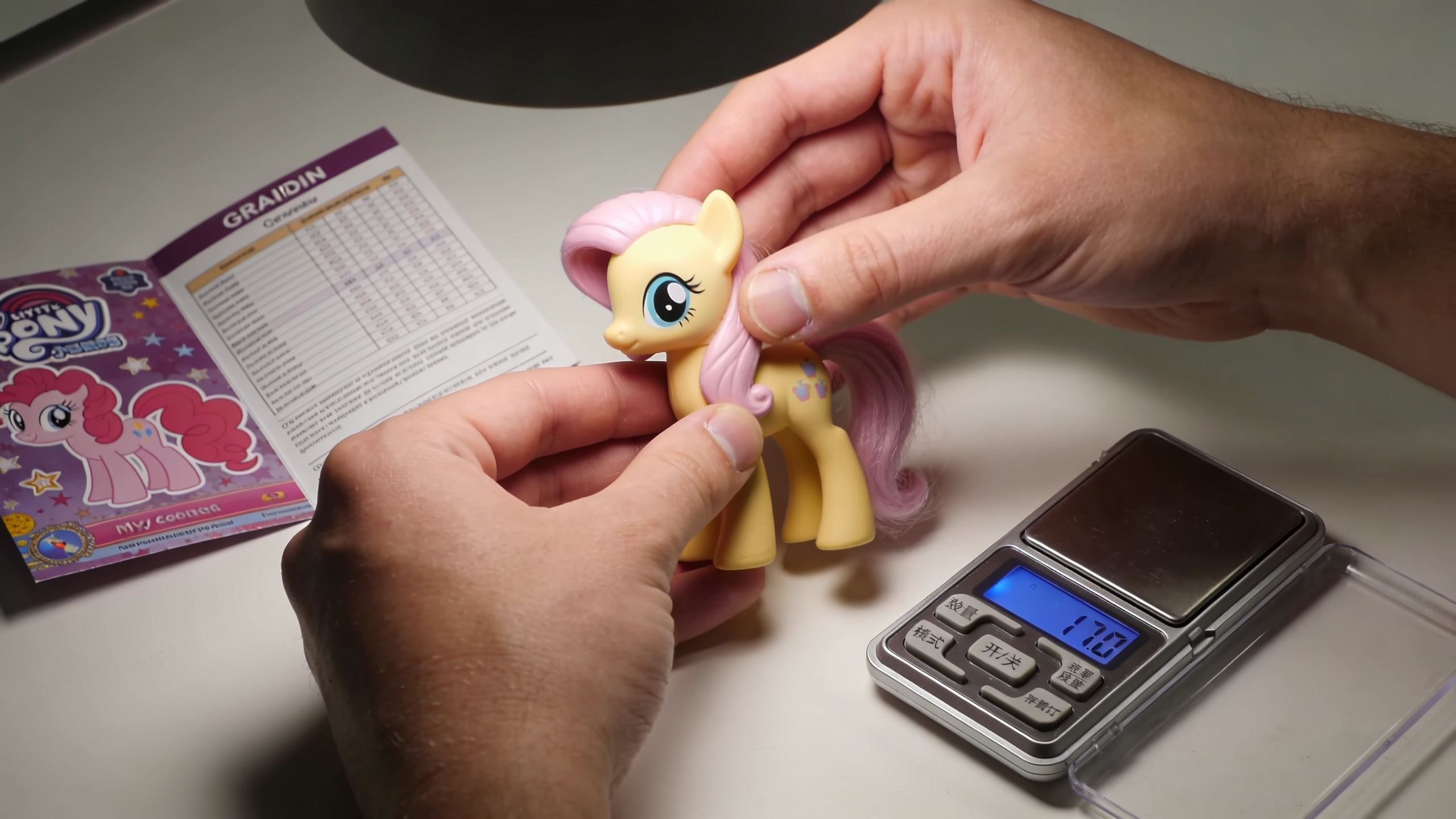
Collectors often use familiar shorthand. Mint in Package and Mint on Card describe examples that remain sealed or attached to original packaging. At the other end, bait usually means a heavily damaged pony kept for spare parts, restoration practice, or customising rather than display.
Most ponies offered for sale fall somewhere between those poles. They may be clean and attractive but not untouched. They may show age while still displaying beautifully. The aim isn’t perfection. It’s accurate description.
A sound grading habit includes checking:
Some defects are immediately visible. Others reveal themselves only with experience. One of the most dreaded terms in the hobby is pony cancer, a collector phrase for a form of vinyl degradation that shows as spreading spots or internal damage. It unsettles new owners because it can resemble surface dirt at first glance. It isn’t the same thing.
Another confusing issue is regrind, where small discoloured specks appear in the plastic. These can be minor or distracting depending on placement and severity. Haircuts are also a major turning point in value. A trimmed mane may seem harmless to a beginner, yet collectors often view original length as part of the pony’s integrity.
A pony can survive a bit of shelf wear and still be handsome. It rarely recovers from a chopped mane, a repainted symbol, or active vinyl deterioration.
Rarity and condition are partners, not rivals. A rare pony in poor order may still be desirable because replacement is difficult. A common pony in exceptional order may also earn admiration because so many surviving examples are worn.
That’s why price isn’t a fixed label. It’s a judgement made from identity, demand, authenticity, and preservation taken together. If you collect broadly across nostalgic toys, that same logic appears elsewhere. It’s part of why soft, character-driven collectibles draw such attention, as seen in the wider appeal of pieces discussed in this Hello Kitty Squishmallow collecting article.
When you handle a pony in person, slow down and inspect in the same order each time. That prevents the common mistake of being charmed by colour and missing damage.
Try this sequence:
You don’t need to be severe to be accurate. A well-loved pony can still have real market value and deep personal value. But the collector who grades fairly buys better, sells better, and builds a collection with fewer regrets.
You bring home a pony from a flea market, and at first glance it looks worn out. Then you wipe one small patch on the cheek and the original colour appears. That moment teaches an important collecting lesson. Many vintage ponies need careful conservation, not dramatic rescue.
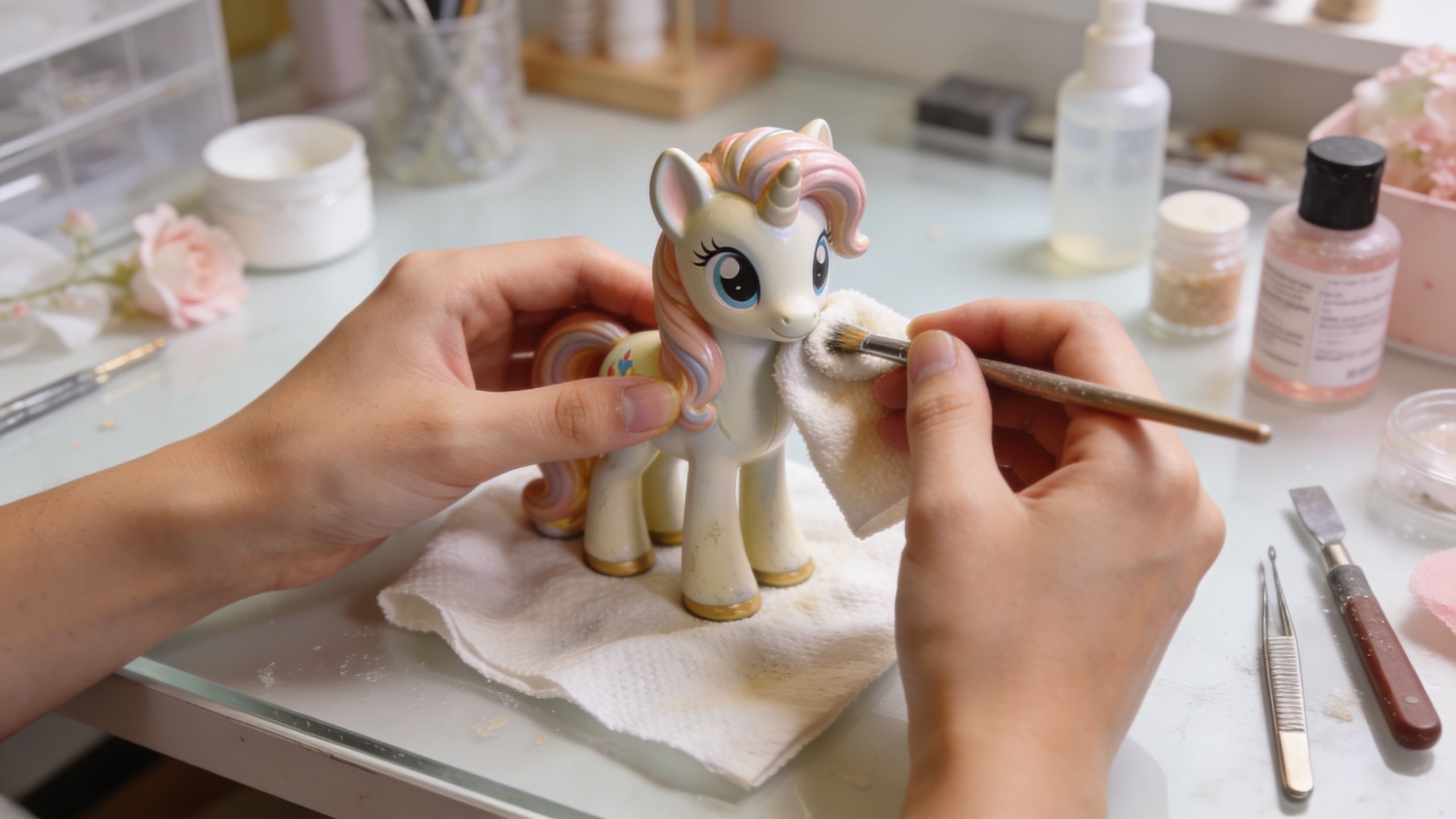
A good restorer approaches a Generation 1 pony the way a folk art collector approaches an old painted wooden horse. Age is part of the object’s story. Your job is to remove dirt, reduce strain, and protect original features, especially the symbols, hair, and finish that give the piece its identity and provenance.
Begin as a conservator would. Use warm water, mild soap, soft cloths, cotton buds, and a small soft brush. Ordinary surface grime often yields to patience. Painted symbols and facial details do not tolerate force well, so dab, lift, and rinse rather than rubbing hard.
It helps to divide the work into three stages. Clean the body first, then the hair, then inspect the pony again in bright light once it is dry. That order keeps you from chasing flaws that are only dust or dampness.
Restraint matters. New collectors often see quick improvement and start scrubbing areas that should just be left alone.
Hair care calls for the same patience used in textile handling. Start with water, then comb slowly from the ends upward with a wide-tooth comb or a very gentle brush. If you meet resistance, add a little water or conditioner and pause. Pulling through knots can thin the hair or snap old fibers.
A neat, honest result usually serves a vintage pony better than a dramatic makeover. Original hair, even if slightly imperfect, often carries more collector confidence than aggressive trimming or heavy styling products. In antiques, preservation usually adds more value than correction.
Preserve first. Beautify second.
For those who like watching technique before trying it, this restoration video gives a useful visual sense of slow, careful handling:
The best restoration is often the least visible one. Cleaning away old residue, easing tangles, and improving presentation are usually safe goals. Repainting symbols, cutting hair to force symmetry, or using harsh treatments can blur the line between preserved original and altered object.
Avoid these common mistakes:
Collectors who value heritage tend to ask a simple question. Can this treatment be reversed, and does it respect the pony’s original character? That standard is useful whether you are restoring a toy, caring for painted folk art, or judging condition from seller photos in guides to buying on eBay in Sweden.
Once a pony is clean, display becomes part of its care. Sunlight can fade bodies and hair. Heat can encourage warping. Damp conditions invite musty storage problems, and cramped shelves cause rubbing that slowly wears surfaces down.
A sound display setup should do three things well:
Closed cabinets can work beautifully if they stay dry and are not placed in direct sun. Open shelves can also be excellent if you dust regularly and give each pony enough space. A crowded display may look lively, but it often creates preventable wear.
The aim is simple. Let the pony be seen without asking it to endure more age than it already has. That is the collector’s version of stewardship.
Buying well is half the craft of collecting. A beautiful pony offered by the wrong seller, with weak photographs and vague wording, can become an expensive lesson. A modest pony from a careful seller with precise descriptions often proves the better purchase.
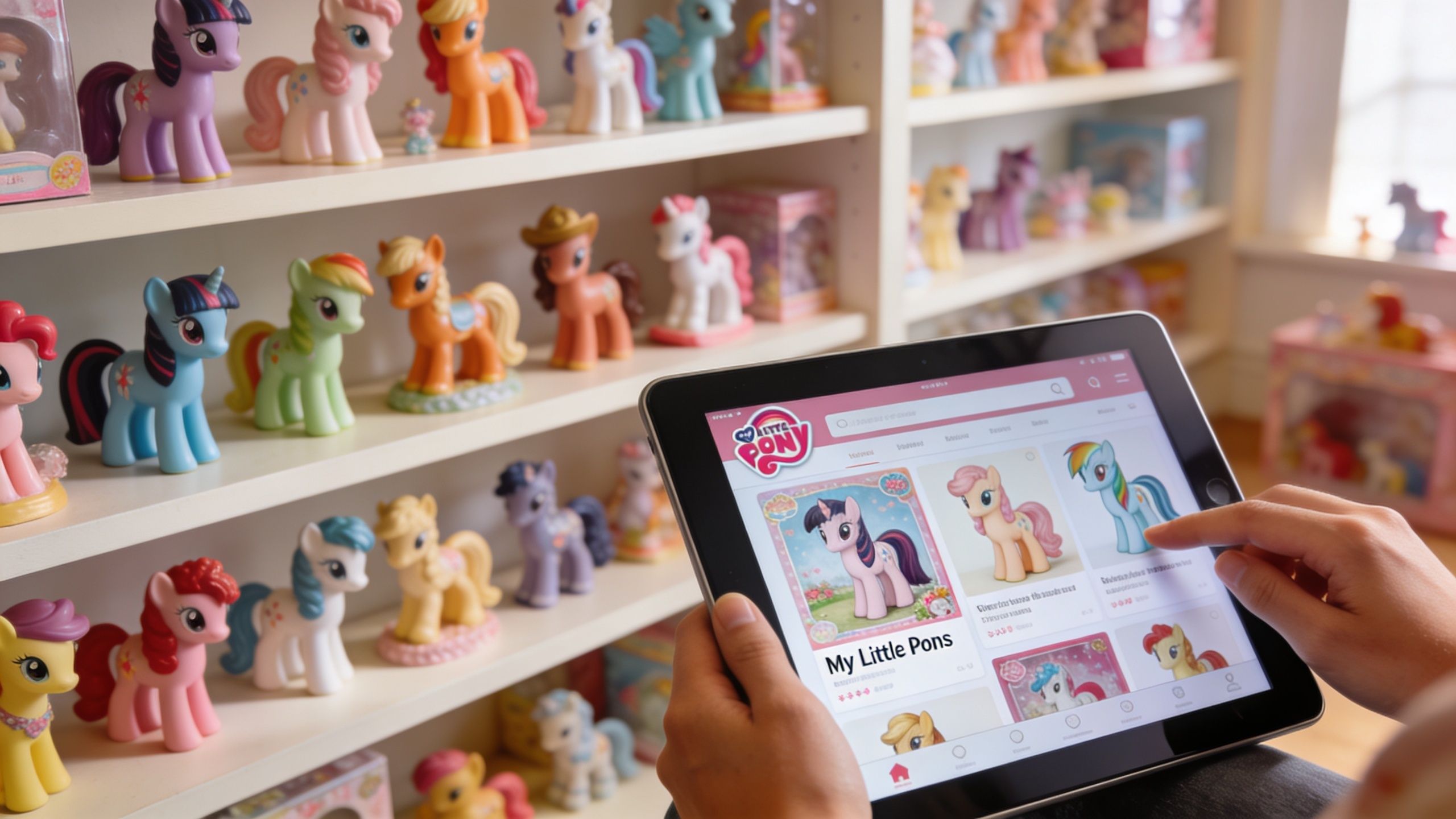
Estate sales, flea markets, online auctions, collector groups, and specialist dealers each offer different advantages. Flea markets reward patience and a trained eye. Online auctions offer reach, but they also demand stricter scrutiny. Specialist dealers may charge more, yet they often provide stronger descriptions, cleaner stock, and fewer authentication surprises.
I generally advise newer collectors not to chase mystery lots too aggressively. The thrill is real, but so is the risk. Until you’ve handled enough authentic examples, the safer route is often to buy a few clearly described ponies from trusted sources and build your eye first.
Most problems show up in plain view once you know what to question. Counterfeits are only one concern. More often, you’ll encounter customised ponies, assembled pieces, reroots, repaints, or heavily staged photographs.
Watch for signs such as:
If a seller won’t show the hooves, the flank symbols, and the hairline clearly, assume you don’t yet know enough to buy with confidence.
Due diligence sounds dull until it saves you from a disappointing parcel. Ask direct, polite questions. Request additional photographs in natural light. Confirm whether the hair has been cut, reset, or rerooted. Ask if there is stickiness, smoke odour, internal rusting, or marks under the mane and tail.
A trustworthy seller usually answers plainly. They don’t need theatrical sales language. They identify flaws, show close-ups, and welcome sensible questions.
Use this short checklist before purchase:
Collectors who like online marketplaces should also understand platform habits, shipping quirks, and listing culture. Broader advice on marketplace buying can be useful, including guidance found in this article on using eBay in Sweden, especially for cross-border expectations.
A rushed buyer often ends up paying twice. Once for the wrong pony, then again for the correct one.
The strongest collections rarely come from impulse buying alone. They grow through comparison, restraint, and a willingness to leave questionable pieces behind. That patience doesn’t make the hobby less exciting. It makes each successful find more satisfying, because you know what you bought and why it belongs in your collection.
A good collection doesn’t have to be large. It has to be thoughtful.
Some collectors focus on the ponies they owned as children. Others pursue a single type, such as Earth Ponies, Unicorns, or a favourite visual theme. Some care most about untouched condition. Others enjoy restoration-grade finds and the quiet satisfaction of bringing them back to displayable life. There isn’t one correct philosophy. There’s only the question of what kind of steward you want to be.
That’s where vintage my little pony becomes more than accumulation. You learn the history, then train your eye to identify moulds, symbols, and production clues. You learn to grade accurately, restore gently, and buy with caution. Over time, the shelf starts to feel less like storage and more like a curated gathering of small cultural objects.
A focused collection often has more character than a crowded one. You might build around:
Collectors who enjoy nostalgic toy worlds more broadly often move between categories, and that cross-interest can be rewarding. If you like the idea of toy lines as cultural artefacts, you may also enjoy reading about other character collectibles in this piece on Go Gos toys.
True pleasure lies in attention. When you handle these ponies carefully, identify them correctly, and preserve them well, you’re doing something larger than shopping. You’re keeping a small corner of design history alive. That’s a fine reason to collect anything.
If you enjoy collecting objects with story, craftsmanship, and heritage, visit Dalaart. Its curated world of authentic Swedish Dala horses and companion animals offers the same pleasures that draw people to beloved vintage collectibles: artistry, provenance, and the joy of living with things made to be treasured.


.svg)


.png)


