March 1, 2026
A proper vinyl record display is more than just a place to stash your LPs; it’s about transforming a treasured collection into a living, breathing piece of art. The best solutions don't just store—they protect your records from damage while turning that iconic cover art into a central feature of your home, making it a true conversation starter.
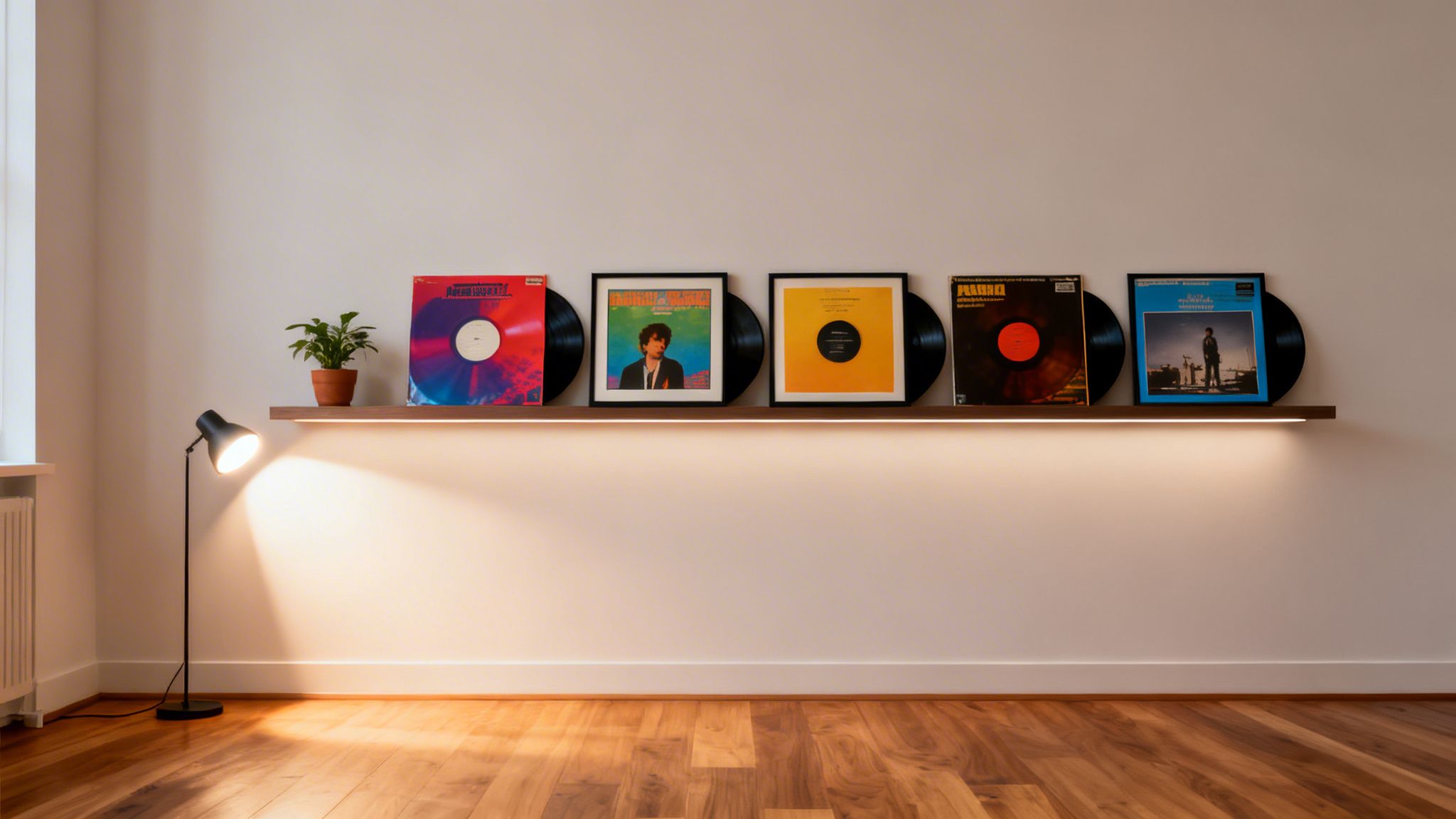
It’s time to get those records out of dusty crates and neglected stacks and give them a place of honour. A thoughtful vinyl display does more than just organise; it celebrates your personal history and musical taste, turning what could be clutter into a curated gallery.
Let's face it, every album cover is a piece of art with its own story, colour palette, and emotional weight. When you display them with intention, you're not just showing off a collection—you’re adding a deeply personal and dynamic layer to your interior design.
Think of your record collection as a library of visual and auditory experiences. Hiding them away is like keeping your favourite books locked in a chest. A well-chosen display system invites you to interact with your music in a completely new way.
Your record display is an extension of your personality. It’s a visual playlist that tells guests who you are, what you love, and the stories that have shaped your life, all without saying a word.
This shift in perspective is what it’s all about. Instead of seeing your records as just items to be stored, view them as decorative objects ready to be styled. This approach opens up a world of creative possibilities for any room in your home.
A great display solution really comes down to two things: protection and aesthetics. These two elements work together to elevate your collection from a simple hobby into a sophisticated design feature.
This blend of form and function is precisely what makes a dedicated vinyl record display so rewarding. It’s an approach that respects both the artistry of the music and the visual craft of the album cover. For more ideas on blending art with your decor, you might find some inspiration in our guide on integrating vintage posters from Sverige into your space.
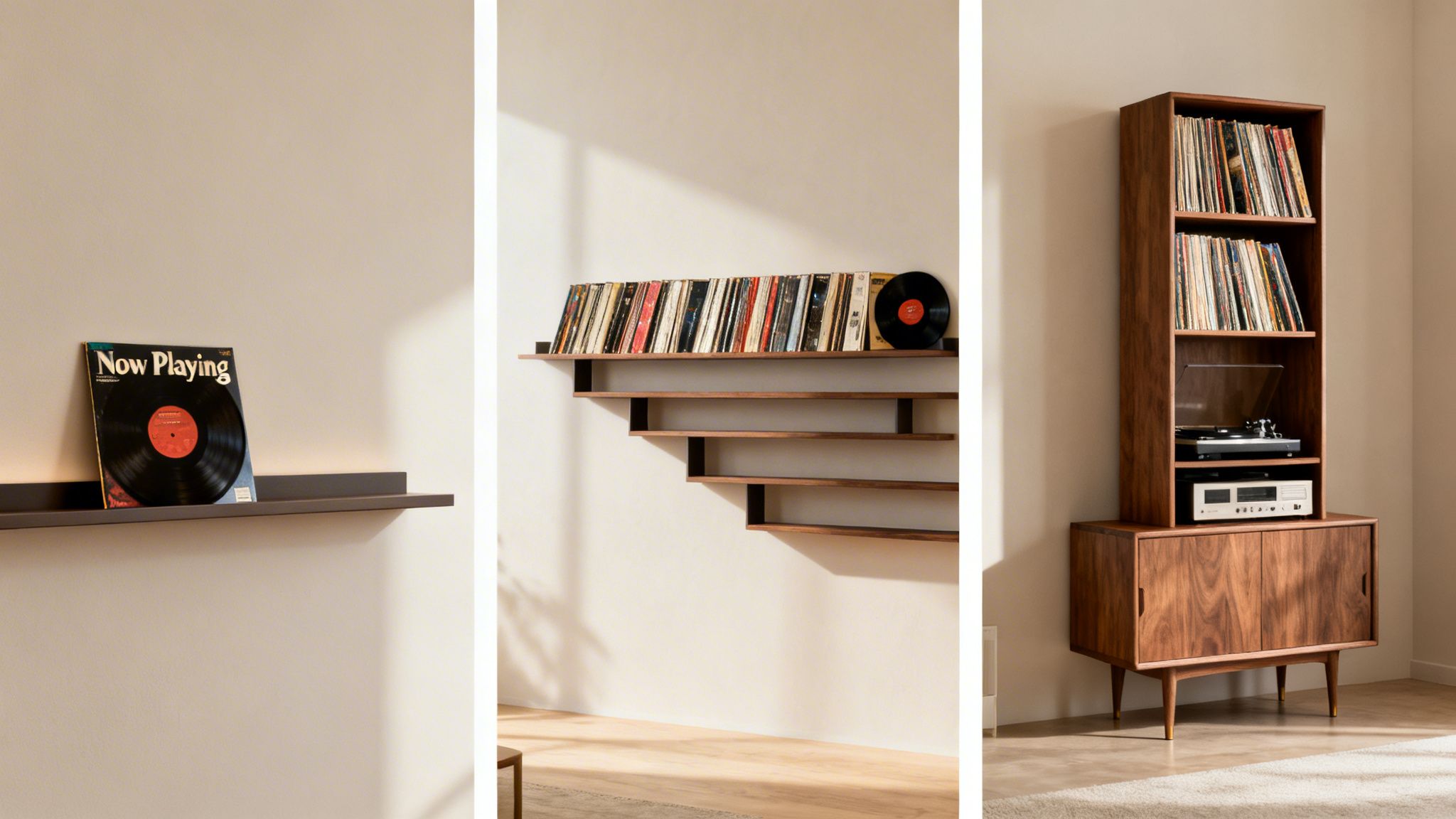
Finding the perfect way to display your vinyl can feel like a big decision. It's more than just storage; it's about finding a piece that fits your personal taste, works with your room's layout, and can handle the size of your collection. There’s no single “right” answer. The goal is to find something that feels like a natural part of your home and your listening routine.
Before you dive into browsing, take a quick inventory. Are you a casual collector with a few treasured LPs, or is your collection growing bigger every month? Knowing this will point you toward the most practical and stylish options for you.
For smaller, curated collections of under 50 records, minimalist solutions often work wonders. They highlight each album as a piece of art, preventing a small number of records from looking lost or sparse.
Once your collection starts to creep into the hundreds, your needs change. You’ll want to think more about capacity and solid construction. Don't forget, vinyl is surprisingly heavy—just 50 LPs weigh around 13.6 kg (30 pounds).
As your collection grows, storing your records vertically is absolutely key. This prevents warping and protects the spines from damage, safeguarding your investment for years to come. It’s also wise not to cram your shelves too full; if you need to, spread the weight across several units.
Your next big choice is whether to go vertical with wall-mounted shelves or stick with a classic floor-standing unit.
Wall-mounted options, like floating ledges or tiered racks, are a lifesaver in smaller flats where floor space is precious. They draw the eye upward and can turn a blank wall into a personal gallery of your favourite music. If you like this idea, you can see how to apply similar principles with our guide on arranging wood wall art.
On the other hand, floor-standing units—think media cabinets, credenzas, or the ever-popular cube shelving—give you loads of storage and a solid base for your entire listening station. They bring your turntable, collection, and accessories together into one dedicated "music corner."
This approach of creating an intentional display is a global trend. For example, in Southeast Asia, where K-pop accounts for 35% of non-local music streams, fans are known to create unique displays. They often mix K-pop vinyl with personal treasures like Swedish moose figurines, turning their collections into a statement of their own cultural blend. You can read more about these fascinating global music trends in this in-depth analysis of the SEA music industry.
Right, let's get into some projects. For that truly personal touch, there’s nothing quite like a custom-built solution for your records. Building your own vinyl record display is not only deeply satisfying but also gives you the power to create something that fits your space and collection perfectly. You don’t need a fancy workshop or to be an expert woodworker; some fantastic, professional-looking projects are achievable with just a few basic tools.
The real beauty of going the DIY route is the freedom. You get to pick the wood, the finish, and the exact measurements, making sure the final piece harmonises with your home's existing style. Let’s look at a couple of projects that offer maximum impact for minimal fuss.
One of the most popular and genuinely effective DIYs is the simple floating ledge. It's the ideal way to spotlight the album you're spinning right now or to show off a rotating gallery of your favourite cover art. This design creates a clean, almost gallery-like feel without dominating the room.
The idea is incredibly straightforward: a narrow shelf with a small groove or a front lip to hold the record sleeve securely. This is what makes the project so approachable:
This project is about more than just following instructions; it’s about creating a functional focal point. When you build it yourself, you get to decide the exact length—whether it's for a single album sitting proudly above your turntable or a long, dramatic ledge spanning an entire wall.
A handmade 'Now Playing' ledge does more than just hold a record; it becomes part of the ritual of listening. The act of choosing an album and placing it on display adds a layer of intention and appreciation to your music routine.
As your collection inevitably grows, you’ll need a storage system that can grow with it. While store-bought cube shelving is a common go-to, building your own modular cubes gives you so much more flexibility and durability. This approach lets you create a sturdy, stylish vinyl record display that's perfectly tailored to your needs.
When you design your own cubes, you're not stuck with standard off-the-shelf sizes. You can build them from high-quality plywood or solid wood, which provides far more strength than the particleboard often found in mass-produced furniture. And remember, a collection of vinyl is surprisingly heavy, so a robust build is absolutely crucial.
The process itself involves cutting panels to size and joining them to form a box. For those wanting to stretch their skills a bit, many of the techniques for building simple storage cubes can be adapted for more intricate projects. If you're feeling adventurous, our guide on a DIY wine rack explores similar joinery and finishing methods that you could easily apply here.
Ultimately, these DIY projects empower you to create something both cost-effective and completely unique. You get the immense satisfaction of making something with your own hands that not only protects your beloved records but also adds a significant dose of personal style to your home.
A fantastic-looking vinyl display is one thing, but if it damages your precious albums or comes crashing down, it’s a collector's nightmare. Getting the installation right and being mindful of preservation are absolutely crucial for protecting your investment. This isn't just about securely mounting your shelves; it's about understanding the subtle environmental enemies that can ruin your records over time.
Think of a secure mount as your first line of defence. The method you use will hinge entirely on what your walls are made of. For drywall—the most common material you'll find inside a home—your best bet is to locate the wooden studs behind the plasterboard. Screwing your shelf brackets directly into these studs creates the strongest hold possible. It's non-negotiable for a heavy display.
What if the studs aren't where you need them? You’ll have to use wall anchors. But hold on—not all anchors are up to the task. For something as heavy as a full vinyl record display, skip the standard little plastic anchors. You need to step up to more robust options like toggle bolts or self-drilling drywall anchors. These are designed to support significantly more weight and will give you peace of mind.
Mounting on tougher surfaces like brick or concrete demands a different set of tools and techniques. You'll need a hammer drill fitted with masonry bits to create the pilot holes. After drilling, you’ll insert a plastic or lead wall plug before driving in your screws. This step is key to ensuring a tight, secure fit that won’t wiggle loose.
This diagram breaks down the basic workflow for a typical DIY display ledge.
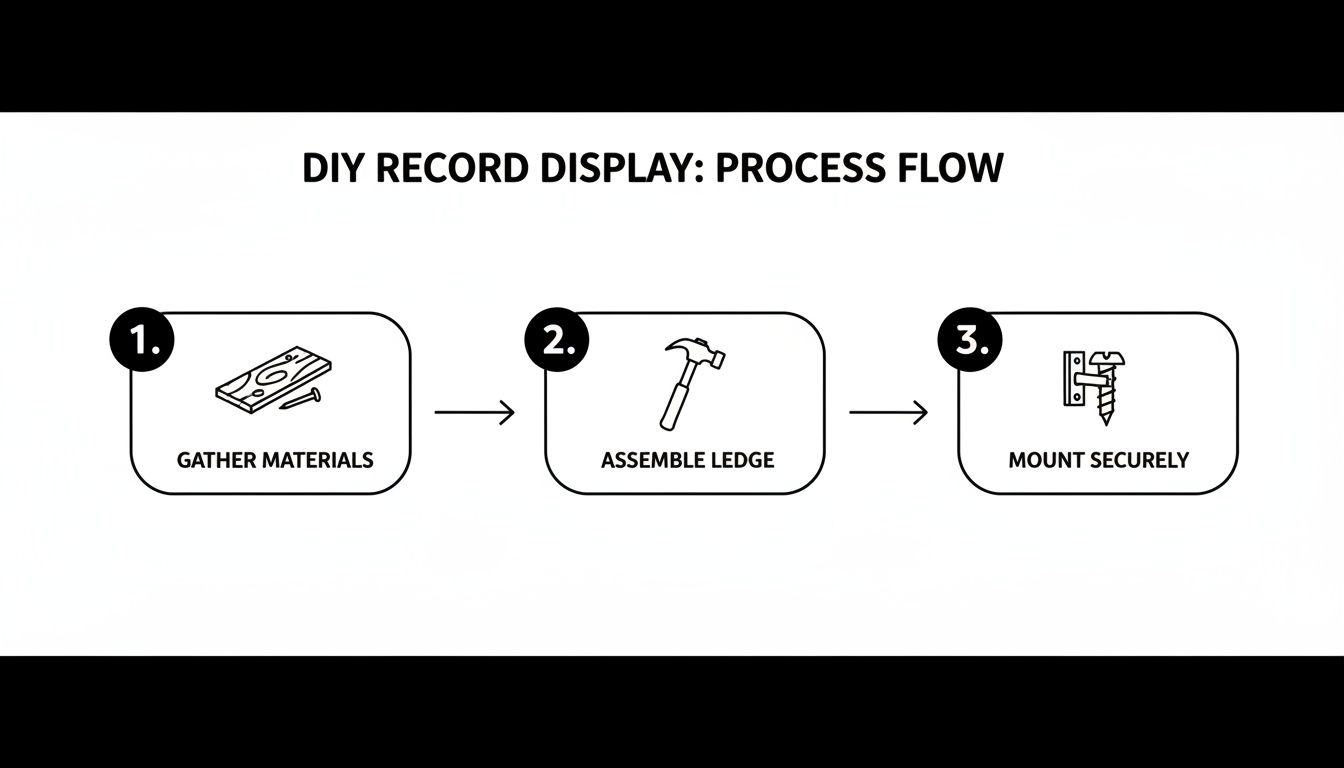
The real takeaway here? A secure mount isn't just a finishing touch; it's the final, critical step that guarantees the safety of your entire collection.
Once your display is firmly on the wall, your focus can shift to long-term preservation. Vinyl is delicate, and how you display it is just as important as how you store the rest of your collection. The three biggest culprits of damage are UV light, heat, and humidity.
Direct sunlight is the number one enemy of a displayed record. UV rays can fade that iconic album art in just a few months. Even worse, it can cause the vinyl itself to warp, rendering it unplayable.
To sidestep this disaster, always place your vinyl record display on a wall that doesn't get blasted by direct, intense sunlight. On that same note, keep your collection well away from heat sources like radiators, fireplaces, or heating vents. Consistent high temperatures can easily soften and permanently warp an LP.
Finally, think about the room's overall environment. Good air circulation is your friend, helping prevent any moisture build-up that could lead to mould on your album sleeves. Here are a few essential habits to get into:
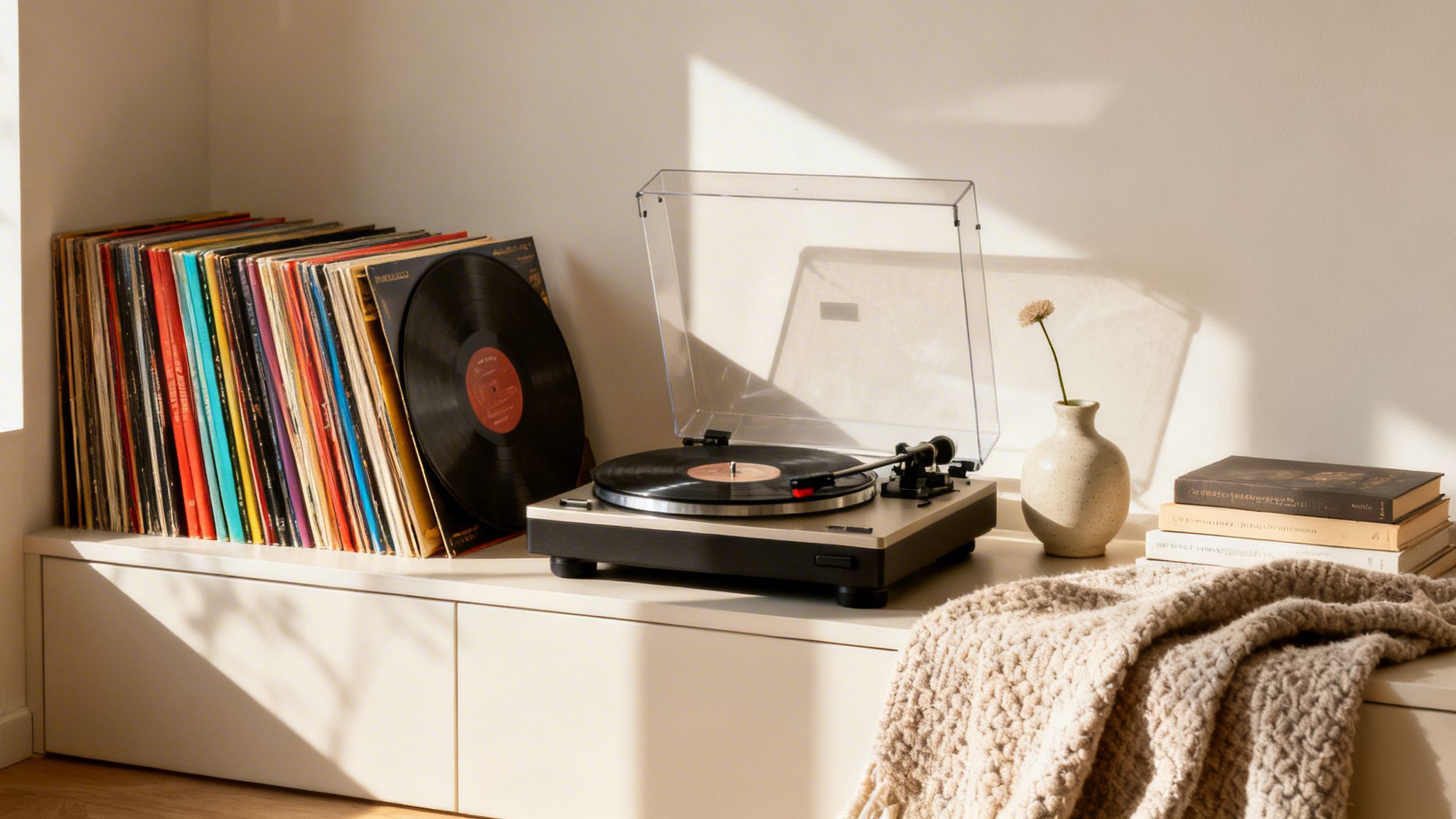
Once your shelves are securely in place, the fun really begins. This is where you move beyond simple storage and start to curate a corner of your home that tells a story, blending your music collection seamlessly with your décor. The art of styling is simply about making deliberate choices that turn a stack of records into a compelling focal point.
You don't need a design degree for this, just a bit of intention. Think of your album covers as individual art pieces and your shelves as a miniature gallery wall. How you arrange them, and what you place alongside them, will define the mood and personality of the entire space.
Your most impactful decision will be which album covers to showcase. Don't just grab the nearest stack—be selective and think like a curator. The idea is to create a visual narrative that is both deeply personal and aesthetically pleasing.
There are a few simple techniques for grouping albums to create a cohesive look:
This trend of using vinyl as décor is seeing a fascinating resurgence across the globe. In Southeast Asia, for instance, collectors are creatively showcasing their music in much the same way one might display unique folk art. With local indie vinyl sales growing by 8% in 2023, enthusiasts in places like Indonesia and Thailand are turning records into stylish home statements. This reflects a broader surge in Asia's recorded music revenue, and you can explore more about how this collector culture is shaping the market in this detailed report on vinyl trends.
A truly great vinyl display rarely features just records. Adding other decorative objects introduces depth, texture, and personality, preventing your setup from looking like a retail rack. The key is to choose items that complement your music and your overall home style.
Think of your display as a "shelfie" waiting to happen. It's a small-scale composition where records are the stars, but the supporting cast of objects makes the entire scene come alive.
Start by "shopping your own home" for items that could work. A small, trailing plant like a pothos can soften the hard lines of the shelves and add a touch of life. A stack of art books or a few vintage paperbacks can provide a different sense of scale and texture.
For a home that values craftsmanship, consider adding pieces that share a similar ethos. For instance, the sustainable, handcrafted nature of a Dalaart Swedish folk art piece, like a classic Dala horse or moose, creates a wonderful contrast next to the glossy finish of an album cover. This blend of modern media and traditional craft builds a space that feels collected, thoughtful, and deeply personal.
Even with the best-laid plans, a few questions always seem to pop up when you’re setting up a new vinyl display. It’s completely normal. To help you feel confident as you get started, I’ve put together answers to some of the most common queries I hear from fellow collectors.
This is a great question, and the answer really boils down to two things: the quality of your shelf and how you’ve attached it to the wall.
For a standard 60 cm (that’s about 24 inches) floating shelf, you can often get away with holding 20-30 LPs—but only if you’ve screwed it directly into the wooden studs inside your wall. That’s the gold standard for a secure foundation.
However, if you're mounting it onto drywall with just wall anchors, you need to be far more conservative. In that scenario, it's much safer to limit the weight to just 10-15 records.
When in doubt, always stick to the manufacturer’s recommended weight limit. It's so much better to use a few extra shelves and spread the load than to risk one overloaded shelf giving way.
Displaying your vinyl can be perfectly safe, as long as you take the right precautions. Your biggest enemies here are direct sunlight, heat, and uneven pressure.
Never, ever place your display where it will be hit by direct sunlight. The UV rays will fade your beautiful album art and can easily warp the vinyl itself. Likewise, keep your records well away from heat sources like radiators or heating vents.
For records you’re displaying vertically, make sure they are standing as upright as possible. If they lean at a sharp angle for a long time, warping is almost guaranteed. Using protective outer sleeves is also non-negotiable; they're essential for guarding the jacket artwork from dust and everyday scuffs.
A narrow picture ledge is a fantastic, minimalist solution for a ‘Now Playing’ display. They’re affordable, incredibly simple to put up, and have a little lip that holds the record jacket securely. Mounting one just above your turntable creates a functional and seriously stylish focal point.
Looking for a solution that doesn't involve any drills? I've got you covered.
Both of these options let you swap out albums in seconds, making it effortless to show off whatever you’ve currently got spinning on the turntable.
Ready to bring a touch of timeless craftsmanship to your home? Explore the authentic, handcrafted collections at Dalaart and find the perfect Swedish folk art piece to complement your unique style. Discover our curated selection.


.svg)


.png)


