February 14, 2026
Nils Johan pieces are far more than just vintage kitchen tools; they are celebrated artefacts from Sweden's golden age of mid-century design. These items, from colourful enamel pots to sleek stainless-steel cutlery, capture a moment when functional beauty was made accessible to everyone. It's no wonder they're so highly sought after by collectors and design lovers today.
Step into any Swedish loppis (flea market) or browse an online vintage shop, and you’ll almost certainly feel the timeless pull of Nilsjohan. These aren't just old pots and pans; they are tangible pieces of Swedish cultural history. Each one tells a story of a nation embracing modernity, practicality, and a new sense of bright-eyed domesticity in the post-war years.
The brand's story is woven into the very fabric of Sweden's "Folkhemmet" or "the People's Home" era. This was a defining period of social progress, built on the belief that well-designed, high-quality goods shouldn't be luxuries for the wealthy, but a part of everyday life. Nilsjohan captured this spirit perfectly.
Nilsjohan’s design philosophy was beautifully straightforward: create items that were durable, efficient, and genuinely pleasing to the eye. They succeeded brilliantly. Their kitchenware quickly became a staple in households all across Scandinavia, designed to be used daily and built to last for generations—a true testament to their exceptional craftsmanship. This blend of robust quality and clean, elegant aesthetics is exactly why these items remain so popular.
The real genius of Nilsjohan was its ability to merge industrial production with a warm, human-centric design. Their products felt modern yet approachable, turning everyday kitchen tasks into moments of quiet satisfaction. This blend of form and function is the core of their lasting legacy.
The company was originally founded way back in 1888 as Nilsson och Johansson, but it truly came into its own as Nilsjohan during the height of the Folkhemmet movement. Spanning from the 1930s to the 1960s, this era championed functional and affordable design for all. By 1955, Nilsjohan’s durable enamelled pots and utensils could be found in an estimated 70% of Swedish households, cementing its status as a cultural icon. You can read more about the brand's historical significance and its deep roots in Swedish society.
This incredible adoption rate turned the brand from a simple manufacturer into a cultural touchstone—as quintessentially Swedish as the Dala horse. Today, collectors and home cooks alike continue to seek out Nils Johan produkter, not just for their retro charm, but for the enduring story of quality and innovation they represent.
Spotting a genuine Nilsjohan piece in the wild can feel like a real treasure hunt, and knowing what to look for is your map. Authenticity goes way beyond a simple logo; you’ll find it in the specific stamps, the quality of the materials, and the tiny design details that separate a true find from a clever imitation. Building this knowledge is what turns you from a casual browser into a confident collector.
Your first and most important clue is always the maker's mark. Most authentic pieces are stamped on the bottom, and this mark actually evolved over the decades. Learning to recognise these subtle variations not only helps you verify an item but also gives you a pretty good idea of its production era.
This visual guide shows the direct line from Sweden's cultural identity to the creation of these beloved household items.
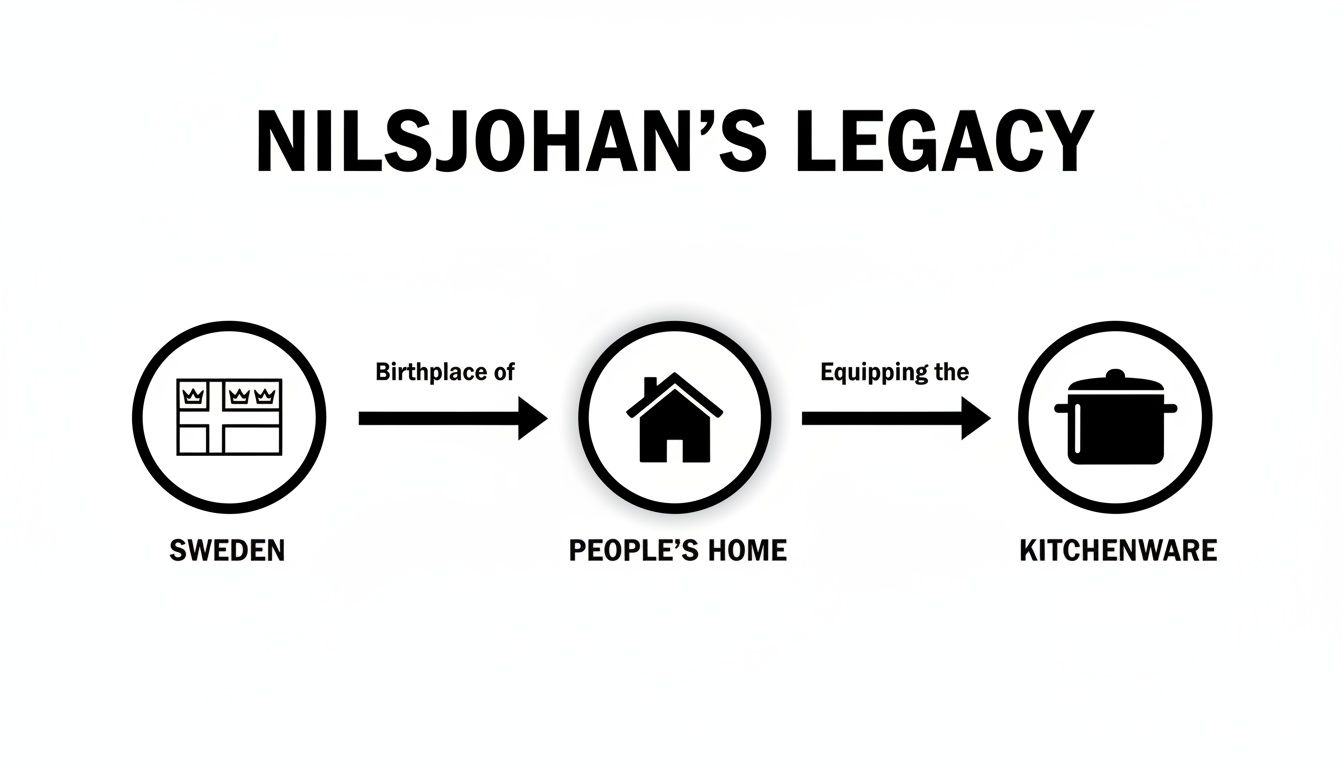
As the chart shows, Nilsjohan’s legacy grew directly from its Swedish roots, becoming a key part of the "People's Home" ideal by putting functional, well-designed ware in everyday kitchens.
The most common stamp you'll see is the simple, elegant "Nilsjohan" text, often joined by "SWEDEN" or "STAINLESS 18-8 SWEDEN." Pay close attention to the font and its placement, as these are crucial identifiers.
A blurry, poorly defined, or misspelled stamp is almost always a red flag. Genuine marks are typically crisp and clearly impressed right into the metal.
Beyond the stamp, the materials themselves tell a story of authenticity. Nilsjohan built its reputation on durability, and you can truly feel it in the weight and solid construction of their products. This hands-on inspection is a vital part of the process, especially when a stamp is faded or missing altogether.
One of the most reliable tests for a genuine Nilsjohan piece is its substantial feel. The company used heavy-gauge stainless steel that feels solid and balanced, never flimsy or lightweight. This commitment to quality material is a hallmark you can literally feel in your hands.
Think about the handles, too. Many iconic designs used Bakelite, a dense, early plastic that feels much more solid and weighty than modern plastics. If a handle feels light, hollow, or cheap, chances are it's not an original.
For those interested in Swedish craftsmanship, you might also enjoy our guide on identifying authentic Gabriel Keramik stoneware, another classic brand from the region. By combining your visual inspection of the marks with a tactile assessment of the materials, you’ll quickly develop a reliable sense for spotting the real deal.
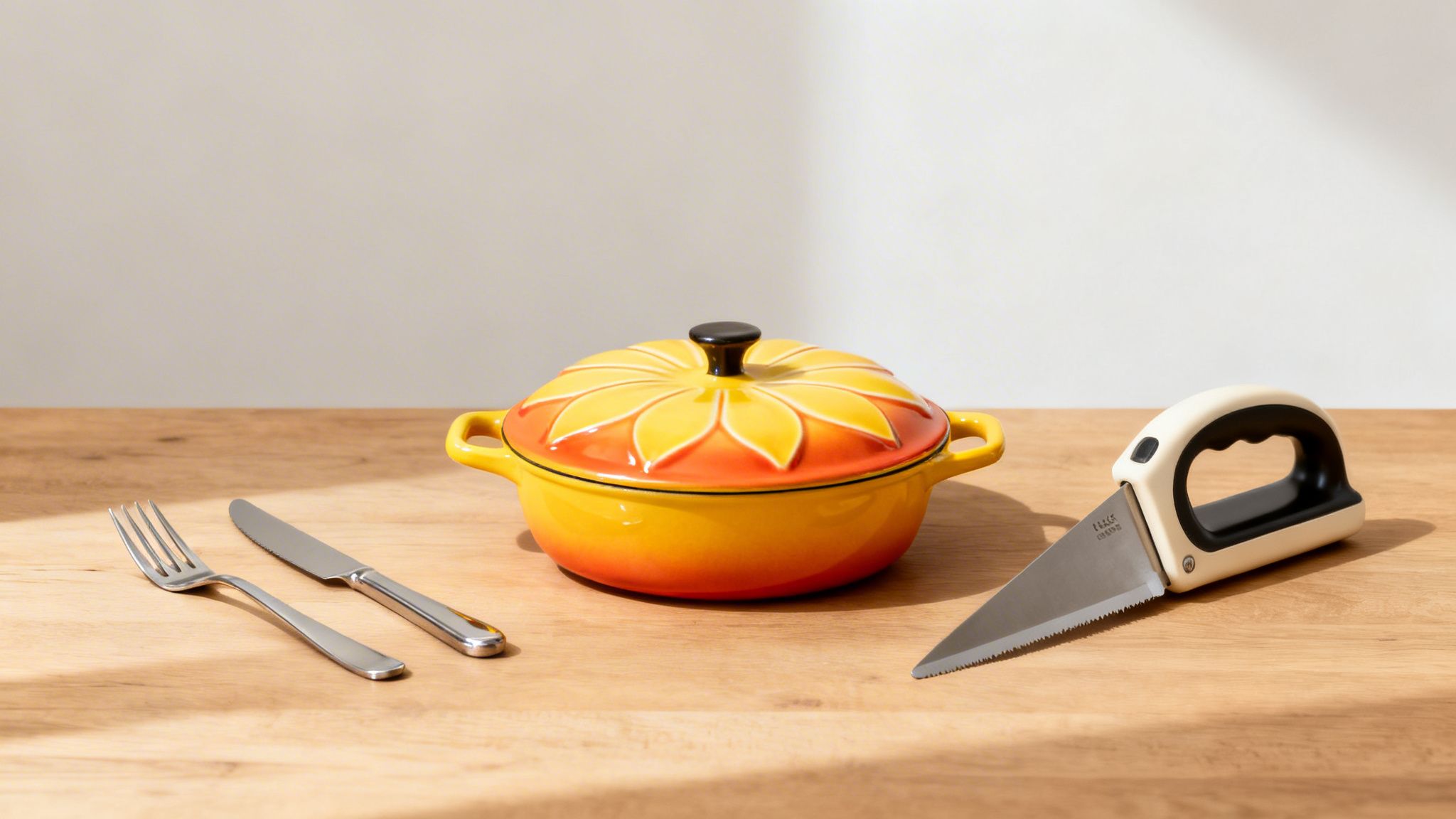
While the brand made a huge range of brilliant kitchenware, a few special designs really captured the public’s imagination and became household heroes. These are the Nils Johan produkter that defined an era, blending clever problem-solving with the clean lines of Scandinavian design.
They weren't just tools; they were elegant solutions that made daily life a little easier and a lot more beautiful. Rather than just making a list, let's look at what made these pieces so special and why they’ve stuck around. It's this ingenuity that turned everyday objects into icons of form and function that are still celebrated today.
If there's one product that screams Nilsjohan, it has to be the ‘Hollywood’ cutlery set. Designed in-house by the company's own artists, this set became the go-to choice for modern Swedish homes in the mid-20th century. Its success was no accident.
The design featured sleek, unadorned lines and a satisfying weight in the hand, striking the perfect balance between elegance and everyday practicality. Made from high-quality stainless steel, it was tough enough for daily use but still looked sharp enough for a special dinner. It was the embodiment of the Folkhemmet ideal: premium design made for everyone.
The pure cleverness of Nilsjohan really shines with the ‘Sissi’ slicer. For anyone who has ever battled to cut a perfectly even slice of bread or cheese, this device was an absolute game-changer. It took on a simple, universal kitchen headache with an incredibly effective design.
The ‘Sissi’ had a sturdy base and an adjustable guide, letting you set your desired thickness for consistently perfect slices, every single time. This simple mechanism took all the guesswork and frustration out of the task. It flew off the shelves because it was a perfect example of Nilsjohan’s philosophy: find a common problem and solve it with an intuitive, well-built tool that looks great on the counter.
While stainless steel was a company staple, Nilsjohan also knew how to embrace colour with its iconic enamelware, most famously the ‘Lotus’ series. The cheerful pattern of stylised lotus leaves, designed by Norwegian artist Arne Clausen, brought a pop of optimistic colour to kitchens all across Scandinavia.
The enduring appeal of the Lotus pattern lies in its joyful simplicity. It was a departure from purely utilitarian cookware, proving that functional items could also be decorative and expressive. This fusion of practicality and personality is why Lotus pieces are some of the most sought-after Nils Johan produkter for collectors today.
This series covered a huge range of items, ensuring you could have a cohesive and vibrant look throughout the kitchen:
Each piece in these iconic lines shows how Nilsjohan excelled at creating products that were not just objects, but trusted companions in the heart of the home. They solved problems, added beauty, and were built with a quality that has allowed them to be cherished for generations.
So, you're ready to start or expand your collection of Nils Johan produkter? Fantastic! Finding these vintage Swedish gems is a thrilling adventure, whether you're digging through dusty market stalls or browsing online from your sofa. The secret is knowing where to look and what to look for.
The most authentic way to hunt is, without a doubt, at a Swedish loppis, or flea market. These bustling markets are a cultural institution, packed with everything from furniture to kitchenware, often at incredibly fair prices. But if a trip to Sweden isn't on the cards, the internet is your best friend.
Your search for that perfect Nilsjohan piece can take you to some wonderful places, both online and in the real world. Each offers a completely different kind of treasure-hunting experience.
If you're new to the Swedish online marketplace, it can feel a bit daunting. We've put together a handy guide on how to use eBay's Swedish counterpart, Tradera, to find amazing deals. It will open up a whole new world of collecting for you.
What makes one Nilsjohan coffee pot more sought-after than another? It usually boils down to a mix of four key things that every smart collector learns to spot. Getting a feel for these elements helps you know what a fair price is and make great additions to your collection.
The real value of a vintage piece isn't just its price. It’s the story, the condition, and its rarity all rolled into one. A complete set in a rare colour, even with a little wear, can be far more desirable than a single, common item in perfect shape.
This balancing act is what makes the hunt so compelling. Condition is king—look for minimal scratches, solid handles, and no chips in the enamel. Rarity is a huge factor, too; less common designs or colours will naturally fetch higher prices. Finally, completeness is a game-changer. A full 'Hollywood' cutlery set or a 'Lotus' casserole with its original lid will always be worth more than the individual parts.
There is absolutely no right or wrong way to build a collection of Nils Johan produkter. Let your personal taste and what you want to achieve guide your search. You might decide to focus on one single product line, like the cheerful 'Lotus' enamelware, and try to find a piece in every colour.
Or maybe you’d rather build a collection around a particular designer's work or a colour scheme that fits your home's decor. Some collectors stick to stainless steel items, while others hunt for the brand's more unusual gadgets and tools. At the end of the day, the best collection is the one that brings you joy.
When you own a piece of design history like a Nilsjohan item, you also take on the wonderful role of its caretaker. Proper care is all about preservation, ensuring these Swedish treasures can be enjoyed for generations to come. You want them beautiful enough to display, but durable enough for everyday life. The secret lies in gentle, effective techniques that protect their integrity and value.
The good news? Most Nilsjohan pieces were truly built to last. Still, different materials need different approaches to keep them looking their absolute best. Harsh, abrasive cleaners and aggressive scrubbing are always off-limits—they can cause irreversible damage to these classic designs.
Stainless steel, the backbone of so many Nils Johan produkter, is incredibly resilient, but it isn't invincible. Restoring its signature shine without adding fine scratches is simpler than you might think.
Enamelware, like the famous Lotus series, needs an even gentler touch to prevent chips and keep its colours vibrant. Avoid sudden temperature changes; never plunge a hot pot into cold water, as this can cause the enamel to crack. If you have baked-on food, let the item soak in warm, soapy water instead of scraping it with metal utensils.
Think of the enamel coating as a layer of glass fused to metal. Just like glass, it’s strong but can be brittle. Protecting it from impact and extreme temperatures is the single most important part of its care.
Often, the most delicate parts of a vintage Nilsjohan piece are the handles. Bakelite, an early type of plastic, can become brittle over time, while wood is prone to drying out and cracking.
Looking after these components is crucial. Never soak items with wood or Bakelite handles in water, and definitely keep them out of the dishwasher. After washing, wipe the handles dry immediately. To bring back the lustre to a dull wooden handle, you can occasionally rub in a small amount of food-safe mineral oil. These principles of gentle care often apply to other Swedish collectibles, too, like those in our guide to Höganäs Keramik stoneware. By following these simple steps, you can confidently protect the charm and function of your entire collection.
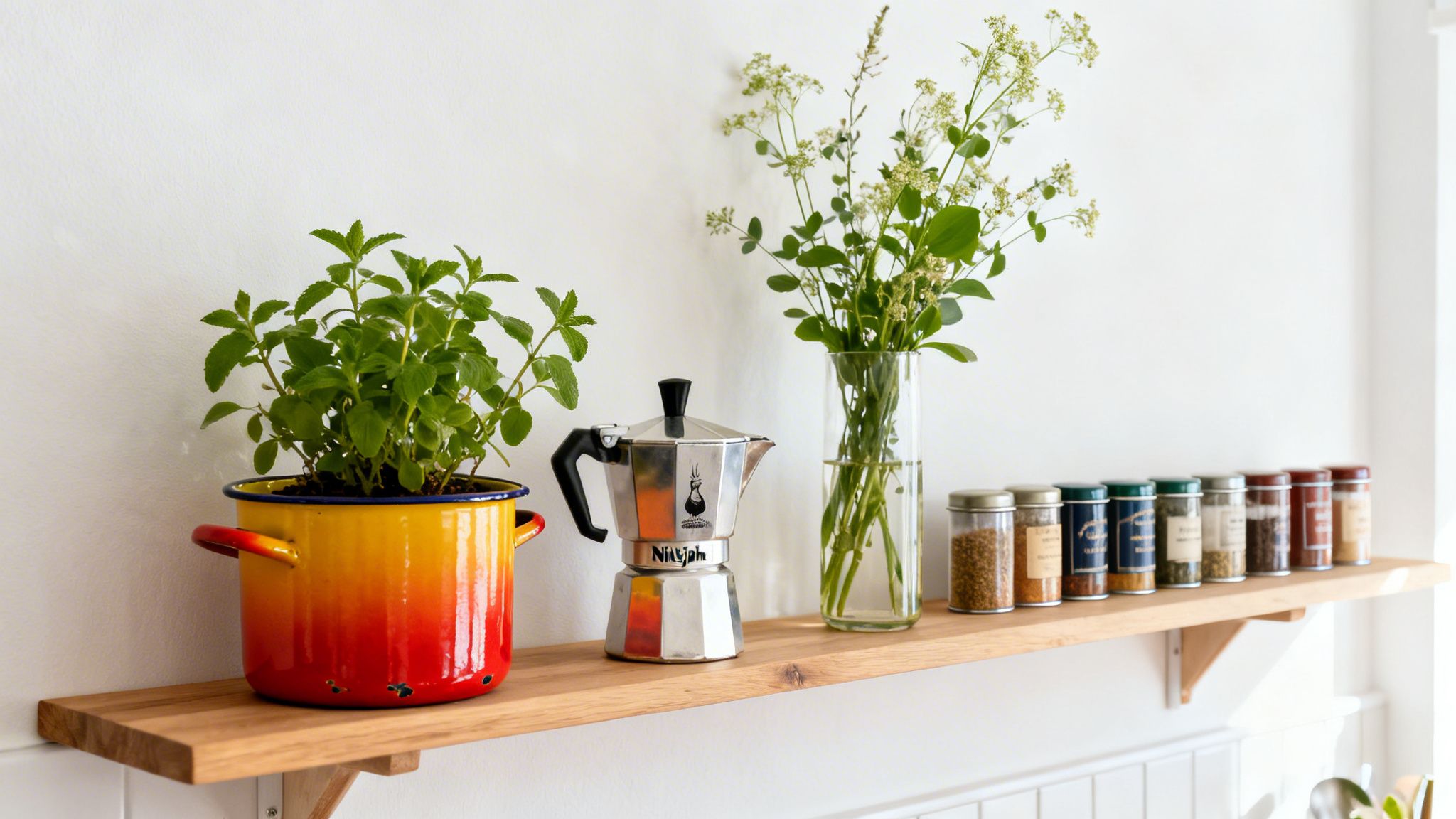
Your collection of Nils Johan produkter deserves to be seen, not hidden away in a cupboard. These pieces are far more than just well-made kitchenware; they are decorative objects brimming with a unique story and a touch of Swedish charm that can light up any contemporary home. The trick is to start thinking of them as functional art, bridging the gap between their original purpose and a new aesthetic role.
By weaving them into your daily décor, you’re not just displaying them. You’re celebrating their design history while giving them a fresh, modern purpose and turning your collection into a dynamic part of your home's personality.
One of the great strengths of Nilsjohan designs is their clean, simple lines, which allow them to mix so beautifully with various interior styles. Whether your home is minimalist, eclectic, or rustic, these pieces add a wonderful layer of warmth and character.
The real goal here is to create a dialogue between the old and the new, letting that classic Swedish design complement your modern pieces.
Think of styling your Nilsjohan items as a creative conversation between past and present. The piece’s history enriches your modern space, and your modern space gives the vintage item a vibrant new context. It’s a beautiful way to honour craftsmanship.
Getting creative with your Nilsjohan finds is where the real fun begins. Repurposing these items allows their design to shine in completely unexpected ways, turning everyday objects into unique decorative accents that are sure to draw attention.
Why not use a sleek stainless steel coffee pot as an elegant vase for a simple bouquet of flowers? You could also transform a colourful enamel bowl into a chic planter for a succulent or an indoor herb. The possibilities are truly endless, letting you infuse every corner of your home with a touch of timeless Scandinavian style and ingenuity.
As you start exploring the wonderful world of vintage Scandinavian design, it's only natural to have a few questions pop up. Whether you're just starting your collection or have been at it for years, getting to grips with the finer points of Nils Johan produkter can sometimes be a puzzle.
We've listened to the chatter in online collecting groups and browsed the stalls at antique markets to bring you clear, straightforward answers to the questions we hear most often. Think of this as your friendly guide to collecting with confidence.
Absolutely. For the most part, Nilsjohan’s stainless steel and enamel pieces are perfectly safe to use in a modern kitchen. The most important thing is to check their condition. Give each item a good look-over for any deep scratches, rust spots, or chips in the enamel where bacteria might hide.
A little heads-up for pieces with those classic Bakelite handles: it's best to keep them out of very hot ovens, as the material can get brittle over time. And to keep them looking their best, hand-washing is always recommended over the dishwasher.
This is a great question, as both are titans of Swedish stainless steel. The real difference comes down to their focus. Nilsjohan truly cornered the market on practical, everyday kitchenware. Their colourful enamel pots and clever gadgets were designed for the family home—functional, cheerful, and accessible to all.
Gense, on the other hand, often aimed for a more high-end market, particularly in their early days. They became known for their architect-designed cutlery and elegant, formal tableware that you might see at a fine dinner party.
Figuring out what your piece is worth comes down to three things: how rare it is, what condition it's in, and how many people are looking for it right now. A great starting point is to look up completed sales on online auction sites. Search for your specific item and pay close attention to the final selling price of pieces in a similar condition to yours—this will give you a realistic idea.
If you think you have something particularly rare or special, it might be worth getting a professional appraisal from a shop that specialises in vintage Scandinavian design.
At Dalaart, we celebrate the timeless beauty and craftsmanship of Swedish design. Explore our curated collection of authentic, handcrafted treasures from the heart of Sweden. Find your piece of Scandinavian heritage today at Dalaart.


.svg)


.png)


