May 28, 2026
You're standing in front of a blank wall, holding a framed print in one hand and a cup of coffee in the other, and the room still feels unfinished. The paint is fine. The furniture works. But the space doesn't say anything about you yet.
That's where wall decals and stickers become useful. They can soften an empty corner, bring rhythm to a hallway, or build a backdrop that makes a shelf of handmade objects feel intentional instead of scattered. For renters, they offer a lower-commitment way to decorate. For homeowners, they're a fast way to test an idea before committing to paint or wallpaper.
What makes them especially appealing is that they're not only decorative. Used well, they work like visual storytelling tools. A line of birds above a bed changes the mood of the room. A cluster of botanical motifs behind a reading chair can make that corner feel like its own little world. And when you pair them with folk pieces, carved wood, ceramics, or textiles, they can help every object around them feel more rooted and expressive.
A room can be fully furnished and still feel like it has no setting. The sofa sits in place. The lamp glows. A shelf holds objects you love. Yet the wall behind them stays silent, so the whole arrangement feels a little untethered.
Wall decals and stickers help give that arrangement a backdrop. Instead of changing the entire room with paint or wallpaper, you can add a layer that frames what is already there and tells the eye how to read the space.
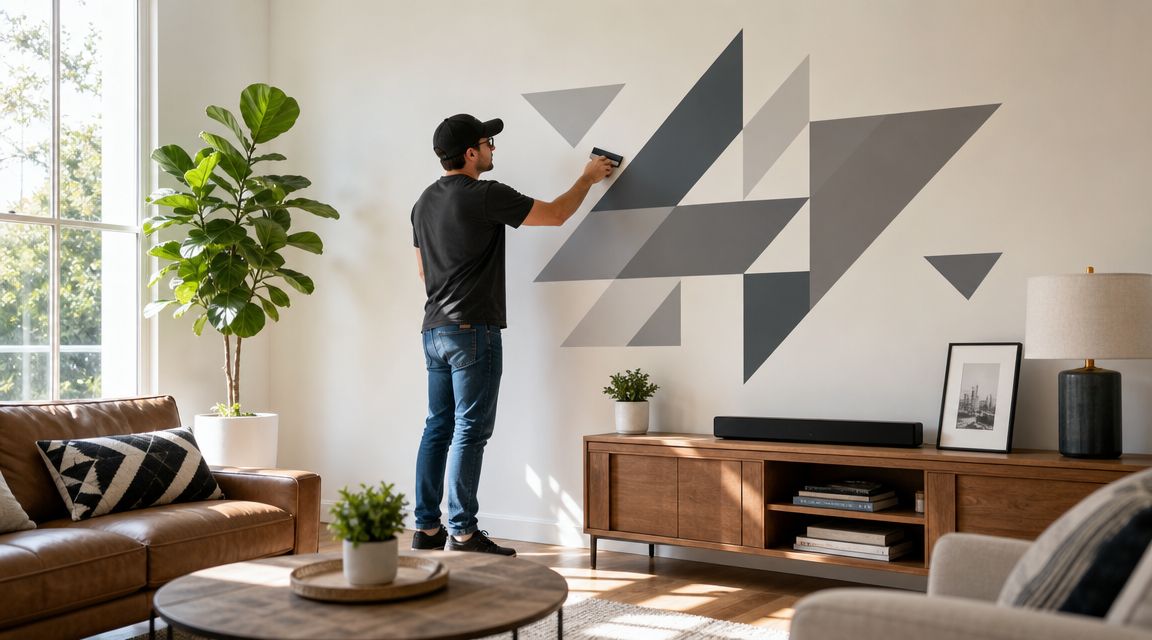
The most satisfying walls usually do one quiet job well. They support the objects in front of them.
A decal works a bit like stage scenery in a small theatre production. The painted forest at the back is not the star, but it helps every prop and character make sense. In the same way, removable wall art can turn a plain shelf into a vignette, or help a small collection feel curated rather than casually placed.
This matters even more if you decorate with handmade pieces. A bright Dala horse, a woven runner, a carved wooden bowl, or a ceramic lamp already carries history and personality. The wall behind those objects can either flatten that story or deepen it. A few restrained motifs can give them a setting that feels intentional.
A wall decal does its best work when it gives treasured objects a visual home.
For example, if you display colorful Dala horses on a narrow shelf, a decal of fine grey branches behind them can suggest a winter woodland backdrop. The horses stay the focus, but the wall helps explain their presence. If your room has a softer folk style, small repeating stars or simple floral lines can echo the language of painted wood and stitched textiles without crowding them.
Removable wall art changes perception faster than many larger decor purchases because it alters the background plane of the room. That sounds technical, but the idea is simple. Your eye reads the wall first as a field of color and shape, then judges the furniture and objects against it.
Change the background, and the same lamp, bench, or shelf can feel calmer, warmer, or more playful.
That is why these pieces are useful for small styling experiments. You might place a soft arch behind a hallway table to make a vase and mirror feel grouped together. You might add a loose botanical arrangement near a reading chair so that corner feels finished. You might use a modest pattern around folk art or carved ornaments to connect separate objects into one story.
For renters, that flexibility lowers the stakes. For homeowners, it offers a practical way to test a visual idea before committing to something more permanent. Either way, the goal is not to cover every blank surface. It is to give the room a setting that makes your favorite pieces, especially handmade ones, feel seen.
People often use the two words as if they mean exactly the same thing. In casual conversation, that's fine. When you're shopping or planning a room, the difference matters.
The simplest way to think about it is this. A decal is like a temporary tattoo for your wall. A sticker is more like a classic peel-and-place label. Both can decorate a surface, but they usually behave differently in your hands and on the wall.

A wall decal is usually cut from a sheet of vinyl into a specific shape, word, or motif. Instead of peeling up one thick piece with a printed border, you often transfer the design itself onto the wall. That gives decals their clean, painted-on look.
If you buy a branch silhouette, for example, the branch is the part that stays. There may be no obvious background around it once it's applied. That's why decals tend to look more integrated with the wall.
They're especially good for:
A wall sticker is usually more direct. You peel the backing and place the whole piece where you want it. If the design is a rainbow, star, animal, or flower, the sticker often includes the full printed shape as one unit.
That makes stickers friendly for quick decorating. They're easy to understand at a glance, which is why they're popular in children's rooms, playrooms, and casual accent walls.
They're often suited to:
Practical rule: If you want the design to look almost built into the wall, start by looking at decals. If you want easy-to-place decorative pieces, start with stickers.
The vinyl sticker category is established and growing. One projection put the global vinyl sticker market at USD 0.62 billion in 2026 and USD 1.01 billion by 2035, as noted in vinyl sticker market projections from Business Research Insights. That doesn't tell you which style to buy for your hallway, but it does confirm that these products are part of a steady personalisation market, not a passing fad.
For your home, the better question is less about labels and more about finish. Do you want something graphic and integrated, or something playful and direct? Once you answer that, the shopping process gets much easier.
A lovely design can still fail if the material doesn't suit the wall behind it. Many people get frustrated at this point. They choose by appearance first, then discover that their textured paint, old plaster, or cool hallway wall behaves very differently from the smooth showroom wall in the product photo.
In Sweden, that question matters for practical reasons as much as aesthetic ones. About 35% of households lived in rented dwellings in 2023, which makes removability and surface performance especially relevant, as noted in this discussion of rental-friendly wall decal concerns. If you're renting, you're not only asking, “Will this look good?” You're also asking, “Will it come off cleanly?”

Smooth painted walls are the easiest surface for most wall decals and stickers. They allow the adhesive to make even contact, which helps the design stay flat and neat.
Older interiors can be trickier. Limewash, uneven plaster, heavily matte paint, and textured walls create tiny highs and lows across the surface. A decal may grip well in one spot and lift in another. On those walls, the issue isn't usually the design. It's the contact.
If your home has characterful imperfections, treat wall decor like choosing shoes for cobblestones instead of a polished floor. Some materials cope better with irregularity.
Here's a practical way to think about materials before you buy:
A small test often saves far more frustration than trying to rescue a full feature wall later.
Material choice also depends on the room's daily life.
A hallway wall gets brushed by bags and sleeves. A child's room may invite touching and peeling. A bathroom introduces moisture. A calm guest room usually places fewer demands on the surface.
That's why the same star pattern can work beautifully in one room and fail in another. The design hasn't changed. The environment has.
On a difficult wall, the smartest decorating choice is often the most forgiving material, not the most dramatic design.
For tiled areas, it also helps to think beyond standard painted walls. If you're planning a kitchen splashback accent or a bathroom detail, this guide to using decals for tiles can help you think through placement and suitability in a more surface-specific way.
Some people stop at “What should I buy?” The more interesting question is “What kind of feeling do I want this wall to create?” That's where wall decals and stickers become more than accessories.
A room with good styling usually has a focal point, a rhythm, and a sense of personality. Wall decor can contribute to all three. It can frame furniture, echo shapes already in the room, or create a quiet backdrop that lets special objects stand out.
One approach is gentle repetition. A wall of small scattered motifs, such as leaves or dots, creates movement without becoming heavy. This is especially effective in bedrooms, nurseries, and corners that need softness rather than drama.
Another is single-placement emphasis. One large decal above a bed, sideboard, or desk acts almost like a mural. It can anchor the room the way a headboard or oversized artwork would.
The third is framing by suggestion. Instead of filling the entire wall, place motifs around the edge of a shelf, mirror, or reading nook. That creates a visual zone and makes everyday objects look curated.
The same decal can look sparse, airy, or wallpaper-like depending on how you place it. A useful rule of thumb is to leave 8 to 12 inches between small-to-medium decals, and a wall measuring 11 ft × 9 ft may need around 130 decals for full coverage, according to this wall decal spacing guide from UW Decals.
That's a practical decorating lesson as much as a shopping one. More spacing creates calm. Tighter spacing creates immersion.
If you're styling by eye, keep asking yourself one question: do you want accents, or do you want atmosphere?
The most memorable rooms often pair wall decor with meaningful objects. A shelf of carved animals, a row of folk ceramics, or inherited wooden pieces can feel isolated on a blank wall. Add a subtle visual backdrop and the whole display suddenly makes sense.
For Scandinavian folk pieces, try ideas like these:
This kind of styling works because it gives handmade items a setting. A treasured object shouldn't look stranded. It should look at home.
When you decorate around a handcrafted piece, think like a stage designer. The backdrop should support the character, not steal the scene.
If you enjoy layered walls with depth and sculptural interest, this article on 3-D wall art offers useful contrast to flat decals and can spark ideas for mixing dimensions in one room.
The best design in the world won't rescue a rushed application. Most problems start before the decal even touches the wall. Dust, grease, and tiny particles interfere with adhesion, which is why manufacturers stress proper cleaning before installation. Smartpress notes in its wall decal installation guidance that the surface should be free of dirt, dust, grease, and debris because those contaminants weaken the bond.

You don't need specialist equipment. A microfibre cloth, low-tack tape, a pencil for light marking, and a smoothing tool such as a squeegee or even a bank card wrapped in soft cloth will do the job.
Follow this order:
Smartpress also recommends smoothing with a hand applicator or rubber roller to push out trapped air, because bubbles reduce contact area and weaken the seal. That simple detail is why patient application beats speed.
Here's a visual walkthrough if you prefer seeing the process in action.
Most application mistakes come from one of three habits:
If you're applying a large botanical decal or arch shape, work in sections. Don't peel away all backing paper at once unless the product instructions clearly support that method.
Peel slowly, smooth slowly, and let the adhesive do its job. Most wrinkles are created by haste, not by the product itself.
Removal worries many renters more than application does. The safest approach is gentle and patient. Start at a corner, peel slowly, and avoid yanking. If the adhesive resists, warming the area lightly with a hairdryer can help soften the bond.
Keep the pull angle low rather than tugging straight outward. That puts less stress on the paint surface. If any residue remains, use a mild cleaner and a soft cloth rather than scraping.
Older paint, poorly prepared paint, or already damaged walls can still behave unpredictably. If the wall has a fragile finish, test a hidden area first. That small caution matters more than any “removable” label on the packaging.
Beyond the quickest decorative fix, you can choose wall decor that reflects your values as well as your style.
A good decal works like a background in a stage set. It should support the pieces you care about, not compete with them. If you collect handmade objects, this matters even more. A custom wall motif can frame those treasures and help the whole arrangement tell one story instead of feeling like separate items placed on the same wall.
Sustainability starts with reading product details carefully. Labels such as “eco-friendly” sound reassuring, but they rarely explain much on their own. Clear material information is more useful because it tells you what will be touching your walls and living in your room.
Look for details such as:
There is also a practical side to sustainable decorating. A decal you choose with care, keep for years, and style around existing furniture is often a better choice than repeatedly buying impulse decor that quickly loses its charm.
Custom wall decor becomes especially meaningful when it connects your wall to family history, regional craft, or objects with a handmade soul. For example, you could create a custom decal based on a traditional kurbits painting motif to frame a collection of authentic Dala horses. The decal becomes the visual folklore around the objects, almost like the painted border around an old storybook page.
That approach helps solve a common styling problem. Handcrafted pieces can look isolated when they sit against a blank wall with no visual context. A custom decal gives them context. It can echo the curves, colors, or folk-art rhythm of the objects nearby, so the display feels intentional and personal.
If you want to design your own piece, keep the shapes bold and the details selective. Walls read designs from a distance. Fine lines that look lovely on paper can disappear once scaled up, while simple silhouettes and repeated motifs hold their character.
For rooms layered with textiles, carved wood, ceramics, and folk art, surface variety helps. A wall does not need to do all the work alone. This guide to a macramé wall hanging offers another way to pair peel-and-stick art with texture, softness, and handmade character.
If your home includes artisanal objects, custom wall decals can do more than decorate. They can build a setting that honors what you already love.


.svg)


.png)


