April 21, 2026
On a pine table in a Stockholm flat, a white fluted plate can look as at home beside a striped linen napkin as it does next to a hand-painted Dala horse. That quiet flexibility is part of why Royal Copenhagen White Fluted has become such a beloved Scandinavian classic.
At many Nordic tables, the most memorable object is not the brightest one. It is the plate that settles the whole scene. Royal Copenhagen White Fluted has that effect. Set it beside rough linen, pale wood, or a small painted Dala horse, and the room feels more composed without losing its warmth.
That balance helps explain its place in Scandinavian homes. Danish design often prizes clarity of form. Swedish interiors often bring in colour, craft, and a sense of lived welcome. White Fluted sits comfortably between those instincts. It is disciplined, but never cold.
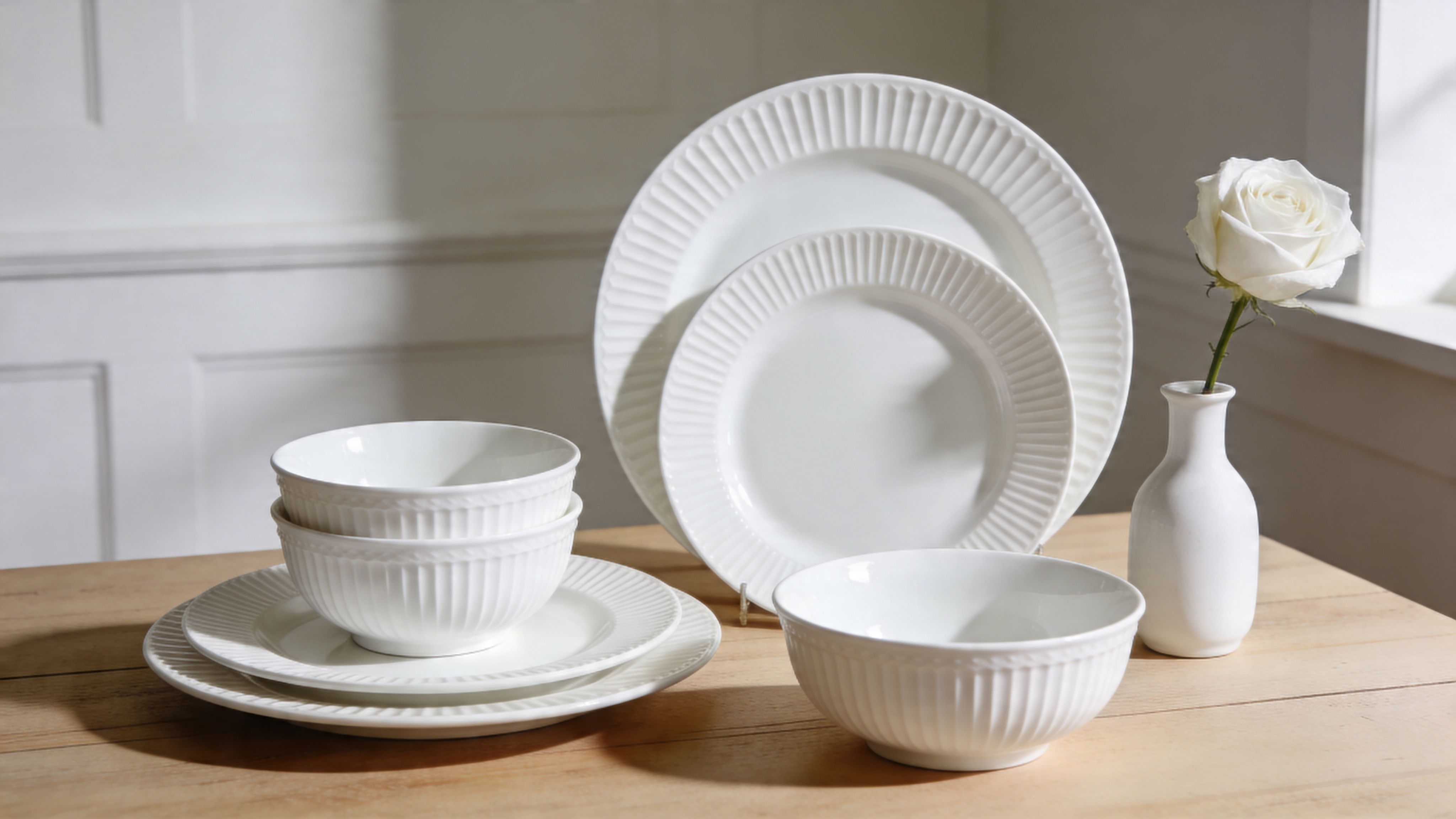
The appeal begins with structure.
Its surface is defined by flutes, the vertical ridges that catch light and create soft shadow across the porcelain. On a plain white plate, those ridges do the work that painted decoration would do elsewhere. They give the object rhythm, texture, and a sense of movement, yet the overall impression stays calm.
This is a familiar Scandinavian idea. A chair does not need carving on every surface if the line of the backrest is already beautiful. In the same way, White Fluted relies on proportion and surface rather than display. That is why it pairs so easily with other Nordic elements, from Danish oak furniture to Swedish folk pieces with more colour and personality.
Placed near a red or blue Dala horse, the porcelain acts almost like a quiet wall around a small painting. It gives the eye a place to rest, which makes the hand-painted object look even more alive.
White Fluted feels contemporary, but it belongs to a much older design lineage. The White Fluted Plain collection was introduced in 2003, and its form comes from Blue Fluted Plain, one of Royal Copenhagen’s earliest and most enduring designs. If you want to see how the painted original compares with the white version, our guide to Royal Copenhagen Blue Fluted offers a useful point of reference.
That heritage matters because it explains why White Fluted has such presence even without colour. The shape was never an afterthought. It was strong from the beginning.
Royal Copenhagen’s identity also rests on a long Danish tradition of porcelain making, including the familiar mark of three wavy lines that refers to Denmark’s waterways. You do not need to study factory history to feel that continuity, but it helps explain the confidence of the design. The pieces feel settled in their proportions because they come from a form refined over generations.
White porcelain is often described as the simpler option, but that description can flatten what makes this collection compelling.
White Fluted shows the pattern in its bare structure. The fluting becomes ornament. The rim and contour carry the visual interest. Light does the rest. What you notice is not absence, but concentration.
That is one reason it speaks so clearly to Scandinavian taste. The region has long valued objects that are useful, durable, and expressive. White Fluted follows that tradition with unusual grace.
A few qualities make this clear:
The attraction is not only visual. It is also ritual.
White Fluted suits the moments that define a home. Coffee near a winter window. Open-faced sandwiches at lunch. Cake set out for guests. A weekday supper that feels more considered because the plate beneath it has shape and weight.
In that sense, royal copenhagen white fluted belongs to a broader Scandinavian understanding of domestic life. The home is not just a place to store beautiful things. It is where beauty supports use, memory, and hospitality. That is also why the porcelain works so well in interiors that mix Danish design with Swedish folk art. The porcelain brings order. The folk object brings story. Together, they create a Nordic interior that feels collected rather than staged.
Even a single bowl or plate can carry that language into a room. It brings in centuries of Danish form, then makes space for the rest of the home to speak.
Once you know the history, the next challenge is visual. Many people can recognise Royal Copenhagen at a glance, yet still hesitate when asked to identify the exact White Fluted variation. That’s understandable, because the family is unified by one underlying language of flutes, rims, and proportion.
The easiest way to read it is to focus on the edge first. The centre of the piece often stays calm. The rim tells you which branch of the family you’re holding.
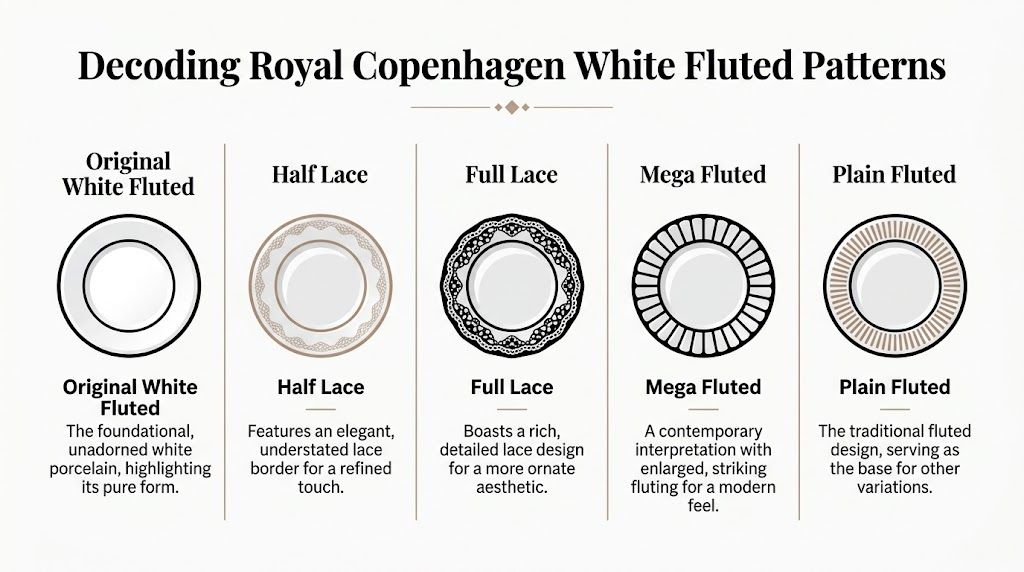
White Fluted Plain is the purest expression of the form. You see the classic flutes and the graceful silhouette, but no lace border interrupts the outline. The effect is clean, architectural, and almost meditative.
This is often the best starting point for someone who wants the Royal Copenhagen look without formality. It’s also the variation that integrates most easily into a mixed Scandinavian interior, especially one with oak, birch, wool, and painted wooden accents.
Half Lace introduces decoration at the rim, but in a measured way. The border feels like the porcelain equivalent of fine embroidery on a linen cuff. It softens the edge without overwhelming the plate.
For many collectors, Half Lace is the bridge between minimalism and ornament. It still reads as light and usable, yet there’s a little more ceremony in the hand. If Plain is the everyday white shirt, Half Lace is the same shirt with delicate detailing at the collar.
A useful comparison appears in Dalaart’s piece on Royal Copenhagen Blue Fluted, where the relationship between shape and decoration becomes easier to see.
Full Lace is the most elaborate member of the core white family. Here the border becomes openwork, hand-carved and visually airy, like antique lace translated into porcelain. On lidded pieces, details such as snail shells and baroque masks make the craftsmanship more explicit, as described in Royal Copenhagen’s historical overview of the collection family.
Some readers find the visual impression misleading. Because the porcelain is white, Full Lace can still look restrained in photographs. In person, though, it’s unmistakably richer. The shadows cast by the pierced edge create depth that plain rims don’t have.
Practical rule: If the rim reads as smooth, you’re likely looking at Plain. If it’s ornamented but still mostly solid, think Half Lace. If the edge feels pierced and lace-like, you’re in Full Lace territory.
A quick way to identify the family is to examine three points in order:
Many people discover that they don’t need to choose only one. Plain can anchor everyday meals, while Half Lace or Full Lace can appear on a festive table. Because the family shares a common visual language, the pieces usually speak to one another gracefully.
Turn a piece of Royal Copenhagen over and the underside becomes a small lesson in origin. There, porcelain stops being only decorative and starts speaking in symbols. For collectors, the backstamp is often the difference between a pleasant white plate and an object with traceable identity.
White Fluted can look deceptively simple from above, so the marks underneath matter. They ground the piece in a maker, a place, and a tradition.
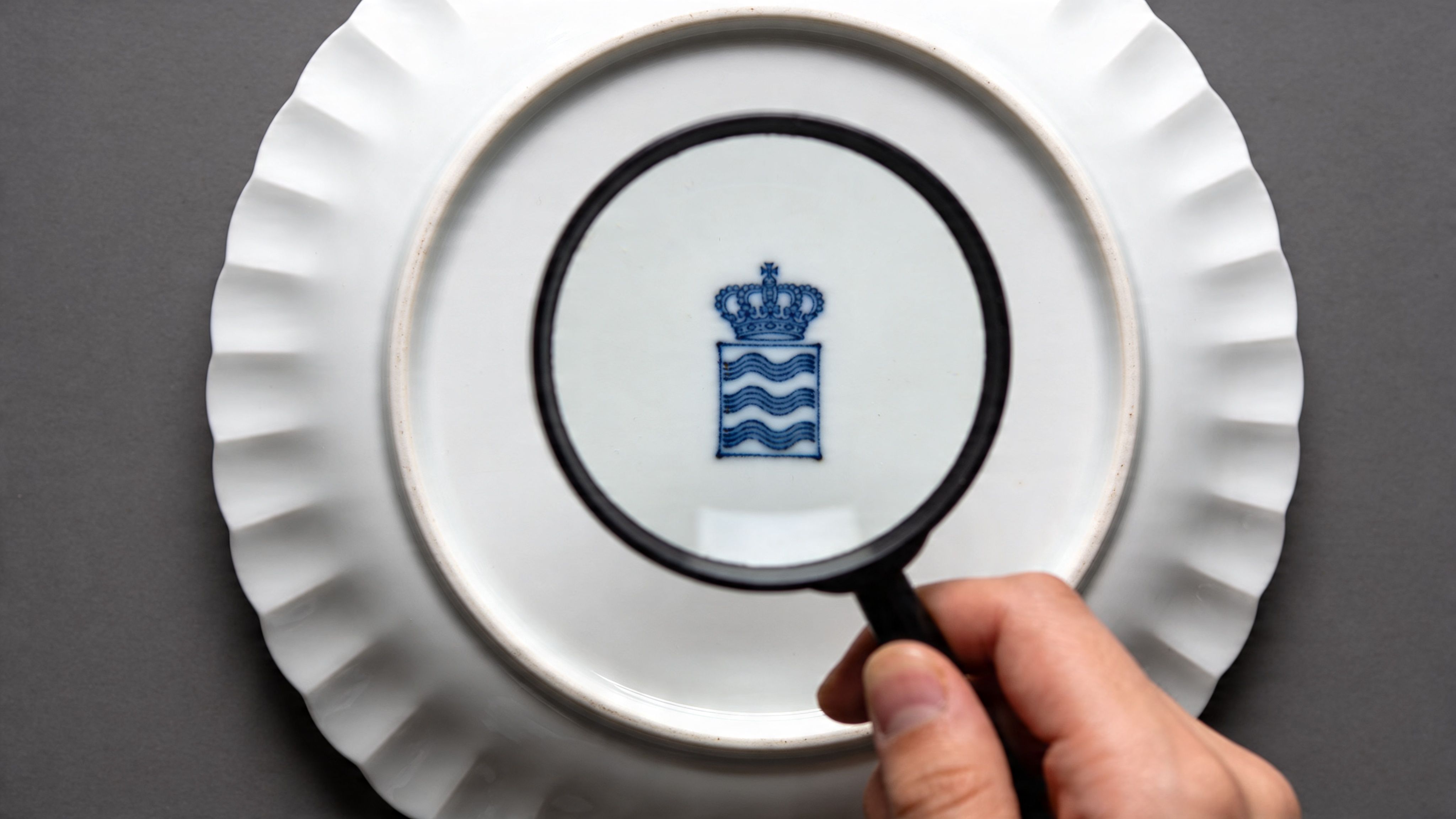
Start with the widely recognised mark. Royal Copenhagen uses three wavy lines, a reference to Denmark’s waterways. Earlier in the article, we touched on their historical meaning. On the object itself, those lines become your first sign that the piece belongs to the Royal Copenhagen tradition.
The second feature is the crown. That symbol points to the royal heritage connected to the original porcelain factory. Even for buyers who aren’t chasing rarity, the crown signals that the porcelain comes from a lineage that has long linked craftsmanship and courtly patronage.
The third clue is often the most personal. Many pieces include a painter’s or decorator’s mark, which reminds you that this brand’s identity has always involved the hand as well as the factory.
When people feel uncertain in a shop or antique centre, they often look too quickly. A slower sequence works better.
If you enjoy studying related Royal Copenhagen families, Dalaart’s collector’s guide to Royal Copenhagen Star Fluted is a useful companion.
A genuine backstamp doesn’t exist in isolation. It should feel in harmony with the weight, finish, and refinement of the piece itself.
The most common misunderstanding is assuming that every mark will look identical across time. They won’t. Factory marks evolve, and production details can vary across eras and lines.
That doesn’t mean variation is suspicious. It means you need to read the whole object. A plate with the right visual language, quality of porcelain, and credible underside marks deserves more confidence than a piece with one convincing stamp but awkward form.
Another point of confusion is the role of wear. A softened or partially rubbed mark on an older piece doesn’t automatically signal a fake. Everyday use can mute the underside over time. In those cases, shape and finish become even more important.
Real Royal Copenhagen often has a kind of internal coherence. The front and back tell the same story. The ridges are clean. The rim is balanced. The glaze feels considered. The mark underneath looks like it belongs there rather than having been added to justify the object.
Collectors develop that instinct gradually. You don’t need to memorise every variation on day one. You need to learn how to read quality, and then let the backstamp confirm what your eye already suspects.
A well-styled Nordic home rarely relies on one dramatic object. It builds mood through relationships between materials. White porcelain, painted wood, woven textiles, and natural surfaces each do a small part of the work.
That’s where royal copenhagen white fluted excels. It gives structure to a room’s softer elements. Beside Swedish folk art, it offers calm. Beside plain modern furniture, it adds detail.
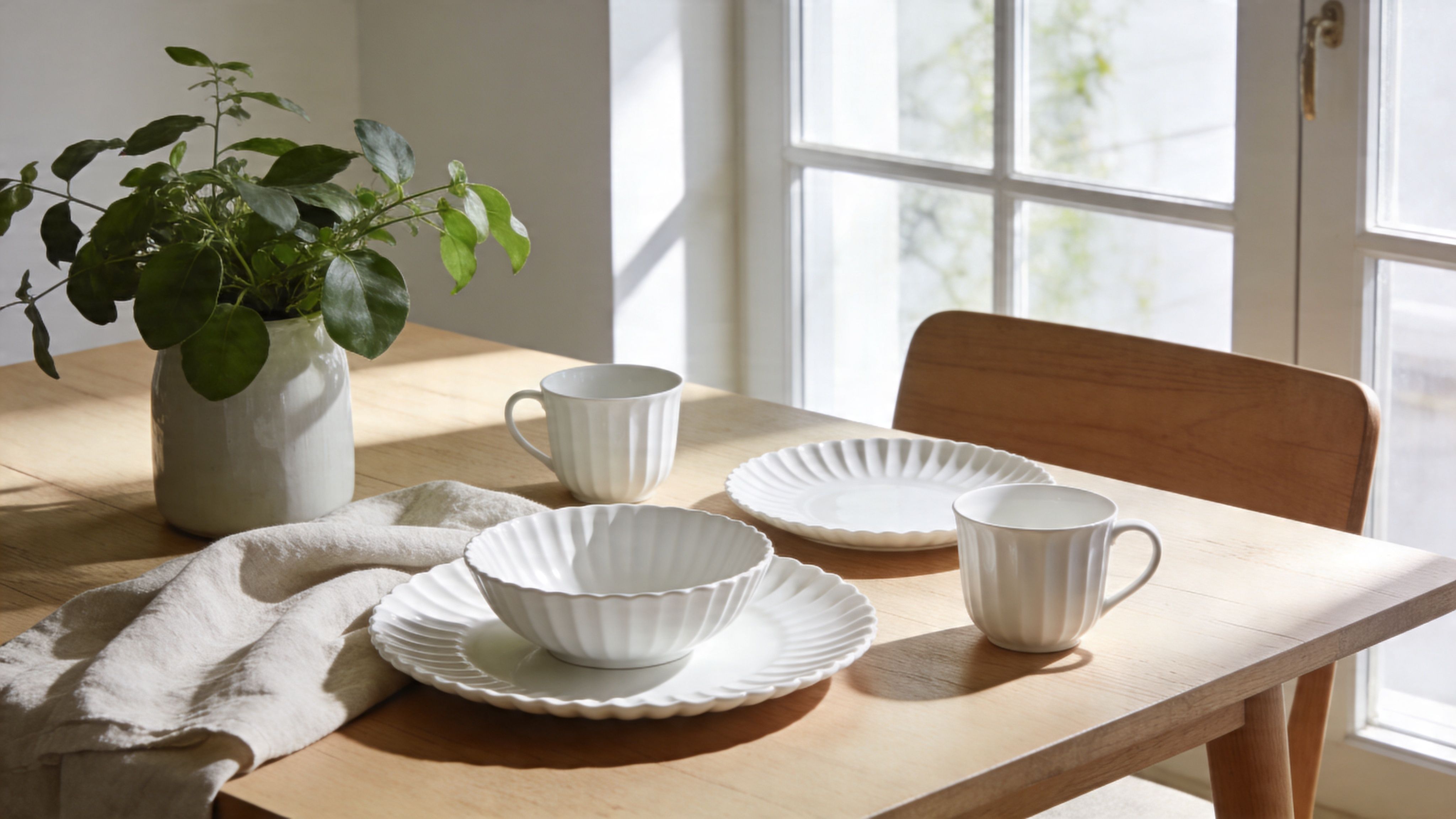
Danish and Swedish decorative traditions aren’t identical, but they often complement one another beautifully. White Fluted brings order, restraint, and elegance. A Dala horse brings colour, handwork, and a more rustic note. Together they create balance.
If the pairing sounds unlikely, think in terms of roles. The porcelain can act as the quiet field, while folk art provides the accent. A single painted horse on a shelf near a stack of white fluted plates can make both pieces more legible.
This works especially well when the surrounding palette stays natural. Pale timber, flax or linen textiles, simple glassware, and greenery let both traditions breathe.
One of my favourite uses for White Fluted is the everyday breakfast setting. Put white fluted bowls on a scrubbed wooden table. Add dark bread, butter on a small dish, and coffee in plain cups. Then place one small painted wooden object nearby, not in the centre, just at the edge of the scene where it can catch the eye.
The effect is not formal. It feels lived-in and considered.
For atmosphere, candlelight matters as much as porcelain in the darker months. Dalaart’s article on candles of Scandinavia offers lovely context for that side of Nordic styling.
Styling note: Let White Fluted carry the repetition, and let folk art carry the surprise.
White Fluted also performs well beyond the dining table. In a glazed cabinet, stacks of plates create rhythm. On open shelving, a few bowls and cups can soften a kitchen that might otherwise feel too severe.
People often worry that display will make the room feel precious. It won’t, if you keep the arrangement loose. Leave breathing room between objects. Mix porcelain with a wooden bowl, a small framed print, or a single folk ornament. Scandinavian interiors feel strongest when they look edited rather than filled.
The mistake I see most often is overmatching. If every surface is white, pale wood, and beige linen, the room can become flat. White Fluted needs contrast to show its depth.
That contrast doesn’t have to be loud. It can be a red Dala horse, a blue woven runner, smoked glass, or a sprig of green in a stoneware vase. The point is to let the porcelain converse with something more grounded.
When styled this way, White Fluted stops feeling like “special occasion china” and starts behaving as Scandinavian design should. It becomes useful, generous, and subtly beautiful in daily life.
Buying White Fluted can be straightforward or surprisingly nuanced, depending on what you want from it. Some people want a durable everyday service. Others want the pleasure of assembling a collection slowly, piece by piece, with attention to marks, condition, and variation.
Both approaches are valid. The difference lies in how closely you inspect before buying.
If you buy from an official retailer, the main advantages are clarity and consistency. You know the line, the model, and the intended finish. That route suits anyone building a practical set for regular use.
Older pieces ask more of the buyer, but they can be very rewarding. An antique dealer, estate sale, or specialist marketplace may offer forms that feel less common or better suited to a layered interior. In those cases, condition and authenticity matter more than speed.
A sensible approach is to decide which matters most to you:
With White Fluted, condition isn’t only about whether a piece is broken. It’s about how well the surface still expresses the design. The ridges should feel clean. The rim should read as intentional. Glaze wear, scratches from heavy stacking, and small chips at the edge can change how the piece catches light.
That doesn’t mean every flaw is disqualifying. A lightly worn bowl for weekday breakfast may still be an excellent buy. A serving piece with a visible rim chip may be less satisfying if you care about display.
When assessing condition, look slowly at the following:
Buy for the role the piece will play. A collector’s cabinet demands one standard. A daily kitchen shelf allows another.
Collectors often want to know how to think about first-quality and factory-second porcelain. The simplest answer is this. First-quality pieces are generally what most buyers seek when they want clean presentation and easier resale confidence. Factory seconds can be perfectly serviceable, but they ask you to accept some irregularity.
If you’re buying a second, inspect the reason with care. A small production quirk may not matter on a serving dish used at home. It may matter a great deal on a gift or on a piece you hope to pair perfectly with others.
In person, trust your eye more than the label alone. White porcelain reveals imperfections clearly, which is helpful. If something bothers you immediately under natural light, it will probably keep bothering you later.
Contemporary buyers often ask more from household objects than earlier generations did. Beauty and provenance still matter, but so do questions about materials, safety, and long-term responsible ownership.
For White Fluted, current brand materials emphasise modern usability. At the same time, some readers may encounter online discussion raising concerns about lead or sustainability claims. Where verified, product descriptions confirm practical use features such as microwave and dishwasher suitability, but broader health or eco concerns aren’t always addressed with the level of detail some buyers now expect.
That doesn’t mean you should avoid the collection. It means you should buy thoughtfully. If material safety is central to your decision, ask the retailer direct questions, request current product documentation where available, and keep records for your own peace of mind. A careful collector doesn’t treat questions as disloyalty. They treat them as part of responsible buying.
A strong White Fluted collection doesn’t need to begin with a full service. In fact, it often grows more gracefully when you start with the pieces you’ll use most. Dinner plates, bowls, cups, and a serving dish can tell you quickly whether the collection suits your life.
Then notice what is missing. Do you host often? Do you prefer simple morning routines? Do you want one more decorative branch of the family for holidays? Your habits should shape the collection, not someone else’s checklist.
Here are three sensible collecting paths:
The everyday path
Begin with Plain. Use it often. Learn whether you enjoy the feel, weight, and visual rhythm.
The layered path
Keep Plain as the base and add Half Lace or Full Lace for serving or celebratory meals.
The heirloom path
Search more selectively. Prioritise marks, condition, and pieces whose form moves you.
The best collections usually reflect restraint. It’s better to wait for the right bowl than to buy a near-match that frustrates you every time you open the cupboard.
White Fluted rewards that patience because its beauty lies in proportion and finish. A single excellent piece can set the tone for years. The goal isn’t quantity. It’s coherence, use, and the quiet satisfaction of choosing well.
A well-set Nordic table is meant to be lived with. White Fluted belongs in that tradition. It has the calm presence of a classic object, yet it was made for daily meals, not museum distance.
That distinction matters in Scandinavian interiors. We value things that earn their place through use. A White Fluted bowl beside a linen cloth, a carved Dala horse, and a branch of seasonal greenery creates the kind of room many Nordic homes aim for. Quiet, useful, and full of character.
Modern White Fluted pieces are designed for ordinary household use, including the dishwasher and microwave, as Royal Copenhagen notes in its product guidance. Even so, porcelain lasts longest when use is paired with good habits. Durability and care work together, much like painted wood furniture and oiled timber floors. Strong materials still respond to thoughtful handling.
Small routines make the biggest difference over time.
A simple rule helps here. Handle each piece as if the fluting were part of the structure, not just the decoration. Those ridges give the design its rhythm, and they also deserve protection from careless scraping in cupboards and dish racks.
Many households still treat fine porcelain as if every cycle or reheating will weaken it. That worry often comes from older wares or from memories passed down with the dishes themselves.
Current White Fluted is made for modern use. The safer approach is practical rather than fussy. Let plates and cups sit with a little space between them, avoid overpacking the dishwasher, and do not heat an empty piece in the microwave. Those habits reduce contact, noise, and stress on the porcelain.
Use should feel calm.
Older pieces ask for closer observation. If you have bought White Fluted from an antiques shop, estate sale, or flea market, check the glaze, the foot rim, and any worn areas before you decide how hard to use it.
Hand washing is often the kinder choice for pieces with visible wear, uncertain age, or delicate lacework. If cutlery leaves grey marks, start with a soft cloth and mild cleaner rather than abrasive scrubbing. A small chip on a beloved plate does not always end its life, but it may shift that piece from dinner service to serving bread, holding jewellery, or displaying a few cinnamon buns beside a painted Dala horse.
That is a very Scandinavian kind of care. Respect the object, adjust its role, and keep it in the home.
White Fluted stays beautiful when it becomes part of the household rhythm. Bring it out for weekday porridge, summer strawberries, saffron buns in winter, or coffee shared at an unhurried table. Its quiet white surface helps brighter Nordic elements sing. Red Dala horses, handwoven runners, blue flax textiles, and pale wood all look more grounded beside it.
Porcelain gains meaning through repetition. Wash it well, store it sensibly, and let it gather the soft authority that only daily use can give.
Trends come and go quickly in home design, but some objects hold their place because they answer needs that don’t change. We still want our homes to feel calm. We still want useful things to be beautiful. We still respond to craftsmanship when we see it.
Royal copenhagen white fluted endures because it meets those needs with unusual clarity. Its form carries history without becoming rigid. Its surface is decorative without noise. Its presence works in both a pared-back modern kitchen and a more layered room that includes antique wood, woven textiles, or painted Scandinavian folk objects.
For collectors, it offers continuity. For stylists, it offers flexibility. For households, it offers daily pleasure without demanding excessive ceremony.
That balance is rare. White Fluted isn’t only porcelain. It’s a design attitude. It suggests that refinement belongs in ordinary life, and that the best objects don’t need to shout to be remembered.
In that way, it shares something important with the most enduring Nordic pieces. Like a well-carved wooden figure or a simple linen cloth used for years, it becomes richer through use, association, and care. It asks very little of the home except that the home make room for quality.
If you choose it well, use it often, and pair it with materials that let it breathe, White Fluted won’t merely decorate a table. It will help shape the atmosphere of the room around it.
If you love the meeting point between refined Danish porcelain and Swedish folk tradition, explore Dalaart for authentic hand-carved Dala horses and companion pieces that bring warmth, colour, and Scandinavian heritage into the home.


.svg)


.png)


