April 4, 2026
When you hear the name Upsala Ekeby Karlskrona, you're hearing more than just a brand of vintage ceramics. You're hearing the story of one of the most brilliant partnerships in Swedish design history. It’s about the moment when Upsala-Ekeby, a ceramics giant known for its artistic firepower, joined forces with the Karlskrona porcelain factory, a name synonymous with master craftsmanship.
This collaboration gave us some of the most cherished and sought-after pieces of mid-century Scandinavian pottery.
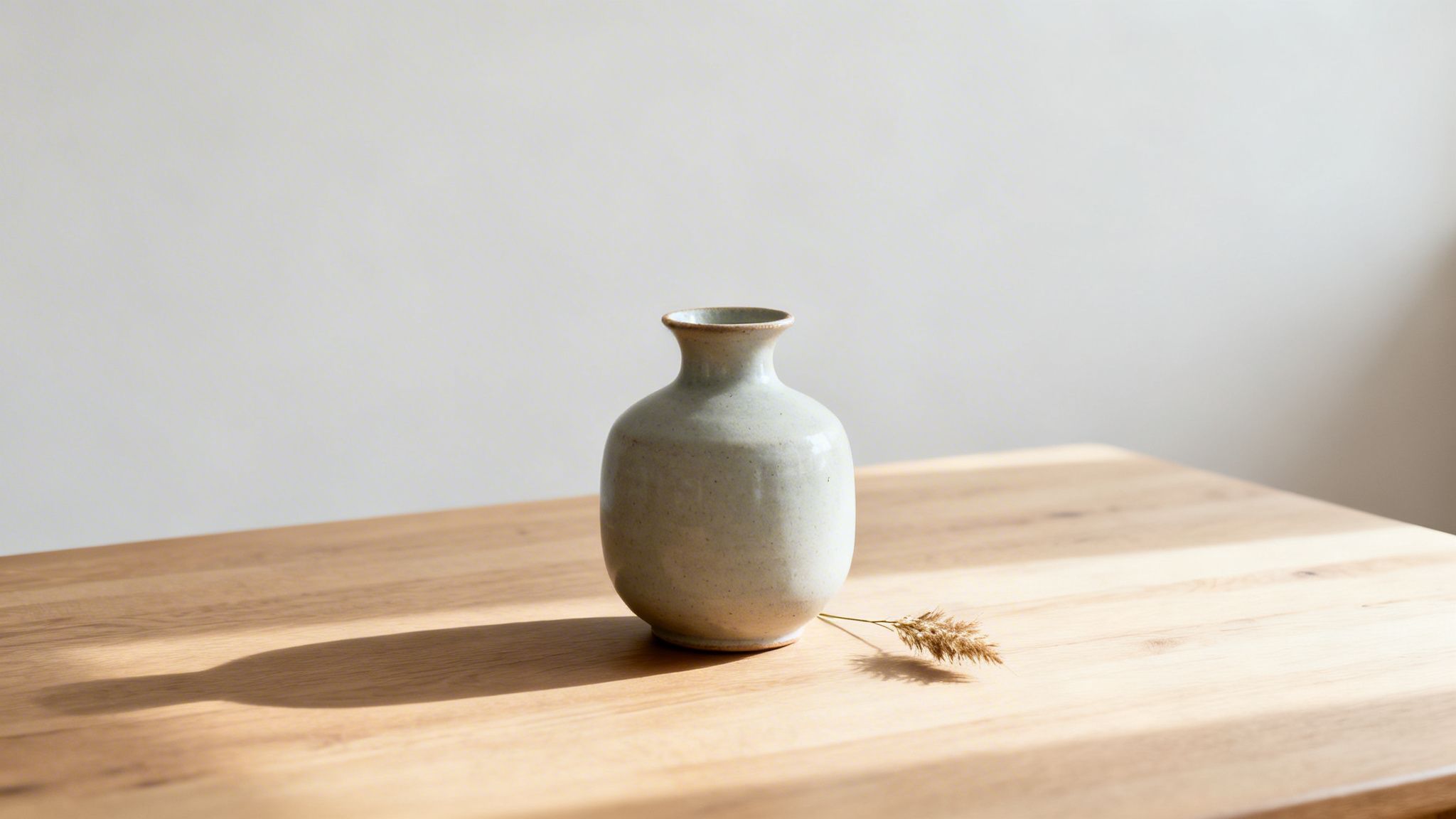
To explore the world of Upsala Ekeby Karlskrona is to hold a piece of Swedish history in your hands. These aren't just pretty objects for a shelf; they are storytellers. They capture the clean lines, practical beauty, and deep love for nature that came to define the mid-century Scandinavian soul.
Each vase, plate, and figurine is a small tribute to a golden age of design.
The magic comes from blending two very different strengths. Upsala-Ekeby brought the daring artistic vision and the marketing know-how, while Karlskrona contributed its long-honed expertise in crafting exquisite, high-quality feldspar porcelain.
Think of it as the perfect creative duo. One partner had the game-changing ideas, and the other had the incredible skill to execute them flawlessly. That synergy is precisely what makes the "Upsala Ekeby Karlskrona" stamp so special for collectors today.
Whether you're just starting your collection or have been at it for years, the appeal is undeniable. The designs feel both classic and perfectly of-their-time, bringing a warmth and simplicity that slips effortlessly into modern homes. Their lasting popularity really boils down to a few key things.
This fusion of art and everyday function is a true hallmark of Scandinavian ceramics. Much like the beloved stoneware from other Swedish makers, these items were made to be both beautiful and useful. If you want to dive deeper into this tradition, you might enjoy our guide on the rustic charm of Höganäs Keramik stoneware.
Ultimately, collecting Upsala Ekeby Karlskrona is about more than just pottery. It's about celebrating a legacy of thoughtful, human-centred design that continues to feel fresh and inspiring.
The journey of Upsala-Ekeby is a fascinating tale that begins not in some elegant art studio, but deep within the rich clay soil of Uppsala, Sweden. From these earthy, practical origins, a true ceramics powerhouse would rise, leaving an indelible mark on Scandinavian design. To truly appreciate any piece of Upsala Ekeby Karlskrona pottery, you have to understand the incredible story behind it.
Everything started with a very practical need. When the company was founded on January 29, 1886, its mission wasn't to create art. It was to make bricks, roof tiles, and other vital building materials. This foundational work gave the company a deep, hands-on understanding of ceramics long before they ever considered making decorative pieces. You can find out more about Upsala-Ekeby's founding and its path to becoming a design leader.
By the 1910s, however, a change was in the air. The company began producing household pottery, but more importantly, it started to bring talented artists and designers into the fold. This was a clear pivot from purely industrial work to artistic creation, laying the groundwork for its future legacy.
A pivotal moment in the company's story came in 1942 when it acquired the AB Karlskrona Porcelain Factory. This wasn't a simple business deal; it was the joining of two incredible Swedish ceramic traditions. Upsala-Ekeby brought its modern design energy and growing brand, while Karlskrona brought its long-established mastery of crafting high-quality whiteware porcelain.
Based in the coastal city of Karlskrona, the factory was legendary for its technical prowess. This brilliant merger allowed Upsala-Ekeby to dramatically expand what was possible, marrying its fresh artistic vision with Karlskrona’s superior production techniques. It sparked a new era of ceramics that were both stunningly designed and flawlessly made.
This collaboration created the perfect storm of creativity and craftsmanship. It allowed Upsala-Ekeby to elevate its output, producing the fine porcelain pieces that are now highly sought-after by collectors worldwide. It is this specific partnership that makes the "Upsala Ekeby Karlskrona" name so meaningful.
After the merger, the company cemented its role as a leader in Scandinavian design. The decades following the war were an explosion of creativity, with the factory producing an incredible array of items, from elegant tableware sets to bold, sculptural art objects. This golden age saw the company collaborate with some of Sweden's most celebrated designers.
The company's incredible success story can be seen in a few key stages. The first stage involved Early Industrial Roots (1886-1910), with a focus on bricks and tiles, which meant mastering the very fundamentals of ceramic production. This was followed by an Artistic Expansion (1910-1941), a shift into decorative arts, hiring visionary designers and cultivating a signature style. Finally, The Karlskrona Era (1942-1960s) marked the game-changing merger with the Karlskrona factory, perfecting fine porcelain and becoming a design powerhouse.
This history of blending different ceramic traditions is a common thread in the story of Swedish design. If you're curious about how other regional factories grew, you can read about the fascinating journey of Kloster Keramik in Ystad and its own unique place in this rich history. In the end, the story of Upsala-Ekeby and Karlskrona is one of brilliant collaboration.
Learning to spot an authentic piece of Upsala Ekeby Karlskrona pottery is a skill that opens up a whole new world for a collector. Think of it like learning to read an artist's signature; the marks on the bottom of a piece tell a rich story of its origin, era, and the hands that made it. Mastering these details is your first step toward building a collection with real confidence.
The most important clue is the maker's mark, or stamp. Before the pivotal 1942 acquisition, the Karlskrona factory used its own distinct marks. You'll often find an anchor symbol—a charming nod to its coastal home city. After the merger, a whole new system of marks appeared, creating a fascinating timeline for collectors to follow.
This simple guide illustrates the journey from the original Upsala-Ekeby factory to its powerhouse status after bringing Karlskrona into the fold.
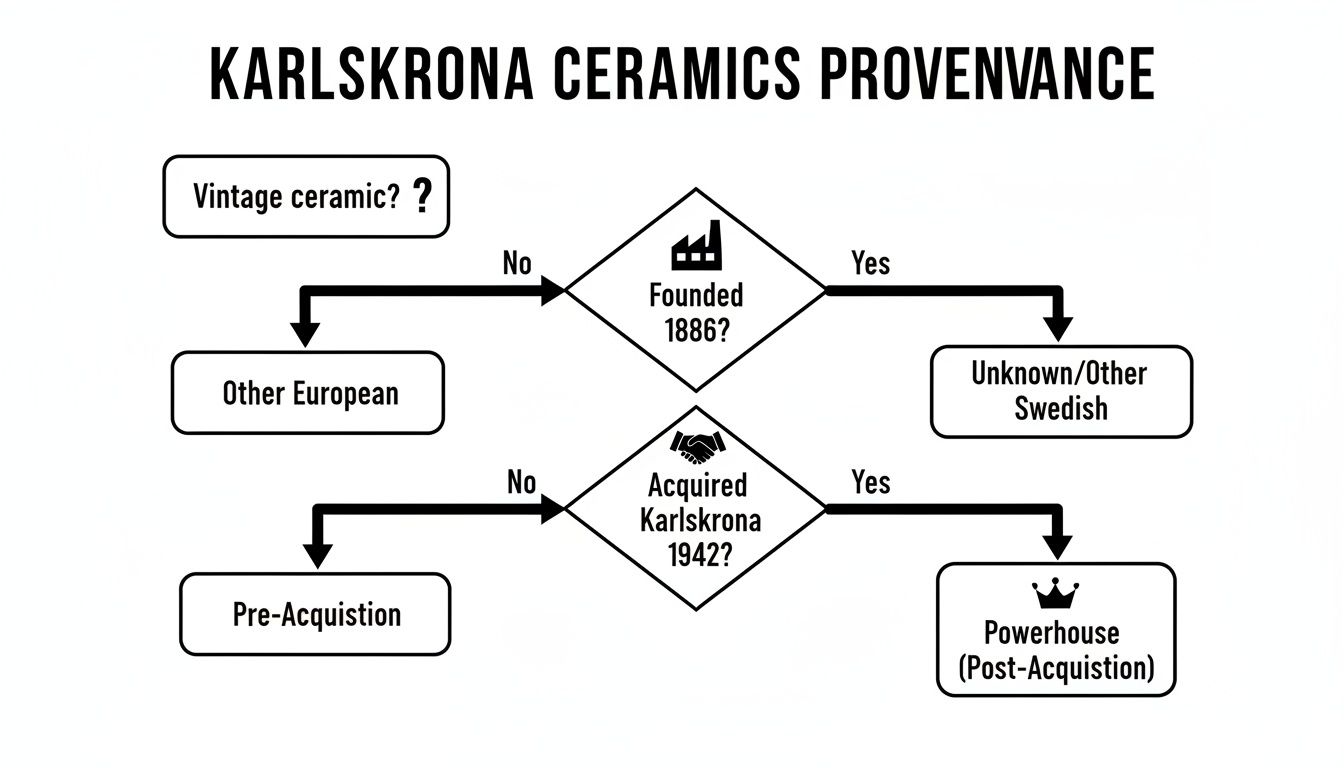
As the flowchart shows, the true "Upsala Ekeby Karlskrona" identity was born from that 1942 merger. This is what makes pieces from this specific period so uniquely collectible.
After the two factories joined forces, the markings became more varied. If you can understand what you're seeing, you can pinpoint a piece's age and provenance with surprising accuracy.
You might find several different combinations, and each one offers a clue. The classic Upsala-Ekeby mark is the "UE" stamp, known and loved by collectors. Alongside it, you might see the "Karlskrona" stamp, which signifies production at the Karlskrona facility under the new ownership. Some pieces have it all. Finding combined marks with both the "UE" symbol and the Karlskrona name or anchor clearly places the item in that exciting, collaborative era.
Beyond the main factory mark, keep an eye out for a model number, a pattern name, or even the signature or initials of the designer. These extra marks are a fantastic find, as they connect a piece directly to a specific artist's work and greatly increase its historical interest and often its value. For more on Swedish stoneware, you might enjoy our look at the distinctive style of Gabriel Sweden Stengods.
While the marks are key, the physical characteristics of the ceramic itself are just as telling. Karlskrona was famous for its high-quality feldspar porcelain. It's durable, a brilliant white, and has a wonderfully refined feel. Just familiarising yourself with the look and weight of this material can help you spot authentic pieces before you even turn them over.
For a collector, recognising the unique qualities of Karlskrona porcelain is like a musician knowing the sound of a specific instrument. The weight, the smooth glaze, and the crispness of the forms are all part of its signature tune.
Finally, start learning the famous patterns. Certain designs are strongly associated with the Upsala Ekeby Karlskrona period. Recognising these patterns on sight is an invaluable skill, allowing you to quickly identify potential treasures at markets or antique shops. It’s what turns a casual browser into a discerning and successful collector.
Behind every piece of pottery you love, there's a person with a vision. The magic of Upsala Ekeby Karlskrona wasn't just in the clay or the kiln; it was in the hands and minds of the artists who worked there. Getting to know them turns collecting from a simple hobby into a fascinating journey, helping you see the story behind each shape and glaze.
The designers at Upsala-Ekeby were the creative heart of the factory. They weren't just employees; they were a dream team who helped define an entire era of Scandinavian design. Drawing inspiration from the natural world and the idea that everyday objects should be both beautiful and useful, they created pieces that still feel fresh and modern today.
While many talented artists left their mark, three names truly stand out. If you're serious about collecting, learning to spot the work of these three is like learning the secret language of the pottery world. They were the tastemakers whose unique styles became the factory's signature.
First is Vicke Lindstrand (1904-1983). A true force of nature in Swedish glass and ceramics, Lindstrand was the artistic director from 1942 to 1950. He thought big, creating powerful, sculptural forms that command a room. He wasn't afraid to push boundaries, and his pieces—from towering floor vases to sleek animal figures—have a bold, modern energy that collectors clamour for.
Next, Anna-Lisa Thomson (1905-1952). Thomson's work feels like a walk through a Swedish meadow or along the coast. Her designs are deeply connected to nature, often featuring beautifully stylized fish, leaves, and flowers. Her famous "Paprika" and "Lancett" series are perfect examples of her gentle, organic style that brings a sense of calm beauty into a home.
Finally, there's Mari Simmulson (1911-2000). Arriving from Estonia, Simmulson infused Upsala-Ekeby with a wonderful sense of colour and playfulness. Her work is full of life and character, from her charming figurines of women in folk dress to her vibrant wall plaques. You can feel the warmth and joy in her pieces, which are known for their strong lines and rich, beautiful glazes.
Seeing a piece by one of these designers is like recognising the work of a famous painter. Each artist had a signature—a unique way of shaping clay, applying glaze, and capturing a mood—that makes their creations instantly identifiable and highly collectible.
Once you get to know these key figures, the ceramics transform. They're no longer just decorative objects; they're small but important pieces of design history, shaped by master artists at the top of their game. The distinct visions of Lindstrand, Thomson, and Simmulson are what elevated Upsala Ekeby Karlskrona from a successful factory to a celebrated name in art and design.
Their influence reached far beyond Sweden, helping to shape the Scandinavian Design movement that we still admire today. When you can recognise their work, you start to appreciate each vase, bowl, or figurine as part of a much bigger, more beautiful story. It’s this human touch that makes collecting so incredibly rewarding.
Have you ever spotted two similar-looking vintage vases, only to find one costs a fortune while the other is pocket change? Figuring out what makes Upsala Ekeby Karlskrona pottery valuable is the first step to building a collection you truly love. It's not about a simple price tag; it’s about understanding the story behind each piece—a blend of artistry, rarity, and how well it has been preserved.
More often than not, the single biggest influence on price is the designer’s signature. A piece that can be clearly traced back to an iconic artist like Vicke Lindstrand, Mari Simmulson, or Anna-Lisa Thomson will nearly always be worth more. Their work is celebrated and highly sought after, making a signed item a true prize for any collector.
Beyond the artist, you have to consider rarity and condition. Everyday tableware, for example, was produced in large quantities, so it's often more common and affordable. On the other hand, sculptural objects from a limited run, pieces with experimental glazes, or items created for a special exhibition are much harder to come by, and that scarcity sends their value soaring.
You can think of it like collecting coins. A standard coin is nice, but it’s the rare misprint or a limited-edition piece that really gets a collector’s heart racing. The same is true for Karlskrona pottery—uniqueness is everything.
Finally, the condition is absolutely crucial. A piece in pristine shape, with no chips, cracks, or crazing (the fine, web-like lines that can appear in the glaze), is what everyone is looking for. Even a small amount of damage can bring the value down significantly, so it pays to inspect every potential purchase very carefully.
When you're starting out, it helps to give your collection a focus. Not only does this create a beautiful, cohesive display, but it also helps you become a real expert in a specific area. One approach is to collect by designer, focusing on finding pieces from a single artist whose style you absolutely love. It’s a wonderful way to see how their work changed and evolved over time. Another option is to collect by form; maybe you have a passion for vases, wall plaques, or charming animal figurines. This creates a fascinating collection by showing all the variations on a single theme. Lastly, you could collect by series. Many famous designs, like Thomson’s "Paprika," were released as part of a larger series. Hunting for every piece in the line can be a fun and rewarding challenge.
At the end of the day, the goal is to create a collection that brings you joy. By keeping these value factors in mind, you can shop with confidence, invest in pieces you'll cherish, and curate a stunning group of Upsala Ekeby Karlskrona ceramics that speaks to you.
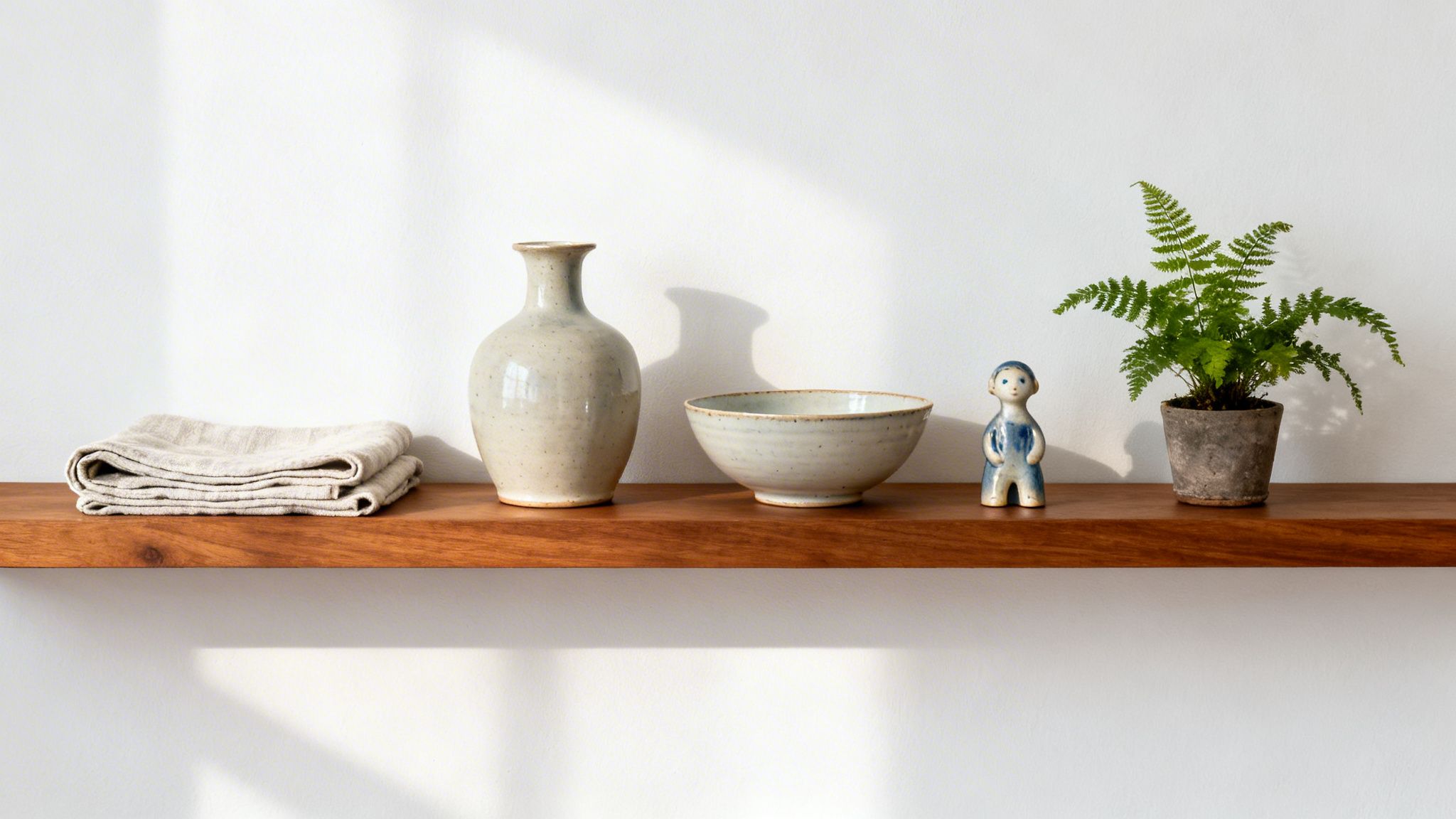
Bringing a piece of Upsala Ekeby Karlskrona history into your home is a wonderful feeling. Now comes the real joy: caring for it and styling it in a way that truly lets its mid-century soul sing. With a little thought, your collection can become a beautiful, personal focal point in your home.
One of the best things about these ceramics is just how adaptable they are. Their clean lines and nature-inspired shapes feel just as right in a minimalist space as they do adding a touch of classic form to a more eclectic room.
The secret to great styling is simply creating harmony. Don't let your beautiful piece get lost in a crowd. Give it some breathing room so its unique shape and glaze can be truly admired.
Styling isn’t just about putting an object on a shelf; it’s about creating small, beautiful moments throughout your home. It’s about telling a story with the things you love.
Here are a few ideas to get you started on a display that feels deliberate and striking:
Proper care is what will keep your collection looking beautiful for years—and generations—to come. While vintage ceramics are certainly resilient, they aren't invincible. A gentle touch is always the golden rule.
Always pick up your pieces from the base, never by the rim or a handle. Those are the most delicate points and are prone to stress.
When it's time for a clean, a light touch is all you need. A soft, damp cloth with just a tiny drop of mild soap will do the trick. Never, ever use abrasive scouring pads or harsh chemicals, as they can easily scratch or damage the glaze.
After a gentle wash, let your ceramics air-dry completely before placing them back on display. By following these simple habits, you’ll protect the integrity and value of your collection, ensuring it remains a source of joy for a long, long time.
As you begin your journey into the world of Swedish ceramics, a few questions are bound to pop up. Think of this as a friendly chat where we answer some of the most common queries we hear from fellow collectors of Upsala Ekeby Karlskrona pottery.
This is one of the most common questions, and the answer lies in a bit of history. Before 1942, the Karlskrona factory had its own distinct mark, often featuring an anchor—a lovely nod to its coastal home.
Once Karlskrona joined the Upsala-Ekeby family, the markings changed. You’ll start to see pieces stamped with "UE," "Karlskrona," or sometimes a combination of the two. Spotting these post-merger marks is a real thrill, as it helps you place your piece right within that important, collaborative chapter of their story.
While these beautiful plates and cups were certainly made for the dinner table back in the day, it's wise to be careful. The glazes used decades ago often don't meet the food safety standards we have in 2026.
For this reason, we always suggest using your collection for display purposes only. This not only keeps you safe but also does a wonderful job of protecting the piece's delicate glaze and overall condition, preserving its history and value for years to come.
Finding the real deal is all about knowing where to look. Your best bet will always be trusted sources that specialise in Scandinavian design, like dedicated vintage shops, antique stores, and reputable online marketplaces.
Always take a moment to check a seller’s reviews. Don’t be shy about asking for plenty of photos showing the maker's marks, the general condition, and close-ups of any little imperfections. A good seller will be happy to share these details, ensuring you know exactly what you’re bringing into your home.
At Dalaart, we believe in the beauty and history of Swedish craftsmanship, from iconic ceramics to our hand-painted Dala horses. Explore our curated collection of authentic art at https://dalaart.com.


.svg)


.png)


